Shop the Collection

To help you build your own global archive, we've prepared this collection of watercolor studies from our research into Dublin, Ireland. These artifacts are designed to bring the stillness of this corner of the world into your home.

Original Series Decorative Magnet

A personal study of Dublin, Ireland, captured in high-fidelity watercolor and prepared for your collection.

Dublin, Ireland | Ha'penny Bridge River Liffey | Original Series Decorative Magnet
Add to Collection / $18
Exclusive Series Artifact

Original Series Gallery Canvas

This high-fidelity canvas is a beautiful way to anchor a room and keep your memories of Dublin, Ireland fresh long after you've returned home.

Dublin, Ireland | Ha'penny Bridge River Liffey | Original Series Gallery Canvas detail Dublin, Ireland | Ha'penny Bridge River Liffey | Original Series Gallery Canvas detail Dublin, Ireland | Ha'penny Bridge River Liffey | Original Series Gallery Canvas detail Dublin, Ireland | Ha'penny Bridge River Liffey | Original Series Gallery Canvas detail
Add to Collection / $65

Original Series Hardboard Coaster

A personal study of Dublin, Ireland, captured in high-fidelity watercolor and prepared for your collection.

Dublin, Ireland | Ha'penny Bridge River Liffey | Original Series Hardboard Coaster
Add to Collection / $18
Exclusive Series Artifact

The Spirit of the Land

Archival Note: A curated field study of Dublin, Ireland, prioritizing the specific atmospheric stillness of the region. These artifacts have been meticulously sourced from our global archival partners to represent the area's unique cultural frequency and environmental character. This selection serves as a formal observation for our ongoing global archive, vetted for its visual accuracy and archival merit.

Dublin, Ireland study No. 01
Dublin, Ireland / 01 VIA / Adrien Olichon
The light is soft and diffuse under Dublin's characteristic cloud cover, which brings out the warm terracotta tones of the Georgian and Victorian buildings along the quay. The metal railings catch subtle reflections off the still water, creating layers of texture that draw the eye from foreground through to the modern skyline. This quiet moment captures the city's blend of heritage and contemporary development, with the Liffey serving as the quiet heart connecting old Dublin to new.
Dublin, Ireland study No. 02
Dublin, Ireland / 02 VIA / ClickerHappy
The soft, diffused daylight bathes the iconic Georgian facade in a gentle, overcast Irish light that emphasizes the textured brick and highlights the striking contrast between the cheerful yellow and deep blue doors. Standing here, one would feel the quiet elegance and timeless charm of Dublin's historic architecture, the symmetry and symmetry inviting reflection on centuries of Dubliners who have passed through these thresholds. The muted palette of the sky and stonework creates an intimate, contemplative atmosphere that captures the essence of Dublin's understated architectural beauty.
Dublin, Ireland study No. 03
Dublin, Ireland / 03 VIA / Amine kübranur Çakıroğlu
This is the General Post Office on O'Connell Street, one of Dublin's most iconic Georgian structures showcasing refined neoclassical architecture. The building features an impressive honey-colored limestone facade that has weathered to a soft patina, contrasting beautifully with the crisp white painted columns and capitals. Most visitors overlook the delicate wrought iron lamp posts flanking the entrance, their warm amber glow a subtle but essential detail that transforms the austere stone facade into an inviting public space, especially as evening approaches.

Where to wander

Archival Note: A curated field study of Dublin, Ireland, prioritizing cultural relevance and archival merit. These locations have been meticulously researched and vetted to ensure they represent the most authentic atmosphere for your own expedition.

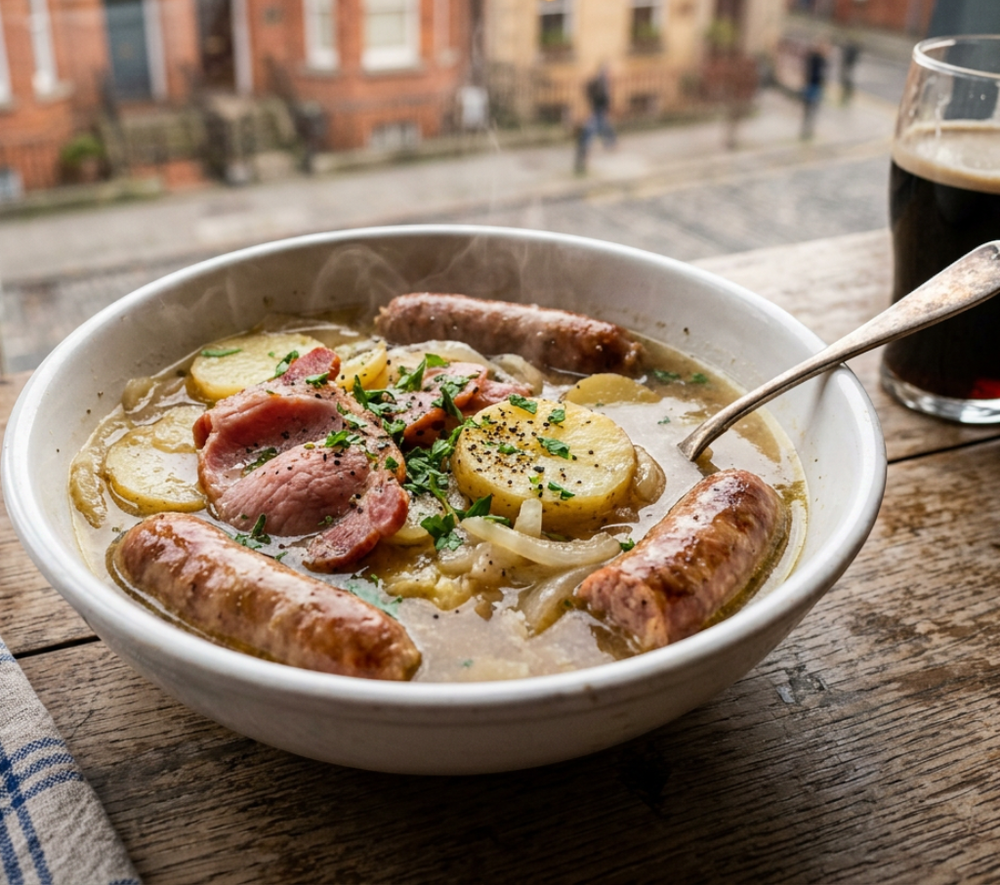
Local Cuisine Spotlight
This authentic Irish stew showcases tender sausages and crispy bacon nestled in a velvety, herb-kissed broth with perfectly cooked potatoes and caramelized onions. Each spoonful delivers warmth and comfort, the kind of nourishing dish that has sustained Dublin diners for generations. The careful balance of savory meats and creamy broth makes this beloved classic impossible to resist.
Credits: THE PAINTED PASSPORT
Local cuisine study in Dublin, Ireland

☕︎ Local Flavor

Chapter One by Mickael Viljanen

Rating: 5* | Price: $$$$ | Coordinates: 53.3503, -6.2636

Chapter One holds two Michelin stars and consistently delivers one of the most refined dining experiences in all of Ireland, located beneath the Dublin Writers Museum. Chef Mickael Viljanen crafts inventive tasting menus that celebrate Irish produce with a precision and creativity that leaves guests speechless. Booking well in advance is essential, and every single bite justifies the planning.

View Entry Details

The Woollen Mills

Rating: 4* | Price: $$ | Coordinates: 53.3469, -6.2614

Perched above the River Liffey near the Ha'penny Bridge, The Woollen Mills serves hearty, honest Irish food in a warmly lit, wood-paneled space full of local character. The fish and chips and the soda bread alone are worth a visit, and the views of the river add a lovely layer to any meal. It strikes that rare balance of being equally perfect for a leisurely lunch or a relaxed evening dinner.

View Entry Details

Uno Mas

Rating: 4* | Price: $$$ | Coordinates: 53.3329, -6.2611

Uno Mas is a Spanish-inspired wine bar and restaurant on Aungier Street that has quickly become a favorite among Dublin food lovers. The small plates arrive full of bold flavor, from crispy croquetas to beautifully sourced Iberian charcuterie, all paired with a thoughtful natural wine list. The room buzzes with a convivial energy that makes it feel like a genuine celebration every single night.

View Entry Details

Assassination Custard

Rating: 4* | Price: $ | Coordinates: 53.3373, -6.2638

This tiny and wonderfully quirky cafe on Kevin Street is a cult favorite for its imaginative soups, open sandwiches, and exceptional coffee that punch far above their humble price point. The menu changes daily based on what is fresh and seasonal, giving regular visitors a reason to keep coming back throughout the week. Squeeze in early because the space is small and word has very much gotten out about how good it is.

View Entry Details

🛌︎ Boutique Stays

The Merrion Hotel

Rating: 5* | Price: $$$$ | Coordinates: 53.3394, -6.2530

The Merrion is a grand Georgian masterpiece sitting just steps from Government Buildings in the heart of Dublin. Its antique-filled rooms and award-winning spa make every stay feel like a quiet retreat from the city buzz. Guests consistently rave about the impeccable service and the stunning private garden courtyard.

View Entry Details

The Shelbourne Dublin

Rating: 5* | Price: $$$$ | Coordinates: 53.3393, -6.2544

Few hotels in Ireland carry the historic weight and elegance of The Shelbourne, overlooking St. Stephen's Green since 1824. The Irish Constitution was drafted within its walls, and you can feel that storied atmosphere in every richly decorated corridor. Afternoon tea in the Lord Mayor's Lounge is an experience that locals and visitors alike treasure deeply.

View Entry Details

Number 31

Rating: 4* | Price: $$$ | Coordinates: 53.3334, -6.2576

Number 31 is a beloved boutique guesthouse tucked into a quiet Georgian mews near Fitzwilliam Square, offering an intimate and artsy alternative to large hotels. The sunken lounge with its sunlit skylight feels more like staying with a stylish friend than checking into a standard room. Mornings here begin with a legendary breakfast spread that fuels a full day of Dublin exploration.

View Entry Details

The Wilder Townhouse

Rating: 4* | Price: $$$ | Coordinates: 53.3318, -6.2608

The Wilder Townhouse blends Victorian charm with modern comfort across a series of beautifully restored Georgian buildings near the Grand Canal. Rooms are cozy yet polished, with thoughtful details like rainfall showers and locally sourced bathroom products. Its location in the Portobello neighbourhood puts you near some of Dublin's most vibrant independent cafes and restaurants.

View Entry Details

📍︎ Field Study

Trinity College and the Book of Kells

Rating: 5* | Price: $$ | Coordinates: 53.3439, -6.2546

Trinity College is Ireland's oldest university and its cobblestoned campus is one of the most photogenic spots in the entire city. The Long Room library, with its barrel-vaulted ceiling and 200,000 ancient texts, is genuinely breathtaking in person and unlike anything you will find elsewhere. The Book of Kells, an illuminated manuscript from 800 AD, adds a layer of spiritual and historical wonder that lingers long after you leave.

View Entry Details

Kilmainham Gaol

Rating: 5* | Price: $ | Coordinates: 53.3418, -6.3107

Kilmainham Gaol is a former prison that served as a central site of Irish history, holding many leaders of the 1916 Easter Rising before their execution. The guided tours are deeply moving and incredibly well presented, weaving together personal stories with the broader narrative of Ireland's fight for independence. Standing in the stone execution yard brings a profound stillness that no textbook could ever fully replicate.

View Entry Details

St. Patrick's Cathedral

Rating: 5* | Price: $ | Coordinates: 53.3393, -6.2714

St. Patrick's Cathedral is Ireland's largest church and has stood in various forms since the 12th century, making it a remarkable window into the country's spiritual and architectural history. Jonathan Swift, author of Gulliver's Travels, served as Dean here and is buried within its walls, adding a literary dimension to the visit. The soaring Gothic interior, complete with medieval floor tiles and ornate memorials, rewards anyone who takes the time to wander slowly.

View Entry Details

The National Museum of Ireland: Archaeology

Rating: 5* | Price: Free | Coordinates: 53.3385, -6.2542

The National Museum of Archaeology on Kildare Street houses some of the most extraordinary Celtic artifacts in the world, including the Ardagh Chalice and the Tara Brooch. Entry is completely free, making it one of the best value cultural experiences in any European capital city. The bog bodies collection is hauntingly fascinating and provides an intimate, almost unsettling connection to Ireland's ancient past.

View Entry Details

Typography

Archival Note: A formal technical study of Dublin, Ireland, archiving the coordinates, elevation, and environmental data that define the region. This data serves as a vital record for our ongoing global field study, providing the technical foundation behind every atmospheric detail captured in our visual work.

Botanical and pigment specimen study for Dublin, Ireland Colors of Dublin, Ireland
Coordinates
53.3498° N, 6.2603° W — Dublin city centre, Republic of Ireland, situated at the mouth of the River Liffey on the east coast
Historical Epoch
Founded by Vikings around 841 AD, Dublin became the second city of the British Empire before emerging as the capital of an independent Ireland in 1922, its Georgian core shaped by colonial ambition and its spirit forged in rebellion.
Elevation
0-100 m / 0-328 ft, Dublin sits largely at sea level along the Liffey estuary, rising gently toward the Dublin Mountains to the south
Atmosphere
Cfb, Oceanic Temperate. Mild, famously wet, and dramatically cloudy year-round. Temperatures rarely punish in either direction, but the rain is constant and often glorious.
Observation Hour
07:30. Dublin mornings deliver a pearlescent diffused glow unique to its coastal latitude. Cloud-filtered Atlantic light removes harsh shadows and wraps Georgian stone in a luminous silver warmth ideal for painting.
Primary Pigment
Payne's Grey (#536878) and Raw Sienna (#C68642)
Best Time to Visit
May through September, long evenings, relatively lower rainfall, and the city in full social bloom make these the most rewarding months to visit.
Avoid Visiting
November through January, short grey days, persistent rain, and a quieter cultural calendar make midwinter the least inspiring time to explore.

The Local Tongue

Language is the invisible architecture of Dublin, Ireland. These entries document the regional vocabulary—capturing the "texture" of local speech that standard translations often miss. Hand-curated expressions reflecting the specific spirit and daily rhythm of the region.
Archival study of English cultural texture

via / Darlene Alderson

Primary Language English
Regional Dialect Hiberno-English (Irish English)

Craic

Craic means fun, good conversation, and the electric atmosphere of a moment well lived. In Dublin it is not a thing to be scheduled but a quality that descends on a pub when the music starts and strangers become friends over the sound of a fiddle.

Slainte

Slainte is the Irish toast to good health, spoken with a lift of the glass and a nod across the bar. It carries centuries of fellowship in two syllables, the kind of word that makes a cold pint in a firelit pub feel like a small ceremony rather than a simple drink.

Flaithiulacht

Flaithiulacht describes a spirit of open-handed generosity that goes beyond politeness into genuine warmth. It is the quality behind a Dubliner insisting on buying the next round before the last one is finished, the cultural instinct that hospitality is never a transaction.

Wait! before you go...

Before you head over to Dublin, Ireland, we’ve audited the essential data points for this corner of the world. These notes cover the logistics—from currency ratios to transit hubs—to help you navigate the landscape with clarity.
🚲 Getting Around Dublin is best navigated on foot in the centre, with the Luas tram network and Dublin Bus covering wider areas efficiently. The DART rail line connects the coast and is the most scenic way to reach seaside suburbs like Dun Laoghaire.
⚖️ Cash or Card Dublin is highly card-friendly and contactless payment is accepted almost everywhere including markets, taxis, and small cafes. Carrying a small amount of euro cash is useful for street vendors, some traditional pubs, and the occasional older establishment.
☁️ Good to Know Dubliners consider directness a form of respect and will give an honest opinion without meaning offence, so a straightforward exchange is a sign of warmth rather than rudeness. Complaining gently about the weather is a universally accepted icebreaker with anyone, anywhere.
🏧 ATMs ATMs are widely available throughout Dublin city centre, clustered near Grafton Street, O'Connell Street, and at all major transport hubs. Most international debit and credit cards work without issue, though checking foreign transaction fees with a personal bank before travel is always worthwhile.
💳 Currency The currency of Ireland is the Euro (EUR), indicated by the symbol and used exclusively across the Republic of Ireland. The United Kingdom's pound sterling is not accepted, so travelers arriving via Northern Ireland should exchange currency before crossing the border.
🔌 Plugs Ireland uses the Type G three-pin plug standard at 230V and 50Hz. An adapter is required for European two-pin and North American devices.
🛡️ Safety Dublin city centre is generally safe for tourists and solo travelers throughout the day and evening. Standard urban awareness applies after midnight around Grafton Street and the quays, and bag security is worth maintaining in crowded areas.
✈️ Airports Dublin Airport (DUB) is the primary international gateway, located approximately 12 km north of the city centre and served by direct bus routes including the Airlink express. A taxi or ride-share from the airport to the city centre typically takes 25 to 45 minutes depending on traffic.

Behind The Scenes

Nathan

Note from the Founder

Hey, did you know this fun fact about Dublin, Ireland? Dublin was named Dubh Linn by early settlers, meaning Black Pool, referring to a dark tidal pool where the Liffey and Poddle rivers once met. That original pool now lies beneath the gardens of Dublin Castle.
Thank you for exploring the Dublin, Ireland series with us. We hope these notes have inspired you to add this incredible destination to your own passport—we are so glad you're here. — Nathan

Some of our Favorites