The Painted Passport

Shop the Collection


To help you build your own global archive, we've prepared this collection of watercolor studies from our research into Shirakawa-go, Japan. These artifacts are designed to bring the stillness of this corner of the world into your home.

Shirakawa-go, Japan | Traditional Gassho-zukuri Village | Original Series Gallery Canvas close-up detail Shirakawa-go, Japan | Traditional Gassho-zukuri Village | Original Series Gallery Canvas detail Shirakawa-go, Japan | Traditional Gassho-zukuri Village | Original Series Gallery Canvas detail Shirakawa-go, Japan | Traditional Gassho-zukuri Village | Original Series Gallery Canvas detail
01 Shirakawa-go, Japan

Traditional Gassho-zukuri Village

(0) No reviews yet

Thatched-roof farmhouses meet mountain mist. Shirakawa-go watercolor canvas print on museum-grade material, made to order. Free US shipping.

Add to Collection $65
Launch offer · 15% off — code WELCOME15
Dimensions
Free U.S. shipping Ready to hang Ships in 3–5 days

Arrives perfect — guaranteed, or we'll make it right

Arrives ready to hang — a perfect gift.

Watercolour · The Painted Passport

The Spirit of the Land

Archival Note: A curated field study of Shirakawa-go, Japan, prioritizing the specific atmospheric stillness of the region. These artifacts have been meticulously sourced from our global archival partners to represent the area's unique cultural frequency and environmental character. This selection serves as a formal observation for our ongoing global archive, vetted for its visual accuracy and archival merit.

Shirakawa-go, Japan study No. 01
Shirakawa-go, Japan / 01 VIA / Rap Dela
The wide street cuts through traditional dark-timbered buildings, their white plaster panels bright against weathered wood, while potted plants soften the edges where homes meet pavement. A forested mountain rises behind the village, its green slopes dense and layered beneath an overcast sky that casts even, gentle light across everything. A few visitors wander the road's center, small against the two-story structures, while the air seems to hold that particular stillness of mountain towns where the landscape presses close.
Shirakawa-go, Japan study No. 02
Shirakawa-go, Japan / 02 VIA / Laurent Gence
Mist clings to the mountainside behind the gassho-zukuri farmhouse, softening the boundary between forest and sky. The rice paddy in the foreground holds recent rain, its neat rows stretching toward the old thatched structure half-hidden by summer greenery. The air here would be thick and still, carrying the smell of wet earth and pine.
Shirakawa-go, Japan study No. 03
Shirakawa-go, Japan / 03 VIA / Hyungman Jeon
The snow sits heavy and thick on the gassho-zukuri roofs, weighted in uneven ridges that reveal where the last snowfall paused and the next began. A bare tree stands to the left, its dark branches stripped clean, offering the only interruption to an otherwise unbroken blanket of white that seems to muffle everything, sound, color, and time itself. Against the forested mountains, the village feels small and temporary, like it's been caught mid-breath in winter's long silence.

Where to wander

Archival Note: A curated field study of Shirakawa-go, Japan, prioritizing cultural relevance and archival merit. These locations have been meticulously researched and vetted to ensure they represent the most authentic atmosphere for your own expedition.

Local Cuisine Spotlight
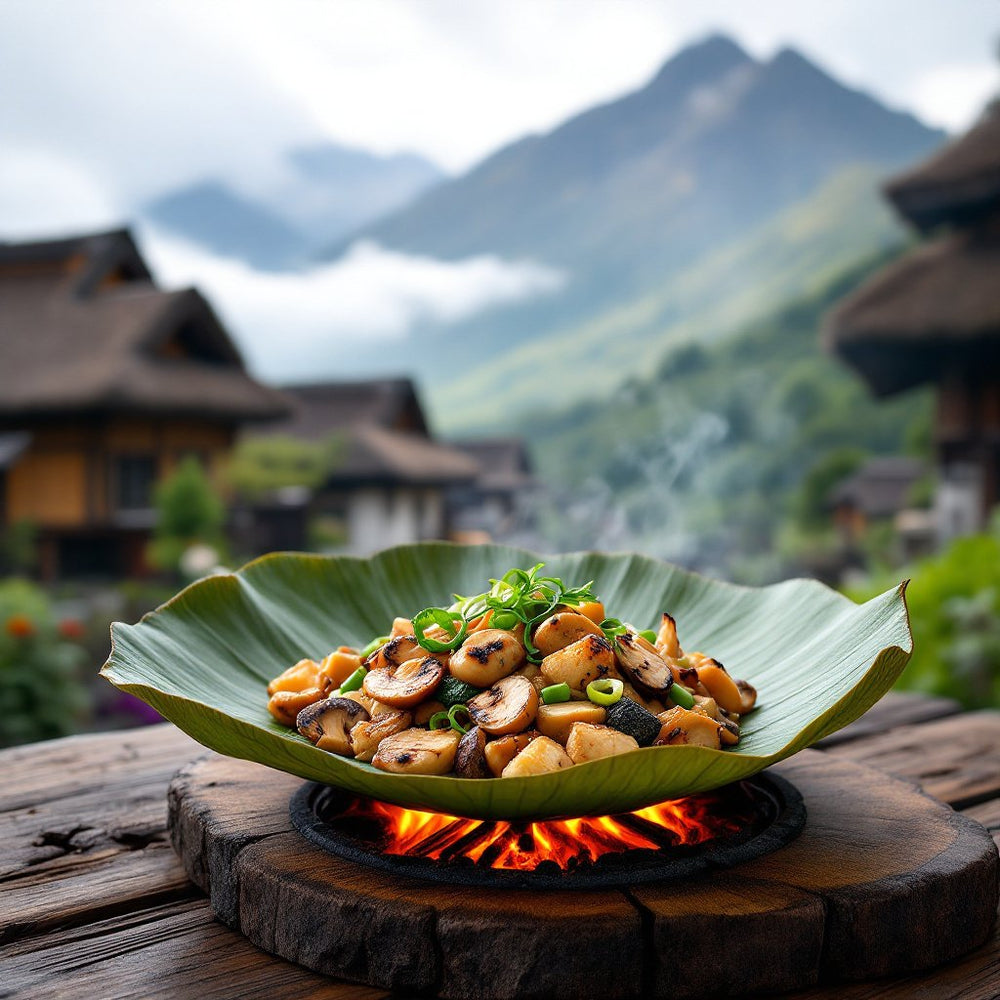
Sautéed mushrooms and root vegetables rest on a broad banana leaf, their smoky char speaking to the open-flame cooking traditions of Japan's mountain villages. The dish showcases Shirakawa-go's forest bounty, earthy fungi mingling with tender potatoes and bright scallions, garnished with fresh herbs. Each bite carries the essence of alpine ingredients prepared simply over glowing embers.
Credits: THE PAINTED PASSPORT
Local cuisine study in Shirakawa-go, Japan

☕︎ Local Flavor

Irori Restaurant

Rating: 5* | Price: $$$ | Coordinates: 36.2580 N, 136.9064 E

The traditional sunken hearth defines every dish here, where river char and Hida beef are grilled over binchotan charcoal while you sit on cushions worn soft by generations of diners. The menu changes with whatever the mountain provides—wild ferns in spring, sweetfish in summer, mushrooms in autumn—each ingredient prepared with a restraint that honors its origin. Watch the chef's hands work in the glow of the irori, performing rituals of hospitality that predate electricity and tourism.

View Entry Details

Shirakawago no Yu

Rating: 5* | Price: $$ | Coordinates: 36.2585 N, 136.9058 E

This soba shop mills buckwheat from nearby fields each morning, and you can hear the stone grinder turning as you wait for your noodles to be hand-cut. The dipping sauce balances the sweetness of local mirin with dashi made from kombu and bonito, served alongside tempura of mountain vegetables that were foraged that same day. Sit at the counter to watch the master's knife work, each strand of soba cut to precisely three millimeters wide.

View Entry Details

Keyaki Coffee & Grill

Rating: 5* | Price: $$ | Coordinates: 36.2575 N, 136.9069 E

Coffee roasted in-house fills this converted gassho house with an aroma that mingles beautifully with the scent of aged wood and tatami. The proprietor sources beans from single estates and prepares each cup with pour-over precision, while the lunch menu features Hida pork katsu sandwiches on milk bread made by the baker next door. Large windows frame the surrounding farmland, offering views that shift dramatically with each season's cultivation cycle.

View Entry Details

Yamamotoya

Rating: 5* | Price: $ | Coordinates: 36.2579 N, 136.9063 E

Five generations have served simmered pork belly and mountain vegetables from this humble shopfront, where the recipe for their miso-based sauce remains closely guarded. The interior consists of just eight seats at a worn wooden counter, and the grandmother still tends the pots while her grandson manages the front. Order the set meal and receive a feast of small dishes showcasing preserved vegetables, pickles, and rice from farms visible through the window.

View Entry Details

🛌︎ Boutique Stays

Juemon Gassho Minshuku

Rating: 5* | Price: $$$ | Coordinates: 36.2583 N, 136.9061 E

Sleep beneath a thatched roof that has sheltered generations, where the timber framework rises above you like the praying hands that give gassho-zukuri its name. Your futon rests on tatami worn smooth by decades of footsteps, and the morning brings miso soup prepared over an irori hearth that has burned continuously for over two hundred years. The Juemon family shares stories of silkworm cultivation in the attic spaces above while serving local river fish for dinner.

View Entry Details

Shimizu Gassho Minshuku

Rating: 5* | Price: $$ | Coordinates: 36.2591 N, 136.9055 E

This 250-year-old farmhouse sits along the Sho River where you fall asleep to the sound of rushing water and wake to mountains draped in morning mist. The Shimizu family maintains the traditional irori fireplace where guests gather in the evening, sharing sake and conversation as smoke rises through the steep thatched roof. Breakfast features homemade tofu and vegetables from their garden, served with a hospitality that feels less like a transaction and more like being welcomed home.

View Entry Details

Nomura Gassho House

Rating: 5* | Price: $$$ | Coordinates: 36.2577 N, 136.9068 E

Step into a living museum where the Nomura family has preserved their ancestral home with extraordinary care, maintaining the balance between heritage and comfort. The house features rare architectural details including intricately joined beams that never used a single nail, and windows that frame views of terraced rice paddies exactly as they have for centuries. Evening meals showcase Hida beef and mountain vegetables, prepared using techniques passed down through nine generations of the family.

View Entry Details

Koemon Gassho Inn

Rating: 5* | Price: $$ | Coordinates: 36.2587 N, 136.9072 E

The smallest of the traditional minshuku, Koemon offers an intimate encounter with gassho architecture where only three guest rooms ensure personal attention and quiet contemplation. Your hosts still use the upper floors for sericulture displays, and you can examine the wooden tools and frames that supported the silk industry that once sustained this valley. The cypress wood bath, fed by mountain spring water, overlooks a carefully tended garden where snow clings to pine branches well into spring.

View Entry Details

📍︎ Field Study

Ogimachi Castle Observatory

Rating: 5* | Price: $ | Coordinates: 36.2598 N, 136.9071 E

The steep path upward rewards you with the iconic view of gassho houses scattered across the valley floor like boats on a green sea, their thatched roofs angled in perfect geometric harmony. Early morning brings mist that pools between the houses before the sun burns it away, while late afternoon casts long shadows that emphasize the dramatic pitch of each roof. This vantage point reveals the village's relationship to the surrounding mountains, showing how centuries of heavy snowfall shaped this distinctive architecture.

View Entry Details

Wada House

Rating: 5* | Price: $$ | Coordinates: 36.2581 N, 136.9066 E

The largest gassho house open to visitors reveals how the village headman's family lived and worked for three centuries, with rooms still furnished with original merchant ledgers and silk-making equipment. Climb the steep stairs to the attic floors where silkworms once fed on mulberry leaves, and examine the massive beams joined without nails using techniques nearly forgotten today. The docent, a descendant of the Wada family, shares stories of village governance and the nenge system of communal labor that maintained these massive roofs.

View Entry Details

Myozenji Temple & Museum

Rating: 5* | Price: $$ | Coordinates: 36.2576 N, 136.9060 E

This 550-year-old temple houses a museum displaying the tools and photographs that document life before tourism transformed the valley, when isolation and heavy snow defined every aspect of existence. The temple bell still rings at traditional hours, its tone carrying across rice paddies that flood to mirror the sky in spring. Behind the main hall, a garden designed for contemplation uses rocks gathered from the Sho River to represent the surrounding mountain peaks.

View Entry Details

Doburoku Festival Hall

Rating: 5* | Price: $ | Coordinates: 36.2584 N, 136.9065 E

This small museum preserves the elaborate floats and costumes used in the biannual doburoku matsuri, where villagers have celebrated rice harvests with unfiltered sake for over four hundred years. The festival's origins trace to prayers for good harvests and protection from fire, and the displays show how each household once took turns hosting the festival gods. Videos capture the autumn performances when lion dancers move through the village blessing homes, their movements unchanged since the Edo period.

View Entry Details

Typography

Archival Note: A formal technical study of Shirakawa-go, Japan, archiving the coordinates, elevation, and environmental data that define the region. This data serves as a vital record for our ongoing global field study, providing the technical foundation behind every atmospheric detail captured in our visual work.

Botanical and pigment specimen study for Shirakawa-go, Japan Colors of Shirakawa-go, Japan
Coordinates
36.2583° N, 136.9061° E — Ogimachi Village, Gifu Prefecture
Historical Epoch
The gassho farmhouses rose during the Edo period, built by extended families who farmed rice and raised silkworms in the mountain isolation. The village survived modernization largely untouched, earning UNESCO recognition in 1995 as a rare example of a living historical landscape where traditional architecture and rural life continue side by side.
Elevation
495-545 m / 1,624-1,788 ft - Shogawa River valley floor to hillside observation points
Atmosphere
Dfa - Humid Continental. Winters bury the village under meters of snow, while summers bring brief, humid warmth and the hum of cicadas echoing through the valley.
Observation Hour
16:30 - Late afternoon light gilds the thatched roofs from the west, catching the textured straw and turning the entire village amber. The mountains cast long shadows across the paddies, and every farmhouse seems to glow from within.
Primary Pigment
Thatch Gold (#D4A574) and Winter Ash (#B8B8BA)
Best Time to Visit
April or late October - the snow has melted to reveal green paddies or autumn has set the beech forests ablaze, and the village breathes easy between winter's crowds and summer's heat.
Avoid Visiting
January and February - the village is stunning under snow, but tour buses clog the roads, accommodations book months ahead, and winter illumination events turn the peaceful hamlet into a ticketed spectacle.

The Local Tongue


Language is the invisible architecture of Shirakawa-go, Japan. These entries document the regional vocabulary—capturing the "texture" of local speech that standard translations often miss. Hand-curated expressions reflecting the specific spirit and daily rhythm of the region.
Archival study of Japanese cultural texture

via / Sorrawis Chongcharoen

Primary Language Japanese
Regional Dialect Hida dialect (Gifu Prefecture)

Gassho-zukuri (合掌造り)

Gassho-zukuri translates to 'constructed like hands in prayer,' describing the steeply pitched thatched roofs that define the village's farmhouses. The angle, designed to shed heavy snow, also created vast attic spaces where families once cultivated silkworms, the beams meeting overhead like palms pressed together in reverence to both function and form.

Irori (囲炉裏)

An irori is a traditional sunken hearth, a square pit cut into the wooden floor where charcoal glows and kettles hang from ceiling hooks. In Shirakawa-go's farmhouses, the irori remains the heart of daily life, warming hands during long winters and filling the rooms with woodsmoke that slowly cures the thatched roofs above, preserving them for generations.

Doburoku (どぶろく)

Doburoku is an unfiltered, milky sake brewed in mountain villages like Shirakawa-go, traditionally offered to the gods during harvest festivals. The villagers still make it according to centuries-old methods, and visitors can taste its rustic, slightly sweet tang at the Doburoku Festival Hall, where the tradition is celebrated with a museum dedicated to this sacred brew.

Wait! before you go...

Before you head over to Shirakawa-go, Japan, we’ve audited the essential data points for this corner of the world. These notes cover the logistics—from currency ratios to transit hubs—to help you navigate the landscape with clarity.
🚲 Getting Around Shirakawa-go is car-free in the historic core, so visitors explore on foot along narrow lanes between farmhouses. The shuttle bus from the parking area to Ogimachi Castle Observatory saves the steep climb and costs just a few hundred yen, though the walk down through the forest is worth taking slowly.
⚖️ Cash or Card Cash is still king here, especially at smaller guesthouses, local eateries, and museum entrances where card readers are rare. Withdraw yen before arriving or use the ATM near the village information center, as options thin out quickly once inside the historic district.
☁️ Good to Know The village glows most beautifully in the quiet hours before tour buses arrive, so guests staying overnight in a minshuku enjoy Shirakawa-go at its most intimate. Morning mist rising from the paddies and smoke curling from breakfast hearths belong almost entirely to those who sleep under the thatched roofs.
🏧 ATMs ATMs are scarce within the village itself, though the tourist information center near the bus terminal has one that accepts international cards. Withdrawing cash in Takayama or Kanazawa before arriving saves worry, as the handful of machines here can run out of bills during peak season.
💳 Currency The Japanese yen is the currency, and Shirakawa-go feels refreshingly affordable compared to major cities. A hearty bowl of soba runs around 800 yen, entrance to historic farmhouses costs 300-500 yen, and a night in a traditional gassho minshuku with dinner and breakfast hovers around 9,000-12,000 yen per person.
🔌 Plugs Type A and B plugs, 100V. Bring a converter if your devices aren't dual-voltage.
🛡️ Safety Shirakawa-go is exceptionally safe, though winter ice on walkways and steep paths to viewpoints requires careful footing. The village feels protected and gentle, a place where the biggest risk is losing track of time wandering between farmhouses and forgetting the last bus back to Takayama.
✈️ Airports Chubu Centrair International Airport (NGO) in Nagoya is the closest major hub, about three hours away by a combination of train and highway bus. Most visitors route through Takayama or Kanazawa, both connected by direct buses that drop you at the village edge in under 90 minutes.

Behind The Scenes

Nathan

Note from the Founder

Hey, did you know this fun fact about Shirakawa-go, Japan? Every 30 to 40 years, the entire village gathers to re-thatch a farmhouse roof in a traditional event called yui, where neighbors work together in a single day, passing bundles of kaya grass hand to hand. This communal labor, practiced for centuries, is the reason the gassho houses still stand.
Thank you for exploring the Shirakawa-go, Japan series with us. We hope these notes have inspired you to add this incredible destination to your own passport—we are so glad you're here. Nathan's signature

Some of our Favorites