

Shop the Collection

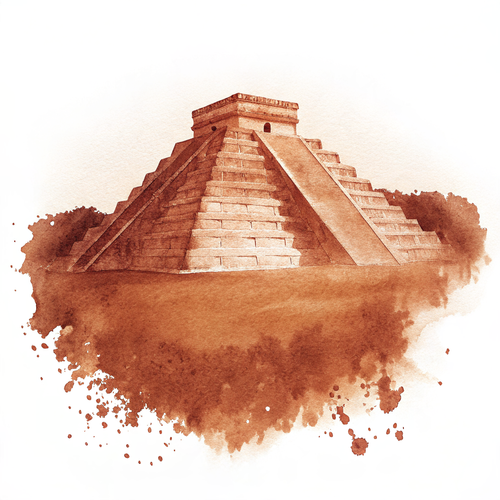
To help you build your own global archive, we've prepared this collection of watercolor studies from our research into Copper Canyon, Mexico. These artifacts are designed to bring the stillness of this corner of the world into your home.

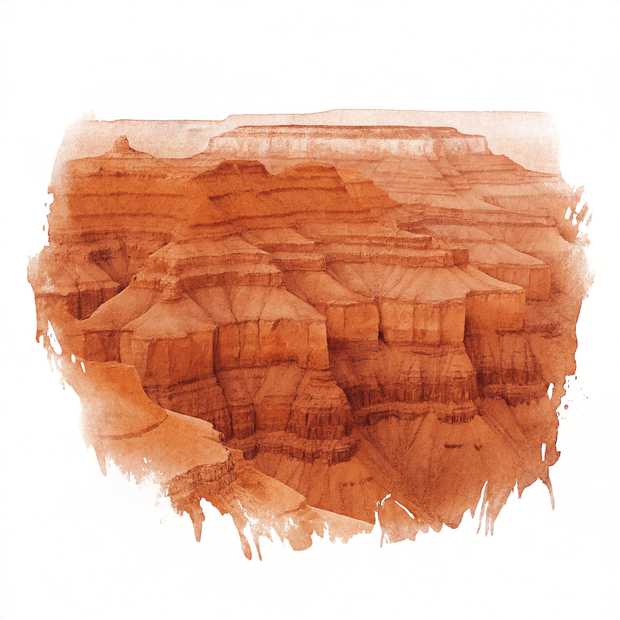
Original Series Decorative Magnet

A personal study of Copper Canyon, Mexico, captured in high-fidelity watercolor and prepared for your collection.

Copper Canyon, Mexico | Copper Canyon River Gorge | Original Series Decorative Magnet
Add to Collection / $18
Exclusive Series Artifact

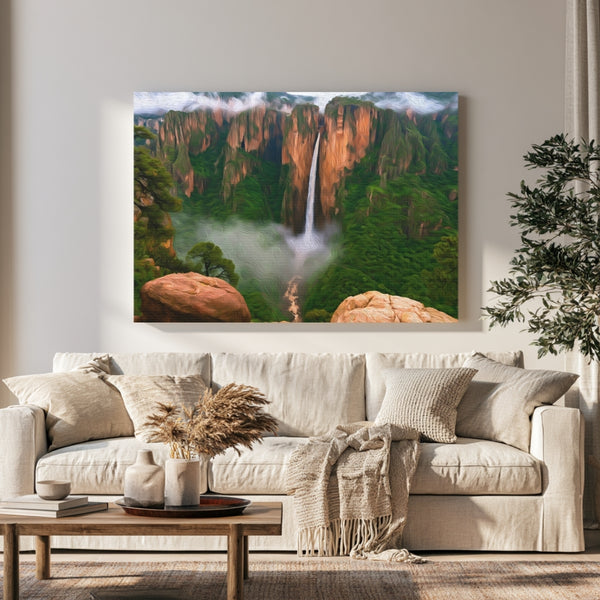
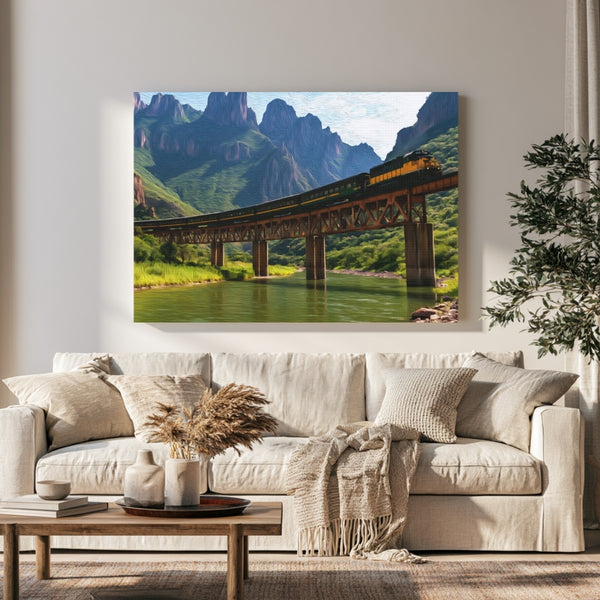
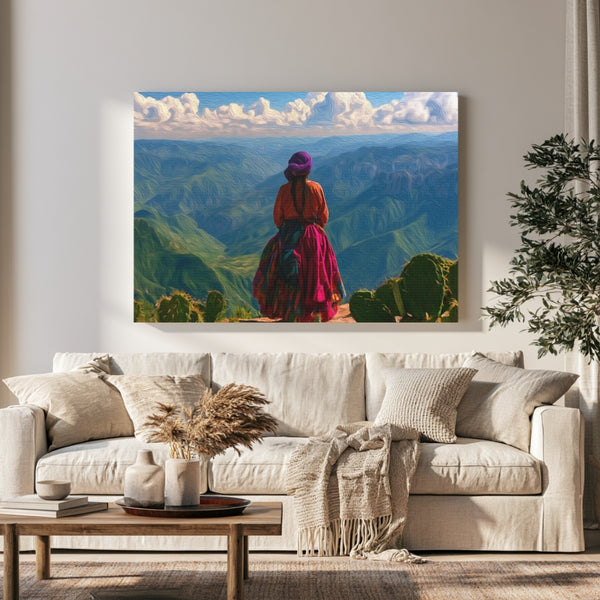
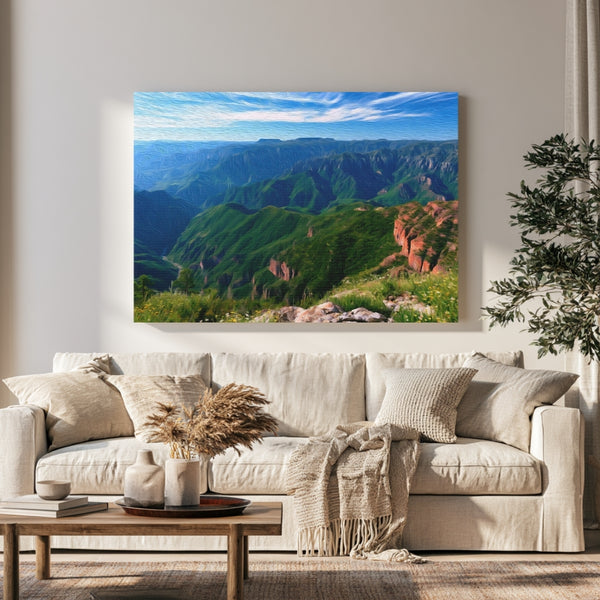
Original Series Gallery Canvas

This high-fidelity canvas is a beautiful way to anchor a room and keep your memories of Copper Canyon, Mexico fresh long after you've returned home.

Copper Canyon, Mexico | Copper Canyon River Gorge | Original Series Gallery Canvas detail Copper Canyon, Mexico | Copper Canyon River Gorge | Original Series Gallery Canvas detail
Add to Collection / $65

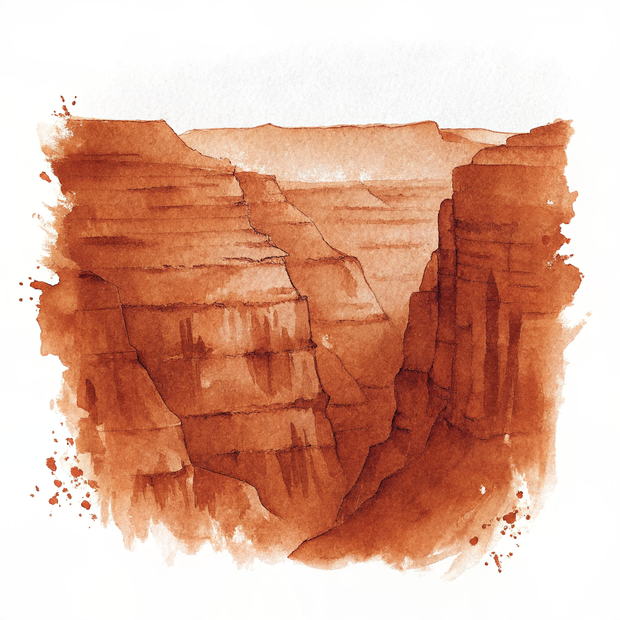
Original Series Hardboard Coaster

A personal study of Copper Canyon, Mexico, captured in high-fidelity watercolor and prepared for your collection.

Copper Canyon, Mexico | Copper Canyon River Gorge | Original Series Hardboard Coaster
Add to Collection / $18
Exclusive Series Artifact

The Spirit of the Land

Archival Note: A curated field study of Copper Canyon, Mexico, prioritizing the specific atmospheric stillness of the region. These artifacts have been meticulously sourced from our global archival partners to represent the area's unique cultural frequency and environmental character. This selection serves as a formal observation for our ongoing global archive, vetted for its visual accuracy and archival merit.

Copper Canyon, Mexico study No. 01
Copper Canyon, Mexico / 01 VIA / Leslie del Moral
The afternoon light bathes the Copper Canyon's layered ridges in rich greens and deep shadows, revealing the dramatic topography carved by millennia of erosion. A lone contrail streaks across the cloudless sky, a subtle reminder of civilization beyond this wild expanse. The scale here is almost incomprehensible—peak after peak recedes into atmospheric haze, creating a sense of boundless wilderness where time moves differently.
Copper Canyon, Mexico study No. 02
Copper Canyon, Mexico / 02 VIA / Ramo
The sun breaks through the canyon's depths in brilliant golden rays, casting the dramatic landscape in ethereal light. Standing here, one would feel humbled by the towering cliff walls and immersed in the serene stillness of the morning, with warm light gradually revealing the canyon's intricate layers. The lush vegetation and pristine air create an atmosphere of untouched wilderness and timeless beauty.
Copper Canyon, Mexico study No. 03
Copper Canyon, Mexico / 03 VIA / Alex Quezada
This photograph captures the dramatic scale of Copper Canyon's geological formations, with the turquoise river creating a serpentine path through rust-colored limestone cliffs. The verdant vegetation clinging to the canyon walls provides a striking contrast to the otherwise arid landscape, while a solitary dirt road carved into the canyon floor hints at the remote human presence below. The interplay between the water's vivid blue and the earthy tones of the rock creates an almost surreal palette that defines this UNESCO World Heritage site.

Where to wander

Archival Note: A curated field study of Copper Canyon, Mexico, prioritizing cultural relevance and archival merit. While we haven't touched down here yet, we've meticulously vetted these locations through our global network of contributors to ensure they represent the most authentic atmosphere for your own expedition.

Local Cuisine Spotlight

Chilaquiles, a beloved Copper Canyon staple, features crispy fried tortilla strips bathed in rich red sauce and topped with a sunny-side egg, crumbly cheese, and fresh cilantro. The dish arrives in authentic clay tableware, its warmth and comfort embodying generations of Mexican culinary heritage served in the shadow of dramatic canyon cliffs.
Credits: THE PAINTED PASSPORT
Local cuisine study in Copper Canyon, Mexico

☕︎ Local Flavor

Restaurante La Cabañita

Rating: 4* | Price: $ | Coordinates: 27.7483° N, 107.6367° W

This beloved family-run spot in Creel serves hearty Chihuahuan comfort food that warms you after cool canyon days in the mountains. Their slow-simmered bean soup and hand-pressed corn tortillas are made fresh each morning using recipes passed down through generations. The dining room is simple and cheerful, filled with locals and travelers sharing tables like old friends.

View Entry Details

El Mesón de Batopilas

Rating: 4* | Price: $$ | Coordinates: 27.0167° N, 107.7333° W

Tucked inside the silver-mining village of Batopilas, this courtyard restaurant serves regional dishes infused with indigenous Rarámuri culinary traditions unique to the canyon lowlands. Try the roasted goat with dried chili sauce — smoky, tender, and utterly revelatory alongside fresh handmade tortillas. Dining here beneath string lights with canyon walls looming overhead is a meal you will quietly carry with you for years.

View Entry Details

Canyon Coffee & Bistro

Rating: 4* | Price: $ | Coordinates: 27.7510° N, 107.6350° W

A delightful little café in Creel that has become a morning ritual for hikers fueling up before hitting the canyon trails at dawn. Their café de olla, brewed with cinnamon and piloncillo in the traditional Mexican style, is among the finest you will taste anywhere in the Sierra Madre. Fresh baked pan dulce and egg dishes round out a breakfast menu that is simple, affordable, and deeply satisfying.

View Entry Details

Tarahumara Kitchen at Divisadero

Rating: 5* | Price: $$$ | Coordinates: 27.5340° N, 107.9170° W

Perched on the canyon rim, this elevated dining experience celebrates indigenous Rarámuri ingredients and cooking techniques in a setting of extraordinary natural beauty. Each dish tells a story — from blue corn pinole porridge to slow-braised venison with wild herb sauces sourced from the canyon slopes. Watching the canyon turn gold at sunset while savoring these flavors creates a moment of pure, unhurried joy.

View Entry Details

🛌︎ Boutique Stays

Hotel Divisadero Barrancas

Rating: 5* | Price: $$$ | Coordinates: 27.5333° N, 107.9167° W

Perched dramatically on the canyon rim, this iconic lodge offers breathtaking panoramic views that stretch across four converging canyons. Rustic stone bungalows blend seamlessly into the landscape while keeping guests comfortable with warm blankets and local crafts. Wake up to misty canyon mornings with coffee in hand — an experience that feels genuinely unforgettable.

View Entry Details

Paraíso del Oso Lodge

Rating: 4* | Price: $$ | Coordinates: 27.4167° N, 107.8833° W

This welcoming eco-lodge near Cerocahui is run by a passionate team deeply connected to the local Rarámuri culture and surrounding wilderness. Cozy cabins are tucked among pine forests, offering guided horseback rides and canyon hikes right from your doorstep. The genuine warmth of the staff and home-cooked meals make every guest feel like a longtime friend returning home.

View Entry Details

Creel Lodge

Rating: 4* | Price: $$ | Coordinates: 27.7500° N, 107.6333° W

Situated in the charming mountain town of Creel, this lodge serves as a perfect base for exploring the surrounding Sierra Tarahumara highlands. Timber-framed rooms are snug and well-appointed, with a crackling fireplace lounge ideal for swapping trail stories after a long day. The friendly owners share local knowledge generously, pointing guests toward hidden viewpoints most visitors never find.

View Entry Details

Copper Canyon Sierra Lodge

Rating: 5* | Price: $$$ | Coordinates: 27.3500° N, 107.8500° W

Deep in the barrancas near Batopilas, this secluded mountain retreat offers a true escape into one of Mexico's most dramatic landscapes. Elegant yet rustic rooms open onto terraces where hummingbirds dart through flowering gardens against canyon walls. Solar-powered and environmentally conscious, the lodge proves that sustainable travel and genuine luxury can coexist beautifully.

View Entry Details

📍︎ Field Study

Barranca del Cobre Viewpoint (Divisadero)

Rating: 5* | Price: Free | Coordinates: 27.5333° N, 107.9167° W

Standing at the Divisadero overlook, you come face to face with a canyon system four times the size of the Grand Canyon — a perspective that genuinely resets your sense of scale. The convergence of four great canyons unfolds in layered shades of copper, ochre, and deep green stretching impossibly far into the distance. Rarámuri artisans gather here daily, offering handwoven baskets and carved figures that make deeply meaningful souvenirs.

View Entry Details

Cascada de Basaseachi

Rating: 5* | Price: $ | Coordinates: 28.1667° N, 108.2000° W

Mexico's tallest single-drop waterfall plunges 246 meters into a mist-filled gorge surrounded by ancient pine and oak forests that feel entirely primordial. The trail leading to the base winds through spectacular canyon scenery with wildflowers and birdsong accompanying every step. Swimming in the cold, clear pool at the base — with the falls thundering nearby — is one of the most invigorating natural experiences in all of North America.

View Entry Details

Unique Hotel Mirador Aerial Tram

Rating: 4* | Price: $$ | Coordinates: 27.5350° N, 107.9165° W

This thrilling cable car descends nearly 1,000 meters into the heart of the canyon, offering a slow, gliding perspective that no hiking trail can replicate. The ride reveals dramatic geological layers, swooping birds of prey, and canyon villages clinging impossibly to narrow ledges far below. It is equal parts adventure and meditation — a rare chance to truly understand the magnificent vertical world of Copper Canyon.

View Entry Details

El Chepe Railway Journey

Rating: 5* | Price: $$$ | Coordinates: 27.7500° N, 107.6333° W

The Chihuahua al Pacífico Railway — El Chepe — is considered one of the world's great train journeys, crossing 37 bridges and passing through 86 tunnels carved through living mountain. Watching the landscape transform from highland pine forest to tropical canyon lowland over the course of the journey is a slow-motion revelation of staggering beauty. Board at Creel and let the rhythmic clatter of the rails carry you through scenery that simply cannot be experienced any other way.

View Entry Details

Typography

Archival Note: A formal technical study of Copper Canyon, Mexico—archiving the coordinates, elevation, and environmental data that define the region. This data serves as a vital record for our ongoing global field study, allowing us to reconstruct the regional atmosphere with archival precision before our physical arrival.

Botanical and pigment specimen study for Copper Canyon, Mexico Colors of Copper Canyon, Mexico
Coordinates
27.5333° N, 107.9167° W — Divisadero Rim, Copper Canyon, Sierra Tarahumara, Chihuahua, Mexico
Historical Epoch
The Raramuri retreated deeper into the canyon system during the Spanish colonial period to preserve their way of life. Jesuit missionaries arrived in the 17th century, leaving small whitewashed churches that still stand quietly in canyon villages today.
Elevation
500-2,400 m / 1,640-7,874 ft - Canyon floor at Batopilas to pine-forested rim near Divisadero and Creel, with dramatic vertical relief across the system.
Atmosphere
Cwb - Subtropical Highland. Warm dry springs, mild summers with monsoon rain July through September, and cold winters with occasional snow on the rim above 2,000 m.
Observation Hour
06:45 - Golden light rakes the copper canyon walls from the east at dawn, turning the rock faces a deep molten amber. Mist still lingers in the gorges and softens every edge beautifully.
Primary Pigment
Burnt Sienna (#8C4A2F) and Prussian Blue (#003153)
Best Time to Visit
October through December - Post-monsoon skies are clear, canyon greenery is lush, temperatures are pleasant, and crowds are thin after summer.
Avoid Visiting
July through August - Heavy monsoon rains can wash out roads, delay El Chepe, and make canyon trails slippery and difficult to navigate safely.

The Local Tongue

Language is the invisible architecture of Copper Canyon, Mexico. These entries document the regional vocabulary—capturing the "texture" of local speech that standard translations often miss. Hand-curated expressions reflecting the specific spirit and daily rhythm of the region.
Archival study of Spanish cultural texture

via / Anya Juárez Tenorio

Primary Language Spanish
Regional Dialect Mexican Spanish (Chihuahuan highlands), with significant Raramuri spoken by indigenous Tarahumara communities throughout the canyon system.

Raramuri

Raramuri is the name the indigenous people of Copper Canyon use for themselves, meaning roughly 'those who run on foot.' It refers to their legendary tradition of long-distance running across canyon trails, a practice visitors witness when they see a runner descending a rocky path in simple sandals at a pace that seems to defy gravity.

Barranca (barranca)

Barranca means deep gorge or ravine in Spanish, and in this region it carries a particular weight beyond simple geography. Standing at the Divisadero rim and looking down into layered shadow and copper stone, a visitor understands why locals speak of the barrancas in almost reverential tones, as if naming a living thing rather than a landform.

Korima

Korima is a Raramuri concept describing the practice of sharing with those who have less, functioning as a moral cornerstone of community life in the canyon villages. A traveler who accepts dried corn or a handmade basket from a Raramuri family at the market in Creel is receiving korima, and the cultural expectation is that the gesture be met with genuine gratitude rather than treated as a transaction.

Wait! before you go...

Before you head over to Copper Canyon, Mexico, we’ve audited the essential data points for this corner of the world. These notes cover the logistics—from currency ratios to transit hubs—to help you navigate the landscape with clarity.
🚲 Getting Around El Chepe, the Chihuahua al Pacifico railway, is the primary and most iconic way to access the canyon, running from Chihuahua City to Los Mochis. Private transfers and guided jeep tours connect rim towns to canyon-floor destinations unreachable by rail.
⚖️ Cash or Card Cash is essential in Copper Canyon. Canyon-floor villages, Raramuri market vendors, and smaller lodges operate exclusively on pesos, and card readers are rare outside of larger Creel hotels. Travelers should carry sufficient pesos from Chihuahua City before boarding El Chepe.
☁️ Good to Know Photographing Raramuri people, especially women and children, requires respectful permission and often a small payment they will indicate. Pointing a camera without acknowledgment is considered deeply disrespectful in canyon communities and reflects poorly on visitors in a place where trust between travelers and locals is still being earned.
🏧 ATMs ATMs exist in Creel and are limited in number, often running low on cash during high season or after long weekends. Travelers should withdraw generously before entering the canyon system, as there are no ATMs at Divisadero, Batopilas, or canyon-floor villages.
💳 Currency The Mexican Peso (MXN) is the only currency accepted throughout the Copper Canyon region. US dollars may be taken at a few larger hotels in Creel at unfavorable rates, but pesos in small denominations are the practical standard for all daily interactions.
🔌 Plugs Mexico uses Type A and Type B outlets at 127V, 60Hz. Most plugs from the US and Canada fit without an adapter, though a voltage-aware adapter may be needed for some European devices.
🛡️ Safety The canyon region itself is generally safe for tourists on established routes and at tourist-facing lodges and rail stops. However, the broader state of Chihuahua has areas with significant cartel activity, and travelers should consult current government advisories, avoid road travel after dark, and follow lodge staff guidance on which areas to explore independently.
✈️ Airports General Roberto Fierro Villalobos International Airport (CUU) in Chihuahua City is the primary gateway, roughly four to five hours from Creel by road or the starting point of the El Chepe rail journey. Los Mochis Airport (LMO) serves travelers approaching from the Pacific coast end of the railway.

Behind The Scenes

Nathan

Note from the Founder

Hey, did you know this fun fact about Copper Canyon, Mexico? Copper Canyon (Barranca del Cobre) is a system of six major canyons covering roughly 65,000 square kilometers in the Sierra Madre Occidental. At its deepest point near Batopilas, the canyon drops over 1,800 meters from rim to river.
Thank you for exploring the Copper Canyon, Mexico series with us. We hope these notes have inspired you to add this incredible destination to your own passport—we are so glad you're here. — Nathan

Some of our Favorites