Original Series / Visual Study
Lalibela, Ethiopia | Original Series Gallery Canvas
Regional Dossier

LALIBELA, ETHIOPIA | "The New Jerusalem of Africa"

Lalibela is the most extraordinary sacred site in Africa, a complex of eleven monolithic churches carved directly into the red volcanic rock of the Ethiopian Highlands in the twelfth and thirteenth centuries, each one excavated from a single piece of living stone by artisans working downward from the surface into the earth. The churches were commissioned by King Lalibela of the Zagwe dynasty, who according to tradition was instructed in a dream to build a New Jerusalem in the highlands of Ethiopia after the fall of the original city. Bet Giyorgis, the Church of Saint George, is the most perfectly realized of the eleven, a cruciform building carved to a depth of twelve meters, its roof flush with the surrounding plateau surface, visible from above as a geometric abstraction of extraordinary precision cut into the red earth. The entire complex is a UNESCO World Heritage Site and remains an active pilgrimage destination for Ethiopian Orthodox Christians, who celebrate Timkat, the Ethiopian Epiphany, here every January in ceremonies that have continued without interruption for eight hundred years.

The colors are specific and irreducible: the deep terracotta-to-ochre of the volcanic tuff in direct sunlight, the warm amber of the same stone at golden hour when the shadows fall into the excavated trenches, the white of the priests's ceremonial shemma cloth against the red rock, and the deep cobalt of the Ethiopian Highlands sky at 2,630 meters, a palette that exists nowhere else in Africa and that changes entirely between the rainy season green and the dry season clarity of the plateau.

Select Size
Museum-Grade Canvas
Ready to Hang
Made to Order · Ships in 3–5 Days (U.S.)
Add to the collection for /

$65.00

Finding the Stillness

It's hard to put the "vibe" of a place into words, so we put together a few images that we think show the quiet side of Lalibela, Ethiopia. These are the textures and small moments we've archived to capture the stillness of this corner of the world.

Lalibela, Ethiopia visual study 01
Lalibela, Ethiopia / No. 01 via Estella
Carved directly into the earth from a single block of volcanic rock, the breathtaking Church of Saint George in Lalibela stands as a profound testament to human faith, ingenuity, and enduring devotion. Looking down upon this monolithic marvel evokes a deep sense of peace, connecting us directly to centuries of history and the quiet, sacred atmosphere that still envelops it today. It is an inspiring reminder of what humanity can achieve when driven by a spirit of reverence and artistic wonder.
Lalibela, Ethiopia visual study 02
Lalibela, Ethiopia / No. 02 via Beyza Kaplan
The vast expanse of Lalibela's rugged highlands opens up a world of quiet grandeur, where ancient earth meets an endless, soft sky. Looking across this majestic, sun-drenched valley inspires a profound sense of peace and a reminder of nature's timeless resilience. It invites the soul to breathe deeply, step back, and appreciate the serene beauty of a landscape shaped over millennia.
Lalibela, Ethiopia visual study 03
Lalibela, Ethiopia / No. 03 via Bemnet Mesfin
A vibrant tapestry of tradition comes alive as Ethiopian Orthodox priests and deacons gather in a unified chorus of celebration and devotion. Wrapped in radiant white vestments and holding ceremonial staffs, their shared spirit fills the air with a profound sense of harmony and joy. It is an uplifting glimpse into a living heritage, beautifully reflecting the strength of community and the peaceful endurance of faith through generations.

Where to wander

Archival Note: A curated field study of Lalibela, Ethiopia, prioritizing cultural relevance and archival merit. These locations have been meticulously researched and vetted to ensure they represent the most authentic atmosphere for your own expedition.

Local Cuisine Spotlight
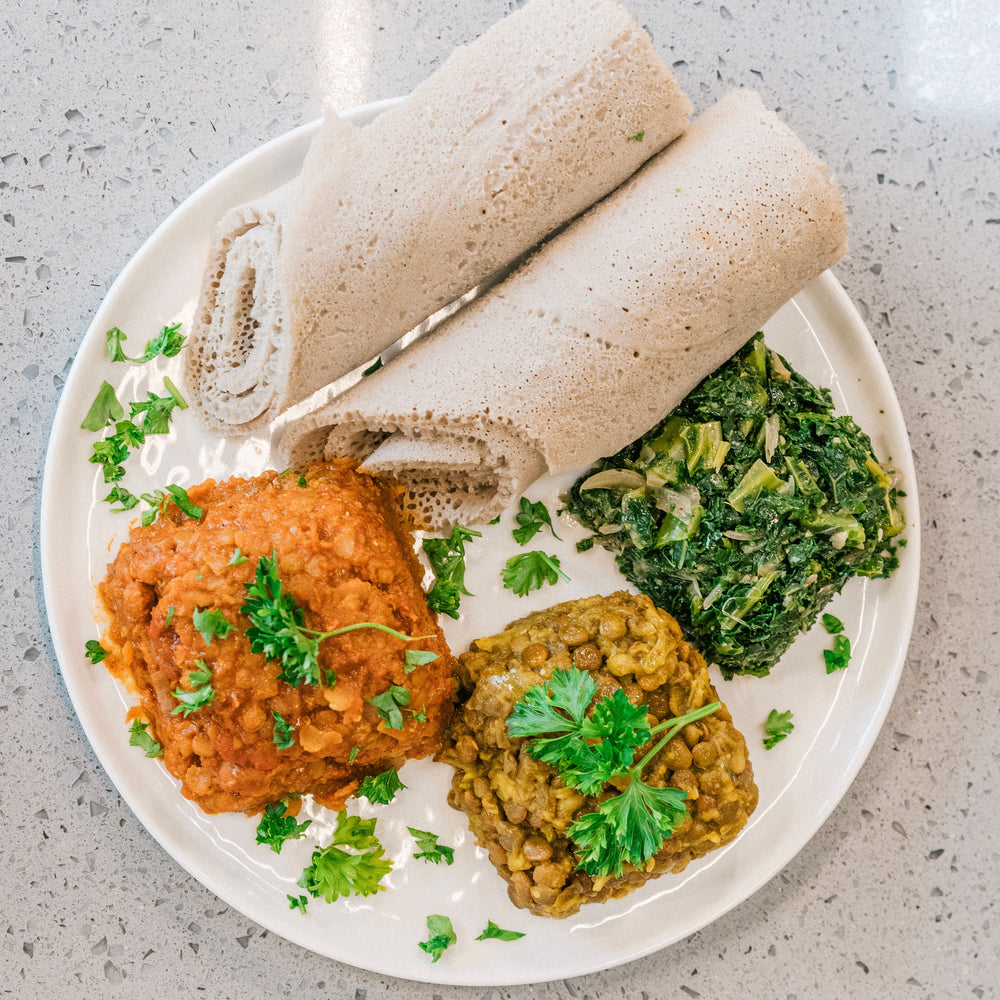
A beautifully arranged platter of traditional Ethiopian cuisine highlights the rich, comforting warmth of a meal meant to be shared in good company. Centered around spongy, rolled injera alongside flavorful, aromatic stews and vibrant greens, it invites us to slow down and savor the artistry of communal dining. This vibrant dish serves as an inspiring celebration of culinary heritage, bringing people together through a timeless and nourishing cultural experience.
Credits: DEANE BAYAS
Local cuisine study in Lalibela, Ethiopia

☕︎ Local Flavor

Ben Abeba Restaurant

Rating: 4.8★ | Price: $$ | Coordinates: 12.0317° N, 39.0472° E

Occupy a table on the most architecturally extraordinary restaurant terrace in Ethiopia — a spider-web of cantilevered platforms suspended above the Lalibela valley on organic concrete columns designed by a Scottish-Ethiopian partnership, with views across the highland plateau to the church complex below. The kitchen produces a menu of Ethiopian and international cuisine that treats the highland ingredient palette — teff injera, berbere, misir wot, tibs, and the honey wines of the Amhara region — as primary source material. The building is as significant as the food: a structure that functions as a living argument for contemporary Ethiopian architecture's capacity to inhabit the landscape without imitating or deferring to it.

View Entry Details

Unique Restaurant

Rating: 4.7★ | Price: $ | Coordinates: 12.0289° N, 39.0445° E

Enter the most reliable and most locally embedded restaurant in Lalibela town, where the kitchen produces the full taxonomy of the Amhara highland diet — injera with misir wot, tibs, shiro, and the slow-cooked lamb of the highland pastoral tradition — in a straightforward dining room that serves pilgrims, priests, and travellers without distinction. The honey wine — tej — is produced from the local Amhara bee-keeping tradition and served in the berele flask that is the standard vessel for tej throughout Ethiopia. Unique is the essential calibration point for understanding what people in Lalibela actually eat, before the international hotel menus reinterpret it.

View Entry Details

Seven Olives Hotel Restaurant

Rating: 4.6★ | Price: $$ | Coordinates: 12.0312° N, 39.0451° E

Dine on the rooftop terrace of the Seven Olives Hotel, where the dining room faces the highland plateau and the kitchen operates as a dependable archive of both Ethiopian and international cuisine for travellers arriving after long days in the rock-hewn churches. The kitfo — raw minced beef seasoned with mitmita and niter kibbeh — is the finest preparation of Ethiopia's most distinctive meat dish available in Lalibela, and the tej selection documents the variation in sweetness and fermentation across the Amhara honey wine tradition. The rooftop is the best vantage point in the town center for the quality of the highland sky at dusk.

View Entry Details

Tukul Village: Traditional Coffee Ceremony

Rating: 4.9★ | Price: $ | Coordinates: 12.0298° N, 39.0461° E

Participate in the Ethiopian coffee ceremony — the most elaborate and socially significant coffee ritual in the world, conducted in the country where the coffee plant was first identified and where the preparation of buna has been the primary format of hospitality for over a thousand years. The ceremony involves three successive rounds of brewing from the same roasted beans, served in small ceramic cups with popcorn or bread, and conducted over approximately forty-five minutes in a sequence that encodes the precise social grammar of Ethiopian welcome. In Lalibela, where the pilgrimage economy intersects with the highland domestic culture, the coffee ceremony is the most direct entry point into the daily life of the town.

View Entry Details

🛌︎ Boutique Stays

Mountain View Hotel

Rating: 4.7★ | Price: $$$ | Coordinates: 12.0334° N, 39.0478° E

Inhabit the most scenically positioned hotel in Lalibela, where the rooms face the highland valley and the church complex is visible on the plateau below. The Mountain View is the best-positioned property in the town for understanding the geography of the Lalibela basin — the way the churches are distributed across the plateau in two groups connected by a ceremonial tunnel, and the way the highland settlement has grown around the sacred precinct over eight centuries. The rooftop bar is the finest vantage point for the quality of the Ethiopian Highlands light at golden hour, when the red volcanic rock of the church roofs catches the last direct sun and the plateau turns from terracotta to deep amber.

View Entry Details

Tukul Village Hotel

Rating: 4.8★ | Price: $$$ | Coordinates: 12.0298° N, 39.0461° E

Settle into a collection of individual tukul circular huts arranged on the highland plateau above Lalibela town, where the architecture references the traditional Amhara highland dwelling form and the views extend across the valley to the Abuna Yosef massif. The property is the most contextually embedded accommodation in Lalibela — its architecture is a direct quotation of the vernacular building tradition that has surrounded the rock-hewn churches for eight hundred years, and staying here is the closest a visitor can come to understanding the physical experience of the highland monastic community that built and maintained them. The coffee ceremonies at dusk are the finest in the town.

View Entry Details

Hudad Highland Lodge

Rating: 4.9★ | Price: $$$$ | Coordinates: 12.0589° N, 39.0234° E

Ascend by mule for three hours from Lalibela to the most remote and scenically extraordinary lodge in the Ethiopian Highlands — a collection of stone-and-thatch shelters on the Hudad escarpment at 3,600 meters, where the views extend across the entire Lalibela basin and on clear mornings to the Simien Mountains one hundred kilometers to the northwest. The Hudad is managed by the local highland community and operates as a conservation and livelihood project for the families of the Hudad plateau, providing the most direct encounter with the subsistence agriculture and pastoral ecology of the Ethiopian Highlands available to a visitor. The night sky at 3,600 meters, without light pollution in any direction, is among the finest in the world.

View Entry Details

Stay Lalibela Guesthouse

Rating: 4.6★ | Price: $$ | Coordinates: 12.0267° N, 39.0423° E

Occupy a well-run guesthouse in the town center, within walking distance of both church groups and the central market, where the rooms are clean and the rooftop provides a genuine vantage point for the highland light and the daily rhythm of a pilgrimage town. Stay Lalibela is the most practical base for visitors who want to be embedded in the town rather than insulated from it — within earshot of the morning prayers from the church complex, within walking distance of the market stalls, and within reach of the independent restaurant scene that has developed around the pilgrimage economy. It functions as the most honest accommodation option in Lalibela for travelers who want context rather than comfort.

View Entry Details

📍︎ Field Study

Bet Giyorgis and the Rock-Hewn Churches: Guided Tour

Rating: 4.9★ | Price: $$ | Coordinates: 12.0317° N, 39.0472° E

Descend into the excavated precincts of the eleven rock-hewn churches with a licensed guide who decodes the architectural logic of a building programme that is still not fully understood — how twelfth-century artisans with iron chisels excavated eleven structurally complex buildings from solid volcanic tuff to a precision that twentieth-century engineers have struggled to replicate. The guide explains the iconographic programme of each church, the function of the ceremonial tunnels that connect the two groups, and the ongoing liturgical life of the complex where Ethiopian Orthodox priests conduct daily services in buildings that have been in continuous use for eight hundred years. Bet Giyorgis is the last stop — approached through a narrow channel in the rock that opens suddenly onto the cruciform plan from twelve meters above — and it is the most powerful architectural experience available in Africa.

View Entry Details

Timkat Festival: Ethiopian Epiphany Pilgrimage

Rating: 4.9★ | Price: $$$ | Coordinates: 12.0317° N, 39.0472° E

Attend the Timkat celebration in Lalibela — the Ethiopian Orthodox commemoration of the Epiphany, held on January 19th and 20th, and the largest religious gathering in the Ethiopian Highlands. The tabot — a replica of the Ark of the Covenant — is carried from each of the eleven churches in a candlelit procession the evening before, wrapped in embroidered cloth and shielded by ceremonial umbrellas, and the priests celebrate an all-night vigil before the blessing of the waters at dawn. Timkat in Lalibela is the most visually and spiritually concentrated religious ceremony in Africa — a direct continuation of a liturgical tradition that has been performed in these churches since the thirteenth century and that draws tens of thousands of pilgrims from across Ethiopia.

View Entry Details

Asheten Maryam Monastery: Highland Trek

Rating: 4.7★ | Price: $$ | Coordinates: 12.0421° N, 39.0389° E

Ascend by foot or mule to the Asheten Maryam monastery at 3,150 meters above sea level, one of the oldest functioning monasteries in Ethiopia, where the rock-hewn church preserves an extraordinary collection of illuminated manuscripts, processional crosses, and ceremonial crowns that document the continuous liturgical life of the Ethiopian Orthodox tradition from the thirteenth century to the present. The ascent takes approximately one hour and passes through the highland agricultural landscape of teff fields, eucalyptus groves, and Amhara farmsteads that surround the church complex. The view from the monastery ridge — across the Lalibela basin to the Abuna Yosef massif — is the finest landscape panorama in the region.

View Entry Details

Lalibela Market and Village Walk

Rating: 4.6★ | Price: $ | Coordinates: 12.0289° N, 39.0445° E

Walk through the Saturday market of Lalibela town with a local guide who decodes the economic geography of a highland pilgrimage settlement — the teff, barley, and sorghum from the surrounding farms, the honey and tej from the highland beekeeping tradition, the spices and incense used in the church ceremonies, and the cross-sellers who produce the hand-carved processional crosses and illuminated manuscripts sold to pilgrims and visitors. The market is the most direct encounter with the daily economic life of the Amhara Highlands and the most useful calibration point for understanding the relationship between the pilgrimage economy of the churches and the agricultural subsistence economy of the surrounding villages.

View Entry Details

Typography

Archival Note: A formal technical study of Lalibela, Ethiopia, archiving the coordinates, elevation, and environmental data that define the region. This data serves as a vital record for our ongoing global field study, providing the technical foundation behind every atmospheric detail captured in our visual work.

Botanical and pigment specimen study for Lalibela, Ethiopia Colors of Lalibela, Ethiopia
Coordinates
12.0317° N, 39.0472° E — Ethiopian Highlands plateau, Amhara Region, north-central Ethiopia
Historical Epoch
King Lalibela commissions the rock-hewn churches around 1181 to 1221 CE. UNESCO World Heritage inscription in 1978.
Elevation
2,630 m / 8,629 ft. High on the Lasta massif of the Ethiopian Highlands, above the Lalibela basin below.
Atmosphere
Highland Subtropical (Cwb). Dry season October through May with clear skies, rainy season June through September, Timkat pilgrimage in January.
Observation Hour
07:00 AM. Direct morning light enters the excavated church trenches from the east, illuminating the red volcanic tuff for about two hours.
Primary Pigment
Volcanic Tuff Terracotta (#B5522A) and Ethiopian Highlands Cobalt (#2A5AB5)
Best Time to Visit
October through January. Clear highland skies and the finest light on the volcanic tuff. Timkat on January 19 to 20 is the peak experience.
Avoid Visiting
July through August. Rainy season floods the church trenches, restricts interior access and brings persistent cloud cover.

Behind The Scenes

Nathan

Note from the Founder

Hey, did you know this fun fact about Lalibela, Ethiopia? The eleven rock-hewn churches of Lalibela were carved from a single plateau of volcanic tuff with an estimated 40,000 cubic meters of rock removed entirely by hand in the 12th and 13th centuries, a feat of human determination that still defies full explanation!
Thank you for exploring the Lalibela, Ethiopia series with us. We hope these notes have inspired you to add this incredible destination to your own passport—we are so glad you're here. — Nathan

Some of our Favorites