

The Real Lalibela
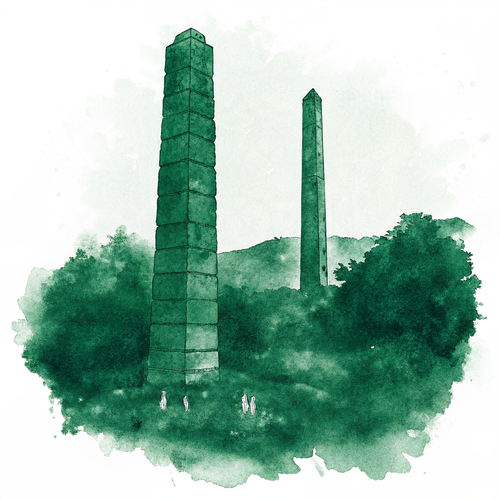
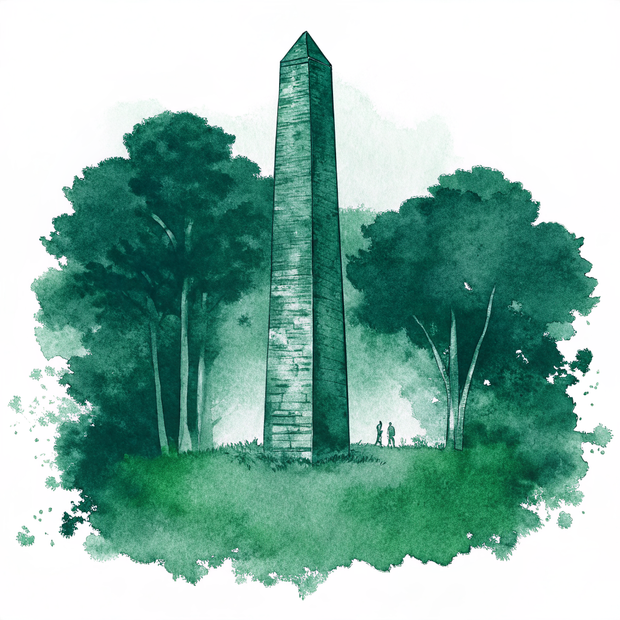
More than a shop, each page is an immersive guide to the real Lalibela: local tips and tricks, the language you'll hear, where to eat, stay, and explore, the lay of the land, and a fun fact to carry home — every canvas mapped to the very spot it was painted.
LALIBELA, ETHIOPIA | "The New Jerusalem of Africa"
Lalibela is the most extraordinary sacred site in Africa, a complex of eleven monolithic churches carved directly into the red volcanic rock of the Ethiopian Highlands in the twelfth and thirteenth centuries, each one excavated from a single piece of living stone by artisans working downward from the surface into the earth. The churches were commissioned by King Lalibela of the Zagwe dynasty, who according to tradition was instructed in a dream to build a New Jerusalem in the highlands of Ethiopia after the fall of the original city. Bet Giyorgis, the Church of Saint George, is the most perfectly realized of the eleven, a cruciform building carved to a depth of twelve meters, its roof flush with the surrounding plateau surface, visible from above as a geometric abstraction of extraordinary precision cut into the red earth. The entire complex is a UNESCO World Heritage Site and remains an active pilgrimage destination for Ethiopian Orthodox Christians, who celebrate Timkat, the Ethiopian Epiphany, here every January in ceremonies that have continued without interruption for eight hundred years.
The colors are specific and irreducible: the deep terracotta-to-ochre of the volcanic tuff in direct sunlight, the warm amber of the same stone at golden hour when the shadows fall into the excavated trenches, the white of the priests's ceremonial shemma cloth against the red rock, and the deep cobalt of the Ethiopian Highlands sky at 2,630 meters, a palette that exists nowhere else in Africa and that changes entirely between the rainy season green and the dry season clarity of the plateau.
We hope you love getting lost in Lalibela through the art above — and that one of these canvases finds a home on your wall. Happy travels, from all of us at The Painted Passport.