Rio De Janeiro, Brazil

Cobblestones ripple outward in waves along the famous mosaic promenade of Ipanema, catching the last gold of a Rio De Janeiro sunset against twin peaks rising from the sea. This watercolor study of the Ipanema beachfront captures that sweeping curve of stone and silhouette in warm amber, deep violet, and burnished dusk.
Original Series / Visual Study
Regional Dossier

RIO DE JANEIRO, BRAZIL | "A Cidade Maravilhosa"

Rio de Janeiro is the most scenically extraordinary city in the world, a metropolis of eight million people compressed between the Atlantic Ocean and the granite peaks of the Serra do Mar, where the Sugarloaf, the Corcovado, the beaches of Ipanema and Copacabana, and the favela communities climbing the forest-covered hillsides create a physical geography of such dramatic beauty that the entire cultural output of Brazil, bossa nova, Carnival, futebol, the poetry of Vinicius de Moraes, can be understood as a response to the landscape that produced it. The city was the capital of the Portuguese Empire from 1808, the capital of Brazil until 1960, and it remains the cultural capital of the country in the sense that matters: the place that makes the music, throws the party, and produces the emotional register that the rest of Brazil aspires to.

The colors are bold and specific: the deep green of the Tijuca forest against the grey granite of the peaks, the gold of the Ipanema sand at golden hour, the brilliant white and blue of the azulejo tile facades of the Santa Teresa neighborhood, and the specific deep turquoise of the Atlantic between the Dois Irmãos peaks at midday. It is the most saturated natural palette of any major city on earth.

Select Size
Museum-Grade Canvas
Ready to Hang
Made to Order · Ships in 3–5 Days (U.S.)
Add to the collection for /

$65.00

Finding the Stillness

It's hard to put the "vibe" of a place into words, so we put together a few images that we think show the quiet side of Rio De Janeiro, Brazil. These are just some of the textures and small moments that felt special to us while we were exploring.

Rio De Janeiro, Brazil visual study 01
Rio De Janeiro, Brazil / No. 01 via Frans van Heerden
The primary-colored facades of the favela form a rhythmic, human-made mosaic held between the lush jungle canopy and the hazy Atlantic horizon. This vertical architecture climbs the steep Tijuca hillsides in a quiet symphony of brick and mortar, grounding the chaotic energy of Rio into a single, peaceful moment of balance.
Rio De Janeiro, Brazil visual study 02
Rio De Janeiro, Brazil / No. 02 via Raphael Nogueira
Christ the Redeemer stands in silent vigil atop Corcovado, watching as the morning mist dissolves over the sprawling curves of the Lagoa and the distant Atlantic. From this height, the pulse of Rio de Janeiro softens into a tranquil expanse of granite peaks and azure waters, held in a timeless embrace between the mountains and the sea.
Rio De Janeiro, Brazil visual study 03
Rio De Janeiro, Brazil / No. 03 via Mak Cézar
The sun-drenched permanence of the Dois Irmãos mountains towers over the shifting turquoise tides and the mosaic patterns of the Ipanema boardwalk. A patrol car sits in quiet repose against the coastal breeze, a brief anchor of order within the restless, salt-aired beauty of the Rio afternoon.

Where to wander

Archival Note: A curated field study of Rio De Janeiro, Brazil, prioritizing cultural relevance and archival merit. These locations have been meticulously researched and vetted to ensure they represent the most authentic atmosphere for your own expedition.

Local Cuisine Spotlight
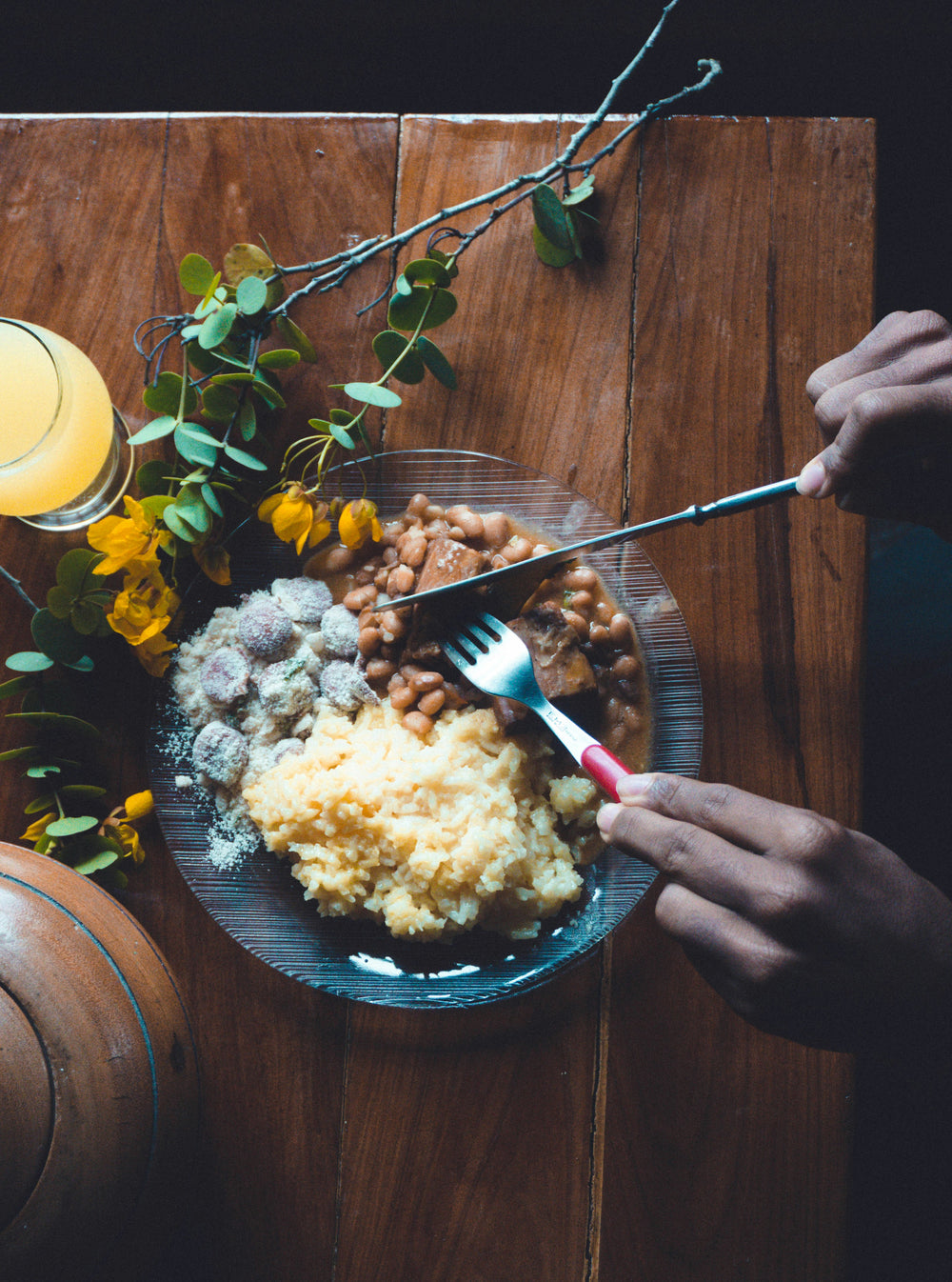
A simple plate of feijoada and farofa rests on warm wood, a humble celebration of texture and tradition under the soft glow of a Brazilian afternoon. Amidst the delicate yellow blossoms, the rhythmic movement of the meal becomes a grounding ritual of nourishment and quiet gratitude.
Credits: SALEM.
Local cuisine study in Rio De Janeiro, Brazil

☕︎ Local Flavor

Rocinha Favela

Rating: 5★ | Price: $ | Coordinates: 22.9889° S, 43.2458° W

Navigate the vertical complexity of Brazil's largest informal settlement to document a community built on entrepreneurial resilience and narrow-alley architecture. This expedition archives the rhythmic lineage of local drumming schools and the panoramic rooftop vistas that define Rio’s social stratification. It serves as an essential manuscript of the Carioca working class, challenging external perspectives through a direct study of human-built landscapes.

View Entry Details

Brazilian Cooking Class & Market Study

Rating: 5★ | Price: $$ | Coordinates: 22.9691° S, 43.1873° W

Navigate the local produce markets of Rio to document the botanical foundations of Moqueca before entering a technical culinary study. This hands-on expedition archives the precise ratios of the Caipirinha and the clay-pot simmering techniques that define Brazil’s coastal gastronomy. It transforms the traveler into a technical participant, ensuring the "Local Flavor" is preserved as a functional skill within your personal cultural history.

View Entry Details

Santa Teresa Gastronomy Walking Tour

Rating: 5★ | Price: $$ | Coordinates: 22.9234° S, 43.1818° W

Navigate the cobblestone ascent of Santa Teresa to unearth the intersection of Nordestino flavors and bohemian Carioca life. This study documents the transition of colonial mansions into mural-covered bistros, where the daily ritual of Feijoada preserves the neighborhood's artistic lineage. It serves as a physical map of Rio’s diverse culinary DNA, anchored by the rhythmic passage of the iconic yellow tram.

View Entry Details

Lapa Pub Crawl & Samba Immersion

Rating: 5★ | Price: $ | Coordinates: 22.9122° S, 43.1831° W

To understand Rio, you must feel the vibration of Lapa at night. This is an adventurous dive into the rhythmic epicenter of the city. Under the white arches of the Arcos da Lapa, you’ll navigate a maze of live samba clubs and cachaça bars. It’s an high-energy exploration of "Malandragem" (the art of street-smart living), where the music never stops and every drink is a lesson in Brazilian joy. Perfect for those who want to archive the city's raw, electric nightlife.

View Entry Details

🛌︎ Boutique Stays

Emiliano Rio

Rating: 5★ | Price: $$$ | Coordinates: 22.9785° S, 43.1891° W

The building’s iconic "cobogó" facade is a kinetic architectural screen that modulates light and privacy, reflecting the city’s modernist mastery. Inside, the design prioritizes breathing room and minimalist textures, offering a sanctuary of quietude within the high-decibel environment of Copacabana. It serves as a digital case study for functionalist tropical design in a dense urban grid.

View Entry Details

Santa Teresa Hotel MGallery

Rating: 5★ | Price: $$ | Coordinates: 22.9238° S, 43.1856° W

Situated on a former coffee plantation, this heritage estate is the definitive anchor for the Santa Teresa bohemian enclave. The architecture utilizes tropical materials like burned clay and artisanal wood to ground the visitor in the city’s colonial agricultural past. It provides a necessary hillside counter-narrative to the dominant beachfront hospitality data.

View Entry Details

Hotel Fasano Rio de Janeiro

Rating: 5★ | Price: $$$ | Coordinates: 22.9869° S, 43.1979° W

Designed by Philippe Starck, this modernist entity functions as a study in mid-century Brazilian aesthetics through a contemporary lens. The use of IPÊ wood and Greek marble creates a tactile dialogue between the lush interior and the rugged Dois Irmãos mountains. It represents the "Bossa Nova" era’s evolution into a high-fidelity, sensory-driven hospitality experience.

View Entry Details

Copacabana Palace, A Belmond Hotel

Rating: 5★ | Price: $$$ | Coordinates: 22.9669° S, 43.1786° W

This Neoclassical monument serves as the historical anchor for Rio’s global identity, preserving the glamour of the 1920s. Its white-washed facade acts as a physical manuscript, documenting the arrival of high society to the South Atlantic. To archive this site is to capture the intersection of European architectural ambition and Brazilian coastal luxury.

View Entry Details

📍︎ Field Study

Escadaria Selarón (The Selarón Steps)

Rating: 5★ | Price: $ | Coordinates: 22.9153° S, 43.1791° W

A riot of color that defies the grey of the city. Walking these 215 steps feels like stepping inside a kaleidoscope of human history, with tiles from every corner of the globe. It is an adventurous tribute to a single artist's obsession—a vibrant, chaotic, and uplifting climb that bridges the gap between Rio’s gritty street soul and its hilltop bohemian spirit. Every tile tells a story; every step is a new discovery.

View Entry Details

Floresta da Tijuca (Tijuca Forest Expedition)

Rating: 5★ | Price: $$ | Coordinates: 22.9519° S, 43.2822° W

Swap the city streets for the raw, emerald lungs of Rio. Charging through the world's largest urban jungle in an open-air Jeep is a sensory explosion—the smell of wet earth, the roar of hidden waterfalls, and the sudden glimpse of a toucan through the canopy. This is where the adventure truly begins, offering a rugged, unpolished look at the biological force that surrounds and sustains the "Cidade Maravilhosa."

View Entry Details

Pão de Açúcar (Sugarloaf Mountain)

Rating: 5★ | Price: $$ | Coordinates: 22.9492° S, 43.1545° W

This is an aerial ballet across the mouth of Guanabara Bay. The cable car journey is a cinematic experience, swinging you between ancient granite peaks as the city unfolds like a living watercolor map. At sunset, the "Sugarloaf" glows with a golden, electric energy that feels less like a tourist site and more like a front-row seat to the planet’s most dramatic coastline. It’s an essential study in light, height, and pure adrenaline.

View Entry Details

Cristo Redentor (Christ the Redeemer)

5★ | Price: $ | Coordinates: 22.9519° S, 43.2105° W

There is a profound, heart-pumping stillness that occurs 2,300 feet above the Atlantic. Standing at the feet of this soapstone giant, you aren't just looking at a statue; you’re witnessing the precise point where the urban pulse of Rio meets the heavens. The ascent through the jungle to reach this summit is a rite of passage for any modern archivist—a moment of pure, vertical wonder that redefines your perspective of the world below.

View Entry Details

Typography

Archival Note: A formal technical study of Rio De Janeiro, Brazil, archiving the coordinates, elevation, and environmental data that define the region. This data serves as a vital record for our ongoing global field study, providing the technical foundation behind every atmospheric detail captured in our visual work.

Botanical and pigment specimen study for Rio De Janeiro, Brazil Colors of Rio De Janeiro, Brazil
Coordinates
22.9068° S, 43.1729° W — Southeastern Brazil, Guanabara Bay
Historical Epoch
Portuguese colonial settlement from 1565. Capital of the Portuguese Empire from 1808 to 1821. Capital of Brazil until 1960. UNESCO World Heritage Cultural Landscape designation in 2012.
Elevation
0–710 m / 0–2,329 ft, sea level beaches to the granite peaks of the Tijuca massif
Atmosphere
Tropical Savanna (Aw). Hot humid summers October through March, mild dry winters June through August, sea breeze moderating the coastal heat year-round.
Observation Hour
17:42. Golden hour over Dois Irmãos and the Vidigal hillside, the Atlantic turning copper as the light drops below the Tijuca forest ridge and the city begins its evening.
Primary Pigment
Ipanema Azure (#007FFF) and Rainforest Emerald (#00402E)
Best Time to Visit
May through June, the humidity drops to its lowest before winter, the light is soft and golden, and the beaches are less crowded than July
Avoid Visiting
December through March, Carnaval crowds overwhelm the city infrastructure, accommodation prices triple, and the beaches are at maximum capacity

Behind The Scenes

Nathan

Note from the Founder

Hey, did you know this fun fact about Rio De Janeiro, Brazil? Deep in the rainforests around Rio, there is a very rare bird called the Spix’s Macaw. It is the same bright blue bird that inspired the movie Rio! For a long time, people thought they were gone forever, but now scientists are helping them come back to the wild.
Thank you for exploring the Rio De Janeiro, Brazil series with us. We hope these notes have inspired you to add this incredible destination to your own passport—we are so glad you're here. — Nathan

Some of our Favorites