Goreé Island, Senegal

An original watercolor print from The Painted Passport archive — designed to bring the light, color, and atmosphere of your favorite destinations into your home.
Original Series / Visual Study
Regional Dossier

Goreé Island, Senegal | Where the Atlantic Holds Its Breath

Goreé sits just three kilometers off the Dakar coast, small enough to walk end to end in twenty minutes, yet so layered with history that visitors often find themselves standing still for much longer than they planned. The island carries the weight of the transatlantic slave trade in its coral-stone walls and iron-doored slave house, but it also pulses with vivid, stubborn life: bougainvillea spilling over rust-colored facades, children chasing each other down car-free lanes, fishermen hauling nets at the same shoreline their ancestors knew. Colonial Portuguese, Dutch, French, and British presences have all left their mark here, and the result is an architectural texture unlike anywhere else on the African coast. It is a place that asks you to feel deeply and look slowly.

The watercolor palette of Goreé is one of warm confrontation and quiet beauty together. Sun-bleached terracotta and burnt sienna climb the walls of merchant houses, softened by the haze of salt air into something closer to blush and ochre. The sea answers in layers of cerulean and deep teal, and the island's famous flamboyant trees throw flame-orange canopies over cobbled courtyards, making every shadow feel like a brushstroke.

Add to the collection for /

$18.00

Finding the Stillness

It's hard to put the "vibe" of a place into words, so we put together a few images that we think show the quiet side of Goreé Island, Senegal. These are the textures and small moments we've archived to capture the stillness of this corner of the world.

Goreé Island, Senegal visual study 01
Goreé Island, Senegal / No. 01 via Jules Germain Formel
The afternoon light falls soft and golden across the ochre and terracotta facades of Gorée Island, turning the old colonial buildings into something that feels almost painted rather than built. A small blue boat named *Vanessa Love* sits quietly on water so clear and turquoise it seems lit from beneath, anchored just off the island's ancient stone seawall. Palm trees lean in the warm Atlantic air, and the whole scene holds that particular stillness of a place that carries both beauty and a very heavy history.
Goreé Island, Senegal visual study 02
Goreé Island, Senegal / No. 02 via Jean Papillon
The stark black-and-white rendering transforms the House of Slaves into something both austere and haunting, its curved stone stairways framing the notorious Door of No Return with a terrible geometric elegance. A visitor standing in this courtyard would feel the weight of silence pressing down from the plastered walls, the bright patch of ocean visible through the archway serving as a cruel counterpoint to the darkness of the passage itself. The quality of light — flat, shadowless, almost clinical — strips the space of sentimentality, leaving only the cold architecture of suffering to speak for itself.
Goreé Island, Senegal visual study 03
Goreé Island, Senegal / No. 03 via Papa birame Faye
A weathered fishing boat rests at the edge of Gorée Island's waters, its peeling blue hull revealing layers of paint that speak to years of salt, sun, and sea. The Senegalese flag — green, yellow, and red with its centered star — catches the coastal breeze above coils of rough manila rope twisted around rusted iron rods. What most eyes skip past is the rope itself: its frayed, sun-bleached fibers telling a quiet story of daily labor and the hands that have knotted and unknotted it countless times against the rhythm of the Atlantic.

Where to wander

Archival Note: A curated field study of Goreé Island, Senegal, prioritizing cultural relevance and archival merit. While we haven't touched down here yet, we've meticulously vetted these locations through our global network of contributors to ensure they represent the most authentic atmosphere for your own expedition.

Local Cuisine Spotlight
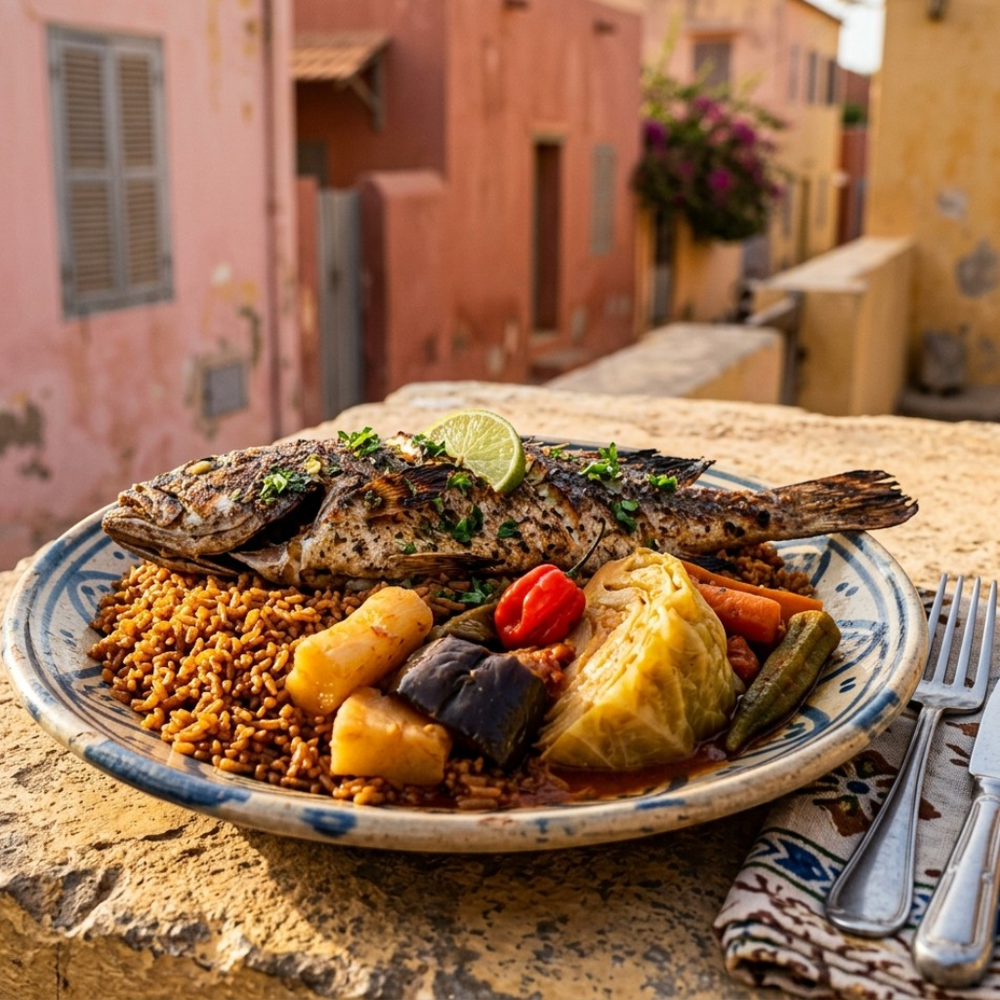
Thieboudienne reigns as Senegal's soul food, its smoky grilled whole fish resting atop saffron-stained broken rice, surrounded by tender eggplant, cassava, and stuffed cabbage. Every bite carries the Atlantic breeze of Gorée Island itself.
Credits: The Painted Passport
Local cuisine study in Goreé Island, Senegal

☕︎ Local Flavor

Restaurant Chez Dieynaba

Rating: 5* | Price: $$ | Coordinates: 14.6688° N, 17.3973° W

Dieynaba herself cooks every dish, and her thieboudienne — Senegal's beloved fish and rice — is arguably the finest on the island. The dining area spills onto a terrace shaded by a massive flamboyant tree, creating a naturally magical atmosphere. Arrive hungry and leave with the recipe for her tamarind sauce firmly memorized.

View Entry Details

Le Cachot Café & Kitchen

Rating: 4* | Price: $$ | Coordinates: 14.6693° N, 17.3966° W

Set inside a beautifully repurposed stone building near the slave house, this café serves thoughtful food that honors the island's spirit of resilience. Fresh grilled barracuda with attiéké coconut couscous is the dish to order without hesitation. The cold bissap hibiscus juice here is simply the most refreshing thing you will drink all trip.

View Entry Details

Terrasse de l'Île

Rating: 4* | Price: $$$ | Coordinates: 14.6701° N, 17.3977° W

Perched on a breezy upper terrace with panoramic ocean views, this restaurant blends French technique with bold West African ingredients beautifully. The yassa chicken — marinated in caramelized onions and lemon — arrives sizzling and deeply fragrant at your table. It is the kind of meal that makes you rebook your ferry for a later departure.

View Entry Details

Snack Bar Goréen

Rating: 4* | Price: $ | Coordinates: 14.6679° N, 17.3969° W

This tiny open-air spot near the beach is where locals gather for affordable, honest, soul-warming food throughout the day. The fish sandwiches on freshly baked rolls disappear quickly, so arriving before noon is strongly advised. It is the perfect place to slow down, share a table with strangers, and simply absorb the rhythm of island life.

View Entry Details

🛌︎ Boutique Stays

Hostellerie du Chevalier de Boufflers

Rating: 4* | Price: $$$ | Coordinates: 14.6690° N, 17.3975° W

This colonial-era guesthouse wraps guests in history with its whitewashed walls and bougainvillea-draped courtyards. Rooms open onto terraces where the Atlantic breeze keeps evenings wonderfully cool. The staff treat every guest like a returning friend, offering insider tips on the island's quieter corners.

View Entry Details

Maison du Gouverneur Guesthouse

Rating: 4* | Price: $$$ | Coordinates: 14.6695° N, 17.3968° W

Housed in a lovingly restored 18th-century governor's residence, this intimate guesthouse offers rooms filled with local art and handwoven textiles. Wake to sweeping views of Dakar's skyline shimmering across the water. Evenings here feel suspended in time, with candlelit dinners served in the open courtyard.

View Entry Details

Auberge Keur Beer

Rating: 3* | Price: $$ | Coordinates: 14.6682° N, 17.3971° W

This cheerful family-run auberge sits steps from the ferry landing, making arrivals and departures completely stress-free. Colorful hand-painted murals decorate every wall, giving the place a joyful, distinctly Senegalese character. The owners prepare a generous breakfast each morning featuring fresh mango, local bread, and strong café Touba.

View Entry Details

Villa Goréenne Boutique Rooms

Rating: 4* | Price: $$$ | Coordinates: 14.6700° N, 17.3980° W

Tucked into a narrow cobblestone lane, this boutique property offers just six rooms, each uniquely decorated with vintage maps and artisan ceramics. The rooftop terrace is an absolute gem, perfect for watching fishing boats drift past at golden hour. Hosts here are passionate storytellers who bring the island's layered history vividly to life.

View Entry Details

📍︎ Field Study

Maison des Esclaves (House of Slaves)

Rating: 5* | Price: $ | Coordinates: 14.6692° N, 17.3972° W

This haunting pink colonial building stands as one of the most emotionally powerful memorials in all of Africa, drawing visitors into a profound silence. The infamous Door of No Return opens directly onto the ocean, and standing before it leaves a mark that no photograph can fully capture. Guided tours led by local historians add essential context and deeply personal storytelling.

View Entry Details

IFAN Historical Museum

Rating: 4* | Price: $ | Coordinates: 14.6697° N, 17.3974° W

Housed in a graceful colonial structure, this small but richly curated museum traces Goréé's remarkable evolution from trading post to UNESCO World Heritage Site. Artifacts, maps, and photographs illuminate centuries of cultural exchange across the Atlantic world in surprising detail. The knowledgeable curators are always eager to expand on any exhibit for genuinely curious visitors.

View Entry Details

Goréé Island Beachfront & Fishing Village

Rating: 5* | Price: Free | Coordinates: 14.6676° N, 17.3965° W

The island's small sandy beach on the northern end offers a gentle contrast to the weight of its history, with children splashing and fishermen mending colorful pirogues. Watching the boats head out at dawn or return at dusk is one of those quietly perfect travel moments that stay with you for years. Striking up a conversation with the fishermen often leads to impromptu tours and unexpected friendships.

View Entry Details

Église Saint-Charles Borromée

Rating: 4* | Price: Free | Coordinates: 14.6699° N, 17.3970° W

This centuries-old Catholic church stands as a striking symbol of the complex spiritual and colonial layers woven into Goréé's identity. Its thick stone walls keep the interior cool and hushed even on the hottest afternoons, inviting quiet reflection. Sunday morning mass draws islanders in vibrant traditional dress, filling the space with joyful singing that echoes beautifully across the square.

View Entry Details

Typography

Archival Note: A formal technical study of Goreé Island, Senegal—archiving the coordinates, elevation, and environmental data that define the region. This data serves as a vital record for our ongoing global field study, allowing us to reconstruct the regional atmosphere with archival precision before our physical arrival.

Botanical and pigment specimen study for Goreé Island, Senegal Colors of Goreé Island, Senegal
Coordinates
14.6692° N, 17.3972° W — Goreé Island, situated in the Atlantic Ocean approximately 3 km southeast of Dakar, Senegal
Historical Epoch
Goreé served as a key node in the transatlantic slave trade from the 15th through the 19th century under successive European colonial powers. The island was designated a UNESCO World Heritage Site in 1978 in recognition of this painful and essential history.
Elevation
0-34 m / 0-112 ft - Goreé is a low-lying island with a modest rocky ridge at its southern end and flat harborside terrain at its northern edge
Atmosphere
BSh - Hot Semi-Arid. Goreé enjoys a dry, breezy season from November to May with Atlantic trade winds keeping coastal heat gentle and skies luminously clear.
Observation Hour
07:00 - The early morning hour bathes the island's terracotta facades in a warm amber glow before ferry crowds arrive. Shadows stay long and the harbor shimmers without haze.
Primary Pigment
Terracotta Blush (#C4714A) and Atlantic Teal (#3A7D8C)
Best Time to Visit
November through February - dry season brings cooling trade winds, clear Atlantic light, and comfortable temperatures ideal for walking the island and open-air dining.
Avoid Visiting
July through September - peak of the humid rainy season brings heavy downpours, thick haze, and oppressive heat that limits comfortable exploration.

Behind The Scenes

Nathan

Note from the Founder

Hey, did you know this fun fact about Goreé Island, Senegal? Goreé Island has no cars, no motorbikes, and no paved roads in the modern sense. Every street is a footpath, every corner is framed by flowering vines, and the loudest sound most mornings is the Atlantic wind moving through the flamboyant trees.
Thank you for exploring the Goreé Island, Senegal series with us. We hope these notes have inspired you to add this incredible destination to your own passport—we are so glad you're here. — Nathan

Some of our Favorites