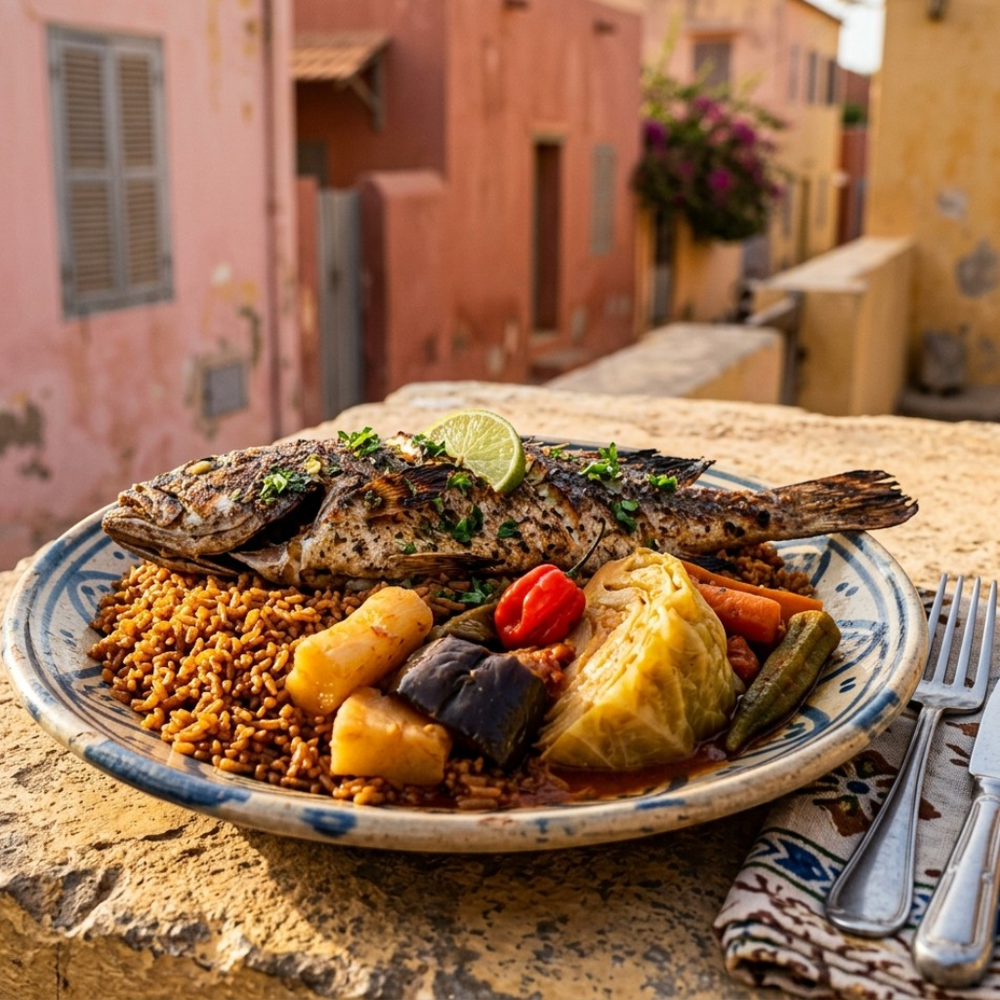
Goreé Island, Senegal | Where the Atlantic Holds Its Breath
Goreé sits just three kilometers off the Dakar coast, small enough to walk end to end in twenty minutes, yet so layered with history that visitors often find themselves standing still for much longer than they planned. The island carries the weight of the transatlantic slave trade in its coral-stone walls and iron-doored slave house, but it also pulses with vivid, stubborn life: bougainvillea spilling over rust-colored facades, children chasing each other down car-free lanes, fishermen hauling nets at the same shoreline their ancestors knew. Colonial Portuguese, Dutch, French, and British presences have all left their mark here, and the result is an architectural texture unlike anywhere else on the African coast. It is a place that asks you to feel deeply and look slowly.
The watercolor palette of Goreé is one of warm confrontation and quiet beauty together. Sun-bleached terracotta and burnt sienna climb the walls of merchant houses, softened by the haze of salt air into something closer to blush and ochre. The sea answers in layers of cerulean and deep teal, and the island's famous flamboyant trees throw flame-orange canopies over cobbled courtyards, making every shadow feel like a brushstroke.