Angkor Wat, Cambodia

An original watercolor print from The Painted Passport archive — designed to bring the light, color, and atmosphere of your favorite destinations into your home.
Original Series / Visual Study
Regional Dossier

ANGKOR WAT, CAMBODIA | "The City That Is a Temple"

Angkor Wat is the largest religious monument in the world, a 400-acre complex of towers, galleries, reflecting pools, and causeways built between 1113 and 1150 CE under the Khmer Emperor Suryavarman II as a state temple dedicated to Vishnu and as his funerary monument. The site is simultaneously the greatest architectural achievement of the Khmer Empire, the symbolic center of Cambodian national identity (the only country whose flag features a building), and the most impressive archaeological site in Southeast Asia. The five lotus-bud towers of the central sanctuary, rising to 65 meters above the surrounding moat, are oriented to the west, the direction of death in Hindu cosmology, and are designed to replicate the five peaks of Mount Meru, the home of the gods at the center of the Hindu universe.

The colors of Angkor Wat shift dramatically between the seasons and the hours: the deep grey of the sandstone in the monsoon mist, the warm amber of the towers at golden hour when the stone turns the color of old honey, the brilliant green of the jungle reclaiming the outer walls, and the specific deep blue of the sky that appears at the end of the dry season when the clarity of the Cambodian air at 5 AM produces the most saturated dawn available in Southeast Asia.

Add to the collection for /

$18.00

Finding the Stillness

It's hard to put the "vibe" of a place into words, so we put together a few images that we think show the quiet side of Angkor Wat, Cambodia. These are the textures and small moments we've archived to capture the stillness of this corner of the world.

Angkor Wat, Cambodia visual study 01
Angkor Wat, Cambodia / No. 01 via allPhoto Bangkok
This stunning view of Angkor Wat captures the timeless harmony between ancient stone and the vibrant life of the Cambodian landscape. As the sun illuminates the towering spires against a brilliant blue sky, it serves as a powerful reminder of human ingenuity and the enduring spirit of history. Standing before such a majestic monument, one can’t help but feel a profound sense of peace and a renewed connection to the wonders of our world.
Angkor Wat, Cambodia visual study 02
Angkor Wat, Cambodia / No. 02 via Daniel Lienert
There is something truly humbling about watching nature slowly reclaim these ancient stones, creating a beautiful dance between the past and the present. It serves as a peaceful reminder that even the most enduring structures are part of a greater, living cycle that continues to grow and thrive.
Angkor Wat, Cambodia visual study 03
Angkor Wat, Cambodia / No. 03 via Serg Alesenko
There is a quiet, heartwarming beauty in watching a monkey family share a gentle moment amidst the ruins of a bygone era. It’s an uplifting reminder that while empires may fade, the simple, peaceful bonds of family and nature continue to flourish and bring life to these sacred stones.

Where to wander

Archival Note: A curated field study of Angkor Wat, Cambodia, prioritizing cultural relevance and archival merit. These locations have been meticulously researched and vetted to ensure they represent the most authentic atmosphere for your own expedition.

Local Cuisine Spotlight
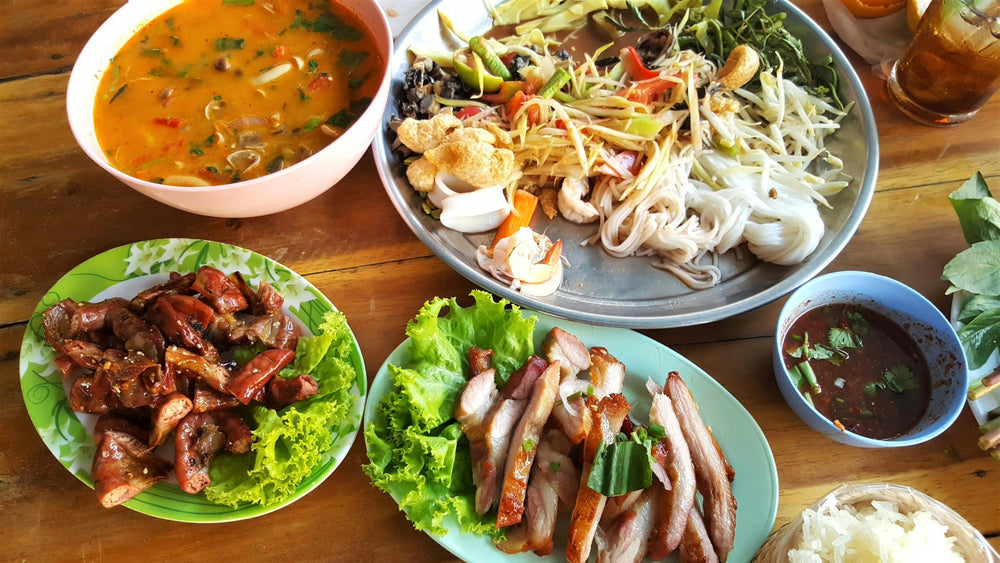
There is something incredibly joyful about a table overflowing with a vibrant, authentic feast meant for sharing. This colorful spread of Cambodian flavors is an inspiring invitation to slow down, savor every bite, and find peace in the simple pleasure of a good meal with good company.
Credits: JEROME JOME
Local cuisine study in Angkor Wat, Cambodia

☕︎ Local Flavor

Khmer Cooking Class at a Local's Home

Rating: 4.9★ | Price: $$ | Coordinates: 13.3633° N, 103.8567° E

Navigate the sensory landscape of a traditional market to source the galangal and kaffir lime essential for authentic Fish Amok. This immersive lesson takes place within a private residential setting, emphasizing the tactile preparation of lemongrass pastes on heavy stone mortars. Such an exchange preserves the culinary lineage of the Khmer people, documenting the transition of flavors from royal courts to village hearths.

View Entry Details

Phare, the Cambodian Circus

Rating: 4.8★ | Price: $$ | Coordinates: 13.3600° N, 103.8315° E

Witness an explosive fusion of theater, music, and high-stakes acrobatics that reinterprets Cambodian folklore through the lens of modern resilience. The performers utilize original soundtracks played on traditional wooden instruments, grounding the soaring physical feats in the rhythmic heritage of the soil. This social enterprise acts as a vital cultural anchor, reclaiming artistic identity and documenting the post-conflict survival of Cambodia’s creative spirit.

View Entry Details

Siem Reap: Evening Street Food Experience by Tuk-Tuk

Rating: 4.8★ | Price: $ | Coordinates: 13.3667° N, 103.8550° E

Traverse the neon-lit corridors of Siem Reap’s night markets to sample charred skewered meats and the fermented tang of Khmer noodles. Your journey moves beyond the aesthetic, focusing on the historical trade of spices and the evolution of the Cambodian palate under various regional influences. This expedition serves as a physical manuscript of daily life, documenting the living habits that sustain the city's modern identity.

View Entry Details

Sombai Rice Wine Workshop & Tasting

Rating: 4.8★ | Price: $ | Coordinates: 13.3512° N, 103.8654° E

Unearth the alchemical secrets of Cambodian rice wine, infused with indigenous fruits and spices within a traditional wooden house. The tasting involves a rigorous exploration of botanical infusions, where the heat of the spirit meets the sweetness of local mango and cinnamon. This workshop is a vital piece of the city's puzzle, preserving the ancestral craft of distillation as a form of liquid historical preservation.

View Entry Details

🛌︎ Boutique Stays

Park Hyatt Siem Reap

Rating: 4.7★ | Price: $$$$ | Coordinates: 13.3619° N, 103.8546° E

Ascend into an Art Deco masterpiece designed by Bill Bensley, where monochromatic elegance meets traditional Khmer motifs. The property features expansive courtyards and basalt-lined pools that echo the symmetry of the ancient temples located just miles away. It stands as a physical manuscript of modern luxury, documenting the transition from colonial architectural heritage to sophisticated, contemporary Khmer design.

View Entry Details

Angkor Village Hotel

Rating: 4.8★ | Price: $$$ | Coordinates: 13.3575° N, 103.8604° E

Discover a sanctuary of rosewood and teak, where traditional wooden architecture is suspended over serene lotus ponds. The rooms emphasize the cooling properties of natural materials, utilizing local craftsmanship to create a space that feels deeply connected to the forest floor. This hotel is a vital anchor for the city's identity, preserving the lineage of Khmer residential aesthetics within a rapidly modernizing urban center.

View Entry Details

Zannier Hotels Phum Baitang

Rating: 4.9★ | Price: $$$$ | Coordinates: 13.3524° N, 103.8122° E

Retreat to a meticulously reconstructed Khmer village, where 45 private villas are set amongst working rice paddies and lemongrass meadows. The design prioritizes the "luxury of simplicity," using weathered wood and woven rattan to mimic the traditional dwellings of the Cambodian countryside. This site acts as a living archive, documenting the enduring connection between the Khmer people and the agricultural rhythms of the land.

View Entry Details

Anantara Angkor Resort

Rating: 4.7★ | Price: $$$ | Coordinates: 13.3685° N, 103.8341° E

Inhabit a boutique haven defined by its intimate scale and its homage to the intricate sandstone carvings of the Angkorian era. The resort’s architecture centers around a sun-drenched courtyard, where the play of shadow and light reflects the solar alignments of the Great Temple. This property is a physical manuscript of hospitality, documenting the sophisticated marriage of international standards with deep-rooted cultural reverence.

View Entry Details

📍︎ Field Study

Private Angkor Thom & Bayon Temple Architectural Study

Rating: 4.8★ | Price: $$ | Coordinates: 13.4412° N, 103.8591° E

Navigate the colossal stone gateways of the last capital of the Khmer Empire to confront the enigmatic, smiling faces of the Bayon. You will analyze the transition from Hindu to Mahayana Buddhist iconography, focusing on the 54 towers that served as a physical manuscript of King Jayavarman VII's divine authority. This tour acts as an anchor for understanding the city's political identity, documenting the shift toward a more compassionate, centralized state.

View Entry Details

Angkor Wat Highlights and Sunrise Guided Tour

Rating: 4.9★ | Price: $$ | Coordinates: 13.4125° N, 103.8670° E

Ascend the central quincunx of Angkor Wat as the first light reveals the celestial alignment of its five sandstone towers. You will study the intricate bas-reliefs of the "Churning of the Sea of Milk," decoding the religious cosmology etched into the gray volcanic rock. This excursion is a vital piece of the historical puzzle, documenting the zenith of the Khmer Empire and preserving the spiritual lineage of the "Temple Mountain."

View Entry Details

Ta Prohm & Banteay Srei: The "Citadel of Women"

Rating: 4.9★ | Price: $$ | Coordinates: 13.4348° N, 103.8892° E

Unearth the delicate pink sandstone carvings of Banteay Srei, renowned for a level of detail that borders on the impossible for 10th-century tools. The journey continues to Ta Prohm, where the roots of giant silk-cotton trees consume the monastic corridors in a slow-motion battle between nature and basalt. This excursion documents the fragility of architectural ambition, preserving the narrative of a civilization eventually reclaimed by the jungle.

View Entry Details

Phnom Kulen Waterfall & River of a Thousand Lingas

Rating: 4.8★ | Price: $$ | Coordinates: 13.6144° N, 104.1025° E

Ascend the sacred mountain of Phnom Kulen to see where the stone for the great temples was quarried and where the Khmer Empire was born in 802 AD. You will examine the underwater carvings of lingas that sanctify the water before it flows down to the plains of Angkor, a feat of hydraulic engineering as much as religious devotion. This site is a physical manuscript of the empire's origin, documenting the vital relationship between the mountain's water and the city's survival.

View Entry Details

Typography

Archival Note: A formal technical study of Angkor Wat, Cambodia, archiving the coordinates, elevation, and environmental data that define the region. This data serves as a vital record for our ongoing global field study, providing the technical foundation behind every atmospheric detail captured in our visual work.

Botanical and pigment specimen study for Angkor Wat, Cambodia Colors of Angkor Wat, Cambodia
Coordinates
13.4125° N, 103.8670° E — Northwestern Cambodia, Siem Reap Province
Historical Epoch
Angkorian Empire from 802 CE. Angkor Wat built under Suryavarman II circa 1113–1150 CE as a Hindu temple. Converted to Theravada Buddhism in the 13th century. Abandoned after the Siamese sack of Angkor in 1431.
Elevation
20 m / 65 ft, flat Mekong lowlands of the Khmer heartland
Atmosphere
Tropical Monsoon (Am). Wet season May through October and dry season November through April. November and February are the peak months, lower humidity and temperatures in the high 20s rather than mid-30s.
Observation Hour
05:30–06:30. Sunrise silhouette of the five lotus towers reflected in the western pools, a 20-minute window before the crowd assembles. Arrival before 05:00 is standard to secure a position at the pool edge.
Primary Pigment
Hematite Red (#8B0000) and Sun-Kissed Sandstone (#D2B48C)
Best Time to Visit
November through March, the cool dry season makes the jungle temples walkable, the moat reflections are clear, and the sunrise is at its most dramatic
Avoid Visiting
June through September, the monsoon brings 35°C+ heat with extreme humidity, the paths flood, and the moat reflections are disturbed by rain

Behind The Scenes

Nathan

Note from the Founder

Hey, did you know this fun fact about Angkor Wat, Cambodia? Angkor Wat is so massive and central to the national identity that it is the only building in the world to appear on a country's national flag!
Thank you for exploring the Angkor Wat, Cambodia series with us. We hope these notes have inspired you to add this incredible destination to your own passport—we are so glad you're here. — Nathan

Some of our Favorites