



The Real Angkor Wat
More than a shop, each page is an immersive guide to the real Angkor Wat: local tips and tricks, the language you'll hear, where to eat, stay, and explore, the lay of the land, and a fun fact to carry home — every canvas mapped to the very spot it was painted.
ANGKOR WAT, CAMBODIA | "The City That Is a Temple"
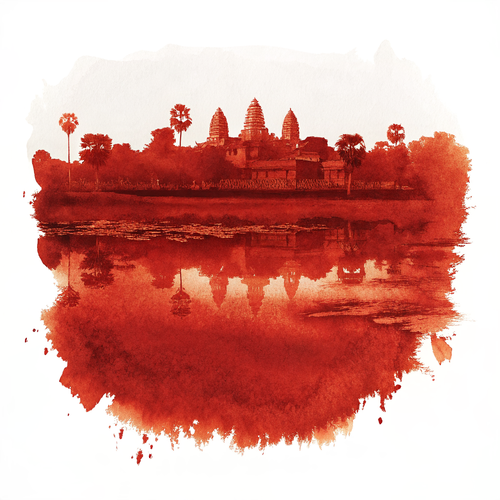
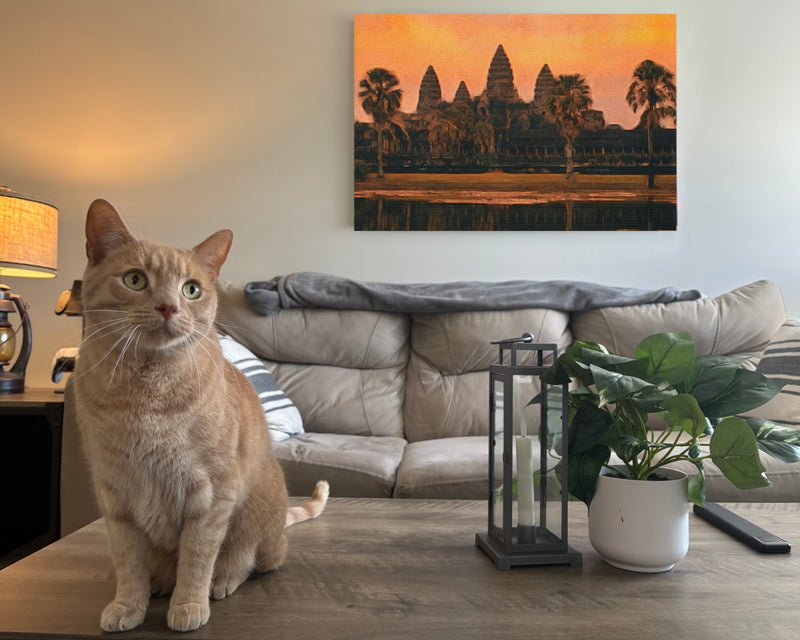
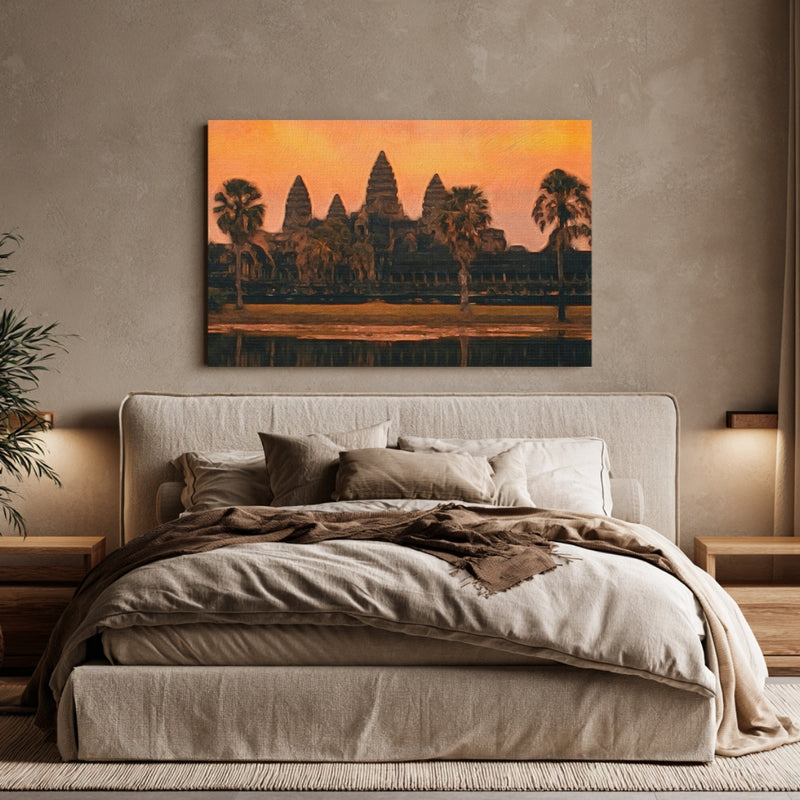
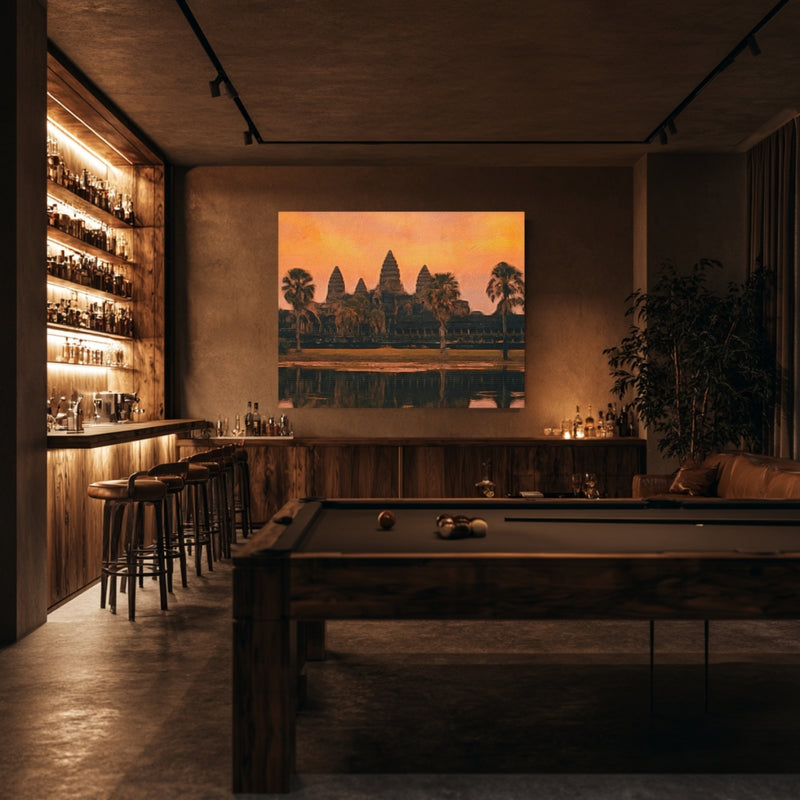
Angkor Wat is the largest religious monument in the world, a 400-acre complex of towers, galleries, reflecting pools, and causeways built between 1113 and 1150 CE under the Khmer Emperor Suryavarman II as a state temple dedicated to Vishnu and as his funerary monument. The site is simultaneously the greatest architectural achievement of the Khmer Empire, the symbolic center of Cambodian national identity (the only country whose flag features a building), and the most impressive archaeological site in Southeast Asia. The five lotus-bud towers of the central sanctuary, rising to 65 meters above the surrounding moat, are oriented to the west, the direction of death in Hindu cosmology, and are designed to replicate the five peaks of Mount Meru, the home of the gods at the center of the Hindu universe.
The colors of Angkor Wat shift dramatically between the seasons and the hours: the deep grey of the sandstone in the monsoon mist, the warm amber of the towers at golden hour when the stone turns the color of old honey, the brilliant green of the jungle reclaiming the outer walls, and the specific deep blue of the sky that appears at the end of the dry season when the clarity of the Cambodian air at 5 AM produces the most saturated dawn available in Southeast Asia.
We hope you love getting lost in Angkor Wat through the art above — and that one of these canvases finds a home on your wall. Happy travels, from all of us at The Painted Passport.