Original Series / Visual Study
Amboseli, Kenya | Original Series Gallery Canvas
Regional Dossier

AMBOSELI, KENYA | "The Place of Salty Dust"

Amboseli National Park is the most photographed wildlife landscape in Africa, a flat, ancient lakebed at the foot of Mount Kilimanjaro where the elephant herds of the Amboseli basin move across a bleached white plain against the permanent snow of Africa's highest peak. The park sits at 1,150 meters above sea level in southern Kenya, on the border with Tanzania, in the ancestral territory of the Maasai people who have managed the Amboseli ecosystem for centuries. The elephant population of Amboseli is the most studied in the world: Cynthia Moss and the Amboseli Elephant Research Project have tracked the social architecture of the basin's families continuously since 1972, producing the longest-running study of wild elephant behavior ever conducted. The result is a landscape where the biology is as documented as the geography, where every matriarch has a name and a known history, and where the movement of the herds across the plain is a function of knowledge accumulated over generations.

The colors are specific and irreducible: the bleached white of the ancient lakebed floor, the deep jade of the Enkongo Narok swamp, the warm amber of the acacia scrub at low sun, and the blue-white of Kilimanjaro's permanent snowfields rising above its own cloud layer, a palette that exists nowhere else on the African continent and that shifts entirely between the dry season and the green season rains.

Select Size
Museum-Grade Canvas
Ready to Hang
Made to Order · Ships in 3–5 Days (U.S.)
Add to the collection for /

$65.00

Finding the Stillness

It's hard to put the "vibe" of a place into words, so we put together a few images that we think show the quiet side of Amboseli, Kenya. These are the textures and small moments we've archived to capture the stillness of this corner of the world.

Amboseli, Kenya visual study 01
Amboseli, Kenya / No. 01 via Brian Kungu
A giraffe grazes peacefully against a brilliant blue sky, a gentle giant moving through the lush acacia trees of Amboseli, Kenya. This serene moment captures the quiet majesty of nature, reminding us of the beautiful, untouched rhythms of the wild that continue to thrive. It’s a breathtaking glimpse into a world where harmony and grace rule the landscape.
Amboseli, Kenya visual study 02
Amboseli, Kenya / No. 02 via Matt Cramblett
A majestic herd of elephants journeys across a vibrant, sunlit savanna, their powerful presence bringing a sense of timeless wonder to the open plains. Dramatic clouds gather on the horizon, framing a landscape where family bonds and raw natural beauty meet in perfect harmony. It is a stirring reminder of the ancient, untamed spirit of Africa that continues to thrive and inspire.
Amboseli, Kenya visual study 03
Amboseli, Kenya / No. 03 via Vladan Raznatovic
The snow-capped peaks of Mount Kilimanjaro rise majestically in the distance, casting a peaceful watch over the sweeping plains below. Vibrant orange aloe blossoms and lush greenery frame this breathtaking view, capturing the serene and timeless beauty of the East African landscape. It is a quiet, inspiring reminder of nature's grand scale and comforting harmony.

Where to wander

Archival Note: A curated field study of Amboseli, Kenya, prioritizing cultural relevance and archival merit. These locations have been meticulously researched and vetted to ensure they represent the most authentic atmosphere for your own expedition.

Local Cuisine Spotlight
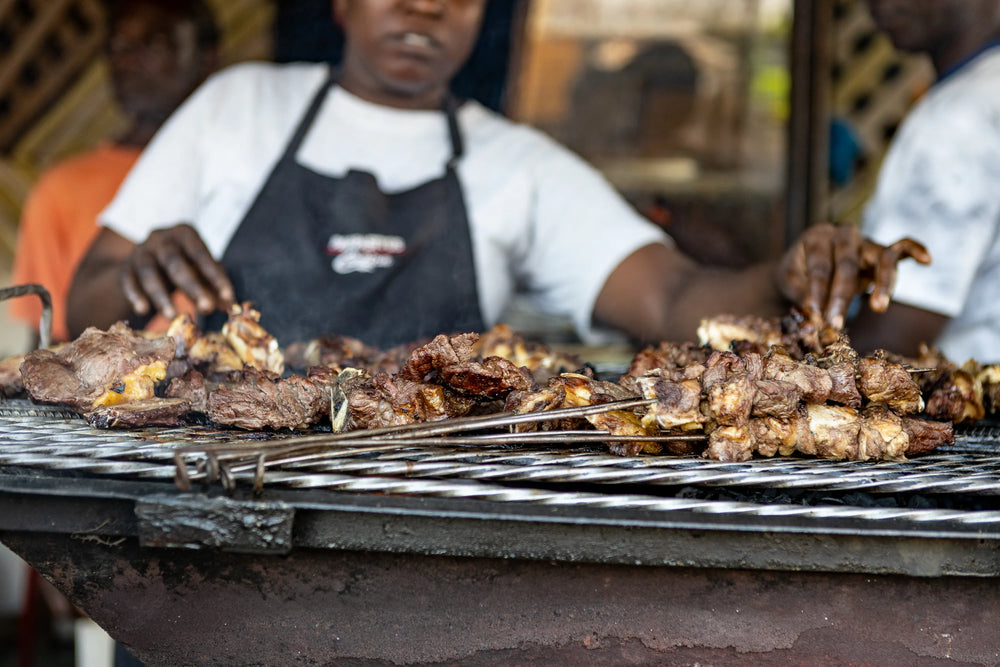
The rich aromas of traditional Kenyan nyama choma fill the air as seasoned meats sizzle to perfection over an open charcoal grill. This vibrant culinary tradition brings people together, celebrating community, warmth, and the shared joy of a hearty local feast. It is a soulful glimpse into the everyday flavors and welcoming culture that make Kenya so unforgettable.
Credits: CHECHIL ORIFA
Local cuisine study in Amboseli, Kenya

☕︎ Local Flavor

Tawi Lodge: Bush Dining

Rating: 4.9★ | Price: $$$$ | Coordinates: 2.6527° S, 37.2564° E

Dine on a canopied terrace above the Amboseli plain where the kitchen operates as a field station for the sustainable agriculture of the Maasai-owned Tawi farm, producing vegetables, herbs, and dairy within the lodge's own boundary. The menu documents the precise intersection of Maasai pastoralism and modern Kenyan farm-to-table cuisine, pairing locally raised proteins with wild herbs gathered from the Kilimanjaro foothills by the lodge's Maasai guides. At dawn, the dining terrace faces the full southern aspect of Kilimanjaro, and breakfast is a study in equatorial mountain light as the snowfields catch the first direct sun above the cloud line.

View Entry Details

Ol Tukai Lodge: Terrace Restaurant

Rating: 4.7★ | Price: $$$ | Coordinates: 2.6487° S, 37.2521° E

Occupy a terrace table at the oldest lodge in Amboseli, where the dining room faces the full panorama of Kilimanjaro and the acacia-dotted plain, and where elephant herds regularly cross within fifty meters of the outdoor seating. The kitchen produces a menu of Kenyan and international cuisine centered on the fresh produce of the lodge's own garden, with nyama choma and ugali as the anchoring local preparations. The terrace is a functioning wildlife observation platform: the proximity of the elephant herds to the dining area makes this the most zoologically eventful meal in the park.

View Entry Details

Amboseli Serena Safari Lodge Restaurant

Rating: 4.6★ | Price: $$$ | Coordinates: 2.6612° S, 37.2498° E

Enter the thatched dining room of the Amboseli Serena, where the architecture references the Maasai manyatta enclosure and the menu documents the full range of Kenyan and East African cuisine — from ugali and sukuma wiki to Swahili coast preparations of spiced fish and coconut rice. The lodge maintains a cultural programme in which Maasai staff explain the food traditions of the Amboseli basin alongside the meal service, creating a direct pedagogical connection between the cuisine on the table and the pastoral ecology visible through the dining room window.

View Entry Details

Bush Breakfast at Observation Hill

Rating: 4.8★ | Price: $$$ | Coordinates: 2.6341° S, 37.2389° E

Ascend Observation Hill at dawn with your lodge's safari team and take breakfast on the summit, the only elevated viewpoint in Amboseli National Park, where the full geometry of the basin is visible simultaneously — the swamps to the northwest, the Kilimanjaro massif to the south, and the elephant trails crossing the bleached plain in every direction. The breakfast is a logistical archive of what bush hospitality means in the Amboseli context: the precise choreography of a white-linen table service conducted in the open air at altitude, with wildlife moving freely in every direction below.

View Entry Details

🛌︎ Boutique Stays

Tawi Lodge

Rating: 4.9★ | Price: $$$$ | Coordinates: 2.6527° S, 37.2564° E

Inhabit one of twelve cottages on a private Maasai-owned farm at the northeastern boundary of Amboseli, where the architecture integrates into the acacia scrub and the morning view from the private plunge pool frames Kilimanjaro in direct elevation above the treeline. Tawi is the most ecologically integrated lodge in the Amboseli ecosystem, operating its own farm, employing exclusively from the surrounding Maasai community, and functioning as a vital field station for the conservation of the private land corridor between the national park and the Kilimanjaro foothills. It is the definitive address for understanding the economics of community-based wildlife conservation in Kenya.

View Entry Details

Ol Donyo Lodge

Rating: 4.9★ | Price: $$$$ | Coordinates: 2.5891° S, 37.5124° E

Ascend to a suite on the Chyulu Hills above the Amboseli plain, where each of the ten rooms features a rooftop star bed for sleeping under the equatorial sky and a private plunge pool with an unobstructed view of Kilimanjaro forty kilometers to the south. Ol Donyo is set within the 275,000-acre Mbirikani Group Ranch, a Maasai community conservation area that is part of the Big Life Foundation's anti-poaching network — the most important private land conservation project in the greater Amboseli ecosystem. The lodge functions as a field station for understanding the landscape-scale ecology of the Kilimanjaro corridor.

View Entry Details

Amboseli Sopa Lodge

Rating: 4.7★ | Price: $$$ | Coordinates: 2.7124° S, 37.3012° E

Settle into a lodge positioned on the southeastern boundary of the park, where the eighty-three rooms are organized around the Maasai manyatta architectural vocabulary and the swimming pool faces the full southern aspect of Kilimanjaro. The Sopa is the most spacious lodge in the park and the most practical base for families and groups, providing access to both the Enkongo Narok swamp — where the majority of Amboseli's elephant activity is concentrated — and the open plains to the east. It serves as a useful field station for understanding the seasonal hydrology of the Amboseli basin.

View Entry Details

Ol Tukai Lodge

Rating: 4.7★ | Price: $$$ | Coordinates: 2.6487° S, 37.2521° E

Occupy the oldest established lodge in Amboseli National Park, positioned at the center of the ecosystem where the Enkongo Narok and Longinye swamps converge and where the elephant herds are most concentrated. The lodge's central position in the park means that game drives in any direction encounter the full range of Amboseli's wildlife within minutes of departure, and the view of Kilimanjaro from the swimming pool is the most iconic single image associated with the park. Ol Tukai is the most historically embedded accommodation in Amboseli and the baseline against which all subsequent lodges in the park are measured.

View Entry Details

📍︎ Field Study

Amboseli National Park: Full-Day Game Drive

Rating: 4.9★ | Price: $$$ | Coordinates: 2.6527° S, 37.2606° E

Depart at dawn in an open-sided Land Cruiser into the bleached lakebed plain of Amboseli, where the elephant herds begin their morning movement from the swamps to the open grassland as the snowfields of Kilimanjaro catch the first direct light above the cloud line. A specialist guide decodes the behavioral patterns of the individual families — each one identified by the matriarch's ear shape and tusk profile, known to the Amboseli Elephant Research Project by name. This is the definitive wildlife observation platform in East Africa, producing the most reproducible encounter between a human observer and a free-ranging elephant family in the world.

View Entry Details

Maasai Village: Cultural Visit

Rating: 4.7★ | Price: $$ | Coordinates: 2.5812° S, 37.1934° E

Enter a traditional Maasai manyatta enclosure on the boundary of the national park, where the Enkiama guides explain the spatial logic of the circular settlement, the function of the acacia thorn fence, and the precise relationship between the Maasai pastoral economy and the wildlife ecosystem that surrounds it. The visit documents the land-use system that has coexisted with Amboseli's elephant population for centuries — a system in which the Maasai concept of communal rangeland management is the primary reason the ecosystem survived into the twenty-first century intact. It is the essential counterpart to the game drive for understanding what you are actually looking at.

View Entry Details

Observation Hill: Sunrise Walk

Rating: 4.8★ | Price: $$ | Coordinates: 2.6341° S, 37.2389° E

Ascend the only elevated viewpoint in Amboseli National Park on foot at dawn, guided by a ranger who narrates the full geography of the basin from the summit: the Enkongo Narok and Longinye swamps to the northwest, the elephant trails crossing the bleached plain in every direction, and the full southern aspect of Kilimanjaro rising above its own cloud layer directly ahead. The walk is a cartographic exercise — the only vantage point from which the spatial logic of the entire ecosystem is legible simultaneously. It is the essential first-morning activity for orienting yourself in the landscape.

View Entry Details

Amboseli Elephant Research Project: Field Visit

Rating: 4.9★ | Price: $$$ | Coordinates: 2.6527° S, 37.2606° E

Access the field operations of the Amboseli Elephant Research Project, the longest-running study of wild elephant behavior on earth, where researchers have tracked the social architecture, reproductive histories, and individual personalities of every elephant family in the basin continuously since 1972. The field visit provides direct access to the research methodology, the photographic identification archives, and the behavioral data that have made Amboseli the most comprehensively documented wildlife population in the world. It is the deepest possible engagement with the scientific infrastructure that underpins the experience of watching elephants in Amboseli — and the most direct way to understand why these animals, in this specific landscape, are known as individuals.

View Entry Details

Typography

Archival Note: A formal technical study of Amboseli, Kenya, archiving the coordinates, elevation, and environmental data that define the region. This data serves as a vital record for our ongoing global field study, providing the technical foundation behind every atmospheric detail captured in our visual work.

Botanical and pigment specimen study for Amboseli, Kenya Colors of Amboseli, Kenya
Coordinates
2.6527° S, 37.2606° E — Ancient lakebed plain at the foot of Mount Kilimanjaro, southern Kenya
Historical Epoch
Maasai settlement before 1850. British East Africa Protectorate from 1895. National Park gazetted in 1977. Elephant Research Project running from 1972 to the present.
Elevation
1,150 m / 3,773 ft. The bleached lakebed floor spread across the Amboseli basin.
Atmosphere
Semi-Arid Savanna (BSh). Long rains March through May, short rains October and November, dry season June through September with the clearest Kilimanjaro views.
Observation Hour
06:15 AM. First light on Kilimanjaro's snowfields produces the amber-to-rose-gold palette on the plain that defines the iconic Amboseli dawn.
Primary Pigment
Kilimanjaro Snow-White (#F2F0EB) and Amboseli Lakebed Ochre (#C8A96E)
Best Time to Visit
July through October. Bleached white plain, crystal-clear Kilimanjaro views and the most concentrated elephant activity at the swamps.
Avoid Visiting
April through May. Long rains turn the plain green and muddy, obscuring Kilimanjaro and making game drives difficult.

Behind The Scenes

Nathan

Note from the Founder

Hey, did you know this fun fact about Amboseli, Kenya? Every single elephant in the Amboseli basin, currently around 1,700 individuals, is known by name to researchers who have tracked them continuously since 1972 making this the most comprehensively documented wildlife population on earth!
Thank you for exploring the Amboseli, Kenya series with us. We hope these notes have inspired you to add this incredible destination to your own passport—we are so glad you're here. — Nathan

Some of our Favorites