



The Real Amboseli
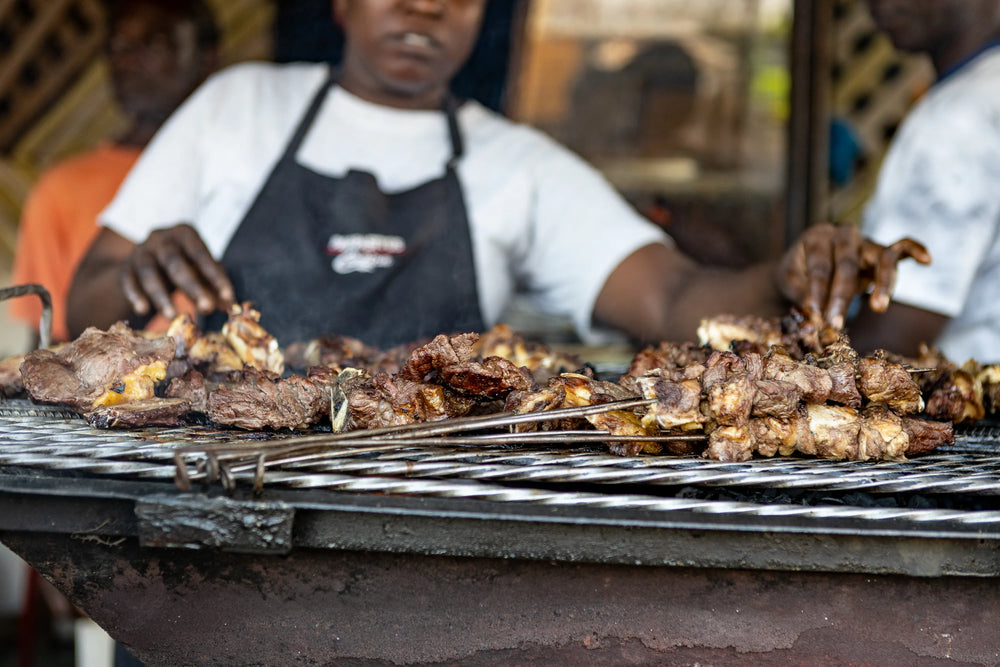
More than a shop, each page is an immersive guide to the real Amboseli: local tips and tricks, the language you'll hear, where to eat, stay, and explore, the lay of the land, and a fun fact to carry home — every canvas mapped to the very spot it was painted.
AMBOSELI, KENYA | "The Place of Salty Dust"
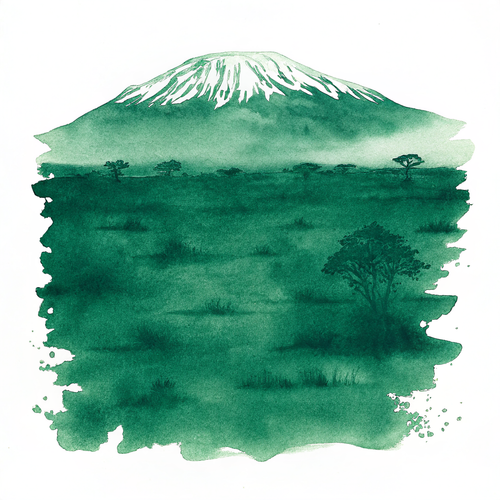
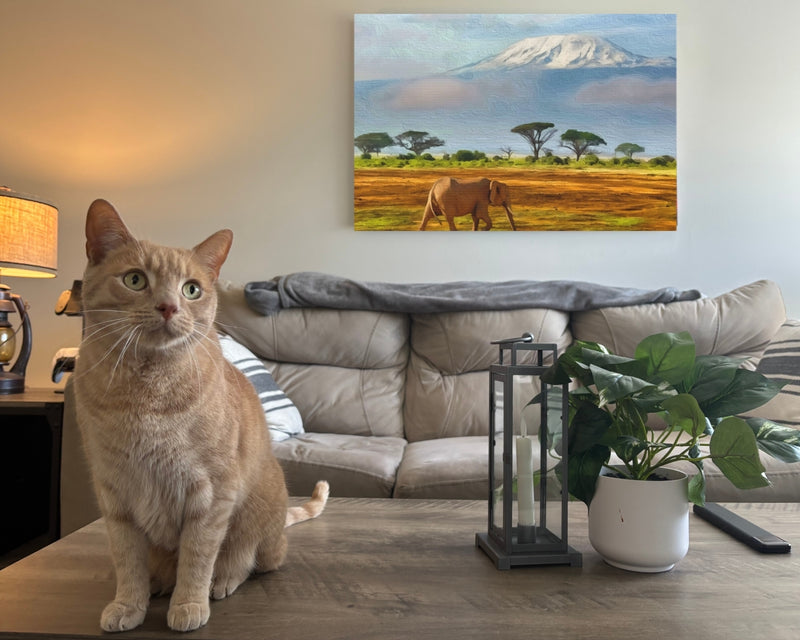
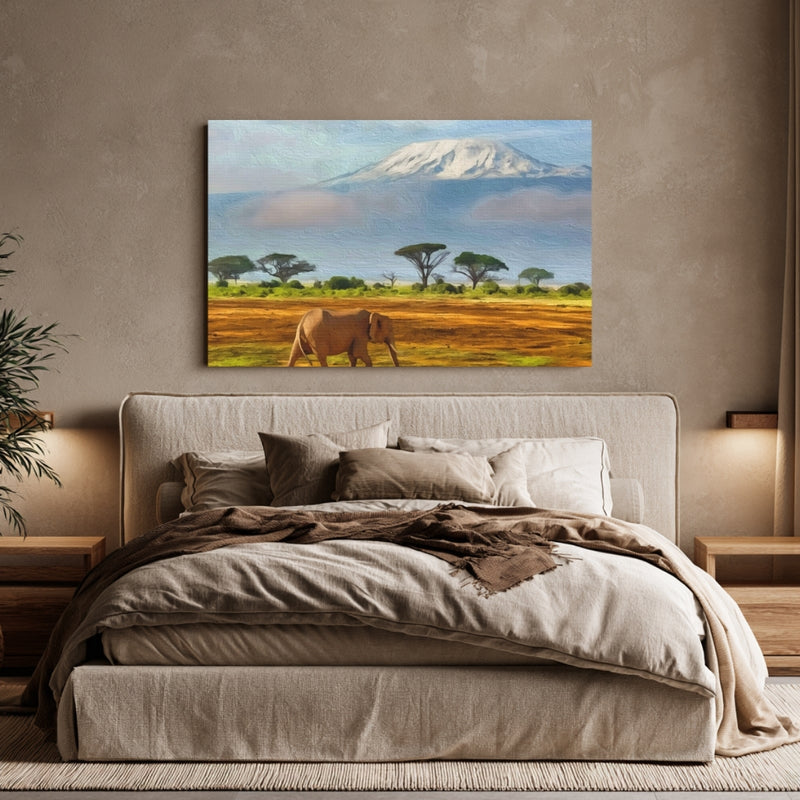
Amboseli National Park is the most photographed wildlife landscape in Africa, a flat, ancient lakebed at the foot of Mount Kilimanjaro where the elephant herds of the Amboseli basin move across a bleached white plain against the permanent snow of Africa's highest peak. The park sits at 1,150 meters above sea level in southern Kenya, on the border with Tanzania, in the ancestral territory of the Maasai people who have managed the Amboseli ecosystem for centuries. The elephant population of Amboseli is the most studied in the world: Cynthia Moss and the Amboseli Elephant Research Project have tracked the social architecture of the basin's families continuously since 1972, producing the longest-running study of wild elephant behavior ever conducted. The result is a landscape where the biology is as documented as the geography, where every matriarch has a name and a known history, and where the movement of the herds across the plain is a function of knowledge accumulated over generations.
The colors are specific and irreducible: the bleached white of the ancient lakebed floor, the deep jade of the Enkongo Narok swamp, the warm amber of the acacia scrub at low sun, and the blue-white of Kilimanjaro's permanent snowfields rising above its own cloud layer, a palette that exists nowhere else on the African continent and that shifts entirely between the dry season and the green season rains.
We hope you love getting lost in Amboseli through the art above — and that one of these canvases finds a home on your wall. Happy travels, from all of us at The Painted Passport.