
Shop the Collection

To help you build your own global archive, we've prepared this collection of watercolor studies from our research into Sicily, Italy. These artifacts are designed to bring the stillness of this corner of the world into your home.

Original Series Decorative Magnet

A personal study of Sicily, Italy, captured in high-fidelity watercolor and prepared for your collection.

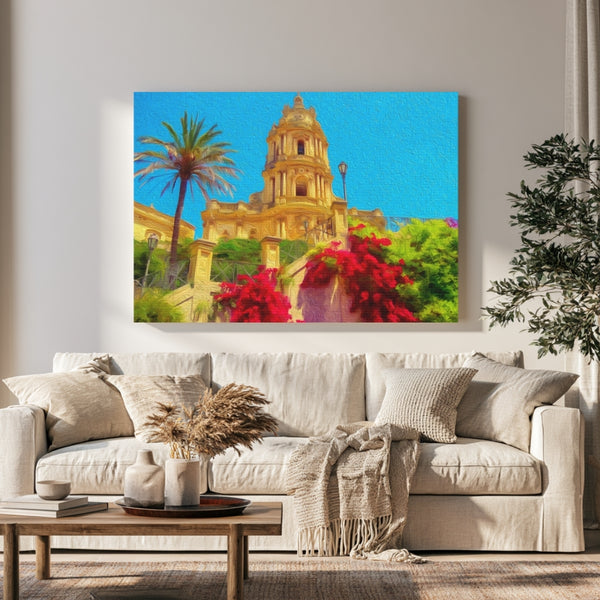
Sicily, Italy | Baroque Cathedral with Bougainvillea | Original Series Decorative Magnet
Add to Collection / $18
Exclusive Series Artifact

Original Series Gallery Canvas

This high-fidelity canvas is a beautiful way to anchor a room and keep your memories of Sicily, Italy fresh long after you've returned home.

Sicily, Italy | Baroque Cathedral with Bougainvillea | Original Series Gallery Canvas detail Sicily, Italy | Baroque Cathedral with Bougainvillea | Original Series Gallery Canvas detail Sicily, Italy | Baroque Cathedral with Bougainvillea | Original Series Gallery Canvas detail Sicily, Italy | Baroque Cathedral with Bougainvillea | Original Series Gallery Canvas detail
Add to Collection / $65

Original Series Hardboard Coaster

A personal study of Sicily, Italy, captured in high-fidelity watercolor and prepared for your collection.

Sicily, Italy | Baroque Cathedral with Bougainvillea | Original Series Hardboard Coaster
Add to Collection / $18
Exclusive Series Artifact

The Spirit of the Land

Archival Note: A curated field study of Sicily, Italy, prioritizing the specific atmospheric stillness of the region. These artifacts have been meticulously sourced from our global archival partners to represent the area's unique cultural frequency and environmental character. This selection serves as a formal observation for our ongoing global archive, vetted for its visual accuracy and archival merit.

Sicily, Italy study No. 01
Sicily, Italy / 01 VIA / Elijah Cobb
The afternoon sun falls warm and unhurried across Palermo's terracotta rooftops, gilding the limestone facades in shades of honey and ochre while the green copper dome of a baroque church rises above the crowded skyline like a quiet exhale. In the distance, the Tyrrhenian Sea catches the light in a pale silver shimmer, framed between the hazy blue shoulders of Monte Pellegrino and the mountains beyond the bay. It is the kind of city that reveals itself slowly — layer by layer, roof by roof — with centuries of Arab, Norman, and Spanish hands still visible in every carved cornice and crumbling wall.
Sicily, Italy study No. 02
Sicily, Italy / 02 VIA / Dmitry Romanoff
The warm Mediterranean light bathes the terracotta rooftops and ancient castle walls of Castellammare del Golfo in a soft, hazy glow, giving the scene an almost timeless quality. Standing at this vantage point, one would feel the quiet grandeur of a place where centuries of history dissolve effortlessly into the turquoise stillness of the sea. The gentle bustle of the marina below — white sailboats rocking in jade-green water — would carry upward only as a murmur, leaving an overwhelming sense of peaceful remove from the world.
Sicily, Italy study No. 03
Sicily, Italy / 03 VIA / Amaury Michaux
The ancient hillside town cascades downward in a dense tapestry of sun-bleached limestone and terracotta, each building seemingly growing organically from the rocky outcropping beneath it. What most visitors overlook are the shadowed archways at the base of the hill — remnants of cave dwellings carved directly into the living rock, quietly revealing that human habitation here predates the Baroque architecture that now dominates the skyline. The palette of the town is remarkably unified, a muted chorus of ochre, blush, and cream that makes the few splashes of teal and green shutters appear almost startlingly vivid against the ancient stone.

Where to wander

Archival Note: A curated field study of Sicily, Italy, prioritizing cultural relevance and archival merit. While we haven't touched down here yet, we've meticulously vetted these locations through our global network of contributors to ensure they represent the most authentic atmosphere for your own expedition.

Local Cuisine Spotlight
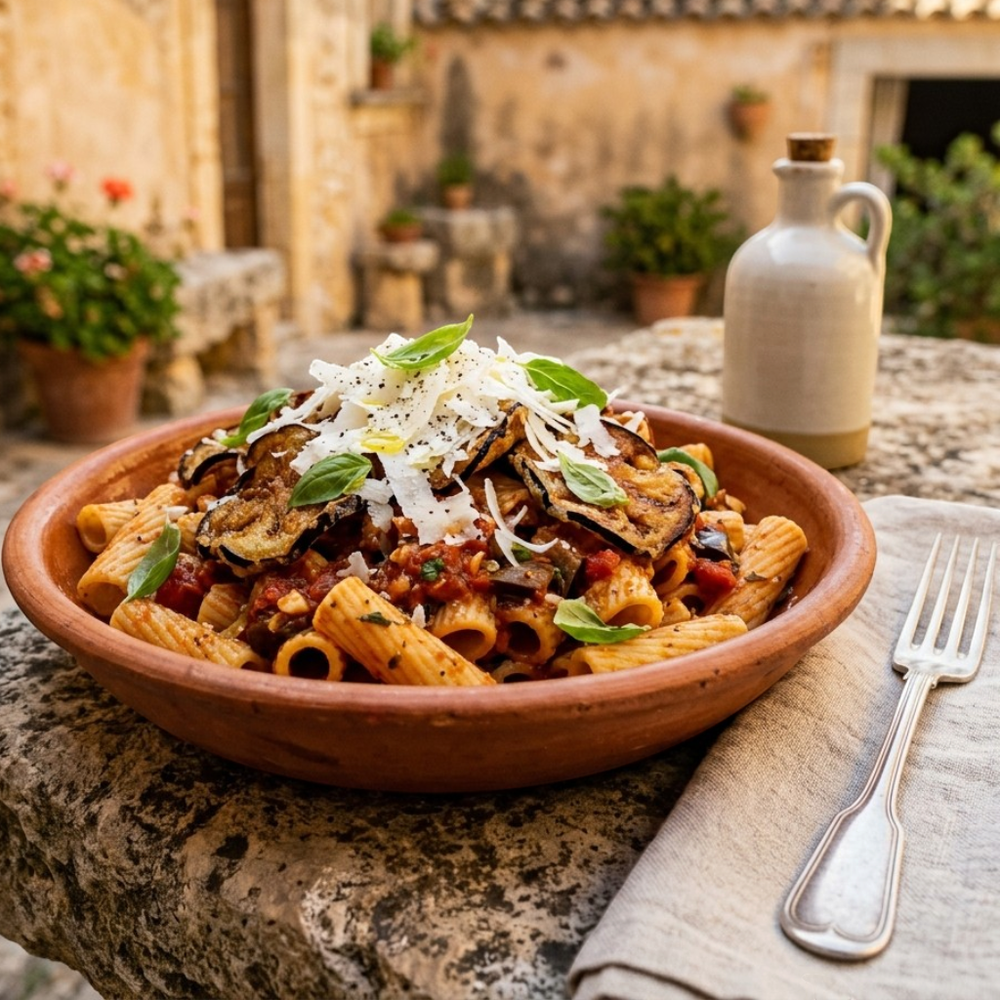
This classic Pasta alla Norma from Sicily layers al dente rigatoni with rich, slow-cooked tomato sauce, crowned with silky fried eggplant, fresh basil, and a generous snowfall of aged ricotta salata. Every forkful delivers the sun-soaked soul of Catania.
Credits: THE PAINTED PASSPORT
Local cuisine study in Sicily, Italy

☕︎ Local Flavor

Osteria dei Vespri, Palermo

Rating: 5* | Price: $$$ | Coordinates: 38.1151° N, 13.3672° E

Set beneath the frescoed vaults of a palazzo beside Piazza Aragona, this elegant osteria is one of Palermo's most treasured dining rooms. Chef Marco Farina weaves classical Sicilian ingredients — swordfish, wild capers, and pistachios — into dishes that feel both rooted and inventive. The curated all-Sicilian wine list is a joy to explore with a knowledgeable sommelier by your side.

View Entry Details

Trattoria del Gallo e dell'Innamorata, Agrigento

Rating: 4* | Price: $$ | Coordinates: 37.3110° N, 13.5765° E

A deeply local and unpretentious trattoria where grandmothers' recipes are honored without compromise, this place draws residents and visitors alike for its slow-cooked lamb, handmade pasta, and volcanic Nero d'Avola poured generously. The dining room is small, lively, and decorated with hand-painted ceramics that reflect the warmth of Sicilian hospitality. Book ahead — word has spread and tables fill fast on weekend evenings.

View Entry Details

Ristorante La Madia, Licata

Rating: 5* | Price: $$$$ | Coordinates: 37.1042° N, 13.9395° E

Two Michelin stars distinguish this intimate restaurant in the coastal town of Licata, where chef Pino Cuttaia reimagines the flavors of his childhood with extraordinary precision and emotion. Each dish tells a story — a sardine becomes a canvas for memory, and a lemon granita arrives as pure poetry. Dining here is less a meal and more a deeply moving meditation on what Sicily truly tastes like.

View Entry Details

Ferro di Cavallo, Palermo

Rating: 4* | Price: $ | Coordinates: 38.1175° N, 13.3580° E

This legendary no-frills trattoria in the heart of Palermo has been feeding students, workers, and curious travelers since 1944 with honest, soul-satisfying Sicilian fare. Expect heaping plates of pasta con le sarde, stuffed eggplant, and arancini made fresh every single morning. The communal tables and handwritten chalkboard menu make every lunch feel like an invitation into a local family's kitchen.

View Entry Details

🛌︎ Boutique Stays

Masseria Torre Coccaro Retreat, Taormina

Rating: 5* | Price: $$$$ | Coordinates: 37.8527° N, 15.2891° E

Perched above the Ionian Sea with sweeping views of Mount Etna, this restored 19th-century estate blends rustic elegance with modern comfort. Rooms are dressed in hand-painted Sicilian tiles, linen drapes, and terracotta floors that stay cool in the summer heat. The infinity pool feels like it flows directly into the blue horizon.

View Entry Details

Palazzo Brunaccini, Palermo

Rating: 4* | Price: $$$ | Coordinates: 38.1157° N, 13.3615° E

Tucked inside a beautifully restored 17th-century noble palazzo steps from the Ballarò market, this boutique hotel oozes old-world Sicilian character. High frescoed ceilings, antique furnishings, and mosaic-tiled bathrooms create an atmosphere that feels like staying inside a living museum. The rooftop terrace offers golden-hour views over Palermo's storied skyline.

View Entry Details

Verdura Resort, Sciacca

Rating: 5* | Price: $$$$ | Coordinates: 37.5041° N, 13.1872° E

Sprawling along a pristine stretch of Sicily's southern coastline, this Rocco Forte property delivers barefoot luxury at its finest. Three pools, a celebrated thalassotherapy spa, and championship golf courses make it nearly impossible to leave the grounds. Evenings here feel magical, with Mediterranean breezes carrying the scent of wild herbs across the terrace.

View Entry Details

Hotel Signum, Salina Island

Rating: 4* | Price: $$$ | Coordinates: 38.5611° N, 14.8346° E

Nestled in the quiet village of Malfa on the lush Aeolian island of Salina, this family-run gem is a haven of whitewashed walls and bougainvillea-draped terraces. Each room is individually decorated with local crafts and opens onto fragrant gardens overlooking the sea. The Michelin-starred restaurant and natural wine list make every evening feel like a quiet celebration.

View Entry Details

📍︎ Field Study

Valley of the Temples, Agrigento

Rating: 5* | Price: $ | Coordinates: 37.2908° N, 13.5880° E

One of the most awe-inspiring archaeological sites in the entire Mediterranean, this UNESCO World Heritage Site contains some of the world's best-preserved ancient Greek temples rising golden from the hilltop. Walking the Sacred Road at dusk, with almond blossoms in February or golden wheat in June, is an experience that slows time completely. The on-site museum adds rich historical context to every column and carved stone you encounter.

View Entry Details

Mount Etna Summit Excursion

Rating: 5* | Price: $$ | Coordinates: 37.7510° N, 14.9934° E

Europe's most active volcano looms magnificently over eastern Sicily, and hiking or taking the cable car toward its smoldering summit craters is an utterly unforgettable adventure. The lunar landscape of black lava fields, steaming fumaroles, and rust-red volcanic rock feels like another planet entirely. Guided tours depart from Nicolosi and Linguaglossa, and local guides share stories of eruptions past with contagious enthusiasm.

View Entry Details

Baroque Old Town of Noto

Rating: 5* | Price: Free | Coordinates: 36.8897° N, 15.0674° E

Rebuilt entirely after the catastrophic 1693 earthquake, Noto is arguably the finest Baroque city in Europe, its warm honey-colored limestone glowing amber at sunset like something from a fever dream. Strolling Corso Vittorio Emanuele past elaborately carved palazzi, churches, and balconies supported by grinning stone monsters is endlessly pleasurable. Stop at Caffè Sicilia on the main corso for a legendary pistachio granita served with fresh brioche.

View Entry Details

Cefalu's Medieval Old Town & Cathedral

Rating: 5* | Price: $ | Coordinates: 37.9991° N, 14.0228° E

Wedged dramatically between a golden beach and a towering limestone promontory, Cefalù is one of Sicily's most photogenic and beloved small towns. The Norman cathedral, built in 1131 by Roger II, houses an extraordinary golden Byzantine mosaic of Christ Pantocrator that commands silence the moment you step inside. Wandering the medieval lanes afterward — past laundry lines, fishermen mending nets, and cats sleeping in doorways — completes an utterly charming day.

View Entry Details

Typography

Archival Note: A formal technical study of Sicily, Italy—archiving the coordinates, elevation, and environmental data that define the region. This data serves as a vital record for our ongoing global field study, allowing us to reconstruct the regional atmosphere with archival precision before our physical arrival.

Botanical and pigment specimen study for Sicily, Italy Colors of Sicily, Italy
Coordinates
37.6000° N, 14.0154° E — Central Sicily, approximate geographic heart of the island
Historical Epoch
Sicily has been continuously inhabited for over 10,000 years, colonized by Greeks in the 8th century BC, then layered with Arab, Norman, and Spanish rule, each civilization pressing its architecture and cuisine deep into the island's identity.
Elevation
0-3,357 m / 0-11,014 ft - Sea level coastline rising to the active summit crater of Mount Etna, with most towns and cultural sites sitting between 50 and 600 m
Atmosphere
Csa - Hot-summer Mediterranean. Long, dry, intensely sunny summers with mild and occasionally rainy winters. The island bakes beautifully from June through September.
Observation Hour
06:30 - The low eastern sun rakes across temple columns and Baroque facades with a warm amber glow that turns stone to gold before the heat builds and flattens the shadows by mid-morning.
Primary Pigment
Temple Gold (#C89A4E) and Tyrrhenian Blue (#2E6FA3)
Best Time to Visit
April through June - wildflowers blanket the hillsides, temperatures are warm but not punishing, and the island is alive without the August crush.
Avoid Visiting
August - coastal towns are overwhelmed with visitors, temperatures regularly exceed 38C inland, and prices peak sharply across accommodations.

The Local Tongue

Language is the invisible architecture of Sicily, Italy. These entries document the regional vocabulary—capturing the "texture" of local speech that standard translations often miss. Hand-curated expressions reflecting the specific spirit and daily rhythm of the region.
Archival study of Italian cultural texture

via / Bernie Andrew

Primary Language Italian
Regional Dialect Sicilian (Sicilianu)

Abbivirari

Abbivirari means to give water, specifically to an animal or a thirsty traveler, carrying a tenderness that the standard Italian abbeverare does not quite hold. In Sicilian villages, the word is tied to the communal stone fountain, where farmers historically stopped to let their horses drink before the long climb back up the hillside at the end of a harvest day.

Calia e simenza

Calia e simenza refers to the beloved street snack of roasted chickpeas and pumpkin seeds sold in paper cones at markets and festivals throughout the island. The phrase is so culturally embedded that it doubles as a mild insult, calling someone calia e simenza implies they are all chatter and no substance, the sound of seeds rattling in a paper bag.

Quaquaraqua

Quaquaraqua is a Sicilian term, famously immortalized in literature, for a person who talks endlessly without meaning or courage, a hollow noise-maker. It carries the particular contempt of a culture that values dignified silence, where a person of true weight is known by what they do not say rather than by the volume of words they pour into a quiet room.

Wait! before you go...

Before you head over to Sicily, Italy, we’ve audited the essential data points for this corner of the world. These notes cover the logistics—from currency ratios to transit hubs—to help you navigate the landscape with clarity.
🚲 Getting Around Renting a car is the single best decision a traveler can make in Sicily, as the most extraordinary sites, from hilltop towns to coastal ruins, are poorly served by public transport and reward the freedom to stop at will. Trains connect Palermo, Catania, and Messina reasonably well, but schedules run on a relaxed Sicilian sense of time and buses fill the gaps between smaller towns.
⚖️ Cash or Card Cash remains king in local markets, small trattorias, street food stalls, and family-run agriturismos, where card machines are sometimes present but often ignored or mysteriously out of service. Larger restaurants, hotels, and tourist-facing businesses in Palermo and Taormina accept cards reliably, so carrying a mix of both is the sensible approach across the island.
☁️ Good to Know Sicilians operate on a deeply relational social rhythm, and a brief exchange of pleasantries before any transaction, however small, is considered basic respect rather than a formality to rush through. Showing genuine curiosity about a dish, a town, or a family recipe will open doors that a hurried tourist manner firmly closes.
🏧 ATMs ATMs, known locally as Bancomat, are widely available in all cities and larger towns, though they can be sparse in the rural interior and on the smaller Aeolian Islands where withdrawal limits and fees vary by bank. Withdrawing a sufficient cash reserve before heading into rural areas or island-hopping is strongly advisable, as the nearest Bancomat may be a ferry ride away.
💳 Currency The euro is the official currency of Italy and therefore Sicily, and it is the only currency accepted anywhere on the island without exception. Coins are particularly useful for parking meters, small churches with coin-operated lighting for mosaics, and roadside fruit and vegetable stalls where exact change is quietly appreciated.
🔌 Plugs Italy uses Type F and Type L outlets at 230V and 50Hz. Travelers from North America will need both a voltage converter and a plug adapter.
🛡️ Safety Sicily is a safe destination for travelers and petty crime is uncommon outside the busiest tourist zones of Palermo's markets and Taormina's peak-season crowds, where bag awareness is simply good practice. Driving mountain roads around Etna and the interior requires attention, as roads narrow unexpectedly and local drivers move with a confidence that surprises the uninitiated.
✈️ Airports Catania Fontanarossa Airport (CTA) is the island's busiest hub, sitting on the eastern coast near Etna and serving as the most convenient gateway for Taormina, Syracuse, and the southeast. Palermo Falcone-Borsellino Airport (PMO) serves the western half of the island and is the better arrival point for Agrigento, Trapani, and the Aeolian Islands ferry connections.

Behind The Scenes

Nathan

Note from the Founder

Hey, did you know this fun fact about Sicily, Italy? Sicily is the largest island in the Mediterranean Sea at 25,711 square kilometers, and it sits at the crossroads of three tectonic plates, which is precisely why Mount Etna, Europe's tallest and most active volcano, never fully sleeps.
Thank you for exploring the Sicily, Italy series with us. We hope these notes have inspired you to add this incredible destination to your own passport—we are so glad you're here. — Nathan

Some of our Favorites