Shop the Collection

To help you bring a piece of your journey home, we've put together this collection of watercolor studies from our time in Positano, Italy. These are our favorite ways to keep the spirit of the trip alive.

Original Series Decorative Magnet

A lovely, high-res reminder for your fridge or workspace. This watercolor magnet is the perfect small token to remember your Positano, Italy adventure.

Positano, Italy | Cascading Cliffside  | Original Series Decorative Magnet
Add to Collection / $18
Exclusive Series Artifact

Original Series Canvas

This high-fidelity canvas is a beautiful way to anchor a room and keep your memories of Positano, Italy fresh long after you've returned home.

Positano, Italy | Cascading Cliffside | Original Series Canvas detail Positano, Italy | Cascading Cliffside | Original Series Canvas detail Positano, Italy | Cascading Cliffside | Original Series Canvas detail Positano, Italy | Cascading Cliffside | Original Series Canvas detail
Add to Collection / $65

Original Series Hardboard Coaster

A wonderful companion for your morning coffee. This coaster captures the atmosphere of Positano, Italy in a functional, beautiful way.

Positano, Italy | Cascading Cliffside | Original Series Hardboard Coaster
Add to Collection / $18
Exclusive Series Artifact

The Spirit of the Land

Archival Note: Documented personally during our time in Positano, Italy. While we leverage a global network of contributors to provide these high-fidelity visual artifacts, each selection is curated to reflect the specific, quiet frequencies we experienced on the ground. These textures serve as a formal study of the unhurried light and environmental character that defined our journey.

Positano, Italy study No. 01
Positano, Italy / 01 VIA / Mihaela Claudia Puscas
Basking in the golden Mediterranean sun, this vibrant terrace captures the effortless charm of a perfect afternoon in Positano. With crisp white linens, pops of cheerful red, and the salty breeze drifting up from the beach, it’s the kind of place where time slows down and every meal feels like a celebration.
Positano, Italy study No. 02
Positano, Italy / 02 VIA / Benni Fish
Sun-drenched villas cascade down the cliffs to meet the Tyrrhenian Sea, where a constellation of boats rests in the shimmering harbor. The iconic majolica dome of the church stands as a golden sentinel over this coastal dream, inviting you to lose yourself in the timeless beauty and gentle pace of the Amalfi Coast.
Positano, Italy study No. 03
Positano, Italy / 03 VIA / Sofia Karageorgiou
Vibrant pink walls glow against an endless horizon of turquoise and deep sapphire, where the sea meets a soft, cloud-dusted sky. With flags fluttering in the coastal breeze and waves gently lapping at the shore, it’s a tranquil corner of paradise that feels like a quiet breath of fresh air.

Where to wander

Archival Note: These recommendations were curated personally during our time in Positano, Italy to capture the textures that defined the quiet frequencies of the trip. Every entry here is a place we genuinely love; we hope these notes inspire you to wander off the main path and discover the same stillness we found on the ground.

Local Cuisine Spotlight
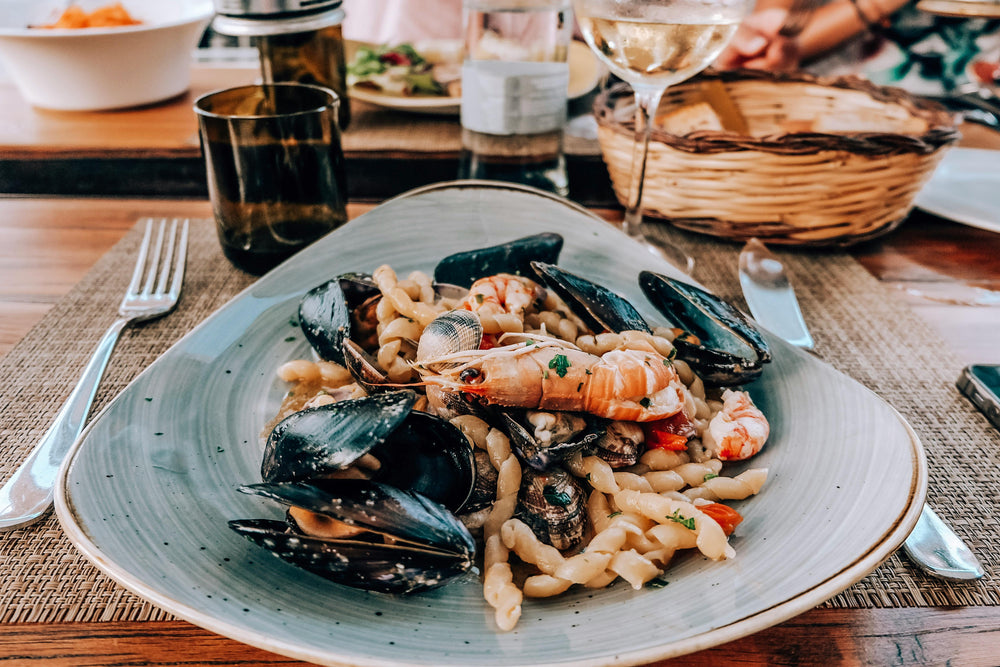
A steaming plate of fresh pasta, tangled with succulent mussels and langoustines, brings the true taste of the sea right to your table. Shared over a glass of wine and crusty bread, it’s a soulful meal that honors the simple joy of good food and even better company.
Credits: Julia Khalimova
Local cuisine study in Positano, Italy

☕︎ Local Flavor

La Vigna degli Dei: Foraging and Family Recipes

Rating: 4.9★ | Price: $$ | Coordinates: 40.6291° N, 14.5052° E

Ascend into the terraced gardens of Agerola to forage wild herbs under the guidance of the Acampora family. This immersion centers on the preparation of Ravioli della Nonna and lemon-infused tiramisu, utilizing hand-pressed organic oils and heritage wheat. By engaging with these ancestral culinary techniques, visitors participate in preserving the lineage of the Lattari Mountains' agrarian identity.

View Entry Details

Cooking Class with Li Galli Views

Rating: 5.0★ | Price: $$$ | Coordinates: 40.6305° N, 14.4920° E

Navigate the steep, citrus-lined pathways of a private estate to master the art of artisanal mozzarella and hand-rolled gnocchi. The experience is grounded by the tactile manipulation of curd and flour, performed against a backdrop of the Li Galli archipelago’s limestone crags. This practice serves as a physical manuscript of the region's "cucina povera," documenting the transition from subsistence farming to world-class gastronomy.

View Entry Details

Traditional Pasta Workshop in Praiano

Rating: 4.8★ | Price: $$ | Coordinates: 40.6133° N, 14.5311° E

Discover the rhythmic geometry of pasta-making within a professional kitchen overlooking the Tyrrhenian Sea. Participants utilize bronze-die textures and volcanic-soil produce to construct authentic Neapolitan ragu and eggplant parmigiana. This session acts as an anchor for the coast’s cultural identity, ensuring that the ephemeral oral histories of local chefs are codified through repeatable, sensory practice.

View Entry Details

Shared Sunset Cruise by Luxury Boats

Rating: 4.9★ | Price: $ | Coordinates: 40.6280° N, 14.4849° E

Unearth the coastal silhouettes of Praiano and the Fiordo di Furore as the golden hour illuminates the limestone cliffs from a luxury yacht. This voyage prioritizes the social ritual of the Italian aperitivo, featuring free-flowing prosecco and traditional snacks served while drifting near the Li Galli archipelago. It serves as a vital piece of the city's puzzle, archiving the timeless maritime tradition of observing the "vertical city" from its primary historical entrance: the sea.

View Entry Details

🛌︎ Boutique Stays

Il San Pietro di Positano

Rating: 4.9★ | Price: $$$$ | Coordinates: 40.6247° N, 14.5019° E

Scale the sheer cliffs to find a sanctuary carved directly into the living rock, where the architecture serves as a seamless extension of the geology. The property features a private cove accessible only by an elevator shaft bored through 280 feet of solid limestone. As a pinnacle of mid-century Italian engineering and design, it remains a physical manuscript of the coast’s mid-20th-century luxury renaissance.

View Entry Details

Le Sirenuse

Rating: 4.8★ | Price: $$$$ | Coordinates: 40.6284° N, 14.4867° E

Navigate the oxblood-red facade of this 18th-century palazzo, which transitioned from a private summer residence to a global icon of refined hospitality. Inside, the air is perfumed by Eau d'Italie and the rooms are curated with museum-grade Neapolitan antiques and hand-painted tiles. The hotel stands as a guardian of the Sersale family heritage, documenting the shift from aristocratic domesticity to curated cultural pilgrimage.

View Entry Details

Hotel Palazzo Murat

Rating: 4.7★ | Price: $$$ | Coordinates: 40.6285° N, 14.4852° E

Step into the former summer residence of the King of Naples, where 17th-century Baroque architecture meets the fragrance of a centuries-old botanical garden. The structural integrity of the high-vaulted ceilings and original majolica floors provides a grounded contrast to the ephemeral bustle of the nearby harbor. This site is an essential historical archive, preserving the stylistic preferences and political influence of the Napoleonic era in southern Italy.

View Entry Details

Villa Treville

Rating: 4.8★ | Price: $$$$ | Coordinates: 40.6242° N, 14.5081° E

Discover the ethereal estate once owned by Franco Zeffirelli, a cluster of four independent villas linked by vine-covered pergolas and hidden elevators. The interiors are a masterclass in maximalist Italian design, featuring intricate woodwork, Syrian furniture, and sprawling terraces that peer toward the sunrise. It serves as an anchor for the city’s artistic identity, preserving the creative spirit of the cinematic legends who once sought refuge within its walls.

View Entry Details

📍︎ Field Study

Full Day Capri Island Cruise from Positano

Rating: 4.5★ | Price: $$ | Coordinates: 40.6280° N, 14.4848° E

Navigate the translucent waters of the Tyrrhenian Sea to circumnavigate the rugged limestone perimeter of Capri and its famed sea caves. The journey highlights the architectural ambition of the Roman emperors who terraformed the island, alongside modern landmarks like the towering Faraglioni rocks. This expedition serves as a physical manuscript of maritime exploration, documenting the transition from ancient naval outposts to high-velocity aesthetic travel.

View Entry Details

Architectural Walking Study of the Vertical City

Rating: 4.7★ | Price: $$ | Coordinates: 40.6295° N, 14.4845° E

Navigate the "Scalinatella," the ancient stairways that dictate the vertical urbanism of this former maritime republic. A local historian provides a scholarly lens on the transition from Saracen defensive towers to the iconic pastel-hued residences of the modern era. This excursion functions as a physical manuscript of urban evolution, archiving how the constraints of steep topography forced a unique communal architecture.

View Entry Details

Path of the Gods Guided Hike

Rating: 4.8★ | Price: [$$] | Coordinates: 40.6355° N, 14.5075° E

Navigate the celestial ridges of the Lattari Mountains along an ancient mule track that suspendedly connects the mountain hamlets of Bomerano and Nocelle. The journey is grounded by high-altitude limestone cliffs and the scent of wild rosemary, offering a panoramic view of the coastline that transitions from pastoral agriculture to sheer maritime drop-offs. This trek serves as a vital piece of the city's puzzle, archiving the historic terrestrial connections used by locals for centuries before the construction of modern coastal roads.

View Entry Details

Pompeii & Herculaneum: An Archaeologist’s Perspective

Rating: 4.8★ | Price: $$$ | Coordinates: 40.7492° N, 14.4845° E

Trace the basalt-paved streets of the world’s most famous disaster site under the guidance of a professional excavator. The study focuses on the structural preservation of the Forum and the intricate mosaics of the House of the Faun, providing a high-fidelity look at Roman civic life. This day trip acts as a chronological anchor, connecting the contemporary luxury of the coast to the tragic preservation of its ancestral Roman roots.

View Entry Details

Typography

Archival Note: We have personally documented these geographic specs for Positano, Italy to ensure every watercolor study is anchored in real-world data. By cataloging the precise elevation, light cycles, and historical epochs, we provide a technical foundation that justifies the atmospheric stillness captured in our visual artifacts.

Botanical and pigment specimen study for Positano, Italy Colors of Positano, Italy
Coordinates
40.6281° N, 14.4850° E — Campania, Amalfi Coast, Tyrrhenian Sea
Historical Epoch
Roman settlement documented from the 1st century CE. Medieval maritime village under the Duchy of Amalfi. Grand Tour destination from the 18th century. UNESCO World Heritage inscription in 1997.
Elevation
0–300 m / 0–984 ft — vertiginous cliffside village between sea and limestone mountain
Atmosphere
Mediterranean (Csa). Hot dry summers with relentless sun and the sea as the only cooling agent, mild wet winters, spring and autumn the most comfortable seasons.
Observation Hour
18:30. Golden hour on the cliffside villas as the sun drops behind the Lattari Mountains, the pastel facades turning amber and the terracotta rooftiles glowing above the Tyrrhenian Sea below.
Primary Pigment
Amalfi Terracotta (#E2725B) and Tyrrhenian Sapphire (#003366)
Best Time to Visit
April through June — the Amalfi sun is warm but not yet punishing, the sea is swimmable, and the cliffside paths are uncrowded before August
Avoid Visiting
July through August — peak tourist crush makes the narrow stairways impassable at times, boat queues run for hours, and prices double

The Local Tongue

Language is the invisible architecture of Positano, Italy. These entries document the regional vocabulary—capturing the "texture" of local speech that standard translations often miss. Hand-curated expressions reflecting the specific spirit and daily rhythm of the region.
Archival study of Italian cultural texture

via / Jovan Vasiljević

Primary Language Italian
Regional Dialect Campano (Neapolitan)

Scogliera

Literally "Cliff" or "Reef." In Positano, it represents the dramatic limestone walls that plunge into the sea, defining the rugged soul and vertical architecture of the town.

Dimane

Literally "Tomorrow." In the local rhythm of life, it reflects the "dolce far niente" attitude—a gentle reminder that there is no rush and the beauty of the coast will still be here waiting.

Majolica

The signature tin-glazed pottery of the region. The term evokes the colorful, sun-catching tiles of the church dome that serve as a beacon for sailors and a symbol of local craftsmanship.

Wait! before you go...

Before you head over to Positano, Italy, we wanted to share a few basic tips we picked up along the way. These notes cover the simple things—like how to get around or what to do about cash—so you can spend less time worrying and more time just enjoying the place.
🚲 Getting Around The orange SITA buses and local Mobility Amalfi Coast shuttles are the primary way to hop between towns. For a more scenic (and less curvy) journey, the ferries connecting Positano to Amalfi, Sorrento, and Capri are an absolute highlight.
⚖️ Cash or Card Aim for a 70/30 card-to-cash ratio to handle everything from breezy cliffside dinners to those essential small-town moments. While cards cover your main expenses, keeping Euros on hand is a lifesaver for mountain bus tickets, porters who tackle the legendary stairs, and that midday lemon granita.
☁️ Good to Know Positano is a "vertical" town, so prepare for plenty of stairs! Comfortable walking shoes are your best friend here. Embrace the local rhythm of "Dolce Far Niente" (the sweetness of doing nothing) by lingering over a long lunch or watching the sunset from a beach club.
🏧 ATMs You can find ATMs (known locally as Bancomats) near the main squares like Piazza dei Mulini. It’s usually best to use one attached to a bank for the most secure transactions and fair exchange rates.
💳 Currency The local currency is the Euro (€). While credit cards and contactless payments are widely accepted in most restaurants and boutiques, it’s helpful to carry some small cash for bus tickets, gelato, or small mementos.
🔌 Plugs Italy uses Type C, F, and L plugs with a standard voltage of 230V. Most modern electronics are dual-voltage, but you’ll want a versatile travel adapter to keep your camera charged for all those cliffside photos.
🛡️ Safety Positano is generally very safe and welcoming. Just keep an eye on your belongings in crowded areas near the Spiaggia Grande and be mindful of your footing on the steep, winding stone paths—especially after a light rain!
✈️ Airports The nearest international gateway is Naples International Airport (NAP), located about 60km away. From there, the most seamless way to reach the cliffs of Positano is via a private car transfer or a ferry from Naples port (seasonal), which offers a breathtaking first view of the coastline from the water.

Behind The Scenes

Nathan

Note from the Founder

Hey, did you know this fun fact about Positano, Italy? Legend has it Poseidon founded the town as a romantic gift for a nymph named Pasitea. It’s the ultimate "grand gesture," proving even ancient gods knew a cliffside Italian villa is the best way to say "I'm into you."
Thank you for exploring the Positano, Italy series with us. We hope these notes have inspired you to add this incredible destination to your own passport—we are so glad you’re here. — Nathan

The Magnets

The Coasters

The Canvas