Shop the Collection

To help you bring a piece of your journey home, we've put together this collection of watercolor studies from our time in Kyoto, Japan. These are our favorite ways to keep the spirit of the trip alive.

Original Series Decorative Magnet

A personal study of Kyoto, Japan, captured in high-fidelity watercolor and prepared for your collection.

Kyoto, Japan | Original Series Decorative Magnet
Add to Collection / $18
Exclusive Series Artifact

Original Series Gallery Canvas

This high-fidelity canvas is a beautiful way to anchor a room and keep your memories of Kyoto, Japan fresh long after you've returned home.

Kyoto, Japan | Original Series Gallery Canvas detail Kyoto, Japan | Original Series Gallery Canvas detail Kyoto, Japan | Original Series Gallery Canvas detail Kyoto, Japan | Original Series Gallery Canvas detail
Add to Collection / $65

Original Series Hardboard Coaster

A personal study of Kyoto, Japan, captured in high-fidelity watercolor and prepared for your collection.

Kyoto, Japan | Original Series Hardboard Coaster
Add to Collection / $18
Exclusive Series Artifact

The Spirit of the Land

Archival Note: Documented personally during our time in Kyoto, Japan. While we leverage a global network of contributors to provide these high-fidelity visual artifacts, each selection is curated to reflect the specific, quiet frequencies we experienced on the ground. These textures serve as a formal study of the unhurried light and environmental character that defined our journey.

Kyoto, Japan study No. 01
Kyoto, Japan / 01 VIA / AXP photography
The vibrant autumn leaves in Kyoto create a breathtaking mosaic of crimson and gold, framing the elegant architecture of Ginkaku-ji in a moment of pure serenity. This scene captures the timeless harmony between nature and tradition, offering a peaceful reminder of the beauty found in the changing seasons.
Kyoto, Japan study No. 02
Kyoto, Japan / 02 VIA / Tamjeed A
The golden walls of Kinkaku-ji glow brilliantly against the deep greens of the surrounding forest, reflecting a perfect image of elegance onto the Mirror Pond below. It is a striking scene of stillness and grandeur, where the meticulous artistry of the pavilion feels as natural and enduring as the ancient pines that guard its shore.
Kyoto, Japan study No. 03
Kyoto, Japan / 03 VIA / Satoshi Hirayama
Walking through these historic streets feels like stepping back in time, where the weathered wood of traditional machiya houses tells a story of centuries past. The gentle slope and quiet atmosphere evoke a sense of nostalgic wonder, inviting you to slow down and appreciate the enduring soul of Old Kyoto.

Where to wander

Archival Note: These recommendations were curated personally during our time in Kyoto, Japan to capture the textures that defined the quiet frequencies of the trip. Every entry here is a place we genuinely love; we hope these notes inspire you to wander off the main path and discover the same stillness we found on the ground.

Local Cuisine Spotlight
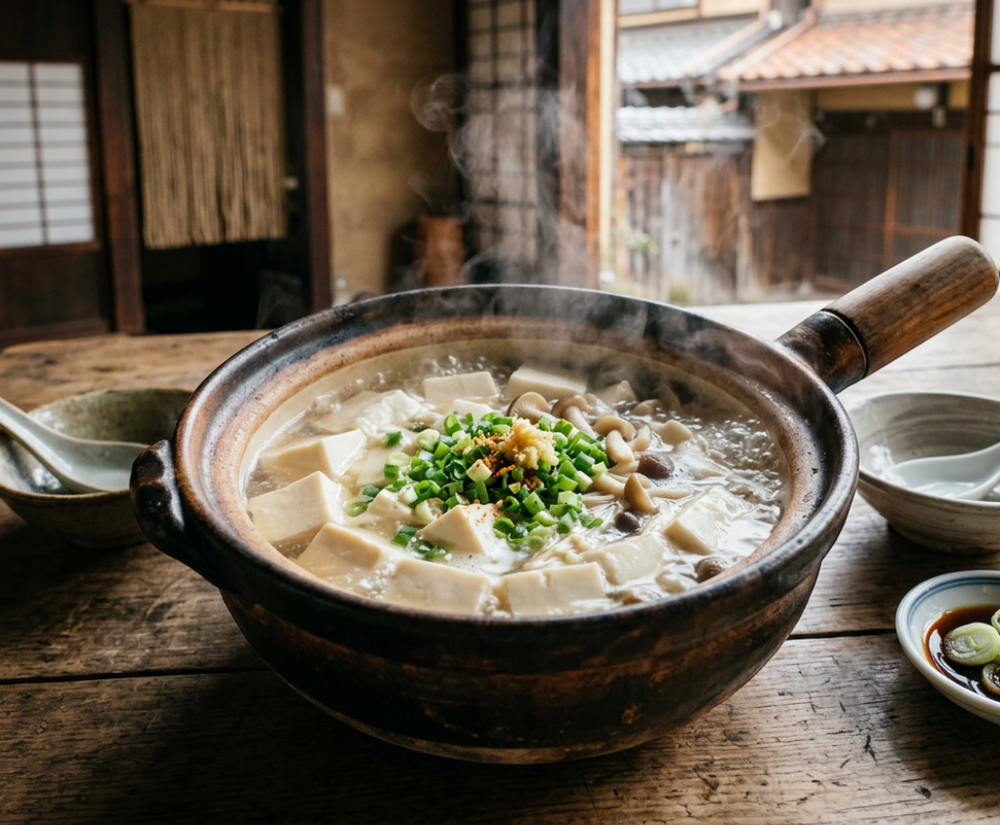
The steam rising from a bowl of hearty hōtō noodles offers a warm, comforting embrace, celebrating the simple joy of a meal made with care and fresh, seasonal vegetables. Every bite is an invitation to slow down and savor the rich, savory flavors that have nourished travelers for generations.
Credits: Gu Ko
Local cuisine study in Kyoto, Japan

☕︎ Local Flavor

Kyoto Nishiki Market Food and Culture Walking Tour

Rating: 4.8★ | Price: [$$] | Coordinates: 35.0050° N, 135.7649° E

Navigate the narrow corridors of the "Kitchen of Kyoto," where multi-generational vendors preserve the city's culinary vocabulary. This exploration focuses on the production of Kyoto-specific ingredients, from the precision-cut hamo (conger eel) to the delicate aging of tsukemono (pickled vegetables) in wooden casks. Documenting the market’s evolution from its 14th-century origins, this tour serves as a vital record of the city’s domestic survival and gastronomic identity.

View Entry Details

Traditional Tea Ceremony in a 150-Year-Old Machiya

Rating: 5.0★ | Price: [$$] | Coordinates: 35.0001° N, 135.7595° E

Enter a preserved machiya townhouse to observe the ritualized preparation of powdered matcha, a practice that defines the Zen aesthetic of "wabi-sabi." The structure itself—a lattice-fronted merchant house—features internal courtyard gardens designed to channel wind and light according to Edo-period architectural principles. This experience functions as a physical manuscript of Kyoto’s social history, preserving the lineage of the tea masters and the artisans who built these cooling urban sanctuaries.

View Entry Details

Kyoto Ramen & Gyoza Cooking Class with Professional Chefs

Rating: 4.8★ | Price: [$$] | Coordinates: 35.0258° N, 135.7483° E

Unearth the chemical and cultural complexities behind Kyoto’s noodle culture within a professional kitchen environment. This class emphasizes the architecture of flavor, teaching the precise ratios of alkaline water to wheat flour and the slow extraction of umami from local kelp and bonito. It documents the transition of Japanese cuisine from aristocratic banquets to the industrial-era innovations that turned ramen into a global cultural anchor.

View Entry Details

Sake Brewery Tour and Tasting in the Fushimi District

Rating: 4.9★ | Price: [$$$] | Coordinates: 34.9312° N, 135.7611° E

Discover the historical Fushimi district, where the convergence of the Katsura and Uji rivers provides the soft water essential for the region's legendary sake production. Explore the white-walled kura (warehouses) that showcase the distinct Meiji-era industrial architecture of the brewery families. This tour acts as an archive of the sensory past, protecting the traditional brewing methods that have anchored this river-bound community for centuries.

View Entry Details

🛌︎ Boutique Stays

Toshiharu Ryokan

Rating: 4.8★ | Price: [$$$] | Coordinates: 34.9961° N, 135.7584° E

Inhabit a Meiji-era structure recognized as a Tangible Cultural Property, where the fragrance of cedar and the texture of tatami define the guest experience. The architecture utilizes the kyomachiya style, featuring long, narrow floor plans that historically facilitated both commerce and private residence. Staying here is an act of preserving a lineage, as the inn provides a rare, tactile engagement with the domestic life of 19th-century Kyoto elites.

View Entry Details

The Ritz-Carlton, Kyoto

Rating: 4.5★ | Price: [$$$$] | Coordinates: 35.0117° N, 135.7724° E

Ascend into a modern masterpiece that pays homage to Heian-period aesthetics through its integration of shippo enamel, lacquerware, and hand-woven textiles. Situated along the banks of the Kamogawa River, the hotel’s design mimics the rhythm of traditional riverside villas while incorporating contemporary structural transparency. It represents an architectural ambition to bridge the city's ancient aristocratic origins with its status as a global center for luxury and design.

View Entry Details

Matsui Honkan

Rating: 4.8★ | Price: [$$$] | Coordinates: 35.0065° N, 135.7651° E

Relish the quietude of a high-end ryokan that specializes in the traditional kaiseki dining experience and the ritual of the communal bath. The interior logic emphasizes the "shadow" aesthetic described by Tanizaki, using dim lighting and natural materials to create a sense of timelessness. This establishment is a vital piece of the city's hospitality puzzle, documenting the enduring relevance of traditional Japanese service in a rapidly urbanizing landscape.

View Entry Details

Yuzuya Ryokan

Rating: 4.5★ | Price: [$$$$] | Coordinates: 35.0033° N, 135.7782° E

Secure a residence in this boutique inn located at the very gates of Yasaka Shrine, characterized by its signature citrus-infused baths. The building is an architectural study in seclusion, utilizing heavy wooden beams and plaster walls to insulate guests from the bustle of the Gion district. It serves as an anchor for the city's identity, providing a sensory archive of the scents and textures that have defined Kyoto’s seasonal celebrations for generations.

View Entry Details

📍︎ Field Study

Kyoto Gion Night Walk & Geisha District Tour

Rating: 4.9★ | Price: [$$] | Coordinates: 35.0035° N, 135.7731° E

Stroll the lantern-lit cobblestones of Hanamikoji Street as the city’s entertainment district transitions into its nocturnal rhythm. The narrative focuses on the preservation of the karyukai (the flower and willow world), exploring the specific architecture of the teahouses and the historical governance of these closed-door societies. This walk is a vital record of Kyoto’s intangible heritage, documenting the survival of highly specialized performance arts within the modern city.

View Entry Details

Arashiyama Bamboo Grove and Sagano Romantic Train

Rating: 4.7★ | Price: [$$] | Coordinates: 35.0175° N, 135.6745° E

Descend into the emerald depths of the Arashiyama bamboo forest, an area that has served as a site for aristocratic retreat since the 8th century. Pair the walk with a journey on the open-air Sagano Romantic Train, which follows the Hozugawa River through steep limestone gorges. This excursion explores the relationship between Kyoto's topography and its literary history, acting as a physical manuscript of the landscapes that inspired classic Japanese poetry.

View Entry Details

Fushimi Inari and Nara Park Day Trip

Rating: 4.8★ | Price: [$$$] | Coordinates: 34.9671° N, 135.7727° E

Unearth the ancient religious foundations of Japan by traversing the vermillion torii gates of Fushimi Inari before continuing to the 8th-century capital of Nara. In Nara, examine the Daibutsuden (Great Buddha Hall) of Todai-ji, which remains one of the largest wooden structures in the world, showcasing early Buddhist engineering. This journey is a vital record of the transition of political power and the enduring influence of Shinto-Buddhist syncretism on the Japanese landscape.

View Entry Details

Kiyomizu-dera and Higashiyama Architectural Study

Rating: 4.9★ | Price: [$$] | Coordinates: 34.9949° N, 135.7850° E

Ascend the steep slopes of Higashiyama to reach Kiyomizu-dera, a temple notable for its massive wooden stage constructed without a single nail. The surrounding neighborhood, with its preserved Sannenzaka and Ninenzaka slopes, provides a high-fidelity look at the timber-frame architecture that has housed Kyoto's merchants for centuries. This tour documents the resilience of traditional wood-joinery techniques, preserving a lineage of Japanese craftsmanship that continues to influence modern structural design.

View Entry Details

Typography

Archival Note: We have personally documented these geographic specs for Kyoto, Japan to ensure every watercolor study is anchored in real-world data. By cataloging the precise elevation, light cycles, and historical epochs, we provide a technical foundation that justifies the atmospheric stillness captured in our visual artifacts.

Botanical and pigment specimen study for Kyoto, Japan Colors of Kyoto, Japan
Coordinates
35.0116° N, 135.7681° E — Kinki Region, Honshu, Kyoto Basin
Historical Epoch
Imperial capital established in 794 CE. Heian Period golden age of court culture through 1185 CE. Destroyed in the Onin War 1467–1477 and rebuilt. Imperial seat until the Meiji Restoration transferred government to Tokyo in 1869.
Elevation
45 m / 148 ft — ancient imperial capital in a mountain-ringed basin
Atmosphere
Humid Subtropical (Cfa). Hot humid summers exceeding 35°C in the basin, cold winters with snow on temple rooftops, extraordinary cherry blossom in late March, and maple foliage in mid-November.
Observation Hour
17:00–18:00. Blue hour in Gion when the Hanamikoji lanterns glow against the darkening sky. The Fushimi Inari torch lighting begins at this hour on a path clear of tourist traffic for approximately 40 minutes.
Primary Pigment
Imperial Vermilion (#E60012) and Moss Temple Green (#8A9A5B)
Best Time to Visit
March through May, October through November — cherry blossoms or autumn maple fire transforms the temple gardens, temperatures are mild, and the light is extraordinary
Avoid Visiting
July through August — the heat and humidity are oppressive at 36°C, the Golden Pavilion queues stretch for an hour, and afternoon thunderstorms are frequent

The Local Tongue

Language is the invisible architecture of Kyoto, Japan. These entries document the regional vocabulary—capturing the "texture" of local speech that standard translations often miss. Hand-curated expressions reflecting the specific spirit and daily rhythm of the region.
Archival study of Japanese cultural texture

via / DSD

Primary Language Japanese
Regional Dialect Kyōto-ben

Hannari (はんなり)

This quintessential Kyoto term describes an elegance that is both bright and sophisticated without being flashy. It captures the sight of a kimono-clad woman walking through Gion or the soft glow of a paper lantern against an ancient wooden wall.

Okini (おおきに)

While standard Japanese uses "Arigatou," Kyoto locals often say "Okini" to express their gratitude. It carries a warm, neighborly spirit that feels like a friendly nod from a shopkeeper who has seen generations pass by.

Oideyasu (おいでやす)

You’ll likely hear this rhythmic greeting the moment you step into a traditional ryokan or tea house. It is a welcoming "please come in" that feels less like a formal business greeting and more like an invitation into a sanctuary.

Wait! before you go...

Before you head over to Kyoto, Japan, we wanted to share a few basic tips we picked up along the way. These notes cover the simple things—like how to get around or what to do about cash—so you can spend less time worrying and more time just enjoying the place.
🚲 Getting Around For a mix of efficiency and peace, the Kyoto City Subway is fantastic for avoiding traffic. To reach the scenic outskirts, the charming local trains and the comprehensive bus network offer a wonderful way to see the city sights through the window!
⚖️ Cash or Card While digital payments and credit cards are becoming much more common, carrying a slim wallet of yen is still a smart move for smaller shrines, local ramen shops, and traditional markets. A mix of both will ensure you are ready for any adventure!
☁️ Good to Know One lovely "unwritten rule" is the art of quiet consideration. You will notice people speak in hushed tones on public transit and always stand on the designated side of escalators to let others pass, creating a very peaceful flow through the city!
🏧 ATMs Finding cash is a breeze if you look for the bright green 7-Eleven signs or the Japan Post Bank symbols. These spots are very friendly to international cards and are tucked into almost every neighborhood!
💳 Currency You will be using the Japanese Yen, which is a beautifully designed currency. The exchange vibe is very organized and clear, making it easy to keep track of your travel treasure!
🔌 Plugs Your gear will feel right at home with Type A and Type B plugs, which are the two flat pin styles. Just keep in mind that Japan runs on 100 volts, so while most modern laptops and phone chargers handle it beautifully, you might want to double check any high powered hair tools!
🛡️ Safety Kyoto is famously one of the safest cities you will ever visit, so you can breathe easy as you explore. Just practice the same gentle awareness you would anywhere else, like keeping your belongings close in busy temple crowds and staying mindful of your surroundings at night!
✈️ Airports You will most likely touch down at Kansai International Airport (KIX), which is the primary gateway for international travelers. For domestic hops within Japan, Itami Airport (ITM) is the convenient hub closer to the city center!

Behind The Scenes

Nathan

Note from the Founder

Hey, did you know this fun fact about Kyoto, Japan? Kyoto is so rich in history that it is home to over 1600 Buddhist temples and 400 Shinto shrines!
Thank you for exploring the Kyoto, Japan series with us. We hope these notes have inspired you to add this incredible destination to your own passport—we are so glad you’re here. — Nathan

The Magnets

The Coasters

The Canvas