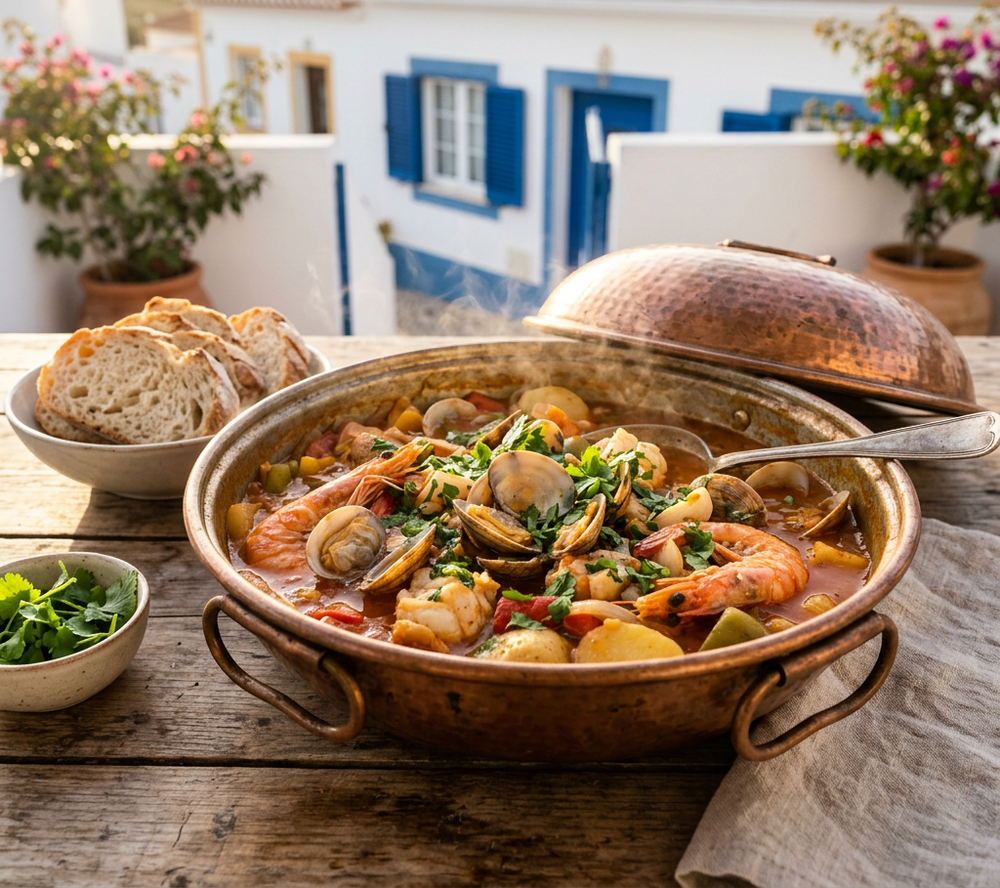
Local Cuisine Spotlight

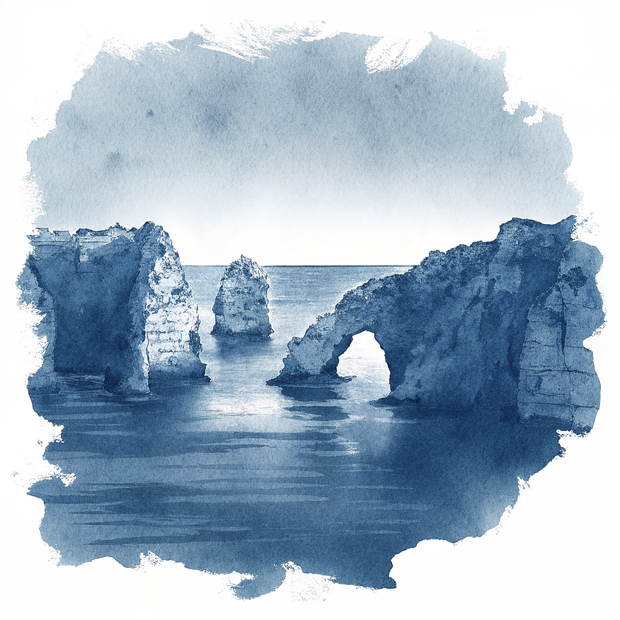
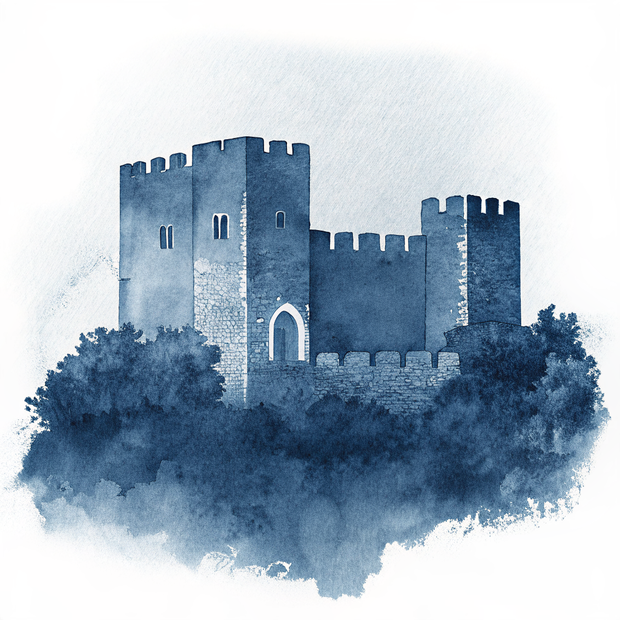
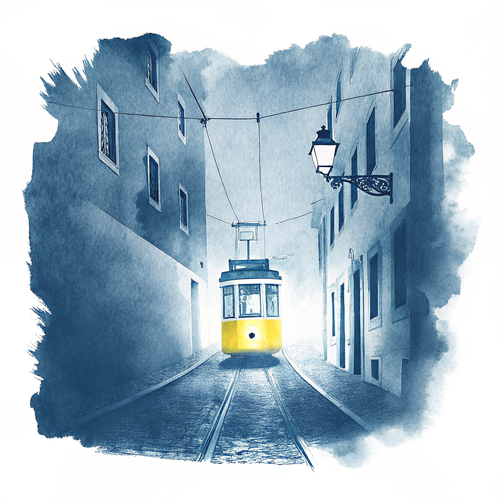
Now representing Algarve — 1 original piece, each hand-crafted in watercolor.
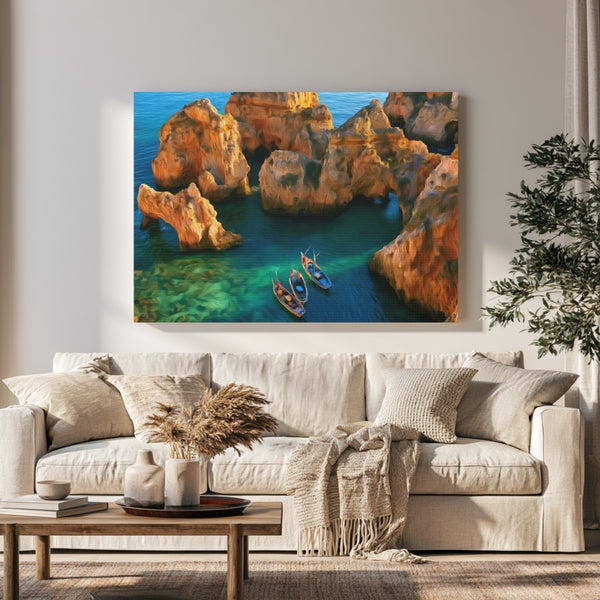
The Algarve is not simply a coastline. It is a slow unfolding of ochre cliffs, whitewashed villages, and Atlantic horizons that have drawn sailors, Moorish architects, and sun-seeking wanderers for centuries. The region carries a layered history written in its place names, most of which still echo Arabic origins from seven hundred years of Moorish rule, and in its azulejo-tiled churches that seem to glow from within on even the quietest afternoons. Inland, cork oaks and almond groves soften the landscape into something almost meditative, while the southern coast performs its famous drama with sea-carved arches and golden sea stacks rising from impossibly turquoise water. This is a place that rewards slowness, where a morning spent watching fishing boats return to Olhao or a late afternoon glass of wine at a clifftop miradouro feels like exactly the right way to spend a life.
Every canvas is painted from a real place. Explore the map to see exactly where each scene lives — and wander Algarve the way a traveler would, one landmark at a time.
Keep Exploring
Archival Note: A curated field study of Algarve, Portugal, prioritizing the specific atmospheric stillness of the region. These artifacts have been meticulously sourced from our global archival partners to represent the area's unique cultural frequency and environmental character. This selection serves as a formal observation for our ongoing global archive, vetted for its visual accuracy and archival merit.


Archival Note: A curated field study of Algarve, Portugal, prioritizing cultural relevance and archival merit. These locations have been meticulously researched and vetted to ensure they represent the most authentic atmosphere for your own expedition.
Archival Note: A formal technical study of Algarve, Portugal, archiving the coordinates, elevation, and environmental data that define the region. This data serves as a vital record for our ongoing global field study, providing the technical foundation behind every atmospheric detail captured in our visual work.
 Colors of Algarve, Portugal

via / Uiliam Nörnberg


