Stone Town, Zanzibar

An original watercolor print from The Painted Passport archive — designed to bring the light, color, and atmosphere of your favorite destinations into your home.
Original Series / Visual Study
Regional Dossier

Stone Town, Zanzibar | Where the Indian Ocean Wrote Its Most Lavish Letter

Stone Town is one of those places that feels like it was dreamed up by someone who had read too much history and loved it anyway. The old city sits at the western tip of Zanzibar Island, its coral-stone buildings stacked close enough to share secrets, its carved wooden doors competing for beauty the way gardens compete for sunlight. Arab traders, Portuguese explorers, Omani sultans, and British colonizers all left something behind here, and the result is a place of extraordinary layered texture. The light in the late afternoon turns the limestone facades the color of warm honey, and the call to prayer drifts across rooftops at the same hour the fishing dhows come in.

A watercolor palette for Stone Town draws from the sea and the soil in equal measure. Think deep indigo and turquoise where the ocean meets the harbor walls, softened by the bleached coral white of sun-worn buildings and the rust-orange of aged timber. Clove and saffron yellows echo the spice trade that built this city, while a dusty rose at dusk settles over everything like a final, generous brushstroke.

Add to the collection for /

$18.00

Finding the Stillness

It's hard to put the "vibe" of a place into words, so we put together a few images that we think show the quiet side of Stone Town, Zanzibar. These are the textures and small moments we've archived to capture the stillness of this corner of the world.

Stone Town, Zanzibar visual study 01
Stone Town, Zanzibar / No. 01 via Alex Levis
The soft, fading light of dusk casts the historic stone buildings in cool blue tones while warm amber light lingers on the horizon. The turquoise waters reflect the sky's complexity, creating a serene palette that reveals both the bustling beach life below and the quiet grandeur of the architecture. This moment captures Stone Town as a living, breathing place where centuries of history meet the gentle rhythm of coastal life.
Stone Town, Zanzibar visual study 02
Stone Town, Zanzibar / No. 02 via Rob Zohrab
The monochromatic palette intensifies the timeless quality of this Stone Town alley, where crumbling facades and tangled wires speak to centuries of history. Shafts of light penetrate the narrow passage, casting sharp shadows that emphasize the architectural details and worn textures of the buildings. Standing here, one would experience a sense of quiet solitude, with the cool darkness of the alley offset by patches of warm Mediterranean sunlight.
Stone Town, Zanzibar visual study 03
Stone Town, Zanzibar / No. 03 via Diji Aderogba
This photograph showcases the iconic carved wooden doors that define Stone Town's architectural heritage, with their rich orange hue and intricate relief patterns reflecting Swahili craftsmanship. The weathered patina and darkened crevices of the carved details reveal the door's age and exposure to the elements, creating depth in the geometric designs. Often overlooked amid the ornate embellishments is the simple metal padlock, a quiet reminder of the practical security needs that persist alongside the doors' cultural and artistic significance.

Where to wander

Archival Note: A curated field study of Stone Town, Zanzibar, prioritizing cultural relevance and archival merit. These locations have been meticulously researched and vetted to ensure they represent the most authentic atmosphere for your own expedition.

Local Cuisine Spotlight
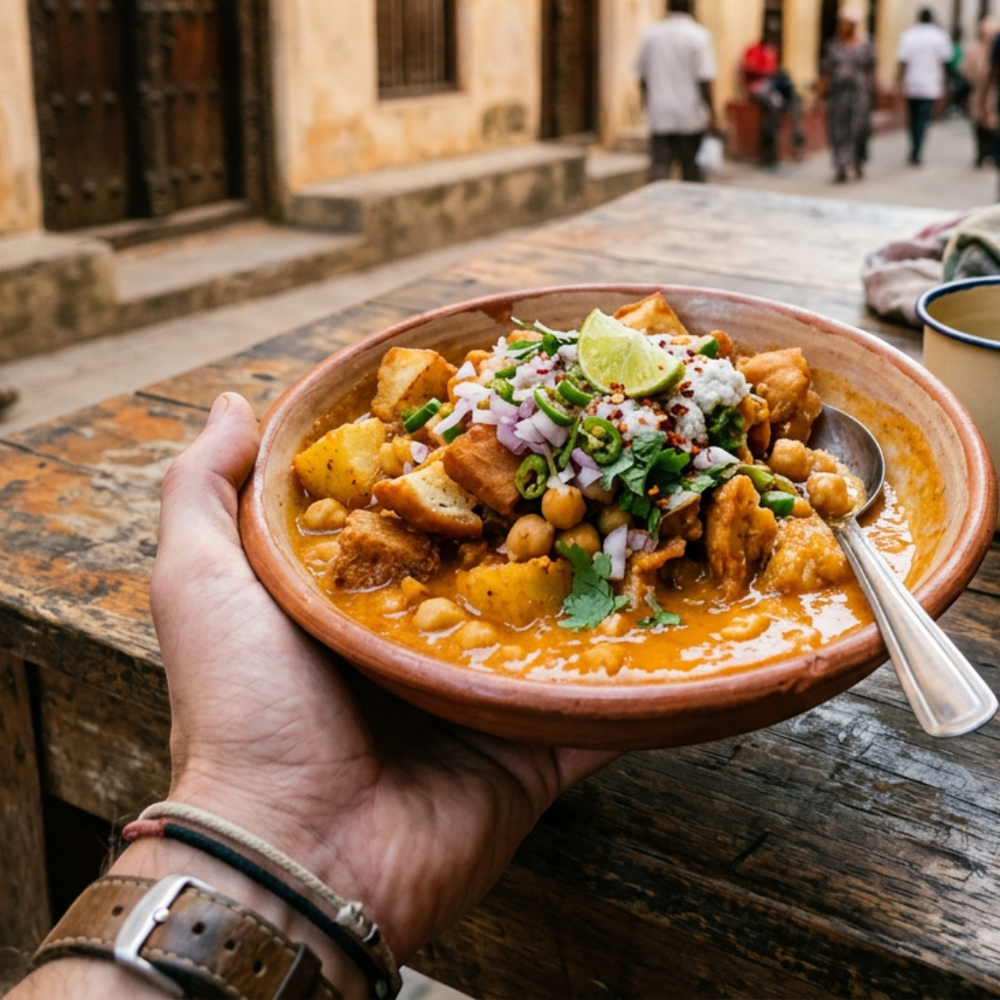
This aromatic curry glows with warmth in its terracotta vessel, layered with tender fried potatoes and chickpeas swimming in a rich, spiced sauce. Fresh cilantro and red onion provide bright contrast atop the golden-hued dish, while a lime wedge promises a zingy finish to each spoonful. It's the essence of Stone Town comfort food.
Credits: THE PAINTED PASSPORT
Local cuisine study in Stone Town, Zanzibar

☕︎ Local Flavor

The Rooftop Restaurant at Emerson Spice

Rating: 5* | Price: $$$ | Coordinates: -6.1641, 39.1888

Dining here at sunset is an almost theatrical experience, with low cushioned seating, flickering candles, and the call to prayer drifting across the rooftops from nearby mosques. The menu celebrates Swahili cuisine with dishes like coconut pilau, tamarind prawns, and slow-cooked lamb fragrant with cardamom and cinnamon. Reservations are essential and strongly recommended well in advance because this beloved spot fills up every single evening without exception.

View Entry Details

Forodhani Gardens Night Market

Rating: 4* | Price: $ | Coordinates: -6.1608, 39.1878

As the sun drops over the harbor, this beloved waterfront park transforms into a buzzing open-air food market where vendors grill Zanzibar pizza, fresh octopus, and sugar cane juice right before your eyes. The energy is festive and communal, with locals and travelers shoulder to shoulder along the stone seawall sharing food and laughter. Arriving just after dusk gives you the best selection and the warmest atmosphere this iconic gathering place has to offer.

View Entry Details

Lukmaan Restaurant

Rating: 4* | Price: $ | Coordinates: -6.1629, 39.1905

A beloved institution among Stone Town locals, Lukmaan serves generous portions of authentic Swahili home cooking from a humble but spotlessly clean dining room near the Darajani Market. The daily specials board features dishes like biriyani, fish curry, and pilau rice that change according to what arrived fresh at the market that morning. The prices are extraordinarily reasonable, the portions are massive, and the warm hospitality makes every visitor feel like a returning regular.

View Entry Details

The Terrace at Park Hyatt Zanzibar

Rating: 5* | Price: $$$$ | Coordinates: -6.1648, 39.1882

Set directly on the seafront with unobstructed views of dhow traffic crossing the turquoise channel toward the mainland, this refined restaurant serves inventive dishes that honor local ingredients with international technique. Starters of cured yellowfin tuna and coconut bisque are followed by beautifully plated mains showcasing Zanzibar lobster and seasonal vegetables from nearby farms. The wine list is thoughtfully curated and the service is attentive without ever feeling formal or stiff.

View Entry Details

🛌︎ Boutique Stays

Emerson on Hurumzi

Rating: 5* | Price: $$$ | Coordinates: -6.1630, 39.1894

This restored 19th-century merchant mansion rises five stories above the old town and rewards guests with a rooftop terrace that glows beautifully at sunset. Each room is filled with carved Zanzibari furniture, Persian rugs, and antique lanterns that tell stories of the spice trade era. The tea house at the top is an experience in itself, offering chai and views across the coral-stone rooftops.

View Entry Details

Park Hyatt Zanzibar

Rating: 5* | Price: $$$$ | Coordinates: -6.1648, 39.1882

Occupying two beautifully preserved seafront buildings including the historic Jubilee Palace, this hotel blends colonial grandeur with sleek contemporary design effortlessly. Rooms face the Indian Ocean and feature deep soaking tubs, locally inspired textiles, and warm lighting that feels genuinely romantic. The infinity pool hovering above the waterfront is one of the most spectacular places to spend a lazy afternoon in all of East Africa.

View Entry Details

Zanzibar Coffee House

Rating: 4* | Price: $$ | Coordinates: -6.1622, 39.1901

Tucked inside a beautifully renovated merchant house in the heart of the old town, this boutique guesthouse offers intimate rooms with high ceilings, carved wooden doors, and a genuine sense of place. The ground floor cafe brews excellent Tanzanian coffee each morning and fills the courtyard with a welcoming aroma. Staff are wonderfully knowledgeable about hidden corners of Stone Town and love helping guests discover the neighborhood authentically.

View Entry Details

Jafferji House and Spa

Rating: 4* | Price: $$$ | Coordinates: -6.1635, 39.1897

This elegant boutique hotel is a passion project by renowned Zanzibari photographer Javed Jafferji, and his artistry is visible in every carefully composed corner of the building. Rooms are adorned with original photography, antique furnishings, and colorful hand-stitched fabrics sourced from local artisans across the archipelago. The rooftop spa offers traditional Swahili treatments using coconut oil and clove, leaving guests refreshed and deeply connected to the island.

View Entry Details

📍︎ Field Study

House of Wonders (Beit al-Ajaib)

Rating: 5* | Price: $ | Coordinates: -6.1612, 39.1879

Built in 1883 as the ceremonial palace of Sultan Barghash, this magnificent seafront building was the first in East Africa to feature electric lights and an elevator, which earned it its legendary name. The grand colonnaded facade and ornate carved doors make it one of the most photographed landmarks in all of Zanzibar and a genuine symbol of Swahili civilization at its height. Even if restoration work limits interior access, walking its perimeter and imagining the sultans who gathered here is a genuinely moving experience.

View Entry Details

Old Fort (Ngome Kongwe)

Rating: 4* | Price: $ | Coordinates: -6.1614, 39.1880

Zanzibar's oldest standing structure dates to the late 17th century and was built by Omani Arabs to defend against Portuguese raids along this strategic coastline. The thick coral-stone walls enclose a lively open-air amphitheater where cultural performances, craft markets, and film screenings bring the ancient space vibrantly back to life. Climbing the ramparts at golden hour gives a sweeping perspective over the harbor and the layered history compressed into every narrow street below.

View Entry Details

Palace Museum (Beit al-Sahel)

Rating: 4* | Price: $ | Coordinates: -6.1610, 39.1877

Once the main residence of the Zanzibar sultanate, this whitewashed seafront palace now houses a fascinating collection of royal furniture, family photographs, and personal artifacts that paint an intimate portrait of life under Omani rule. Rooms preserve the carved beds, Victorian china, and ornate mirrors that sultans imported to project wealth and cosmopolitan taste during the height of the spice trade. A knowledgeable local guide will transform a simple walk through the rooms into a rich and surprising story about power, trade, and culture.

View Entry Details

Darajani Market

Rating: 4* | Price: $ | Coordinates: -6.1624, 39.1908

Stone Town's main covered market has operated continuously since 1904 and remains the beating heart of daily life in the old city, filled with the scent of cloves, cardamom, and fresh fish mingling together in the warm humid air. Vendors sell everything from tower-stacked spices and colorful kangas to live chickens and handwoven baskets, offering a completely unfiltered window into local commerce. Visiting early in the morning when the fish stalls are at their most active is the best way to experience the market at its most energetic and authentic.

View Entry Details

Typography

Archival Note: A formal technical study of Stone Town, Zanzibar, archiving the coordinates, elevation, and environmental data that define the region. This data serves as a vital record for our ongoing global field study, providing the technical foundation behind every atmospheric detail captured in our visual work.

Botanical and pigment specimen study for Stone Town, Zanzibar Colors of Stone Town, Zanzibar
Coordinates
6.1600° S, 39.1900° E — Stone Town, west coast of Unguja Island, Zanzibar Archipelago, Tanzania
Historical Epoch
Stone Town rose to global significance under the Omani Sultanate in the 19th century, becoming the center of Indian Ocean trade in cloves, ivory, and enslaved people. The Slave Market, abolished in 1873 under British pressure, now stands as a cathedral on that same ground.
Elevation
0-15 m / 0-49 ft. Stone Town occupies a low coastal promontory at near sea level, with the oldest quarter built directly on coral bedrock along the harbor edge.
Atmosphere
Aw, Tropical Savanna. Hot and humid year-round with two monsoon seasons shaping the calendar. The short rains in November and the long rains from March to May define the rhythm of life here.
Observation Hour
06:30. The harbor glows amber as dhows leave for the morning catch, and the coral-stone facades catch a warm side-light before the sky turns white with heat. Two hours of soft, golden clarity follow sunrise.
Primary Pigment
Omani Indigo (#3B5A8A) and Spice Saffron (#D4872E)
Best Time to Visit
June through October. The cool dry season brings calm seas, clear skies, and comfortable humidity ideal for walking the old town's alleys and exploring the coast.
Avoid Visiting
March through May. The long rains, known locally as Masika, bring heavy downpours daily and make outdoor exploration persistently difficult.

Behind The Scenes

Nathan

Note from the Founder

Hey, did you know this fun fact about Stone Town, Zanzibar? Stone Town is a UNESCO World Heritage Site inscribed in 2000. Its carved wooden doors number over 500, many of them older than the buildings they now guard, moved and reinstalled across centuries of rebuilding and renovation.
Thank you for exploring the Stone Town, Zanzibar series with us. We hope these notes have inspired you to add this incredible destination to your own passport—we are so glad you're here. — Nathan

Some of our Favorites