Nara, Japan

An original watercolor print from The Painted Passport archive — designed to bring the light, color, and atmosphere of your favorite destinations into your home.
Original Series / Visual Study
Regional Dossier

Nara, Japan | Where the Sacred Walks Freely Among the Living

Nara carries the quiet authority of a place that has always known it mattered. Japan's first permanent capital, it was the seat of an empire before Kyoto ever rose to prominence, and that deep age shows in every mossy stone lantern and cedar-framed gate. The light here has a particular quality in the early morning, filtering through ancient cryptomeria forests in long golden shafts that make the world feel like a painting already underway. Hundreds of sika deer drift through the park like living spirits, unbothered and unhurried, regarded by locals as divine messengers of the god Takemikazuchi. The city does not rush you. It asks you to slow down, to look closely, and to feel the particular peace of a place held sacred for over thirteen centuries.

A watercolor palette for Nara draws from the earth itself: the warm ochres of aged temple timber, the soft mineral grey of stone lanterns colonized by lichen, and the deep verdigris of copper rooftops patinated by centuries of rain. Blossoms push bursts of pale sakura pink and warm ivory through the composition in spring, while autumn floods the same streets with burnt sienna and persimmon orange. The greens here are never sharp or synthetic but always mossy, hushed, and layered, the kind that come from mixing sap green with a generous wash of raw umber.

Add to the collection for /

$18.00

Finding the Stillness

It's hard to put the "vibe" of a place into words, so we put together a few images that we think show the quiet side of Nara, Japan. These are just some of the textures and small moments that felt special to us while we were exploring.

Nara, Japan visual study 01
Nara, Japan / No. 01 via Worachat Sodsri
Two sika deer graze nose-to-nose on a carpet of vivid green grass, their warm tawny coats catching the soft, diffused light of an overcast spring afternoon. Above them, cherry blossom trees arch like a canopy of pale pink and white, their petals dense and heavy against the cool grey sky. It is the kind of quiet, unhurried moment that makes Nara's Deer Park feel less like a tourist destination and more like a place where the world has simply agreed to slow down.
Nara, Japan visual study 02
Nara, Japan / No. 02 via Alex Iabnmkymsfa
The dappled sunlight filters through an ancient canopy of moss-covered trees, casting a shifting, luminous glow across the stone lanterns that line the path like silent sentinels. A visitor standing here would feel the weight of centuries pressing gently around them — the air cool and faintly damp, carrying the scent of moss and aged stone. There is a profound stillness to the place, sacred and unhurried, as though time itself moves differently beneath these gnarled, reaching branches.
Nara, Japan visual study 03
Nara, Japan / No. 03 via Michael Demarco
The ancient stone lanterns of Kasuga Taisha stand in weathered rows, their surfaces surrendering entirely to thick velvet moss that glows an almost electric green against the cold grey granite. What most visitors fail to notice is the small Sika deer tucked quietly between the lanterns in the lower left — a living reminder that in Nara, the sacred and the wild share the same breath. The white paper tags bearing purple shrine seals flutter against the stillness, marking each lantern as a donated offering, transforming this moss-covered corridor into something between a forest and a temple.

Where to wander

Archival Note: These recommendations were curated personally during our time in Nara, Japan to capture the textures that defined the quiet frequencies of the trip. Every entry here is a place we genuinely love; we hope these notes inspire you to wander off the main path and discover the same stillness we found on the ground.

Local Cuisine Spotlight
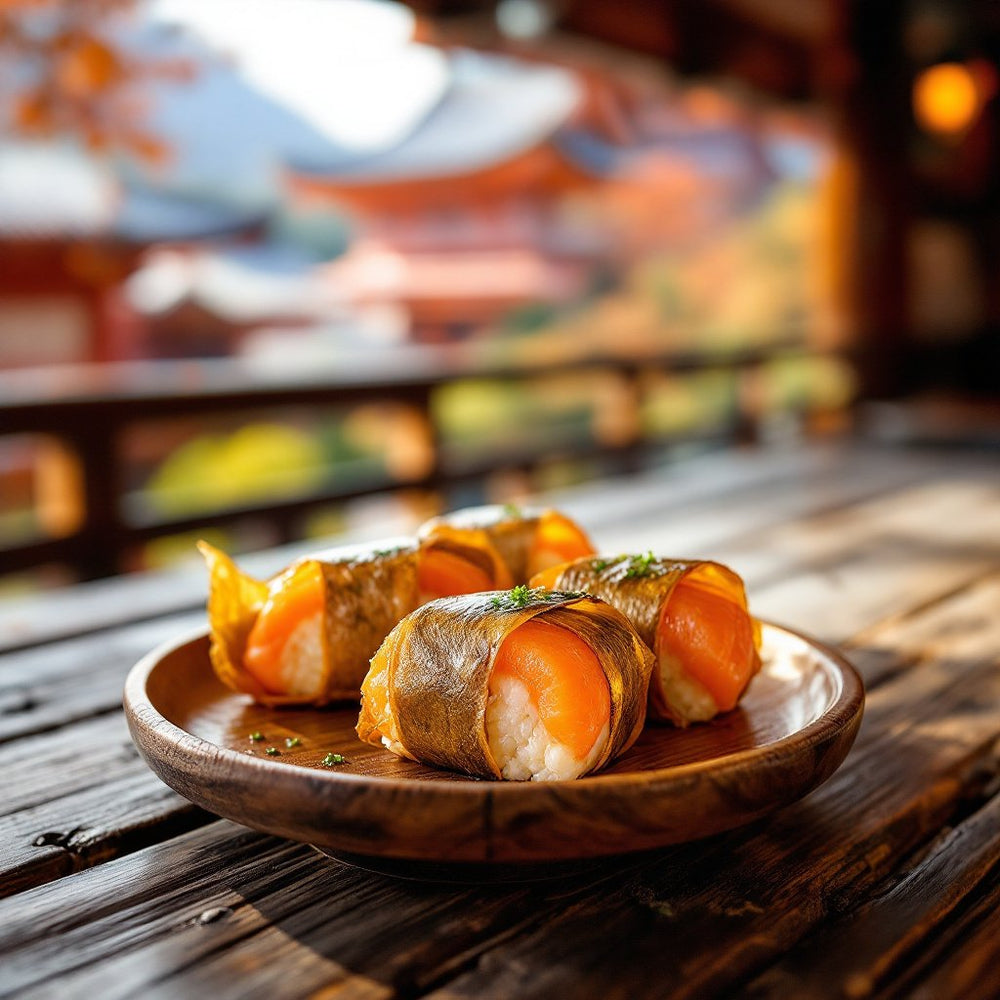
柿の葉寿司 (Kakinoha-zushi) from Nara wraps seasoned rice and salmon in fragrant persimmon leaves, infusing each bite with a subtle, earthy sweetness. The leaves impart a delicate floral aroma while naturally preserving the fish. This centuries-old regional treasure embodies Nara's quiet, ancient elegance.
Credits: The Painted Passport
Local cuisine study in Nara, Japan

☕︎ Local Flavor

Yanagiya

Rating: 5* | Price: $$ | Coordinates: 34.6838° N, 135.8412° E

Tucked beside a stone lantern path near Kasuga Taisha, Yanagiya has been serving fragrant kakinoha-zushi — rice and salmon wrapped in persimmon leaves — for generations. The leaves impart a subtle, earthy perfume that is entirely unique to Nara's culinary tradition. Arrive early, as the handcrafted boxes sell out most afternoons.

View Entry Details

Maguro Koya

Rating: 4* | Price: $$ | Coordinates: 34.6819° N, 135.8301° E

A lively, wood-paneled izakaya near Higashimuki shopping street where the tuna dishes are outrageously good and the sake list runs deep into Nara's own breweries. The staff are boisterous and warm, refilling drinks before you think to ask. Order the negitoro hand rolls and whatever seasonal small plate the chef recommends that evening.

View Entry Details

Mizuya Chaya

Rating: 4* | Price: $$ | Coordinates: 34.6889° N, 135.8453° E

A charming thatched teahouse nestled inside Nara Park, where deer occasionally peer through the wooden fence as you sip matcha. The wagashi sweets served alongside — shaped like maple leaves and lotus blossoms — are almost too pretty to eat. It is one of the most peaceful lunch stops in the city, especially on misty autumn mornings.

View Entry Details

Harishin

Rating: 5* | Price: $$$ | Coordinates: 34.6801° N, 135.8349° E

An elegant kaiseki restaurant operating from a beautifully preserved machiya, where each seasonal course arrives as a quiet meditation on local ingredients. The chef sources mountain vegetables, river fish, and Yamato beef with obvious dedication, and the presentation is always breathtaking. Reserve weeks in advance — this intimate dining room holds only a handful of tables.

View Entry Details

🛌︎ Boutique Stays

Nara Hotel

Rating: 5* | Price: $$$$ | Coordinates: 34.6851° N, 135.8431° E

A grand Meiji-era landmark perched on a forested hill, Nara Hotel has hosted emperors and celebrities since 1909. Its high-ceilinged rooms blend elegant Western architecture with Japanese refinement, offering sweeping views of the ancient park below. Waking up here feels like stepping into a living history book.

View Entry Details

Edo-San

Rating: 4* | Price: $$$ | Coordinates: 34.6773° N, 135.8389° E

This intimate ryokan sits quietly near Nara Park, offering traditional tatami rooms with futon bedding and seasonal kaiseki dinners served in your room. The attentive staff prepares a soothing yuzu bath each evening, and the cedar-scented hallways carry a genuine sense of old Japan. It is a deeply restorative place to unwind after temple-hopping.

View Entry Details

Guesthouse Nara Backpackers

Rating: 4* | Price: $ | Coordinates: 34.6812° N, 135.8298° E

A cheerful, well-run hostel housed in a lovingly restored machiya townhouse just minutes from the central sights. Communal spaces feel genuinely social, with a shared kitchen, local maps pinned to wooden walls, and friendly staff who offer honest neighborhood tips. Private and dormitory rooms alike are spotlessly clean and quietly comfortable.

View Entry Details

Hyatt Place Nara

Rating: 4* | Price: $$$ | Coordinates: 34.6847° N, 135.8276° E

Modern and polished near Kintetsu Nara Station, Hyatt Place offers spacious rooms with plush bedding and large windows that frame the city beautifully at dusk. The rooftop lounge serves excellent cocktails and craft beers alongside small Japanese plates worth lingering over. It is a reliable, stylish base that balances comfort with easy access to everything.

View Entry Details

📍︎ Field Study

Tōdai-ji Temple

Rating: 5* | Price: $ | Coordinates: 34.6888° N, 135.8398° E

Home to the world's largest bronze Buddha, the Daibutsu Hall of Tōdai-ji is genuinely awe-inspiring even on crowded days. Standing before the 15-meter gilded figure, you feel the centuries collapse into a single humbling moment. Walk the surrounding grounds at dawn when morning light filters through the cedars and the deer roam freely in the mist.

View Entry Details

Kasuga Taisha Shrine

Rating: 5* | Price: $ | Coordinates: 34.6812° N, 135.8493° E

One of Japan's most sacred Shinto shrines, Kasuga Taisha glows with over 3,000 bronze and stone lanterns that are lit dramatically during the Mantoro festivals in February and August. The vermilion corridors wind through ancient cryptomeria forest, lending the whole site an atmosphere of deep, hushed reverence. Even outside festival season, the lantern-lined pathways feel quietly magical.

View Entry Details

Nara Park

Rating: 5* | Price: Free | Coordinates: 34.6851° N, 135.8432° E

Over 1,200 freely roaming sika deer call this vast, forested park home, and they are considered sacred messengers of the gods in Nara's Shinto tradition. Pick up shika senbei — special deer crackers — from park vendors and prepare for enthusiastic, bowing companions who follow you cheerfully across the lawns. The park's cherry blossom season in April transforms the entire landscape into something otherworldly.

View Entry Details

Isuien Garden

Rating: 5* | Price: $ | Coordinates: 34.6862° N, 135.8421° E

A masterpiece of Edo and Meiji-era garden design, Isuien uses the technique of shakkei — borrowed scenery — to frame Tōdai-ji and Mount Wakakusa perfectly within its compositions. Koi drift beneath stone bridges while manicured moss and sculpted pines create scenes of profound tranquility. This is the single best spot in Nara to sit quietly and let the beauty of the city settle around you.

View Entry Details

Typography

Archival Note: We have personally documented these geographic specs for Nara, Japan to ensure every watercolor study is anchored in real-world data. By cataloging the precise elevation, light cycles, and historical epochs, we provide a technical foundation that justifies the atmospheric stillness captured in our visual artifacts.

Botanical and pigment specimen study for Nara, Japan Colors of Nara, Japan
Coordinates
34.6851° N, 135.8431° E — Central Nara, near Nara Park and Todai-ji Temple
Historical Epoch
Founded as Japan's first true capital, Heijo-kyo, in 710 AD during the Nara Period, the city became the cradle of Japanese Buddhism and state governance, its grand temples commissioned by Emperor Shomu as acts of devotion and political authority rolled into one.
Elevation
60-150 m / 197-492 ft - Nara sits in the Yamato Basin, a broad valley floor ringed by low forested hills, with the city center occupying gentle flatland rising slightly toward the eastern park and shrine areas.
Atmosphere
Cfa - Humid Subtropical. Nara has four distinct seasons, with hot humid summers, mild springs and autumns ideal for walking, and cool but rarely severe winters that keep the temple stones frost-kissed and uncrowded.
Observation Hour
06:30 - The low morning sun slants through the cryptomeria forest behind Kasuga Taisha in long amber columns, the deer still drowsy and the stone lanterns glowing before the first tourist buses arrive.
Primary Pigment
Temple Ochre (#C8913A) and Kasuga Moss (#7A8C5E)
Best Time to Visit
March through May - Cherry blossom season in late March and April transforms Nara Park into something otherworldly, and mild spring temperatures make all-day walking deeply pleasurable.
Avoid Visiting
July through August - Peak summer brings oppressive heat and humidity alongside the largest crowds, making long walks between temples genuinely uncomfortable and the deer visibly irritable.

Behind The Scenes

Nathan

Note from the Founder

Hey, did you know this fun fact about Nara, Japan? Nara was Japan's capital for only 84 years, from 710 to 794 AD, yet in that brief window it produced some of the country's most enduring Buddhist architecture, including Todai-ji, which still houses the world's largest bronze Buddha cast in 752 AD.
Thank you for exploring the Nara, Japan series with us. We hope these notes have inspired you to add this incredible destination to your own passport—we are so glad you're here. — Nathan

Some of our Favorites