Easter Island, Chile

An original watercolor print from The Painted Passport archive — designed to bring the light, color, and atmosphere of your favorite destinations into your home.
Original Series / Visual Study
Regional Dossier

Easter Island, Chile | 'The Navel of the World'

Rapa Nui sits in the southeastern Pacific Ocean with a loneliness that feels almost sacred, more than 3,500 kilometres from the nearest populated land. This tiny volcanic triangle is home to the moai, those brooding stone giants carved from compressed volcanic ash, standing sentinel across grasslands that roll toward a horizon of pure ocean blue. The island carries the weight of one of history's great mysteries: a Polynesian civilisation that flourished here in extraordinary isolation, built monumental architecture without metal tools or wheels, and left behind a written script called rongorongo that no one has fully deciphered. Walking among the moai at dusk, when the light turns the stone the colour of burnt honey, feels less like sightseeing and more like a private conversation with time.

The watercolour palette of Easter Island is vivid and elemental: the warm russet and sienna of volcanic tuff at Rano Raraku, where hundreds of unfinished moai still emerge from the hillside like thoughts half-formed. Against that earthen warmth sits the impossible blue-green of the sea at Anakena Beach, a turquoise so saturated it reads almost artificial, framed by the soft ochre of the sand and the silver-green of coconut palms. The sky here shifts from pale morning lilac to a midday cobalt so deep it seems to press down on the landscape, and at sunset the whole island glows in shades of tangerine and rose that turn every stone face into something theatrical.

Add to the collection for /

$18.00

Finding the Stillness

It's hard to put the "vibe" of a place into words, so we put together a few images that we think show the quiet side of Easter Island, Chile. These are the textures and small moments we've archived to capture the stillness of this corner of the world.

Easter Island, Chile visual study 01
Easter Island, Chile / No. 01 via Miguel Cuenca
A row of weathered moai stand guard along a rustic stone wall, their silent gaze fixed toward the vast Pacific beyond. The soft, diffused light of an overcast day bathes the green landscape in muted tones, while the dark volcanic cliffs drop sharply to turquoise waters below. This quiet moment captures the stark beauty and enduring mystery of these ancient sentinels in their remote island home.
Easter Island, Chile visual study 02
Easter Island, Chile / No. 02 via Miguel Cuenca
The afternoon light casts the iconic moai in warm, earthy tones against a dramatic sky filled with soft clouds. Standing here, one would feel the isolation and windswept tranquility of this remote Pacific island, where these ancient stone figures command a contemplative presence across the vast, rolling grassland. The serene yet enigmatic atmosphere speaks to the monumental effort and mysterious purpose behind these enduring monuments.
Easter Island, Chile visual study 03
Easter Island, Chile / No. 03 via Diego Gonzalez
This ceremonial platform on Easter Island displays a remarkable collection of restored moai statues in their characteristic upright position. The weathered stone faces reveal intricate carving details and surface textures that tell of centuries exposed to the Pacific elements. Most visitors overlook the dark volcanic stone platform base that anchors these monumental figures, providing the foundation that has preserved them through countless storms.

Where to wander

Archival Note: A curated field study of Easter Island, Chile, prioritizing cultural relevance and archival merit. While we haven't touched down here yet, we've meticulously vetted these locations through our global network of contributors to ensure they represent the most authentic atmosphere for your own expedition.

Local Cuisine Spotlight
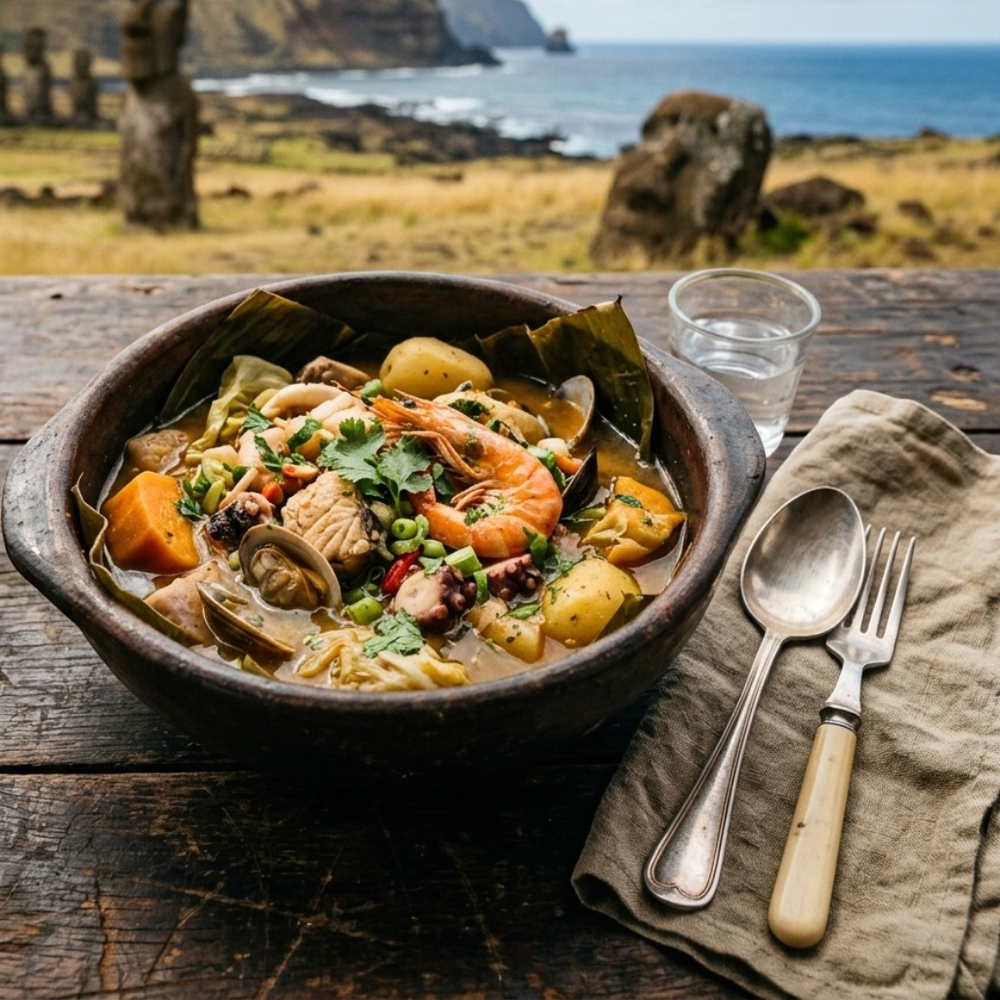
This authentic Easter Island cazuela brings together the Pacific's bounty—plump shrimp and briny clams—with tender potatoes in a rich, herbaceous broth. Served in earthy ceramics overlooking windswept cliffs and ancestral moai, each spoonful carries the island's maritime heritage and ancient spirit, a warm embrace of Polynesian coastal cuisine.
Credits: The Painted Passport
Local cuisine study in Easter Island, Chile

☕︎ Local Flavor

La Kaleta Restaurant

Rating: 5* | Price: $$$ | Coordinates: -27.1503, -109.4351

Dramatically positioned at the edge of the sea cliff, La Kaleta serves the freshest tuna and mahi-mahi caught just hours before reaching your plate. The ceviche here is legendary among travelers, brightened with local herbs and a citrus zing that captures the Pacific perfectly. Dining at sunset with waves crashing below and a glass of Chilean white wine is an experience that lingers long after you've left the island.

View Entry Details

Tataku Vave

Rating: 4* | Price: $$ | Coordinates: -27.1489, -109.4337

Tataku Vave is a beloved local haunt where Rapa Nui flavors shine through in every carefully prepared dish. The grilled octopus with coconut sauce draws regulars back time and again, and the portions are wonderfully generous. The laid-back outdoor seating and live Polynesian music some evenings create an atmosphere that feels authentically island and deeply joyful.

View Entry Details

Haka Honu

Rating: 4* | Price: $$ | Coordinates: -27.1501, -109.4355

Right on the Hanga Roa waterfront, Haka Honu is a charming seafood restaurant with colorful décor inspired by Rapa Nui mythology and petroglyphs. The fish empanadas are a must-order snack, crispy and filled with locally caught seafood that bursts with flavor. Friendly staff are happy to explain each dish's cultural roots, turning every meal into a small lesson in island heritage.

View Entry Details

Kaimana Restaurant

Rating: 4* | Price: $$$ | Coordinates: -27.1521, -109.4312

Kaimana blends Polynesian and Chilean culinary traditions into a menu that feels both inventive and deeply rooted in place. The tuna tiradito with ají amarillo is a standout dish that regulars rave about long after returning home. The intimate candlelit setting and attentive service make it an ideal choice for a special evening celebrating the wonder of being on this remote and magical island.

View Entry Details

🛌︎ Boutique Stays

Explora Rapa Nui

Rating: 5* | Price: $$$$ | Coordinates: -27.1127, -109.3497

Perched on a volcanic ridge with sweeping Pacific views, Explora Rapa Nui is the island's most celebrated luxury retreat. Each suite is designed to frame the dramatic landscape, with earthy tones and floor-to-ceiling windows. Guided excursions to the moai are included, making every stay feel like a curated adventure into Rapa Nui culture.

View Entry Details

Hangaroa Eco Village & Spa

Rating: 5* | Price: $$$$ | Coordinates: -27.1498, -109.4342

This thoughtfully designed eco-resort sits just steps from the ocean, blending Polynesian craftsmanship with modern sustainability. The spa offers volcanic stone treatments inspired by ancient Rapa Nui healing traditions that feel truly restorative. Wake to crashing waves and enjoy organic breakfasts while watching the sunrise paint the cliffs in gold.

View Entry Details

Altiplanico Rapa Nui

Rating: 4* | Price: $$$ | Coordinates: -27.1482, -109.4361

Nestled into the rugged hillside, Altiplanico's stone bungalows feel like natural extensions of the volcanic landscape surrounding them. The design is intimate and serene, with private terraces perfect for stargazing on clear southern Pacific nights. Staff are warm and knowledgeable, offering personal tips that help guests discover the island's quieter, lesser-known corners.

View Entry Details

Hotel Taha Tai

Rating: 4* | Price: $$ | Coordinates: -27.1512, -109.4298

Hotel Taha Tai offers cozy, colorful rooms with a genuinely welcoming family atmosphere that immediately puts guests at ease. Located near Hanga Roa's waterfront, it's perfectly placed for exploring local restaurants and craft markets on foot. The breakfast spread features tropical fruits and freshly baked goods that fuel a full day of exploring the moai with energy to spare.

View Entry Details

📍︎ Field Study

Rano Raraku Quarry

Rating: 5* | Price: $ | Coordinates: -27.1231, -109.2866

Rano Raraku is the volcanic nursery where nearly all of Easter Island's iconic moai were carved, and standing among hundreds of unfinished statues is profoundly humbling. Some figures emerge from the hillside only to their shoulders, frozen mid-creation in a scene that feels suspended in time. The surrounding crater lake and lush vegetation add a hauntingly beautiful contrast to the stone giants watching silently from the slopes.

View Entry Details

Ahu Tongariki

Rating: 5* | Price: $ | Coordinates: -27.1259, -109.2765

Ahu Tongariki is the island's largest ceremonial platform, bearing fifteen restored moai that stand in a breathtaking row against the open sky. Arriving at sunrise is a near-spiritual experience as golden light silhouettes the statues against the horizon in extraordinary fashion. The site was dramatically restored after a 1960 tsunami and stands today as a powerful testament to both ancient craftsmanship and modern preservation efforts.

View Entry Details

Anakena Beach

Rating: 5* | Price: Free | Coordinates: -27.0739, -109.3224

Anakena is Easter Island's most beautiful white-sand beach, fringed by swaying palm trees planted in the 1960s and lapped by clear turquoise water. Two ahu platforms with moai stand guard nearby, blending the thrill of archaeological wonder with a genuinely idyllic tropical beach setting. It's the perfect place to swim, picnic, and reflect on the extraordinary civilization that once thrived on this remote Pacific island.

View Entry Details

Orongo Ceremonial Village

Rating: 5* | Price: $ | Coordinates: -27.1900, -109.4456

Perched dramatically on the rim of Rano Kau volcano, Orongo was the sacred center of the Birdman cult, one of Rapa Nui's most fascinating and mysterious ancient traditions. Stone house foundations and elaborate petroglyphs of the birdman deity cover the clifftops overlooking two spectacular vistas at once. The sheer drop to the Pacific on one side and the vast reed-filled crater lake on the other create a setting of almost overwhelming natural and cultural power.

View Entry Details

Typography

Archival Note: A formal technical study of Easter Island, Chile—archiving the coordinates, elevation, and environmental data that define the region. This data serves as a vital record for our ongoing global field study, allowing us to reconstruct the regional atmosphere with archival precision before our physical arrival.

Botanical and pigment specimen study for Easter Island, Chile Colors of Easter Island, Chile
Coordinates
27.1127° S, 109.3497° W — Easter Island (Rapa Nui), southeastern Pacific Ocean, Chilean territory
Historical Epoch
Polynesian settlers arrived around 300-800 CE and built one of the most isolated civilisations on earth. The moai-carving period peaked between 1100 and 1600 CE before European contact in 1722 dramatically altered the island's course.
Elevation
0-507 m / 0-1,663 ft - sea level coastline rising to the volcanic peak of Maunga Terevaka, the island's highest point
Atmosphere
Cfb - Oceanic. Mild and breezy year-round with no true dry season, warm summers rarely exceeding 28C and winters that stay gentle and green.
Observation Hour
06:15 - Dawn at Ahu Tongariki delivers long raking light across the moai faces, turning the stone deep amber. The ocean behind glows pink before the crowds arrive.
Primary Pigment
Volcanic Sienna (#A0522D) and Pacific Cerulean (#1E7FAB)
Best Time to Visit
September through November - spring brings mild temperatures, lower rainfall, smaller crowds, and vivid green landscapes ideal for photography and hiking.
Avoid Visiting
February through March - the peak of summer coincides with the Tapati festival, meaning maximum crowds, higher prices, and the year's hottest and most humid conditions.

Behind The Scenes

Nathan

Note from the Founder

Hey, did you know this fun fact about Easter Island, Chile? Easter Island is one of the most remote inhabited places on earth, roughly 3,512 km from continental Chile and 2,075 km from Pitcairn Island, its nearest populated neighbour. The island measures just 24 km at its longest point yet contains nearly 1,000 moai.
Thank you for exploring the Easter Island, Chile series with us. We hope these notes have inspired you to add this incredible destination to your own passport—we are so glad you're here. — Nathan

Some of our Favorites