Shop the Collection

To help you build your own global archive, we've prepared this collection of watercolor studies from our research into Yazd, Iran. These artifacts are designed to bring the stillness of this corner of the world into your home.

Original Series Decorative Magnet

A personal study of Yazd, Iran, captured in high-fidelity watercolor and prepared for your collection.

Yazd, Iran | Ancient Windtower Skyline | Original Series Decorative Magnet
Add to Collection / $18
Exclusive Series Artifact

Original Series Gallery Canvas

This high-fidelity canvas is a beautiful way to anchor a room and keep your memories of Yazd, Iran fresh long after you've returned home.

Yazd, Iran | Ancient Windtower Skyline | Original Series Gallery Canvas detail Yazd, Iran | Ancient Windtower Skyline | Original Series Gallery Canvas detail Yazd, Iran | Ancient Windtower Skyline | Original Series Gallery Canvas detail Yazd, Iran | Ancient Windtower Skyline | Original Series Gallery Canvas detail
Add to Collection / $65

Original Series Hardboard Coaster

A personal study of Yazd, Iran, captured in high-fidelity watercolor and prepared for your collection.

Yazd, Iran | Ancient Windtower Skyline | Original Series Hardboard Coaster
Add to Collection / $18
Exclusive Series Artifact

The Spirit of the Land

Archival Note: A curated field study of Yazd, Iran, prioritizing the specific atmospheric stillness of the region. These artifacts have been meticulously sourced from our global archival partners to represent the area's unique cultural frequency and environmental character. This selection serves as a formal observation for our ongoing global archive, vetted for its visual accuracy and archival merit.

Yazd, Iran study No. 01
Yazd, Iran / 01 VIA / AmirHadi Manavi Moghadam
The warm afternoon sun bathes Yazd's historic courtyard in golden light, casting deep shadows across the terracotta brick facades. Intricate geometric tilework in blues and earth tones adorns the arches, while the rounded dome on the right catches the brightness, creating a striking contrast against the cloudless sky. This quiet moment captures the serene beauty of traditional Persian architecture preserved in the heart of the ancient city.
Yazd, Iran study No. 02
Yazd, Iran / 02 VIA / Marziyeh Tabeshfard
This intricate ceiling showcases the masterful tilework characteristic of Yazdi architecture, with brilliant turquoise glazes contrasting warmly against earthy ochre tones. Standing beneath this ornamental dome, one would be enveloped in the cool, ethereal light filtering through the geometric patterns, creating a sense of profound stillness and spiritual contemplation. The meticulous symmetry and rich color palette evoke both the precision of Persian craftsmanship and the transcendent beauty of Islamic design.
Yazd, Iran study No. 03
Yazd, Iran / 03 VIA / AmirAbbas Rahbar Modami
This photograph captures a stunning view from inside a traditional Persian building in Yazd, looking upward through an intricately carved octagonal aperture. The ornamental wooden frame features delicate scalloped edges illuminated by warm golden light, creating a striking contrast against the deep brown tones of the surrounding geometric ceiling. Most viewers focus on the opening itself, but the subtle radiating pattern that extends outward in the darkness reveals the masterful complexity of the architectural design that frames this simple view of sky.

Where to wander

Archival Note: A curated field study of Yazd, Iran, prioritizing cultural relevance and archival merit. These locations have been meticulously researched and vetted to ensure they represent the most authentic atmosphere for your own expedition.

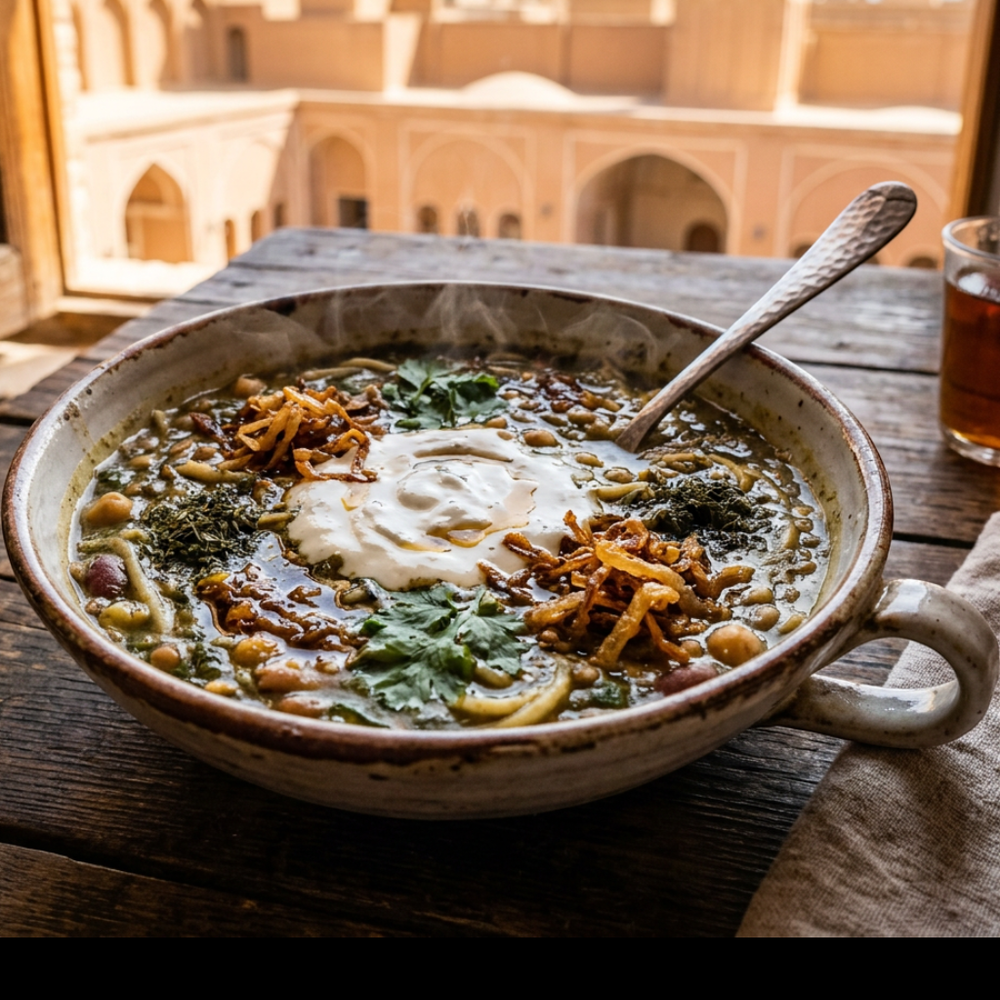
Local Cuisine Spotlight
Ash reshteh, a beloved Persian herb and lentil soup, reveals its layered character in this Yazd setting. Silky yogurt swirls into the fragrant green broth as crispy golden onions provide textural contrast. This ancient comfort dish carries the warmth of Iranian hospitality in every aromatic spoonful.
Credits: THE PAINTED PASSPORT
Local cuisine study in Yazd, Iran

☕︎ Local Flavor

Hamayesh Traditional Restaurant

Rating: 5* | Price: $$ | Coordinates: 31.8980° N, 54.3690° E

Hamayesh serves slow-cooked Yazdi lamb stew and saffron-laced rice dishes in a beautifully restored historic house with vaulted ceilings and carved plaster walls. The kitchen takes pride in using locally sourced pomegranate molasses, dried limes, and rose water in ways that feel deeply regional and genuine. A meal here is less a restaurant visit and more an immersion into Yazd's generous culinary soul.

View Entry Details

Shater Abbas Restaurant

Rating: 4* | Price: $$ | Coordinates: 31.8950° N, 54.3630° E

Shater Abbas is celebrated among locals for its perfectly charred kebabs served alongside fresh lavash bread still warm from the clay oven. The dining room spills across several interconnected traditional rooms, each decorated with antique copper pots and hand-woven kilims. Arrive early on weekends because this place fills quickly with families celebrating everything from birthdays to university graduations.

View Entry Details

Yazd Traditional Sweets Bazaar Stalls

Rating: 5* | Price: $ | Coordinates: 31.8970° N, 54.3665° E

The sweet shops clustered around the bazaar produce Yazd's legendary baklava, qottab pastries filled with almonds and cardamom, and rose-water ice cream that has been perfected over generations. Vendors are generous with samples and happy to explain the significance of each confection in Persian celebrations and religious festivals. Buying a boxed assortment to share with friends later is one of the great small pleasures of visiting this city.

View Entry Details

Haj Khalifeh Ali Rahbar Confectionery

Rating: 5* | Price: $ | Coordinates: 31.8988° N, 54.3702° E

Founded more than a century ago, this legendary sweet shop is considered the birthplace of Yazd's most iconic confections, including the crispy, honey-drenched pashmak cotton candy and dense walnut brittle. The counters are always crowded with locals buying gifts to carry back to Tehran or beyond, which tells you everything about the quality. Watching the artisans pull and spin sugar by hand is a small but genuinely enchanting performance.

View Entry Details

🛌︎ Boutique Stays

Dad Hotel

Rating: 5* | Price: $$$ | Coordinates: 31.8974° N, 54.3678° E

Dad Hotel is a lovingly restored caravanserai in the heart of Yazd's ancient mud-brick labyrinth. The courtyard glows at night with lantern light reflecting off turquoise tilework, creating an atmosphere that feels genuinely timeless. Guests wake to birdsong, fresh pomegranate juice, and views of wind towers rising against the desert sky.

View Entry Details

Moshir al-Mamalek Garden Hotel

Rating: 4* | Price: $$ | Coordinates: 31.8912° N, 54.3601° E

This elegant historic mansion sits within a lush Persian garden that feels like a secret oasis hidden from the city's dusty alleys. Rooms are decorated with hand-painted ceilings, stained glass windows, and traditional textiles that tell stories of Qajar-era craftsmanship. The sound of the central fountain and the scent of jasmine make evenings here deeply restorative and memorable.

View Entry Details

Fahadan Museum Hotel

Rating: 4* | Price: $$ | Coordinates: 31.9001° N, 54.3712° E

Nestled inside one of Yazd's oldest neighborhoods, Fahadan Museum Hotel doubles as a living archive of traditional Zoroastrian and Islamic architectural heritage. Each room is uniquely shaped by centuries-old earthen walls, wooden beams, and alcoves that once stored silks along ancient trade routes. Staying here connects you intimately with the Fahadan quarter's winding, story-filled streets.

View Entry Details

Silk Road Hotel

Rating: 3* | Price: $ | Coordinates: 31.8965° N, 54.3655° E

The Silk Road Hotel is a favorite among backpackers and budget travelers who still want authentic mud-brick charm without sacrificing warmth or cleanliness. The rooftop terrace offers sweeping views across Yazd's iconic skyline of wind catchers and ancient domes. The friendly staff arrange bicycle rentals and walking tours that help guests discover hidden corners of this UNESCO-listed city.

View Entry Details

📍︎ Field Study

Jameh Mosque of Yazd

Rating: 5* | Price: Free | Coordinates: 31.8975° N, 54.3683° E

The Jameh Mosque of Yazd features one of the tallest and most intricate mosaic tile minarets in all of Iran, glittering in shades of cobalt blue and turquoise against the pale desert sky. Built during the Timurid era, its proportions feel bold and meditative at the same time, drawing visitors into a stillness that is rare in modern travel. Early morning visits reward you with golden light washing across the facade and almost no crowds to interrupt the experience.

View Entry Details

Towers of Silence (Dakhma)

Rating: 5* | Price: $ | Coordinates: 31.8601° N, 54.3501° E

These ancient Zoroastrian funerary towers rise dramatically from rocky hills just outside the city, offering both a deeply moving glimpse into one of humanity's oldest living religions and panoramic views across the desert plain. The walk up is short but the atmosphere is contemplative, with wind, silence, and a vast open sky combining into something that feels genuinely sacred. Interpretive signs and nearby dioramas help visitors understand the cosmological beliefs that shaped this extraordinary burial tradition.

View Entry Details

Dowlat Abad Garden

Rating: 5* | Price: $ | Coordinates: 31.9020° N, 54.3570° E

Dowlat Abad Garden is home to the tallest wind catcher in the world, a soaring octagonal tower that funnels cool desert breezes down into the elegant pavilion below with remarkable engineering ingenuity. The garden itself is a UNESCO World Heritage Site and a textbook example of the Persian charbagh layout, with channels of water, cypress trees, and flowering beds creating a vision of paradise in the middle of arid terrain. Stained glass panels inside the pavilion cast pools of colored light across white marble floors in a display that is quietly breathtaking.

View Entry Details

Yazd Water Museum (Ab Anbar Museum)

Rating: 4* | Price: $ | Coordinates: 31.8960° N, 54.3648° E

This fascinating museum is housed inside a restored historic cistern and celebrates the remarkable qanat underground irrigation systems that allowed civilizations to flourish in one of the driest regions on earth for thousands of years. Models, artifacts, and well-designed exhibits explain how ancient engineers calculated water flow, built aqueducts, and distributed water fairly across entire communities without modern technology. Descending into the cool depths of the cistern itself feels like stepping into a living chapter of human ingenuity and desert survival.

View Entry Details

Typography

Archival Note: A formal technical study of Yazd, Iran, archiving the coordinates, elevation, and environmental data that define the region. This data serves as a vital record for our ongoing global field study, providing the technical foundation behind every atmospheric detail captured in our visual work.

Botanical and pigment specimen study for Yazd, Iran Colors of Yazd, Iran
Coordinates
31.8974° N, 54.3678° E — Historic city center of Yazd, near the Jameh Mosque and the old Fahadan quarter
Historical Epoch
Yazd has been continuously inhabited for over three thousand years, serving as a Zoroastrian stronghold through the Arab conquest of the seventh century and later flourishing as a Silk Road weaving and trade center under the Ilkhanid and Timurid dynasties.
Elevation
1,216 m / 3,990 ft — Yazd sits on an elevated desert plain between the Dasht-e Kavir and Dasht-e Lut, giving it cooler nights than its latitude would otherwise suggest.
Atmosphere
BWk — Cold Desert Climate. Yazd is hot and dry in summer with intense sun, but winters bring genuinely cold nights and occasional frost. Spring and autumn offer mild days perfect for walking the old city.
Observation Hour
06:30 — The low morning sun rakes across the mud-brick facades and wind towers in long amber streaks, deepening every shadow in the narrow lanes and making the terracotta city glow from within. No filters needed before 8am.
Primary Pigment
Raw Sienna (#C68642) and Lapis Turquoise (#2A6B8A)
Best Time to Visit
March through May - Spring brings mild temperatures, blooming gardens, and the Nowruz New Year energy that fills the old city with color and life.
Avoid Visiting
June through August - Peak summer heat regularly exceeds 40 degrees Celsius, making long days of walking the exposed mud-brick lanes genuinely uncomfortable and potentially dangerous.

The Local Tongue

Language is the invisible architecture of Yazd, Iran. These entries document the regional vocabulary—capturing the "texture" of local speech that standard translations often miss. Hand-curated expressions reflecting the specific spirit and daily rhythm of the region.
Archival study of Persian (Farsi) cultural texture

via / Majid Masajedi

Primary Language Persian (Farsi)
Regional Dialect Yazdi Persian, a distinct regional variety of Iranian Persian with archaic vocabulary and a softer intonation pattern.

Badgir (بادگیر)

Badgir translates literally as wind catcher, referring to the tall ventilation towers that have cooled Yazdi homes for millennia. Standing beneath one on a hot afternoon, a visitor can feel the faint channeled breeze descend through the shaft like a gift from the roofline, a piece of architectural intelligence that no modern air conditioning fully replicates in its quiet dignity.

Qanaat (قنات)

Qanaat refers to the ancient underground aqueduct system that carries snowmelt from distant mountains beneath the desert floor directly into city cisterns. The sound of water moving through a qanaat opening in a courtyard garden is a deeply emotional one in Yazd, a reminder that this entire civilization was built on the patient, invisible labor of water engineers who worked centuries before anyone alive today.

Yazdan (یزدان)

Yazdan is an old Persian and Avestan word for God or the divine, and it is widely considered the etymological root of the city name Yazd itself. In Zoroastrian culture, the word carries a sense of sacred light rather than authority, which helps explain why a small flame burning in a temple for fifteen hundred years feels less like ceremony and more like a living presence that the whole city quietly tends.

Wait! before you go...

Before you head over to Yazd, Iran, we’ve audited the essential data points for this corner of the world. These notes cover the logistics—from currency ratios to transit hubs—to help you navigate the landscape with clarity.
🚲 Getting Around Within Yazd, taxis and motorcycle taxis are the primary way to move around, and negotiating a fare before departure is standard practice. The old city is compact enough to walk once a visitor is oriented, with most major sites concentrated within a thirty-minute walk of the Jameh Mosque.
⚖️ Cash or Card Yazd operates almost entirely on cash, and foreign bank cards are not accepted due to international sanctions on Iran. Travelers must arrive with sufficient foreign currency, typically US dollars or euros, and exchange at official exchange offices called sarafi where rates are far better than at the airport.
☁️ Good to Know Hospitality in Yazd carries a cultural weight that should not be mistaken for salesmanship. When a shopkeeper or local invites someone in for tea, declining more than once can cause genuine offense, and accepting creates a warmth that tends to lead to the most memorable conversations of any trip to Iran.
🏧 ATMs ATMs in Yazd do not accept foreign cards due to international sanctions, which means all cash must be brought from outside the country or sourced through official exchange offices in the city. The sarafi exchange offices near the bazaar offer the most competitive rates and are the standard method travelers use throughout Iran.
💳 Currency The official currency is the Iranian Rial (IRR), but Iranians colloquially quote prices in Tomans, where one Toman equals ten Rials. Menu prices and shop tags are almost always written in Tomans, so confirming which unit is being used before agreeing to any price avoids the most common source of confusion for first-time visitors.
🔌 Plugs Iran uses Type C and Type F outlets at 220V and 50Hz. Most European two-pin adapters work, but travelers from North America and the UK will need a converter.
🛡️ Safety Yazd is considered one of the safest cities in Iran for travelers, with very low street crime and a population known for its calm, welcoming character toward foreigners. Visitors should stay updated on their home country travel advisories, as the broader geopolitical situation around Iran can shift, and solo female travelers should carry a headscarf and wear modest clothing to move through the city with ease.
✈️ Airports Shahid Sadooghi Airport (AZD) serves Yazd with domestic flights connecting to Tehran, Mashhad, Isfahan, and other major Iranian cities several times daily. International travelers typically fly into Imam Khomeini International Airport (IKA) in Tehran first and then connect onward to Yazd by domestic flight or take the overnight train, which takes approximately seven hours.

Behind The Scenes

Nathan

Note from the Founder

Hey, did you know this fun fact about Yazd, Iran? Yazd was recognized as a UNESCO World Heritage Site in 2017, making it one of the oldest living cities on earth still continuously inhabited and one of the finest examples of earthen architecture anywhere in the world.
Thank you for exploring the Yazd, Iran series with us. We hope these notes have inspired you to add this incredible destination to your own passport—we are so glad you're here. — Nathan

Some of our Favorites