Shop the Collection

To help you build your own global archive, we've prepared this collection of watercolor studies from our research into Victoria, British Columbia. These artifacts are designed to bring the stillness of this corner of the world into your home.

The Painted Passport®

A lovely, high-res reminder for your fridge or workspace. This watercolor magnet is the perfect small token to remember your Victoria, British Columbia adventure.

Victoria, British Columbia | Original Series Decorative Magnet | The Painted Passport®
Add to Collection / $18
Exclusive Series Artifact

The Painted Passport®

This high-fidelity canvas is a beautiful way to anchor a room and keep your memories of Victoria, British Columbia fresh long after you've returned home.

Victoria, British Columbia | Original Series Gallery Canvas | The Painted Passport® detail Victoria, British Columbia | Original Series Gallery Canvas | The Painted Passport® detail Victoria, British Columbia | Original Series Gallery Canvas | The Painted Passport® detail Victoria, British Columbia | Original Series Gallery Canvas | The Painted Passport® detail
Add to Collection / $65

The Painted Passport®

A wonderful companion for your morning coffee. This coaster captures the atmosphere of Victoria, British Columbia in a functional, beautiful way.

Victoria, British Columbia | Original Series Hardboard Coaster | The Painted Passport®
Add to Collection / $18
Exclusive Series Artifact

The Spirit of the Land

Archival Note: A curated field study of Victoria, British Columbia, prioritizing the specific atmospheric stillness of the region. These artifacts have been meticulously sourced from our global archival partners to represent the area's unique cultural frequency and environmental character. This selection serves as a formal observation for our ongoing global archive, vetted for its visual accuracy and archival merit.

Victoria, British Columbia study No. 01
Victoria, British Columbia / 01 VIA / Vlad D
The golden hour light spills across Victoria's Inner Harbour, warming the boats rocking gently at their moorings and the historic buildings that frame the waterfront. Bright geraniums and purple blooms spill over the foreground, their colors deepened by the late afternoon sun, while people gather along the wooden walkways to watch the day soften into evening. There's a stillness here that invites you to pause—the kind of moment where the beauty of a place settles into your bones and reminds you why we seek out water, light, and open sky.
Victoria, British Columbia study No. 02
Victoria, British Columbia / 02 VIA / Mario Mendez
The late afternoon light bathes the Parliament Buildings in a golden glow, their distinctive copper domes weathered to that beautiful sea-green patina that speaks of coastal heritage. The expansive lawn stretches out in peaceful invitation, where locals and visitors alike gather to simply sit and absorb the dignified beauty of this waterfront landmark. There's something profoundly calming about this scene—the way the historic stone architecture stands solid against the endless blue sky, the unhurried pace of people strolling the grounds, the sense that you've found a place where time moves just a little more gently.
Victoria, British Columbia study No. 03
Victoria, British Columbia / 03 VIA / M M
The turquoise waters lap gently against weathered rocks and driftwood, creating a shoreline that feels timeless and unhurried. Soft light filters through the coastal sky, illuminating the green hillside that rises protectively above the beach, while distant mountains fade into gentle blues across the strait. Standing here, you can feel the quiet rhythm of the Pacific—a place where the land meets the sea with such grace that time seems to slow down, inviting you to simply breathe and be present.

Where to wander

Archival Note: A curated field study of Victoria, British Columbia, prioritizing cultural relevance and archival merit. While we haven't touched down here yet, we’ve meticulously vetted these locations through our global network of contributors to ensure they represent the most authentic atmosphere for your own expedition.

Local Cuisine Spotlight
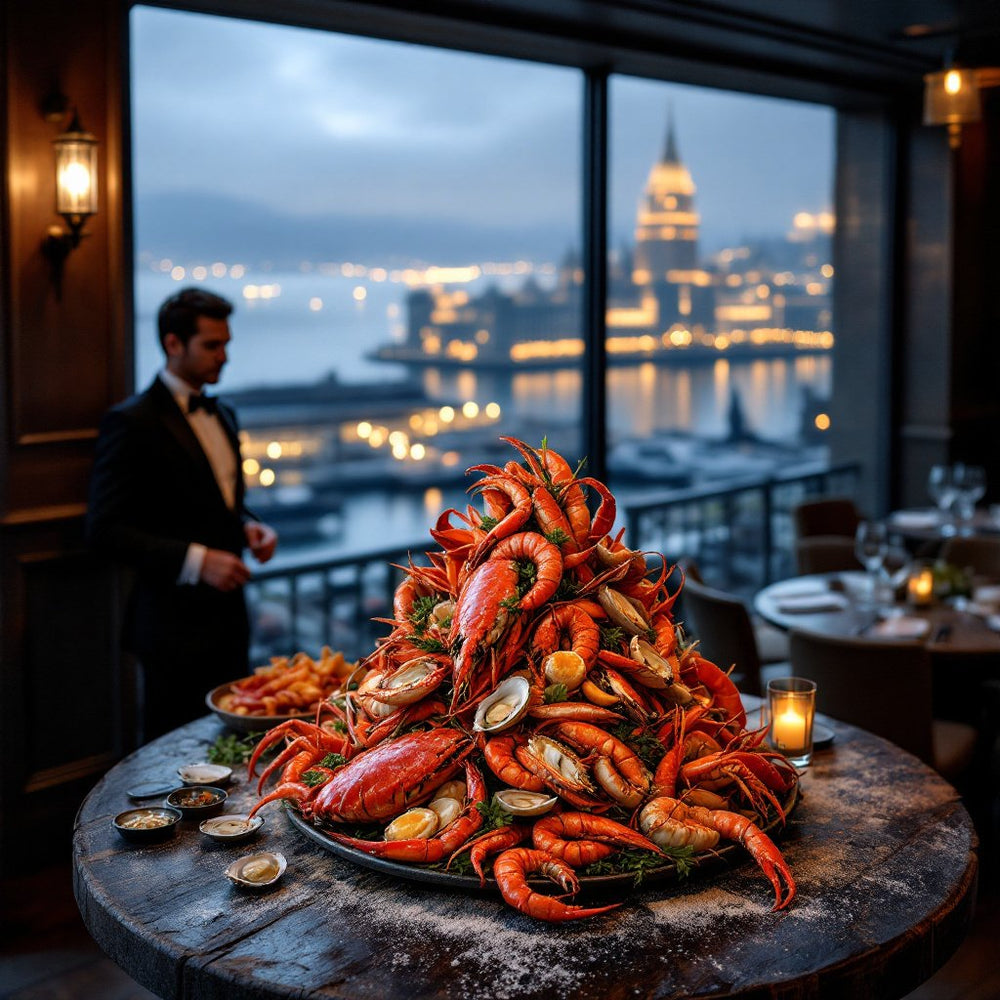
Victoria's coastal bounty reaches dramatic heights in this towering plateau de fruits de mer—a cascading architecture of Dungeness crab, spot prawns, and plump oysters harvested from Vancouver Island's pristine waters. Each element arrives pristine and cold, requiring nothing more than a squeeze of lemon to reveal the sweet brininess that defines Pacific Northwest shellfish at its finest.
Credits: The Painted Passport
Local cuisine study in Victoria, British Columbia

☕︎ Local Flavor

Agrius Restaurant

Rating: 4.9★ | Price: $$$ | Coordinates: 48.4274° N, 123.3649° W

Agrius is the most intellectually serious restaurant in Victoria — a dining room on Broad Street in the Old Town whose kitchen organizes its entire menu around the grain heritage of the Pacific Northwest, partnering with the Nanaimo-based Tall Tree Milling to build a fermentation and whole-grain baking program that runs from the sourdough bread baked in the wood-fired oven to the pasta made from heritage Red Fife wheat to the fermented grain preparations that appear as supporting elements in nearly every dish on the menu. The sourcing is exclusively from British Columbia farms and fisheries, and the cooking treats the specific ingredients of Vancouver Island, the Gulf Islands, and the Fraser Valley with a technical rigour that produces food of genuine complexity and regional identity. Agrius is where you understand that Victoria's culinary tradition at its most ambitious is organized not around the ocean view but around the agricultural landscape that feeds the city from the landward side.

View Entry Details

The Fish Hook

Rating: 4.8★ | Price: $$ | Coordinates: 48.4252° N, 123.3685° W

The Fish Hook is the most honest seafood kitchen in Victoria — a small, warm room on Blanshard Street that has been building a menu around the specific marine harvest of the waters surrounding Vancouver Island with a sourcing discipline and a technical directness that the Inner Harbour tourist restaurants cannot match and the fine dining establishments replace with technique. The halibut cheeks, the albacore tuna, the Dungeness crab preparations, and the spot prawn season menu that runs for six weeks in May and June when the local BC spot prawn harvest peaks constitute the most accurate available calendar of what the Pacific Ocean off the British Columbia coast is producing at any given moment of the year. The Fish Hook is where the Victoria food culture is most honest about what it is: a city at the end of a peninsula surrounded by some of the most productive cold water fisheries in the Pacific, with every reason to cook the fish simply and every reason to know which fish is in season.

View Entry Details

Canoe Brewpub

Rating: 4.7★ | Price: $$ | Coordinates: 48.4266° N, 123.3697° W

Canoe Brewpub occupies the engine room of the 1894 Victoria City Power Station on Swift Street — a heritage industrial building whose brick walls, exposed timber trusses, and river-rock fireplace have been converted into the most atmospheric brewpub in Western Canada, with a patio directly above the Gorge Waterway where the tidal inlet runs inland from the Inner Harbour under the blue bridge. The house-crafted ales, lagers, and the seasonal cask-conditioned ales produced in the visible brewing facility are the primary argument; the kitchen produces the most reliable pub food in the Old Town district. Canoe is where the Victoria experience becomes fully democratic and fully pleasurable simultaneously: the same heritage industrial architecture, the same view of the tidal waterway, the same properly made pint of the seasonal brew for every visitor regardless of itinerary or budget. The patio on a June evening, when the light on the Gorge is at its most specifically golden, is the most pleasant outdoor drinking address in the city.

View Entry Details

Il Terrazzo Ristorante

Rating: 4.8★ | Price: $$$ | Coordinates: 48.4278° N, 123.3671° W

Il Terrazzo is the most enduringly romantic restaurant in Victoria — a brick-walled courtyard dining room in an 1889 heritage building off Waddington Alley in the Old Town, where the wood-burning fireplace, the exposed brick, the candlelight, and a wine list of three hundred Italian and BC labels have made it the correct choice for the most important dinner in the city for over three decades. The kitchen applies classical Northern Italian technique to Vancouver Island and Pacific Northwest ingredients with a consistency that has no equal in the city's Italian dining landscape: the house-made pastas change with the season, the wild mushroom preparations draw from the forests of Vancouver Island, and the Pacific seafood preparations read as what happens when Italian culinary intelligence encounters the specific marine bounty of the British Columbia coast. Il Terrazzo is where Victoria's European cultural inheritance and its Pacific geography arrive at the same table without confusion.

View Entry Details

🛌︎ Boutique Stays

The Fairmont Empress

Rating: 4.7★ | Price: $$$$ | Coordinates: 48.4235° N, 123.3683° W

The Fairmont Empress is the defining building of Victoria — a Francis Rattenbury–designed château hotel built by Canadian Pacific Railway in 1908 on the Inner Harbour waterfront, where its ivy-covered limestone facade, its copper-green roofline, and its position directly opposite the British Columbia Legislature create the architectural composition that makes Victoria the most recognizably British city in Canada. The Empress is not merely the backdrop to the Inner Harbour but its primary compositional element — the hotel from which every ferry arrival, every harbour float plane landing, and every sunset photograph of the city is framed and understood. The afternoon tea service in the Tea Lobby, served since 1908 in a tradition maintained without interruption through two world wars, is the most institutionally specific experience available in the city: a full five-course Victorian tea with clotted cream and finger sandwiches at a white-gloved table service that takes Victoria's British colonial identity and makes it into something genuinely, almost absurdly complete.

View Entry Details

Hotel Grand Pacific

Rating: 4.7★ | Price: $$$ | Coordinates: 48.4220° N, 123.3694° W

The Hotel Grand Pacific sits directly on the Inner Harbour waterfront across from the BC Legislature — the most operationally convenient full-service hotel in Victoria, with harbour-view rooms, a full-service spa, and a rooftop hot tub above the float plane terminal where the De Havilland Beaver aircraft come and go from the Harbour Air service to Vancouver. The hotel's Pacific Restaurant is a consistently reliable kitchen for the Inner Harbour area, and the location within walking distance of the Royal BC Museum, the Parliament Buildings, Chinatown, and the beginning of the Dallas Road waterfront cycling path makes the Grand Pacific the most efficiently positioned hotel for visitors who want to document Victoria's full civic and natural landscape from a single base without a car.

View Entry Details

Oswaldo Inn

Rating: 4.9★ | Price: $$$ | Coordinates: 48.4249° N, 123.3611° W

The Oswaldo Inn is a beautifully restored 1910 Craftsman house three blocks from the Inner Harbour in the Humboldt Valley neighbourhood — a seven-room boutique property whose combination of original fir floors, Arts and Crafts woodwork, stained glass windows, and a garden where the owner's knowledge of Victoria's heritage architecture and culinary landscape exceeds any guidebook the city has produced makes it the most personally curated small accommodation in the city. The Oswaldo occupies the specific Craftsman-era Victoria that exists behind the Inner Harbour tourist layer — the quiet residential streets of heritage houses, mature garry oak trees, and the specific domestic architecture of a city that was building its residential character at the same moment the Empress Hotel was establishing its commercial one. Breakfast is served at a communal table and is the most specifically good morning meal available at any Victoria inn.

View Entry Details

Magnolia Hotel & Spa

Rating: 4.8★ | Price: $$$$ | Coordinates: 48.4237° N, 123.3688° W

The Magnolia Hotel & Spa occupies a purpose-built heritage-style building on Courtney Street one block from the Inner Harbour — a 64-room boutique hotel whose combination of intimate scale, exceptional spa facility, and the kind of personal service that the larger harbour hotels cannot maintain at their scale makes it consistently the most praised accommodation in the city for guests who want Inner Harbour proximity without the Empress's scale. The Wilson's restaurant in the lobby, one of the most seriously committed wine program in the city with a cellar organized primarily around British Columbia's Okanagan producers and Pacific Northwest natural wines, makes dining in the hotel itself a genuinely recommended choice rather than the compromise it is at most Vancouver Island accommodations. The rooftop terrace view of the Inner Harbour at dusk, with the Parliament Buildings lit behind the Empress, is available only from this specific elevation.

View Entry Details

📍︎ Field Study

Royal BC Museum

Rating: 4.8★ | Price: $$ | Coordinates: 48.4198° N, 123.3674° W

The Royal BC Museum is the most comprehensive institution of its kind on the Pacific coast of North America — the definitive archive of British Columbia's natural history, First Nations cultural heritage, and colonial settlement, housed in a complex on Belleville Street opposite the Parliament Buildings where the permanent collections cover the full geological and cultural sequence of the province from the Cretaceous period to the 20th century. The First Peoples Gallery, built in genuine collaboration with BC First Nations communities and featuring the most important collection of Northwest Coast Indigenous material culture in any Canadian museum, is the single most important institutional archive of the art and cultural practice of the Haida, Kwakwaka'wakw, Nuu-chah-nulth, and Coast Salish peoples available to the public. The Imax theatre, the natural history dioramas, and the Modern History Gallery documenting the colonization of British Columbia make the Royal BC Museum the most compressed and most authoritative single-site education in the full complexity of what British Columbia is and how it became so.

View Entry Details

The Butchart Gardens

Rating: 4.9★ | Price: $$$ | Coordinates: 48.5655° N, 123.4766° W

The Butchart Gardens is the most extraordinary private garden in Canada — a 55-acre botanical complex 21 kilometres north of Victoria in the Saanich Peninsula, created from 1904 onward in the exhausted limestone quarry of the Tod Inlet Portland Cement Company by Jennie Butchart, whose determination to transform an industrial wasteland into a living landscape produced one of the most sustained and ambitious acts of horticultural creation in North American history. The Sunken Garden, occupying the original quarry floor with walls of exposed limestone around it, is the compositional centre of the garden and one of the most precisely theatrical natural spaces in the country — the way the garden descends into the old quarry creates a spatial enclosure that the surrounding wildflower meadows and rose garden do not, making the transition from the rim into the Sunken Garden the most specific single spatial experience the property offers. The Saturday evening fireworks display in summer, synchronized to music and reflected in the Sunken Garden's central pond, is the most kitsch and most genuinely spectacular event in the Victoria calendar.

View Entry Details

Inner Harbour Whale Watching

Rating: 4.9★ | Price: $$$ | Coordinates: 48.4218° N, 123.3700° W

The waters of the Strait of Juan de Fuca between Victoria and Washington State support one of the most accessible marine mammal populations in the Pacific Northwest — the three pods of southern resident killer whales whose range covers the shipping lanes between Victoria and the San Juan Islands constitute the most studied orca population in the world, and the combination of their predictable seasonal presence and the proximity of the Victoria Inner Harbour to their feeding grounds makes Victoria the most convenient departure point for orca observation on the entire Pacific coast of North America. The three-hour rigid inflatable boat tours departing from the Inner Harbour operate multiple daily departures from May through October, and the combination of the orca presence, the humpback whales that have returned to the Strait in increasing numbers since the 1990s, and the harbour porpoises, Steller sea lions, and bald eagles visible year-round make the whale watching tour the most compact available documentary of the marine ecosystem that defines the geography of Victoria.

View Entry Details

Dallas Road Waterfront & Beacon Hill Park

Rating: 4.9★ | Price: $ | Coordinates: 48.4122° N, 123.3714° W

The Dallas Road waterfront path along Victoria's southern shoreline, from Ogden Point breakwater east through Beacon Hill Park and along the Strait of Juan de Fuca, is the most complete available walking and cycling study of what Victoria's specific geography means at the human scale — the Olympic Mountains visible across the water in Washington State, the garry oak meadows of Beacon Hill Park, the rocky shore below the cliffs where the tidal pools hold anemones and purple sea urchins and ochre sea stars, and the specific quality of the Pacific light in the late afternoon when the low sun enters from the southwest and turns the water from grey to deep silver-blue. The 500-year-old Douglas fir at the northeast corner of Beacon Hill Park — believed to be the oldest living organism within the city limits of any Canadian city — is the most specific single archival object on the route, a tree that was already a century old when the first European ships navigated the Strait of Juan de Fuca.

View Entry Details

Typography

Archival Note: A formal technical study of Victoria, British Columbia—archiving the coordinates, elevation, and environmental data that define the region. This data serves as a vital record for our ongoing global field study, allowing us to reconstruct the regional atmosphere with archival precision before our physical arrival.

Botanical and pigment specimen study for Victoria, British Columbia Colors of Victoria, British Columbia
Coordinates
48.4284° N, 123.3656° W — Capital Regional District, southern Vancouver Island, B.C.
Historical Epoch
Lekwungen Territory / Hudson's Bay Company Fort 1843 / BC Capital 1868
Elevation
0–179 m / 0–587 ft — Inner Harbour at sea level to the summit of Mount Tolmie and the Saanich hills above
Atmosphere
Oceanic (Cfb). The driest, mildest climate of any Canadian city — less rainfall than London, warm dry summers, mild winters rarely below freezing, and over 2,000 annual sunshine hours shielded by the Vancouver Island and Olympic mountain rain shadows.
Observation Hour
18:30. The summer evening when the low Pacific sun enters the Inner Harbour from the northwest and the Empress Hotel's limestone and copper roofline turns amber against the deep blue of the harbour, with the Parliament Buildings lit behind it.
Primary Pigment
Empress Copper (#7A9E7E) and Strait Pacific (#1A5C8A)
Best Time to Visit
June through September — the dry Pacific summer at its finest, whale watching season peaks in the Strait of Juan de Fuca, and the Butchart Gardens Saturday evening fireworks run through summer.
Avoid Visiting
November through February — the rainy grey season arrives, tourist infrastructure reduces hours, though Victoria stays mild and almost never falls below freezing in the coldest months.

The Local Tongue

Language is the invisible architecture of Victoria, British Columbia. These entries document the regional vocabulary—capturing the "texture" of local speech that standard translations often miss. Hand-curated expressions reflecting the specific spirit and daily rhythm of the region.
Archival study of English cultural texture

via / Divzz

Primary Language English
Regional Dialect Pacific Coast Canadian (Vancouver Island)

Inner Harbour

The Inner Harbour is the protected tidal inlet at the centre of Victoria's waterfront — framed by the Empress Hotel, the Parliament Buildings, and the wharves where Harbour Air float planes and BC Ferries passenger services to Washington State depart. The phrase functions as a geographical term, a social location, and a tourist zone simultaneously: the boardwalk is where every Victoria visit begins, where the whale watching boats depart, and where the architectural composition that makes Victoria recognizable is most theatrically presented.

Garry Oak

The garry oak is the only oak native to British Columbia — endemic to the dry rocky meadows of southeastern Vancouver Island, where it forms park-like ecosystems among the most endangered habitats in Canada. Beacon Hill Park preserves the largest remaining garry oak meadow in British Columbia, and the 500-year-old specimen at the park's northeast corner is believed to be the oldest living organism within any Canadian city limits. The garry oak's autumn gold is the defining colour of the southern Vancouver Island landscape in October.

Empress

The Empress is the shorthand Victoria residents use for the Fairmont Empress Hotel — the Francis Rattenbury–designed château dominating the Inner Harbour since 1908, serving afternoon tea in an unbroken tradition through two world wars. To say one is going to the Empress for tea is to participate in the most specifically Victorian ritual available in the city: the five-course service with clotted cream, finger sandwiches, and scones delivered at white-gloved tables in the Tea Lobby every afternoon for over 115 years.

Wait! before you go...

Before you head over to Victoria, British Columbia, we’ve audited the essential data points for this corner of the world. These notes cover the logistics—from currency ratios to transit hubs—to help you navigate the landscape with clarity.
🚲 Getting Around Victoria is best explored on foot and bicycle — the Inner Harbour, Old Town, Beacon Hill Park, and Dallas Road waterfront path are all walkable from central hotels. BC Transit buses connect the city to Saanich, Oak Bay, and the University of Victoria. BC Ferries from Tsawwassen to Swartz Bay runs hourly, with a shuttle bus to the city centre connecting at Swartz Bay terminal. Harbour Air float planes from Vancouver Harbour reach the Inner Harbour in 35 minutes.
⚖️ Cash or Card 93% Card, 7% Cash. Victoria is fully card-friendly across all hotels, restaurants, the Royal BC Museum, and the Butchart Gardens. Keep a small amount of Canadian cash for the Saturday James Bay Community Market on Menzies Street, the Inner Harbour buskers who work exclusively for tips, and the occasional cash-preferred food cart on the Government Street pedestrian corridor during the summer peak.
☁️ Good to Know Empress afternoon tea must be reserved weeks ahead in summer — the Tea Lobby fills completely every afternoon from June through September. The Butchart Gardens requires advance tickets as daily capacity is capped. The BC Ferries Tsawwassen-Swartz Bay route sells out on long weekends and summer Fridays; book online before leaving Vancouver. The Inner Harbour is a working seaplane and ferry terminal — expect Harbour Air float plane noise through the morning hours on all days of the week.
🏧 ATMs TD Canada Trust, RBC, and Scotiabank ATMs are on Government Street and Fort Street in the downtown core. ATM access thins considerably once you leave the Inner Harbour area for the Saanich Peninsula and Butchart Gardens — withdraw adequate Canadian cash before heading to these outlying destinations, the Gulf Islands ferry terminal at Swartz Bay, or any of the rural routes on the peninsula.
💳 Currency The Canadian Dollar (CAD) is the currency. Victoria prices at a moderate premium for a capital city destination — a room at the Empress runs $350–$700 CAD, dinner at Agrius or Il Terrazzo costs $70–$120 CAD per person, and the Butchart Gardens admission is $40 CAD. The Empress afternoon tea runs $130–$165 CAD per person. The Canoe Brewpub and the Fish Hook offer the best value at $20–$45 CAD per person.
🔌 Plugs Type A and B (120V, 60Hz) — standard North American outlets throughout, identical to the United States. No adapters needed for US devices. European visitors need a Type C or G adapter. The Empress Hotel and the Magnolia Hotel have fully modern electrical infrastructure in all rooms; smaller heritage Craftsman B&Bs and some historic Victoria inns may have limited outlet access in their original period rooms.
🛡️ Safety Victoria is one of the safest cities in Canada for visitors of all kinds. The primary practical consideration is the BC Ferries booking — missing a sailing on a summer long weekend adds 90 minutes to the journey. The Dallas Road path and Beacon Hill Park trails are safe and well-maintained year-round. Ocean kayaking and whale watching in the Strait requires wet weather gear in all seasons; the water temperature runs 10–14°C year-round regardless of air temperature.
✈️ Airports Victoria International Airport (YYJ) is 26 km north in Sidney with Air Canada and WestJet service from Vancouver (45 min), Calgary, and Toronto. Harbour Air float planes connect Vancouver Harbour directly to the Inner Harbour in 35 minutes — the most scenic and direct approach to the city. Vancouver International (YVR) is the primary international gateway with BC Ferries or floatplane as the onward connection to the city.

Behind The Scenes

Nathan

Note from the Founder

Hey, did you know this fun fact about Victoria, British Columbia? Victoria receives less rainfall than London, England — 584mm per year versus London's 601mm — making it the driest major Canadian city despite sitting on the Pacific coast. This exceptional microclimate is created by the combined rain shadow of the Vancouver Island mountains to the west and the Olympic Mountains to the south, which together reliably intercept the Pacific weather systems before they reach the southern tip of Vancouver Island.
Thank you for exploring the Victoria, British Columbia series with us. We hope these notes have inspired you to add this incredible destination to your own passport—we are so glad you're here. — Nathan

Some of our Favorites