Shop the Collection

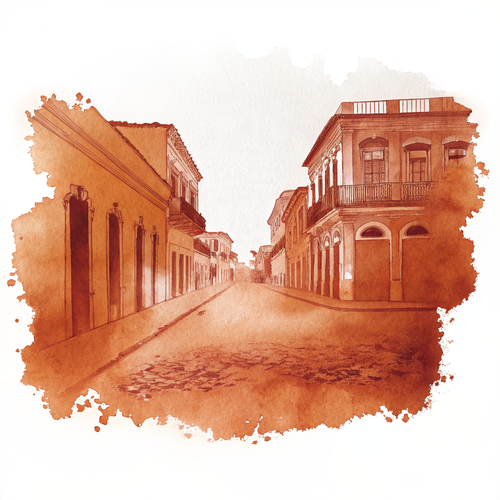
To help you build your own global archive, we've prepared this collection of watercolor studies from our research into Trinidad, Cuba. These artifacts are designed to bring the stillness of this corner of the world into your home.

Original Series Decorative Magnet

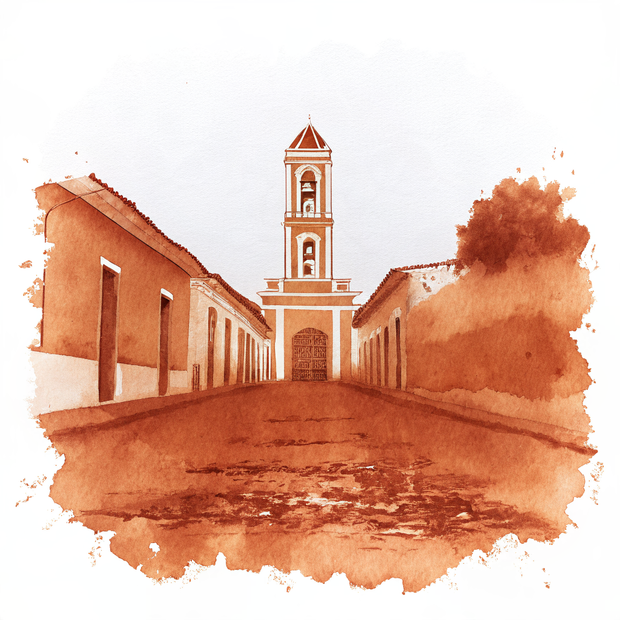
A personal study of Trinidad, Cuba, captured in high-fidelity watercolor and prepared for your collection.

Trinidad, Cuba  | Colonial Rooftops and Bell Tower | Original Series Decorative Magnet
Add to Collection / $18
Exclusive Series Artifact

Original Series Gallery Canvas

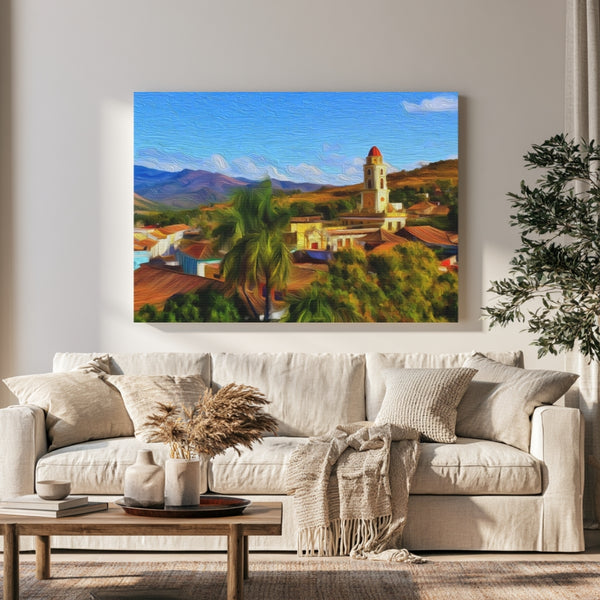
This high-fidelity canvas is a beautiful way to anchor a room and keep your memories of Trinidad, Cuba fresh long after you've returned home.

Trinidad, Cuba  | Colonial Rooftops and Bell Tower | Original Series Gallery Canvas detail Trinidad, Cuba  | Colonial Rooftops and Bell Tower | Original Series Gallery Canvas detail Trinidad, Cuba  | Colonial Rooftops and Bell Tower | Original Series Gallery Canvas detail Trinidad, Cuba  | Colonial Rooftops and Bell Tower | Original Series Gallery Canvas detail
Add to Collection / $65

Original Series Hardboard Coaster

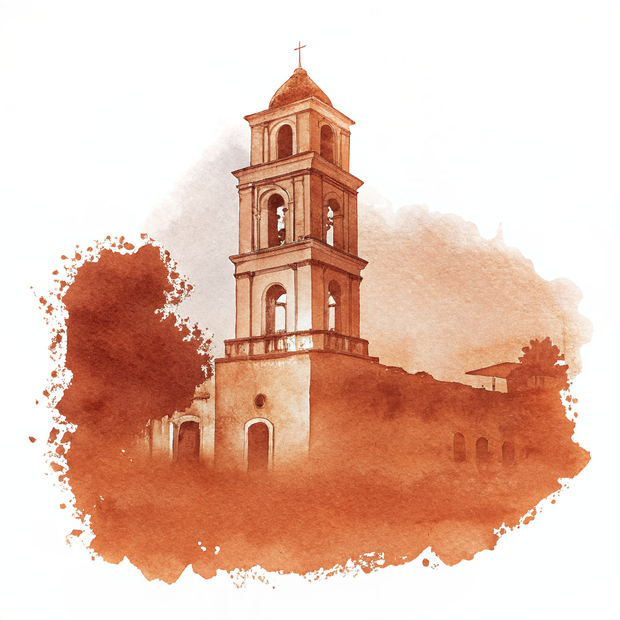
A personal study of Trinidad, Cuba, captured in high-fidelity watercolor and prepared for your collection.

Trinidad, Cuba  | Colonial Rooftops and Bell Tower | Original Series Hardboard Coaster
Add to Collection / $18
Exclusive Series Artifact

The Spirit of the Land

Archival Note: A curated field study of Trinidad, Cuba, prioritizing the specific atmospheric stillness of the region. These artifacts have been meticulously sourced from our global archival partners to represent the area's unique cultural frequency and environmental character. This selection serves as a formal observation for our ongoing global archive, vetted for its visual accuracy and archival merit.

Trinidad, Cuba study No. 01
Trinidad, Cuba / 01 VIA / Martin Kleppe
The last light of day settles over Trinidad's rooftops in shades of amber and dusty rose, catching the worn stone of the old convent ruins and making even the crumbling walls look burnished and alive. The bell tower of the Iglesia y Convento de San Francisco rises cool white against the warm sky, a quiet counterpoint to the layered disorder of terracotta tiles, blue water tanks, and paint-faded facades spread below it. Beyond the town, the Sierra del Escambray fades into soft violet silhouettes, grounding the whole scene in something older and slower than the day that's ending.
Trinidad, Cuba study No. 02
Trinidad, Cuba / 02 VIA / Flo P
The midday sun beats down on Trinidad's cobblestone plaza with an almost theatrical intensity, bleaching the shadows sharp and hard against the weathered turquoise walls. A visitor standing here would feel suspended in time — the salt-tinged Caribbean breeze barely stirring the palm fronds overhead, the golden statues seated in quiet conversation as if they've always belonged to this sun-soaked square. There's a drowsy, unhurried magic to the scene, where peeling paint and faded colonial grandeur somehow feel not like decay, but like a place the world has simply agreed to leave beautifully alone.
Trinidad, Cuba study No. 03
Trinidad, Cuba / 03 VIA / Flo P
The vivid cerulean of the vintage American car mirrors the sun-bleached blue of the colonial wall behind it so precisely that the vehicle appears to dissolve into the architecture, as though the city itself claimed it long ago. What most viewers overlook are the terracotta roof tiles crowning each window alcove — their curved, overlapping forms casting soft, scalloped shadows that add a rare tactile warmth against the flat expanse of painted plaster. The photograph breathes with a quiet symmetry, the three arched openings standing like sentinels above a machine frozen in a time that Trinidad, Cuba has never quite let go.

Where to wander

Archival Note: A curated field study of Trinidad, Cuba, prioritizing cultural relevance and archival merit. While we haven't touched down here yet, we've meticulously vetted these locations through our global network of contributors to ensure they represent the most authentic atmosphere for your own expedition.

Local Cuisine Spotlight
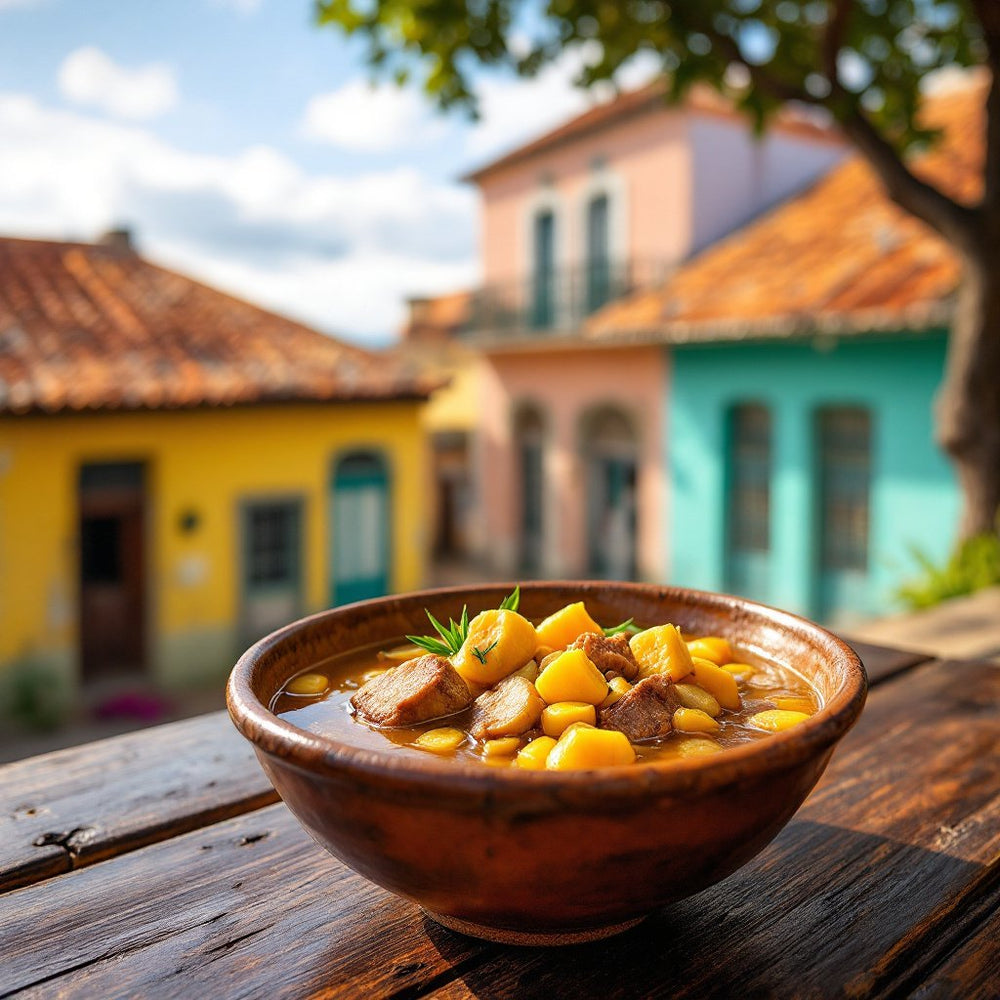
This hearty Cuban stew, likely a classic caldo de res, simmers tender chunks of beef alongside golden potatoes and sweet corn in a rich, savory broth. The rustic clay bowl captures the soul of Trinidad, where colonial streets and home-cooked comfort have fed generations.
Credits: THE PAINTED PASSPORT
Local cuisine study in Trinidad, Cuba

☕︎ Local Flavor

Restaurante Sol Ananda

Rating: 5* | Price: $$$ | Coordinates: 21.8055, -79.9847

Set inside a gorgeous colonial mansion with open-air courtyards draped in bougainvillea, Sol Ananda serves beautifully crafted Cuban cuisine that goes far beyond the typical paladar menu. The slow-roasted pork with citrus mojo and the fresh lobster dishes are absolute standouts that guests talk about long after leaving Trinidad. Live acoustic music drifting through the candlelit dining room makes every meal feel like a special celebration.

View Entry Details

Taberna La Botija

Rating: 4* | Price: $$ | Coordinates: 21.8041, -79.9860

This earthy, character-filled tavern is beloved by locals and travelers alike for its honest Cuban cooking, cold Cristal beer, and no-fuss atmosphere that feels authentically Trinidadian. The ropa vieja — tender shredded beef in a rich tomato and pepper sauce — is arguably the best in the region and always comes with perfectly fried plantains. The rustic wooden furniture and old rum bottles lining the walls give it the feel of stepping back into another era entirely.

View Entry Details

Paladar Guitarra Mía

Rating: 4* | Price: $$ | Coordinates: 21.8049, -79.9862

Named after the famous Cuban song, Guitarra Mía is a charming family-run paladar where passion for food and music are equally evident in everything the owners do. The menu changes daily based on what's fresh at the market, with grilled fish, black bean soup, and coconut desserts being perennial highlights that keep visitors coming back. Dining on the breezy terrace while a guitarist plays softly nearby is one of Trinidad's most quintessentially magical evening experiences.

View Entry Details

Canchánchara Bar & Restaurant

Rating: 4* | Price: $ | Coordinates: 21.8058, -79.9845

This legendary open-air spot on Calle Rubén Martínez Villena is the birthplace of canchánchara, Cuba's oldest cocktail made from rum, lime, honey, and water — and every sip tastes like history. The vibrant courtyard buzzes with live son cubano music from local musicians who pour their hearts into every performance throughout the day. Pair your cocktails with simple Cuban snacks and let the infectious rhythms carry you away into an afternoon you won't soon forget.

View Entry Details

🛌︎ Boutique Stays

Iberostar Grand Hotel Trinidad

Rating: 5* | Price: $$$$ | Coordinates: 21.8048, -79.9843

A beautifully restored colonial mansion in the heart of Trinidad's historic center, this grand hotel blends 18th-century architecture with modern elegance. High ceilings, terracotta floors, and lush courtyards create an atmosphere of timeless charm. Wake up to rooftop views of terracotta rooftops and the Sierra del Escambray mountains glowing in morning light.

View Entry Details

Casa Particular La Casona

Rating: 4* | Price: $$ | Coordinates: 21.8052, -79.9855

This lovingly run family casa particular offers some of the warmest hospitality you'll find anywhere in Cuba, with owners who treat every guest like a long-lost relative. Rooms are bright and airy with colonial touches, colorful tiles, and breezy windows overlooking a quiet cobblestone street. Homemade breakfasts featuring fresh tropical fruit, strong Cuban coffee, and eggs from the backyard garden are reason alone to stay here.

View Entry Details

Hotel La Ronda

Rating: 3* | Price: $$ | Coordinates: 21.8045, -79.9850

Tucked along one of Trinidad's most photogenic streets, Hotel La Ronda offers comfortable rooms with a genuinely local character that larger hotels simply can't replicate. The rooftop terrace is a hidden gem where you can sip rum cocktails as the sun dips behind the mountains each evening. Its central location means the Plaza Mayor, live music venues, and the best restaurants are all just a short stroll away.

View Entry Details

Casa Colonial Muñoz

Rating: 4* | Price: $$ | Coordinates: 21.8060, -79.9838

One of Trinidad's most celebrated casas particulares, Casa Colonial Muñoz is a meticulously maintained colonial home brimming with antiques, original wooden furniture, and genuine Cuban soul. The owner is a passionate local historian who loves sharing stories about Trinidad's sugar-boom past over a welcoming glass of canchánchara. The flower-filled interior patio is the perfect place to relax after a day of exploring winding cobblestone streets.

View Entry Details

📍︎ Field Study

Plaza Mayor

Rating: 5* | Price: Free | Coordinates: 21.8048, -79.9847

The magnificent heart of Trinidad's UNESCO World Heritage historic center, Plaza Mayor is one of the most beautifully preserved colonial squares in all of Latin America. Framed by pastel-painted mansions, elegant iron railings, and royal palm trees, the plaza glows with an almost dreamlike quality at every hour of the day. Spend time wandering its edges, popping into surrounding museums, and watching locals gather in the shade as the rhythms of Cuban life unfold naturally around you.

View Entry Details

Valle de los Ingenios

Rating: 5* | Price: $ | Coordinates: 21.8200, -79.9100

A sweeping UNESCO-protected valley stretching east of Trinidad, Valle de los Ingenios was once home to over 50 sugar mills and holds the complex, powerful legacy of Cuba's colonial sugar industry and the enslaved people who built it. The towering Manaca-Iznaga tower offers panoramic views across the lush green valley that are simply breathtaking on a clear day. Exploring the crumbling haciendas and former slave quarters alongside this extraordinary landscape makes for a deeply moving and unforgettable afternoon.

View Entry Details

Topes de Collantes Natural Park

Rating: 5* | Price: $ | Coordinates: 21.9000, -80.0500

Rising dramatically above Trinidad in the Sierra del Escambray, Topes de Collantes is a lush cloud-forest paradise offering some of Cuba's most rewarding hiking through waterfalls, coffee plantations, and ancient fern-covered trails. The hike to Caburní Falls rewards adventurous visitors with a stunning cascade tumbling into a crystal-clear natural pool perfect for a refreshing swim. The cool mountain air and extraordinary biodiversity feel worlds away from the colonial streets below, making this natural sanctuary an essential complement to any Trinidad visit.

View Entry Details

Museo Romántico

Rating: 4* | Price: $ | Coordinates: 21.8050, -79.9845

Housed inside the magnificent Palacio Brunet overlooking Plaza Mayor, the Museo Romántico is one of Cuba's finest colonial museums and a true window into the opulent lifestyle of Trinidad's 19th-century sugar aristocracy. Room after room is filled with exquisite period furniture, fine porcelain, crystal chandeliers, and personal objects that paint a vivid and intimate portrait of wealth, culture, and contradition during the sugar boom era. The building's architecture alone — with its soaring ceilings, carved wooden screens, and polished tile floors — makes every moment spent inside an absolute pleasure for the eyes.

View Entry Details

Typography

Archival Note: A formal technical study of Trinidad, Cuba—archiving the coordinates, elevation, and environmental data that define the region. This data serves as a vital record for our ongoing global field study, allowing us to reconstruct the regional atmosphere with archival precision before our physical arrival.

Botanical and pigment specimen study for Trinidad, Cuba Colors of Trinidad, Cuba
Coordinates
21.8048° N, 79.9843° W — Historic center of Trinidad, Sancti Spiritus Province, central Cuba
Historical Epoch
Founded in 1514 by Diego Velazquez, Trinidad grew rich on sugar and slavery through the 18th and 19th centuries. Its decline after abolition left its colonial architecture frozen in place, a circumstance that became its greatest gift to posterity.
Elevation
45-80 m / 148-262 ft - Trinidad sits on a gentle coastal plain at the base of the Escambray Mountains, with the mountains rising steeply to over 1,000 m to the north.
Atmosphere
Aw - Tropical Savanna. Warm and sunny year-round with a distinct dry season from November to April and humid, storm-prone summers. Sea breezes soften the heat.
Observation Hour
07:00 - Early morning casts a honeyed amber across the cobblestones before heat haze builds. Shadows are long, facades glow warm, and the streets are quiet enough to hear birds over church bells.
Primary Pigment
Trinidad Terracotta (#C2623F) and Escambray Sage (#7A9E7E)
Best Time to Visit
December through March - dry season brings clear skies, low humidity, and comfortable temperatures ideal for exploring on foot and painting outdoors.
Avoid Visiting
August through October - peak hurricane season brings heavy rain, oppressive humidity, and the highest risk of tropical storm disruption to travel plans.

The Local Tongue

Language is the invisible architecture of Trinidad, Cuba. These entries document the regional vocabulary—capturing the "texture" of local speech that standard translations often miss. Hand-curated expressions reflecting the specific spirit and daily rhythm of the region.
Archival study of Spanish cultural texture

via / L Odyssee

Primary Language Spanish
Regional Dialect Cuban Spanish - marked by dropped final consonants, rapid cadence, and a rich vocabulary of local slang known as cubismos.

Canchanchara

Canchanchara is the name of Trinidad's oldest known cocktail, a rustic blend of aguardiente, honey, lime, and water served warm in a clay cup. It is so tied to the city's identity that the bar bearing its name on Calle Rubens functions less like a tourist stop and more like a civic institution, where the smell of raw cane spirit and citrus fills the open courtyard from late morning onward.

Guajiro

Guajiro refers to a Cuban country person or rural dweller, carrying connotations of hardworking simplicity, folk tradition, and an unbreakable connection to the land. In the Valle de los Ingenios, the word takes on particular weight, evoking the agricultural laborers and smallholders whose daily rhythms shaped the tobacco and sugar landscapes visible from the old watchtower at Manaca Iznaga.

Tumbaito

Tumbaito is a style of son music native to Trinidad and the Sancti Spiritus region, a rhythmic form slower and more hypnotic than its Havana cousins. On warm evenings, its distinctive beat rises from the open-air steps of La Casa de la Musica, drawing both locals and visitors into a swaying crowd that forms organically around whoever has picked up the tres guitar first.

Wait! before you go...

Before you head over to Trinidad, Cuba, we’ve audited the essential data points for this corner of the world. These notes cover the logistics—from currency ratios to transit hubs—to help you navigate the landscape with clarity.
🚲 Getting Around Trinidad has no airport and is best reached by Viazul intercity bus from Havana, roughly five to six hours, or from Cienfuegos in under two hours. Within the city, horse-drawn carriages, bicycle taxis, and walking are the primary modes of getting around the compact historic center.
⚖️ Cash or Card Trinidad operates almost entirely on cash, and visitors should arrive with sufficient Cuban pesos or convertible currency exchanged beforehand, as card acceptance is extremely limited. US credit and debit cards do not function in Cuba, making it essential for American travelers especially to plan cash reserves carefully before arrival.
☁️ Good to Know Photography of locals, especially musicians and street vendors, is welcomed but a small tip or purchase is the respectful exchange that keeps the interaction genuine rather than transactional. Trinidad's residents are accustomed to visitors but genuinely appreciate those who slow down, ask names, and treat the city as a living community rather than an open-air museum.
🏧 ATMs ATMs exist in Trinidad but are unreliable in terms of both availability and function, frequently running out of cash or experiencing network outages without warning. Travelers are strongly advised to arrive with all the cash they anticipate needing for their stay rather than depending on in-town withdrawals to cover daily expenses.
💳 Currency Cuba's currency situation has undergone significant changes, and as of recent years the Cuban Peso (CUP) is the standard national currency in use across most transactions including tourist ones. Visitors should exchange currency at official Cadeca exchange houses or bank branches and avoid informal street exchanges, which carry legal and financial risk.
🔌 Plugs Cuba uses Type A and Type B outlets at 110V/60Hz, the same standard as the United States. European and other travelers will need both a plug adapter and a voltage converter for most devices.
🛡️ Safety Trinidad is considered one of the safer destinations in Cuba for travelers, with petty opportunism around tourist areas being the most common concern rather than serious crime. Staying alert in crowded markets and keeping phones and cameras discreet reduces the chance of minor theft, while solo nighttime wandering in unlit side streets is best approached with local guidance.
✈️ Airports The nearest international airport is Abel Santamaria Airport in Santa Clara, approximately 80 km northeast of Trinidad, serving a limited number of international routes. Havana's Jose Marti International Airport is the main entry point for most international visitors, followed by an overland journey of roughly five to six hours to reach Trinidad.

Behind The Scenes

Nathan

Note from the Founder

Hey, did you know this fun fact about Trinidad, Cuba? Trinidad and the Valle de los Ingenios were jointly inscribed as a UNESCO World Heritage Site in 1988. The city contains one of the best-preserved colonial urban landscapes in the Caribbean, with over 1,400 protected structures in its historic center.
Thank you for exploring the Trinidad, Cuba series with us. We hope these notes have inspired you to add this incredible destination to your own passport—we are so glad you're here. — Nathan

Some of our Favorites