Shop the Collection

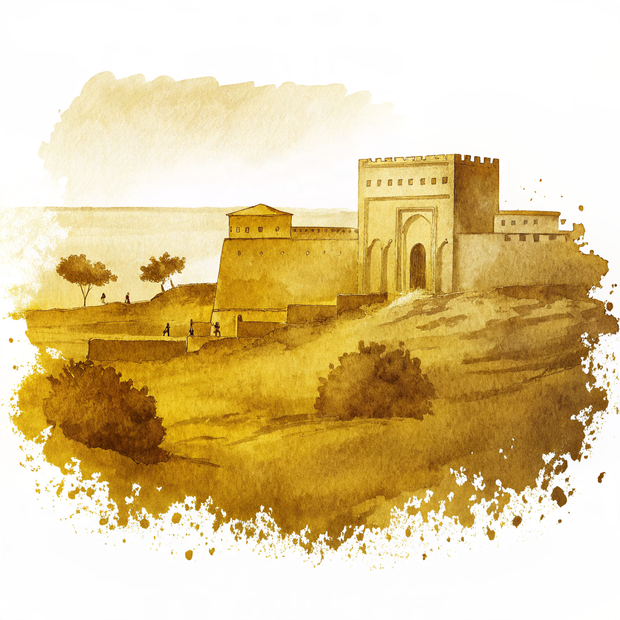
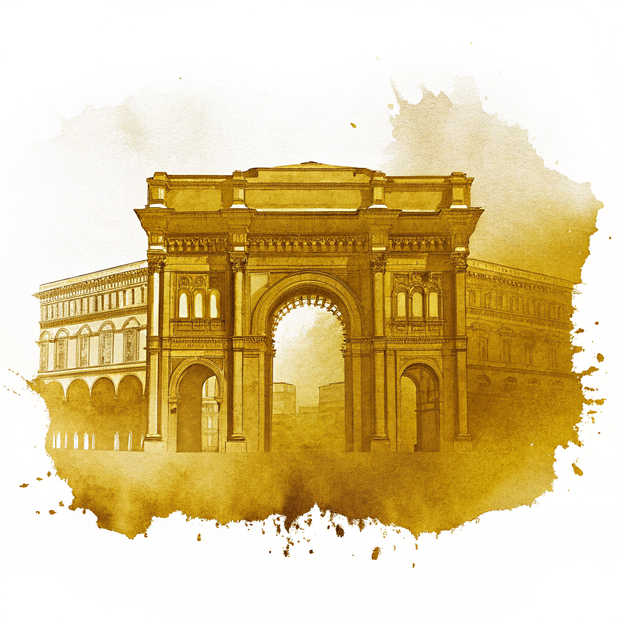
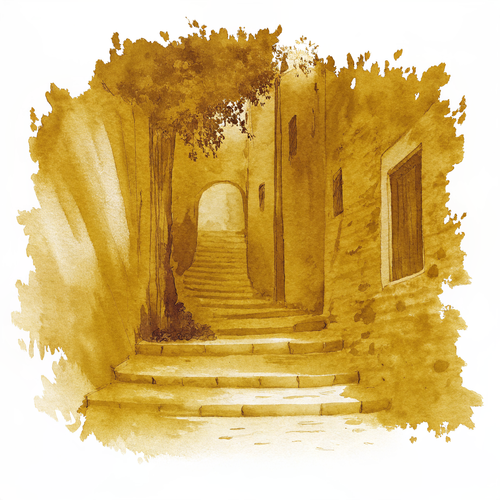
To help you build your own global archive, we've prepared this collection of watercolor studies from our research into Tangier, Morocco. These artifacts are designed to bring the stillness of this corner of the world into your home.

Original Series Decorative Magnet

A personal study of Tangier, Morocco, captured in high-fidelity watercolor and prepared for your collection.

Tangier, Morocco | Cap Spartel Lighthouse | Original Series Decorative Magnet
Add to Collection / $18
Exclusive Series Artifact

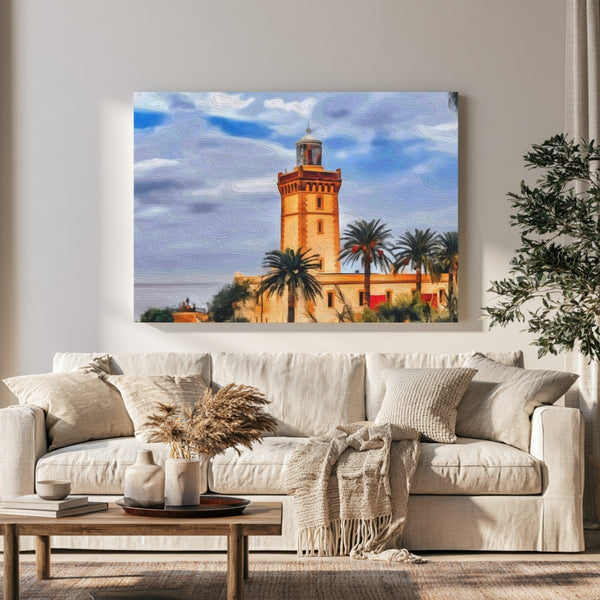
Original Series Gallery Canvas

This high-fidelity canvas is a beautiful way to anchor a room and keep your memories of Tangier, Morocco fresh long after you've returned home.

Tangier, Morocco | Cap Spartel Lighthouse | Original Series Gallery Canvas detail Tangier, Morocco | Cap Spartel Lighthouse | Original Series Gallery Canvas detail Tangier, Morocco | Cap Spartel Lighthouse | Original Series Gallery Canvas detail Tangier, Morocco | Cap Spartel Lighthouse | Original Series Gallery Canvas detail
Add to Collection / $65

Original Series Hardboard Coaster

A personal study of Tangier, Morocco, captured in high-fidelity watercolor and prepared for your collection.

Tangier, Morocco | Cap Spartel Lighthouse | Original Series Hardboard Coaster
Add to Collection / $18
Exclusive Series Artifact

The Spirit of the Land

Archival Note: A curated field study of Tangier, Morocco, prioritizing the specific atmospheric stillness of the region. These artifacts have been meticulously sourced from our global archival partners to represent the area's unique cultural frequency and environmental character. This selection serves as a formal observation for our ongoing global archive, vetted for its visual accuracy and archival merit.

Tangier, Morocco study No. 01
Tangier, Morocco / 01 VIA / Travel with Lenses
The rich mahogany tones of the old wooden door glow warmly against the bleached plaster and rough-hewn stone, holding centuries of quiet history within their grain. Overcast light falls evenly across the cobblestones, softening the textures of the eroded walls without casting harsh shadows. A small potted plant tucked beside the doorway is the only sign of present-day life, making the scene feel suspended somewhere between the living and the forgotten.
Tangier, Morocco study No. 02
Tangier, Morocco / 02 VIA / Matteo Basile
Standing in this sun-drenched alleyway, a visitor would feel enveloped by an almost theatrical clash of color — the electric blue walls intensifying the warmth of the saffron-orange rug glowing in the morning light. The narrow passage hums with quiet commerce, textiles cascading from hooks and doorways, each shadow sharp and deliberate against the cobblestone. There is a sense of timelessness here, as though the medina exists just slightly outside the modern world, unhurried and richly sensory.
Tangier, Morocco study No. 03
Tangier, Morocco / 03 VIA / Laura The Explaura
The photograph captures the medina of Chefchaouen, Morocco, famously known as the Blue City, its buildings tumbling down the Rif Mountains in a mosaic of azure, white, and terracotta. Most viewers are drawn to the overwhelming sweep of blue, yet scattered rooftops tell quieter stories — laundry lines strung between parapets suggest the unhurried rhythm of daily domestic life. A careful eye will notice the satellite dishes dotting nearly every rooftop, a subtle tension between centuries-old architecture and the modern world pressing quietly in.

Where to wander

Archival Note: A curated field study of Tangier, Morocco, prioritizing cultural relevance and archival merit. While we haven't touched down here yet, we've meticulously vetted these locations through our global network of contributors to ensure they represent the most authentic atmosphere for your own expedition.

Local Cuisine Spotlight
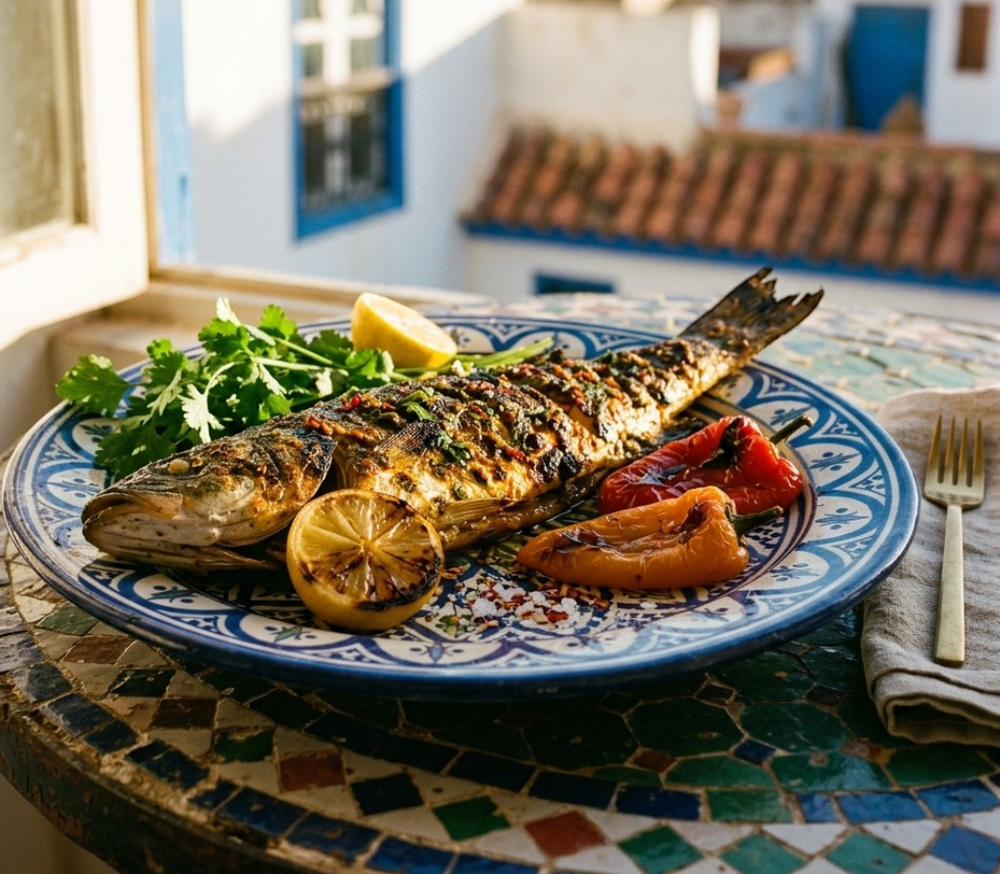
A whole fish grilled over open flame and slathered in chermoula, Moroccos beloved herb and spice marinade, arrives on a hand-painted ceramic plate in Tangier. Charred peppers and caramelized lemon deepen the smoky, citrus-laced flavors that define coastal Moroccan cooking at its most soulful.
Credits: THE PAINTED PASSPORT
Local cuisine study in Tangier, Morocco

☕︎ Local Flavor

El Korsan Restaurant

Rating: 5* | Price: $$$ | Coordinates: 35.7895° N, 5.8137° W

Housed within El Minzah Hotel, this celebrated dining room serves impeccably refined Moroccan cuisine to the soulful accompaniment of live Andalusian music each evening. The slow-braised lamb tagine with preserved lemon and olives is one of those rare dishes you will genuinely dream about for years afterward. Arrive hungry and stay late — the atmosphere rewards those who linger.

View Entry Details

Saveur de Poisson

Rating: 4* | Price: $$ | Coordinates: 35.7843° N, 5.8112° W

This beloved medina institution serves a fixed daily menu of whatever the fishermen pulled from the strait that morning, and the freshness is absolutely extraordinary. Course after course of grilled fish, seafood soup, and herb-flecked salads arrive at a wonderfully unhurried pace in the intimate tiled dining room. There is no printed menu and no choices to make — just deep, honest flavors and total satisfaction.

View Entry Details

Café Hafa

Rating: 4* | Price: $ | Coordinates: 35.7921° N, 5.8198° W

Clinging to a cliff above the Atlantic since 1921, this legendary terraced café has served mint tea to the Rolling Stones, the Beatles, and the Beat Generation writers who defined Tangier's bohemian myth. Sip your intensely sweet tea slowly as the Atlantic stretches endlessly before you and swallows drift lazily overhead. It is less a meal and more a meditation — one of the great simple pleasures of the entire Mediterranean world.

View Entry Details

Restaurant Hamadi

Rating: 4* | Price: $$ | Coordinates: 35.7867° N, 5.8089° W

A cozy medina stalwart celebrated for its generously spiced harira soup, pillowy msemen flatbreads, and richly layered bastilla that balances sweet and savory like nothing else on earth. The dining room is decorated with vintage Moroccan lanterns and colorful hand-painted plaster that feels genuinely artisanal rather than tourist-facing. Locals fill it nightly, which is always the most reliable recommendation you can have.

View Entry Details

🛌︎ Boutique Stays

El Minzah Hotel

Rating: 5* | Price: $$$$ | Coordinates: 35.7895° N, 5.8137° W

A legendary colonial-era grande dame that has hosted Winston Churchill and the Rolling Stones within its whitewashed Andalusian walls. Lush courtyard gardens perfumed with jasmine and orange blossom create an atmosphere of timeless luxury. Every room whispers stories of Tangier's golden age as a glamorous international city.

View Entry Details

La Maison Blanche Boutique Hotel

Rating: 4* | Price: $$$ | Coordinates: 35.7801° N, 5.8098° W

Tucked into the winding medina lanes, this intimate riad glows with hand-painted Zellige tilework and warm candlelight each evening. The rooftop terrace delivers sweeping panoramas across the Strait of Gibraltar toward the hazy Spanish coastline. Staff greet you like a returning friend and serve homemade mint tea on arrival.

View Entry Details

Dar Nour

Rating: 4* | Price: $$$ | Coordinates: 35.7889° N, 5.8121° W

Perched high in the Kasbah, this beautifully restored guesthouse offers some of the most romantic views in all of northern Morocco. Rooms are individually decorated with antique Moroccan furniture, hand-woven blankets, and art collected across decades of passionate travel. Breakfast on the terrace as fishing boats dot the shimmering blue strait below is genuinely unforgettable.

View Entry Details

Hotel Continental

Rating: 3* | Price: $$ | Coordinates: 35.7912° N, 5.8134° W

One of Africa's oldest continuously operating hotels, the Continental carries a wonderfully faded grandeur that feels like stepping into a Paul Bowles novel. Its clifftop position above the port offers dramatic sea views that no modern luxury hotel can replicate at this price point. The creaking wooden staircases and mosaic floors are charming testaments to Tangier's storied cosmopolitan past.

View Entry Details

📍︎ Field Study

The Kasbah Museum

Rating: 5* | Price: $ | Coordinates: 35.7898° N, 5.8128° W

Occupying a beautifully restored 17th-century sultan's palace at the medina's highest point, this museum traces Tangier's remarkable history from prehistoric times through its extraordinary international zone era. Roman mosaics, Phoenician artifacts, and intricate Moroccan decorative arts share space in airy, light-filled galleries surrounding a tranquil fountain courtyard. The panoramic terrace alone — overlooking the city, the strait, and Spain — justifies the modest entry fee entirely.

View Entry Details

Cap Spartel & Caves of Hercules

Rating: 5* | Price: $ | Coordinates: 35.7873° N, 5.9243° W

Standing at the precise point where the Atlantic Ocean meets the Mediterranean Sea, Cap Spartel is one of those geographical moments that genuinely gives you goosebumps. Just minutes away, the Caves of Hercules open dramatically toward the sea in an opening shaped, by remarkable coincidence, exactly like the African continent in silhouette. Ancient Berber stone-cutting marks cover the cave walls, reminding you that humans have found this place astonishing for thousands of years.

View Entry Details

Grand Socco & Medina Souks

Rating: 4* | Price: Free | Coordinates: 35.7856° N, 5.8101° W

The Grand Socco — officially Place du 9 Avril 1947 — pulses at all hours as the vibrant gateway between Tangier's European new city and its ancient medina labyrinth. Dive into the souks beyond and lose yourself among spice merchants, leather craftsmen, silverworkers, and fabric vendors operating in lanes unchanged for centuries. The sensory richness of sound, color, and fragrance here is the living heart of everything that makes Tangier genuinely irreplaceable.

View Entry Details

American Legation Museum

Rating: 5* | Price: $ | Coordinates: 35.7871° N, 5.8118° W

Tangier holds the unique distinction of housing the only American National Historic Landmark located on foreign soil, and this extraordinary museum tells that remarkable story with warmth and depth. The building itself — a gift from the Sultan of Morocco to a young United States in 1821 — is a stunning Moorish palace filled with paintings, maps, and documents tracing centuries of American-Moroccan friendship. Passionate volunteer guides bring every portrait and manuscript to vivid, surprising life.

View Entry Details

Typography

Archival Note: A formal technical study of Tangier, Morocco—archiving the coordinates, elevation, and environmental data that define the region. This data serves as a vital record for our ongoing global field study, allowing us to reconstruct the regional atmosphere with archival precision before our physical arrival.

Botanical and pigment specimen study for Tangier, Morocco Colors of Tangier, Morocco
Coordinates
35.7595° N, 5.8340° W — City center of Tangier, at the northwestern tip of Morocco overlooking the Strait of Gibraltar
Historical Epoch
Tangier served as an International Zone from 1924 to 1956, governed jointly by multiple world powers, making it a magnet for spies, artists, and exiles during one of history's most dramatic centuries.
Elevation
0-245 m / 0-804 ft - Tangier ranges from sea level at the port and beach to elevated Kasbah and hillside residential neighborhoods
Atmosphere
Csa - Hot-summer Mediterranean. Warm dry summers and mild wet winters, with the Strait delivering a reliable sea breeze that keeps even July bearable near the coast.
Observation Hour
07:30 - Morning light in Tangier arrives soft and silver off the Strait, warming to gold within an hour and casting long gentle shadows across the Kasbah walls before the heat lifts the haze. Max 220 chars.
Primary Pigment
Cobalt Teal (#2E7D8C) and Raw Sienna (#C8732A)
Best Time to Visit
April through June - Spring brings warm days, blooming hillsides, and manageable crowds before summer heat arrives on the coast.
Avoid Visiting
July through August - Peak summer brings intense heat, heavy tourist traffic, and accommodation prices at their highest.

The Local Tongue

Language is the invisible architecture of Tangier, Morocco. These entries document the regional vocabulary—capturing the "texture" of local speech that standard translations often miss. Hand-curated expressions reflecting the specific spirit and daily rhythm of the region.
Archival study of Moroccan Arabic (Darija) cultural texture

via / Özlem K

Primary Language Moroccan Arabic (Darija)
Regional Dialect Jbala-influenced Darija with significant French and Spanish loanwords reflecting Tangier's international zone history

Medersa (مدرسة)

Medersa refers to an Islamic school or place of sacred learning, often housed inside buildings of breathtaking geometric beauty. In Tangier, to step through the carved cedar doorway of a historic medersa is to understand that education and devotion were once considered the same act.

Baraka (بركة)

Baraka means a kind of divine blessing or grace that is believed to flow through holy people, places, and even objects. Vendors at the Grand Socco may press a sprig of fresh mint into a visitor's hand as a small gesture of goodwill, and that quiet generosity carries the spirit of baraka in everyday Tangerine life.

Hshuma (حشومة)

Hshuma describes a layered sense of shame tied to social honor and the importance of dignity within a community. In the medina's narrow lanes, it governs everything from the volume of a conversation to how goods are wrapped and presented, a reminder that respect in Tangier is both deeply felt and carefully observed.

Wait! before you go...

Before you head over to Tangier, Morocco, we’ve audited the essential data points for this corner of the world. These notes cover the logistics—from currency ratios to transit hubs—to help you navigate the landscape with clarity.
🚲 Getting Around Taxis are the practical backbone of getting around Tangier, with petit taxis for short urban hops and grand taxis for intercity routes. The city also connects by ferry to Spain, and a new high-speed rail link puts Casablanca within two hours.
⚖️ Cash or Card Cash remains king across most of Tangier, particularly in the medina, traditional cafes, and smaller family-run restaurants where card terminals are rare. Higher-end hotels and a handful of modern restaurants accept cards, but arriving with Moroccan dirhams on hand is strongly advised.
☁️ Good to Know Bargaining in the souks is expected and even enjoyed as a social exchange, so naming a fair counter-price with a smile is entirely appropriate and rarely taken as offense. Dress modestly when entering the medina or visiting mosques, as covered shoulders and knees signal respect that locals genuinely appreciate.
🏧 ATMs ATMs are reliably available near the city center, the port area, and along Boulevard Mohammed VI, and most accept international Visa and Mastercard with standard withdrawal limits. It is worth notifying a home bank before travel, as Moroccan ATM transactions can occasionally trigger fraud alerts on foreign accounts.
💳 Currency The Moroccan Dirham (MAD) is the official currency and is not freely traded outside the country, so it should be acquired upon arrival at the airport, a bank, or an official bureau de change. Importing or exporting large amounts of dirham is restricted by Moroccan law, so spending down the balance before departure is practical.
🔌 Plugs Morocco uses Type C and Type E outlets at 220V, 50Hz. Most European two-pin plugs fit without an adapter, but travelers from North America or the UK will need one.
🛡️ Safety Tangier has improved considerably in terms of tourist safety and is generally welcoming to visitors who stay alert in crowded areas like the Grand Socco and the port. Persistent touts near ferry terminals and medina entrances are common, and a calm, confident refusal is always the most effective response.
✈️ Airports Tangier Ibn Battuta Airport (TNG) sits roughly 15 kilometers southeast of the city center and handles direct connections to major European hubs as well as domestic Moroccan routes. Ground transfer to the city center takes about 20 to 30 minutes by taxi, with petit taxis available at fixed regulated fares from the terminal.

Behind The Scenes

Nathan

Note from the Founder

Hey, did you know this fun fact about Tangier, Morocco? Tangier was the first foreign nation to recognize American independence in 1777, and the American Legation building in the medina remains the only U.S. National Historic Landmark located on foreign soil.
Thank you for exploring the Tangier, Morocco series with us. We hope these notes have inspired you to add this incredible destination to your own passport—we are so glad you're here. — Nathan

Some of our Favorites