Shop the Collection

To help you build your own global archive, we've prepared this collection of watercolor studies from our research into Split, Croatia. These artifacts are designed to bring the stillness of this corner of the world into your home.

Original Series Decorative Magnet

A personal study of Split, Croatia, captured in high-fidelity watercolor and prepared for your collection.

Split, Croatia | Riva Waterfront Harbor View | Original Series Decorative Magnet
Add to Collection / $18
Exclusive Series Artifact

Original Series Gallery Canvas

This high-fidelity canvas is a beautiful way to anchor a room and keep your memories of Split, Croatia fresh long after you've returned home.

Split, Croatia | Riva Waterfront Harbor View | Original Series Gallery Canvas detail Split, Croatia | Riva Waterfront Harbor View | Original Series Gallery Canvas detail Split, Croatia | Riva Waterfront Harbor View | Original Series Gallery Canvas detail Split, Croatia | Riva Waterfront Harbor View | Original Series Gallery Canvas detail
Add to Collection / $65

Original Series Hardboard Coaster

A personal study of Split, Croatia, captured in high-fidelity watercolor and prepared for your collection.

Split, Croatia | Riva Waterfront Harbor View | Original Series Hardboard Coaster
Add to Collection / $18
Exclusive Series Artifact

The Spirit of the Land

Archival Note: A curated field study of Split, Croatia, prioritizing the specific atmospheric stillness of the region. These artifacts have been meticulously sourced from our global archival partners to represent the area's unique cultural frequency and environmental character. This selection serves as a formal observation for our ongoing global archive, vetted for its visual accuracy and archival merit.

Split, Croatia study No. 01
Split, Croatia / 01 VIA / Salim Chauhan
The afternoon light falls evenly across Split's Riva promenade, warming the terracotta rooftops to a deep burnt orange against the chalky white facades. From the water, the city arranges itself like a painting — palm trees stitching the shoreline together, the cathedral campanile rising quietly above the old town. The Adriatic sits dark and restless in the foreground, an honest contrast to the sun-soaked stillness of the city behind it.
Split, Croatia study No. 02
Split, Croatia / 02 VIA / Luciann Photography
A brooding overcast sky casts cool, diffused light across Split's ancient waterfront, softening the warm terracotta rooftops and pale stone facades of Diocletian's Palace. Standing at the harbor's edge, one would feel the quiet tension between the Mediterranean's languid warmth and the approaching storm rolling in over the Dinaric Alps. The palm-lined Riva promenade stretches along the water's edge, offering a sense of timeless grandeur that belongs equally to Roman emperors and modern travelers.
Split, Croatia study No. 03
Split, Croatia / 03 VIA / Luciann Photography
The aerial perspective reveals Split's crescent-shaped bay curving gracefully between the Marjan peninsula and the city's sun-bleached shoreline. What most viewers miss are the yellow paddle boats resting idle near the small pier — silent witnesses to a tourist season recently ended. The pale limestone promenade catches the flat coastal light with a chalky luminosity that distinguishes Dalmatian architecture from anywhere else in the Mediterranean.

Where to wander

Archival Note: A curated field study of Split, Croatia, prioritizing cultural relevance and archival merit. While we haven't touched down here yet, we've meticulously vetted these locations through our global network of contributors to ensure they represent the most authentic atmosphere for your own expedition.

Local Cuisine Spotlight
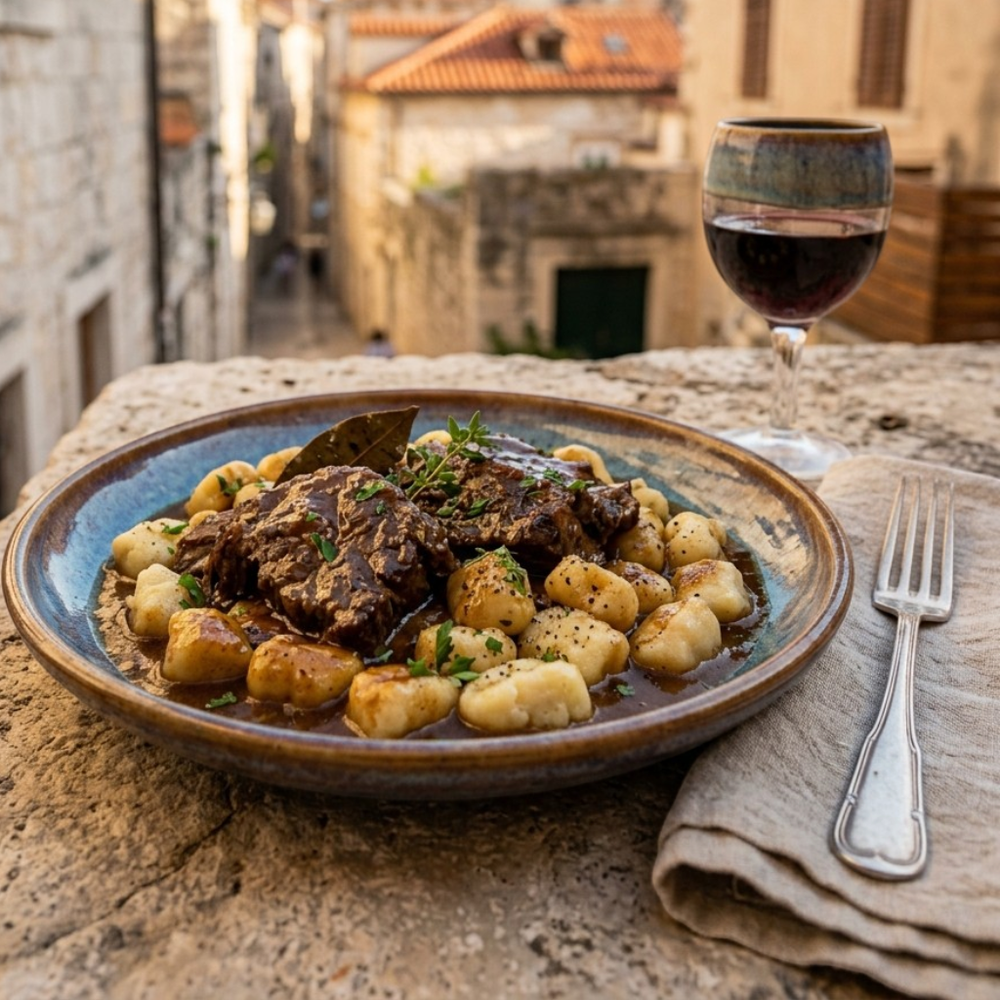
Pašticada, Dalmatia's most beloved slow-braised beef dish, arrives deeply fragrant with red wine, prunes, and herbs. Tender chunks of beef collapse at the touch of a fork, their rich sauce clinging to each pillowy gnocchi. It is soul-warming, centuries-old comfort food at its finest.
Credits: THE PAINTED PASSPORT
Local cuisine study in Split, Croatia

☕︎ Local Flavor

Restoran Dvor

Rating: 5* | Price: $$$ | Coordinates: 43.5055° N, 16.4431° E

Perched dramatically on the cliffs above the Adriatic, Dvor delivers stunning sea views alongside impeccably fresh Dalmatian seafood. The grilled sea bass with capers and olive oil is a dish worth traveling for on its own. Sunset dinners here, with waves crashing below and wine glasses glinting in golden light, are absolutely extraordinary.

View Entry Details

Konoba Matejuška

Rating: 4* | Price: $$ | Coordinates: 43.5098° N, 16.4359° E

Tucked inside a tiny stone-walled fishing harbor, this beloved konoba serves the kind of honest, soulful Croatian food that locals have cherished for generations. The black risotto made with fresh cuttlefish ink is rich, briny, and absolutely addictive. Small, intimate, and perpetually lively, it captures the true spirit of Split's coastal dining culture.

View Entry Details

Zinfandel Food & Wine Bar

Rating: 4* | Price: $$$ | Coordinates: 43.5086° N, 16.4393° E

A sophisticated wine bar and bistro championing exceptional Dalmatian and Croatian wines paired thoughtfully with seasonal small plates. The sommelier's passion for local Plavac Mali and Pošip varietals is infectious and genuinely educational. Every bite and sip here tells a rich story of Croatia's remarkable and often underappreciated culinary landscape.

View Entry Details

Figa Food & Wine

Rating: 4* | Price: $$ | Coordinates: 43.5080° N, 16.4398° E

Figa is a beloved gathering spot hidden in the palace's stone alleyways, serving creative Mediterranean small plates with an unfussy, joyful spirit. The lamb peka — slow-cooked under an iron bell — is tender, smoky, and deeply comforting beyond words. The relaxed ambiance, fairy-lit courtyard setting, and genuine warmth of the staff make every visit feel like a celebration.

View Entry Details

🛌︎ Boutique Stays

Vestibul Palace Hotel

Rating: 5* | Price: $$$$ | Coordinates: 43.5081° N, 16.4402° E

Nestled within the ancient walls of Diocletian's Palace, this boutique gem offers rooms carved directly into Roman stonework. Waking up here feels like sleeping inside living history, with arched ceilings and warm candlelit corridors. The staff's personal touch and rooftop views over the Adriatic make every moment unforgettable.

View Entry Details

Hotel Peristil

Rating: 4* | Price: $$$ | Coordinates: 43.5083° N, 16.4401° E

Positioned steps from the iconic Peristyle square, this charming hotel blends contemporary comfort with centuries-old surroundings beautifully. The rooms are cozy and elegantly furnished, offering a peaceful retreat after exploring the bustling old city. Enjoy morning coffee practically touching ancient Roman columns — a truly surreal and magical experience.

View Entry Details

Cornaro Hotel

Rating: 5* | Price: $$$$ | Coordinates: 43.5089° N, 16.4388° E

A sleek, modern five-star retreat just outside the palace walls offering a rooftop pool with breathtaking panoramic views of Split's skyline and sea. The interiors are polished and sophisticated, with attentive service that anticipates your every need. Its wellness spa and stylish restaurant make it a complete urban sanctuary in the heart of Dalmatia.

View Entry Details

Art Hotel Tartini

Rating: 4* | Price: $$ | Coordinates: 43.5094° N, 16.4375° E

This artistic boutique hotel surprises guests with locally inspired murals, handpicked Croatian artwork, and vibrant, personality-filled rooms. It sits in a quieter neighborhood pocket, offering a genuine neighborhood feel away from the tourist crowds. The welcoming hosts go above and beyond with personalized tips to help you explore Split like a true local.

View Entry Details

📍︎ Field Study

Diocletian's Palace

Rating: 5* | Price: Free | Coordinates: 43.5081° N, 16.4402° E

One of the most remarkably preserved Roman monuments in the world, this 4th-century palace is not a museum but a living, breathing neighborhood. Thousands of people reside and work within its ancient limestone walls, creating a uniquely atmospheric blend of ancient and modern life. Wandering its labyrinthine passages and stumbling upon hidden courtyards is a genuinely magical and disorienting adventure.

View Entry Details

Marjan Hill Forest Park

Rating: 5* | Price: Free | Coordinates: 43.5083° N, 16.4192° E

Split's beloved green lung rises above the city offering pine-scented trails, dramatic sea panoramas, and a blissful escape from summer heat and crowds. The viewpoint at Telegrin peak rewards the moderate hike with sweeping vistas stretching to the nearby islands of Brač and Hvar on clear days. Ancient chapels dotting the hillside add a quiet, contemplative beauty to every walk through this natural sanctuary.

View Entry Details

Cathedral of Saint Domnius

Rating: 5* | Price: $ | Coordinates: 43.5082° N, 16.4402° E

Originally built as Emperor Diocletian's mausoleum, this extraordinary structure was later converted into one of the world's oldest functioning Catholic cathedrals — a beautifully ironic twist of history. Climbing the Romanesque bell tower delivers breathtaking 360-degree views over the palace rooftops and glittering Adriatic beyond. The ornate wooden choir stalls, carved reliefs, and ancient sarcophagi inside make every corner deeply worth exploring.

View Entry Details

Bačvice Beach

Rating: 4* | Price: Free | Coordinates: 43.5031° N, 16.4447° E

A short stroll from the old town, this crescent-shaped sandy bay is the social heartbeat of Split, loved equally by locals and visitors throughout the summer. It's the birthplace of picigin, a uniquely Dalmatian ball game played in shallow water that you'll inevitably stop to watch with a huge grin. The surrounding beach bars buzz with energy from morning swims through to late-night cocktails under a warm Adriatic sky.

View Entry Details

Typography

Archival Note: A formal technical study of Split, Croatia—archiving the coordinates, elevation, and environmental data that define the region. This data serves as a vital record for our ongoing global field study, allowing us to reconstruct the regional atmosphere with archival precision before our physical arrival.

Botanical and pigment specimen study for Split, Croatia Colors of Split, Croatia
Coordinates
43.5081° N, 16.4402° E — Diocletian's Palace, Split Old Town, Dalmatian Coast, Croatia
Historical Epoch
Emperor Diocletian built his retirement palace here around 305 AD, and when the Western Roman Empire fell, refugees moved inside its walls. That unbroken thread of habitation stretches across seventeen centuries to the present day.
Elevation
0-178 m / 0-584 ft - Sea level along the Riva waterfront rising to the ridge of Marjan Hill to the west
Atmosphere
Csa - Hot-Summer Mediterranean. Long, dry, intensely sunny summers and mild wet winters make Split one of the sunniest cities in Europe with over 2,700 hours of annual sunshine.
Observation Hour
06:30 - Dawn light hits Split's limestone facades with a honeyed warmth before the stone bleaches white. The Riva is quiet and the palace walls hold the softest shadows of the day.
Primary Pigment
Adriatic Cobalt (#2B5F8E) and Diocletian Limestone (#E8D9B5)
Best Time to Visit
May through June - warm and sunny with far fewer crowds than July and August, ideal light for painting and exploring.
Avoid Visiting
July through August - peak tourist season brings intense heat, extreme crowds, and inflated prices throughout the old town.

The Local Tongue

Language is the invisible architecture of Split, Croatia. These entries document the regional vocabulary—capturing the "texture" of local speech that standard translations often miss. Hand-curated expressions reflecting the specific spirit and daily rhythm of the region.
Archival study of Croatian cultural texture

via / Vladimir Srajber

Primary Language Croatian
Regional Dialect Dalmatian Croatian (Cakavian-influenced Split vernacular)

fjaka

Fjaka is the art of blissful, guilt-free doing-nothing, a state of warm physical and mental surrender specific to Dalmatian life. A local will stretch across a sun-warmed bench on the Riva in the afternoon heat and describe the sensation not as laziness but as something earned and sacred.

pjaca

Pjaca is the local name for the People's Square, the main public gathering place at the heart of the old town, drawn from the Venetian word for plaza. On any given morning the marble underfoot is polished smooth from centuries of foot traffic, and the square fills with the sound of espresso cups and unhurried conversation before the tourist crowds arrive.

pomalo

Pomalo translates loosely to 'take it easy' or 'little by little' and functions as both a greeting and a life philosophy along the Dalmatian coast. When a fisherman untangles his nets at the Matejuska harbour and responds to any question about timing with a slow smile and a single word, that word is almost always pomalo.

Wait! before you go...

Before you head over to Split, Croatia, we’ve audited the essential data points for this corner of the world. These notes cover the logistics—from currency ratios to transit hubs—to help you navigate the landscape with clarity.
🚲 Getting Around The old town is entirely walkable and many of its narrowest lanes are inaccessible by vehicle. Ferries and catamarans connect Split to the Dalmatian islands from the main port terminal adjacent to the Riva, making water transport a practical and scenic daily option.
⚖️ Cash or Card Card payments are now widely accepted in hotels, restaurants, and larger shops throughout Split, though smaller konobas, market stalls, and local taxis may still prefer cash. Carrying a modest amount of euro is sensible for spontaneous stops at the green market or a quick espresso at a neighbourhood cafe.
☁️ Good to Know Locals take their afternoon coffee seriously and a table on the Peristyle square is considered a place to linger, not to vacate quickly. Rushing a meal or asking for the bill before the server offers it can read as impolite; the rhythm of dining in Split is slow and that is entirely intentional.
🏧 ATMs ATMs are readily available throughout Split, particularly along the Riva, near the bus and ferry terminals, and around the edges of the old town. Using a bank-affiliated ATM rather than independent machines will generally yield better rates and lower fees for international cardholders.
💳 Currency Croatia adopted the euro on January 1, 2023, replacing the kuna after decades of use. Prices are now denominated in euros and ATMs, banks, and exchange offices throughout Split dispense euros without difficulty.
🔌 Plugs Croatia uses Type F outlets (Schuko) at 230V and 50Hz. Visitors from North America will need both a plug adapter and a voltage converter for older devices.
🛡️ Safety Split is considered a very safe destination for travellers and violent crime is rare. Petty theft and pickpocketing can occur in the busiest parts of the palace and along the Riva during peak summer months, so keeping bags secured in crowds is a sensible precaution.
✈️ Airports Split Airport (SPU), also known as Resnik Airport, sits approximately 24 kilometres northwest of the city centre near the town of Kastela and handles direct flights from dozens of European cities. A regular bus service connects the airport to the city centre and the ferry port, with the journey taking around 30 to 40 minutes depending on traffic.

Behind The Scenes

Nathan

Note from the Founder

Hey, did you know this fun fact about Split, Croatia? Split is the second-largest city in Croatia and the largest on the Adriatic coast. Diocletian's Palace covers roughly half of the old town and is a UNESCO World Heritage Site that shelters around 3,000 permanent residents within its ancient walls.
Thank you for exploring the Split, Croatia series with us. We hope these notes have inspired you to add this incredible destination to your own passport—we are so glad you're here. — Nathan

Some of our Favorites