




The Real Sossusvlei
More than a shop, each page is an immersive guide to the real Sossusvlei: local tips and tricks, the language you'll hear, where to eat, stay, and explore, the lay of the land, and a fun fact to carry home — every canvas mapped to the very spot it was captured.
SOSSUSVLEI, NAMIBIA | "The Place of No Return"
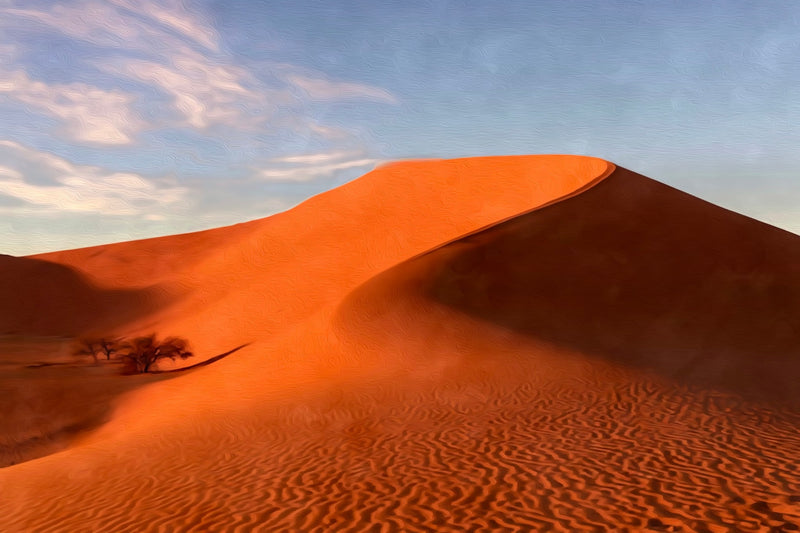
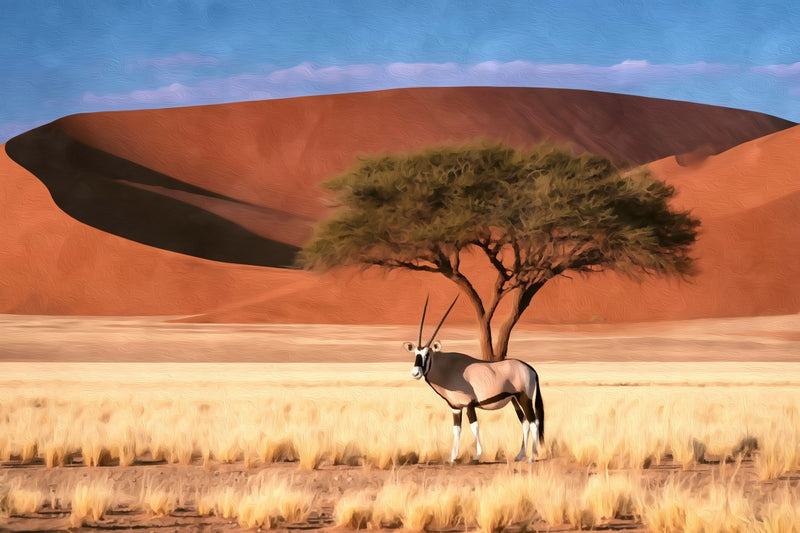
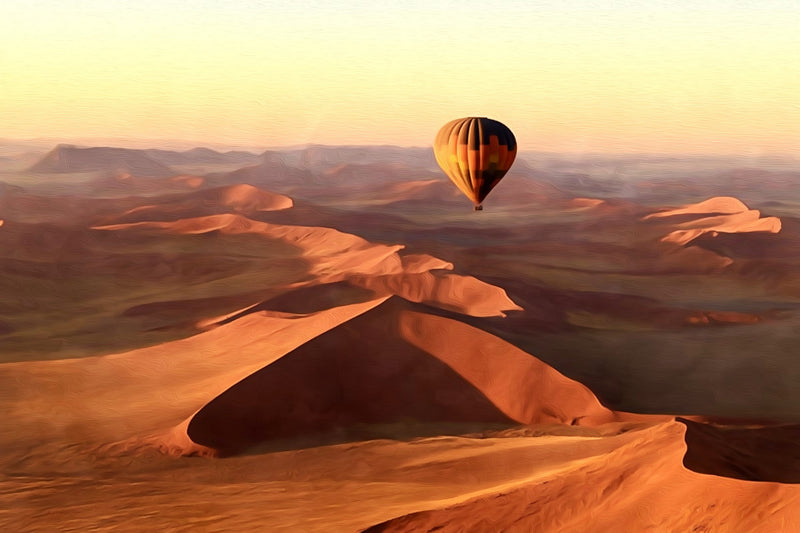
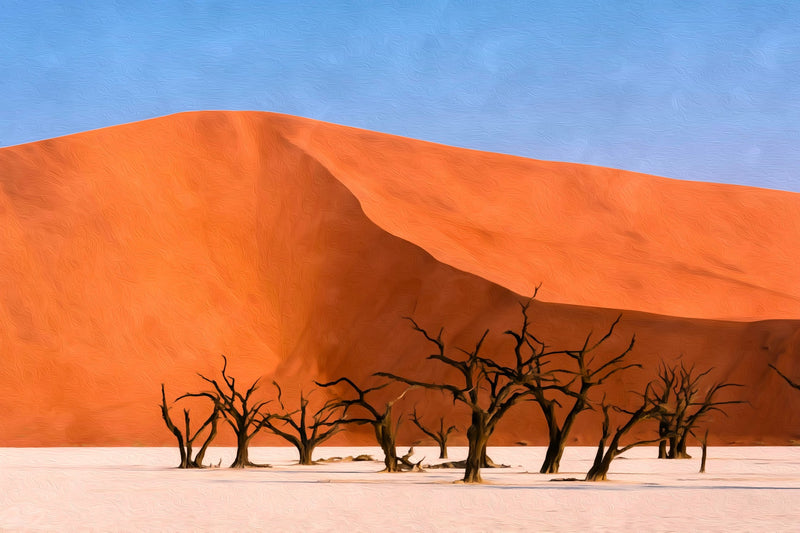
Sossusvlei is the most visually overwhelming landscape in Africa, where a white clay pan sits surrounded by the highest sand dunes in the world. The deep orange of the Namib's ancient iron-oxide dunes rises against a cobalt blue sky with a geometric clarity and color saturation that defies every prior expectation of what a desert can look like. The Namib is the oldest desert on earth, formed over five million years, and the dunes at Sossusvlei and the adjacent Deadvlei clay pan have been shaped by the same geological forces over that same span of time. They reach heights of over 300 meters and carry a color that shifts from pale gold at noon to deep amber at golden hour, becoming the most vivid burnt orange at dawn found in any landscape on earth. The dead camel thorn trees of Deadvlei died roughly 900 years ago, when advancing dunes blocked the Tsauchab River, and extreme aridity has preserved them ever since. They stand against the dune faces in a composition of such stark geometric beauty that the image has become one of the most recognized landscape photographs on earth.
The palette is three bands and nothing else: deep cobalt blue sky, burnt orange dune, pale cream clay pan. There is no gradation, no middle ground, no compromise. It's the most graphically precise natural landscape on earth, producing a quality of light between dawn and mid-morning that no photographer or painter who has stood in Deadvlei ever fully recovers from.
We hope you love getting lost in Sossusvlei through the art above — and that one of these canvases finds a home on your wall. Happy travels, from all of us at The Painted Passport.