The Real Siena
More than a shop, each page is an immersive guide to the real Siena: local tips and tricks, the language you'll hear, where to eat, stay, and explore, the lay of the land, and a fun fact to carry home — every canvas mapped to the very spot it was painted.
Siena, Italy | Where the Middle Ages never really left
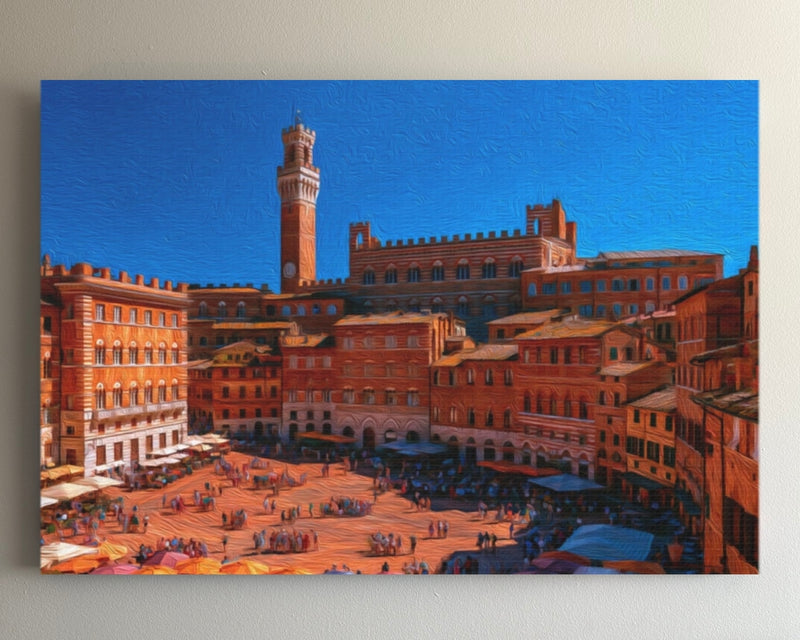
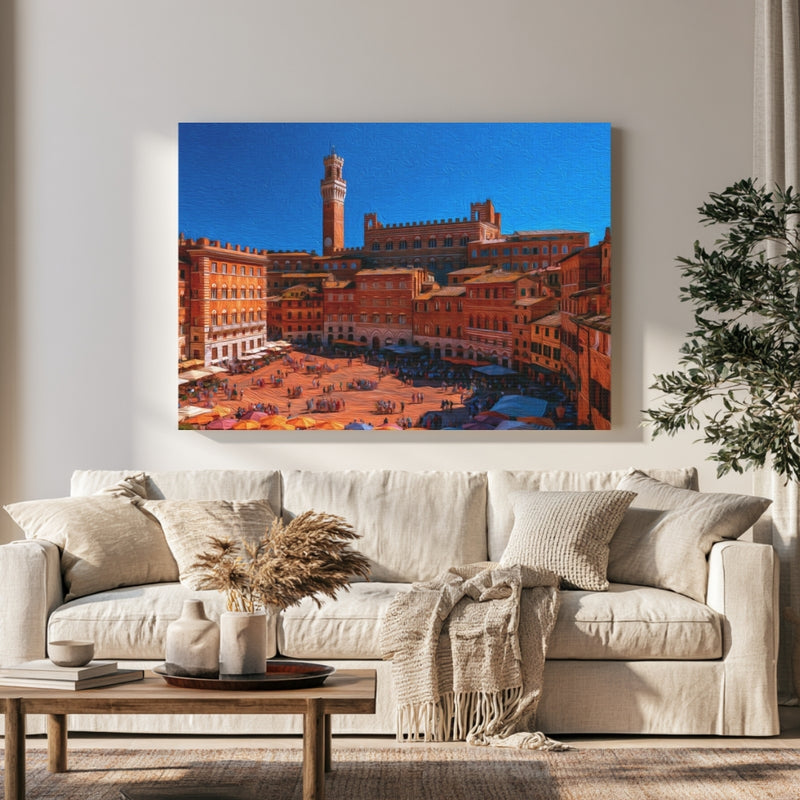
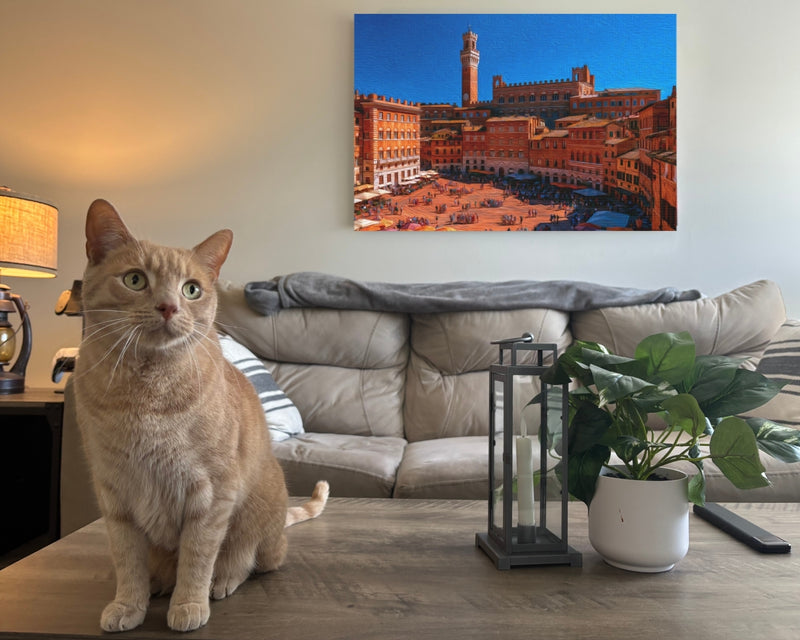
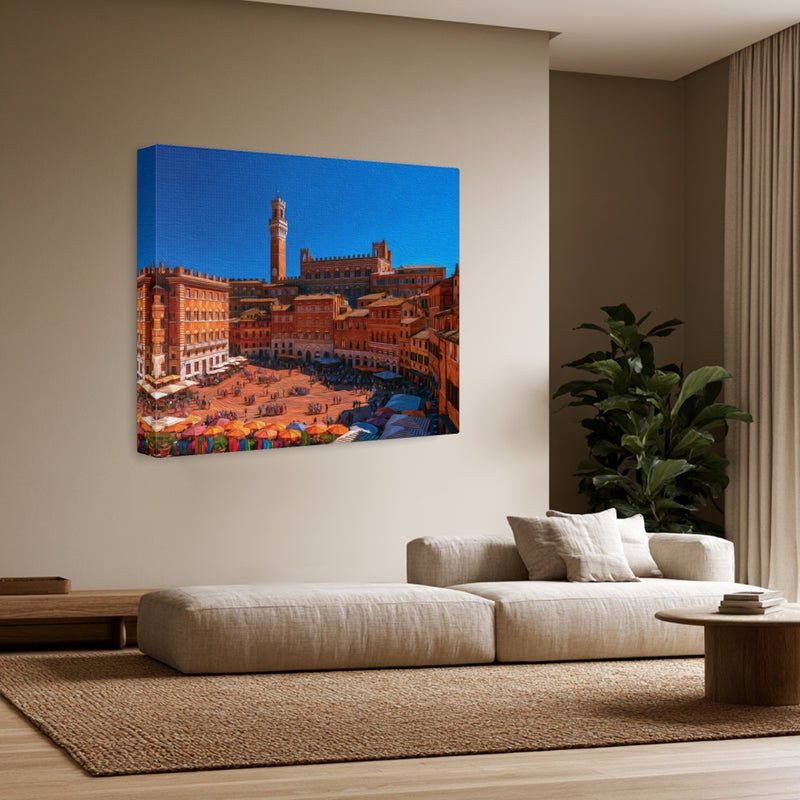
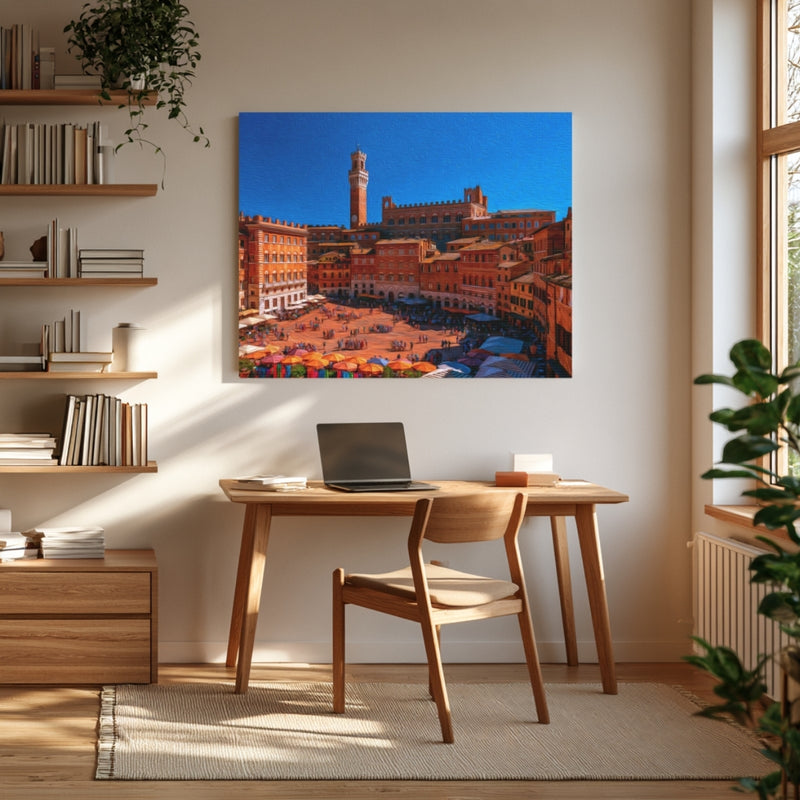
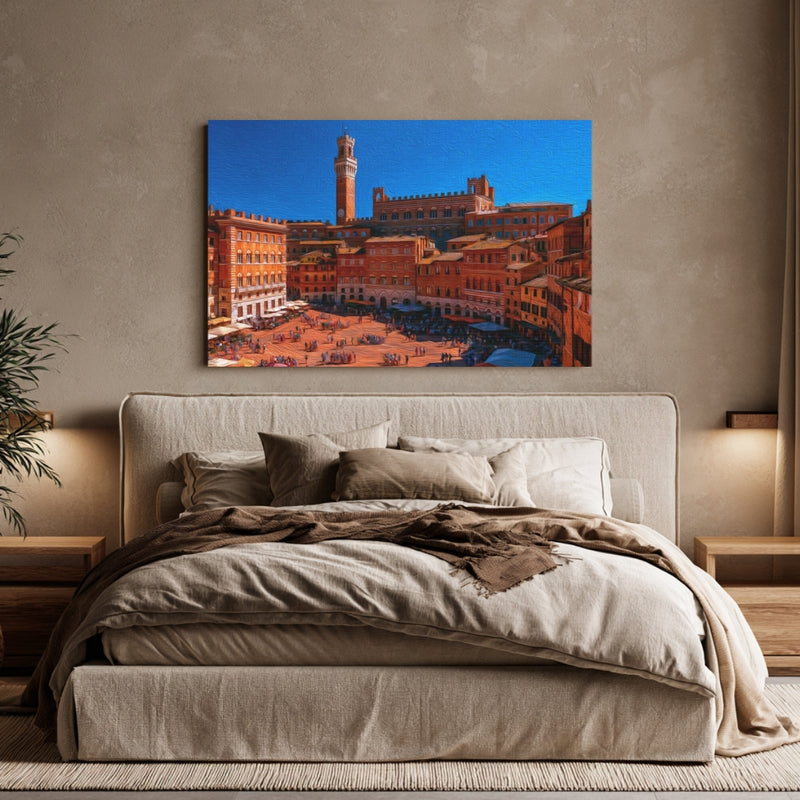
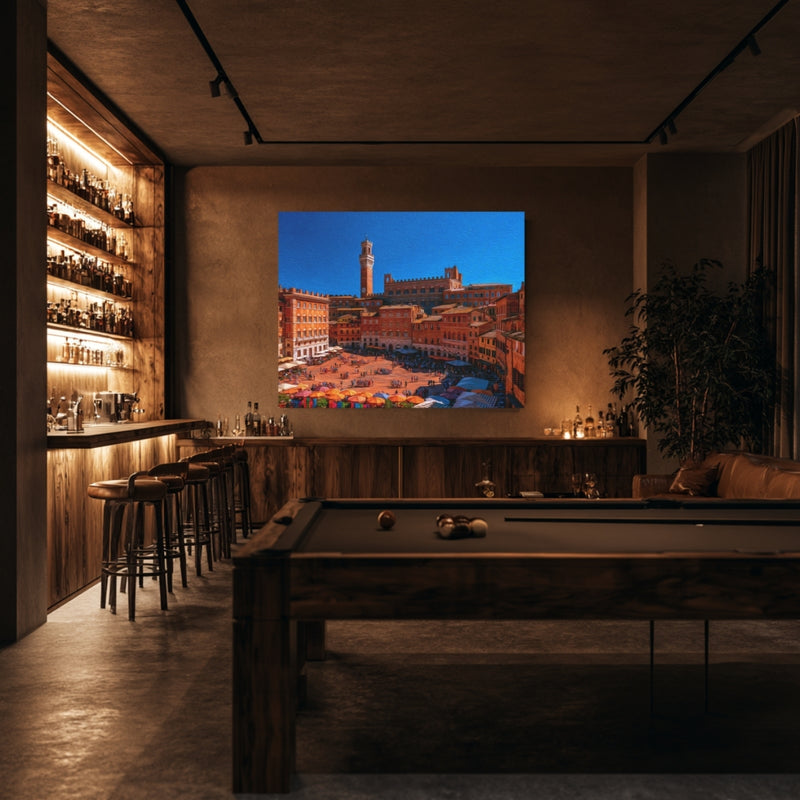
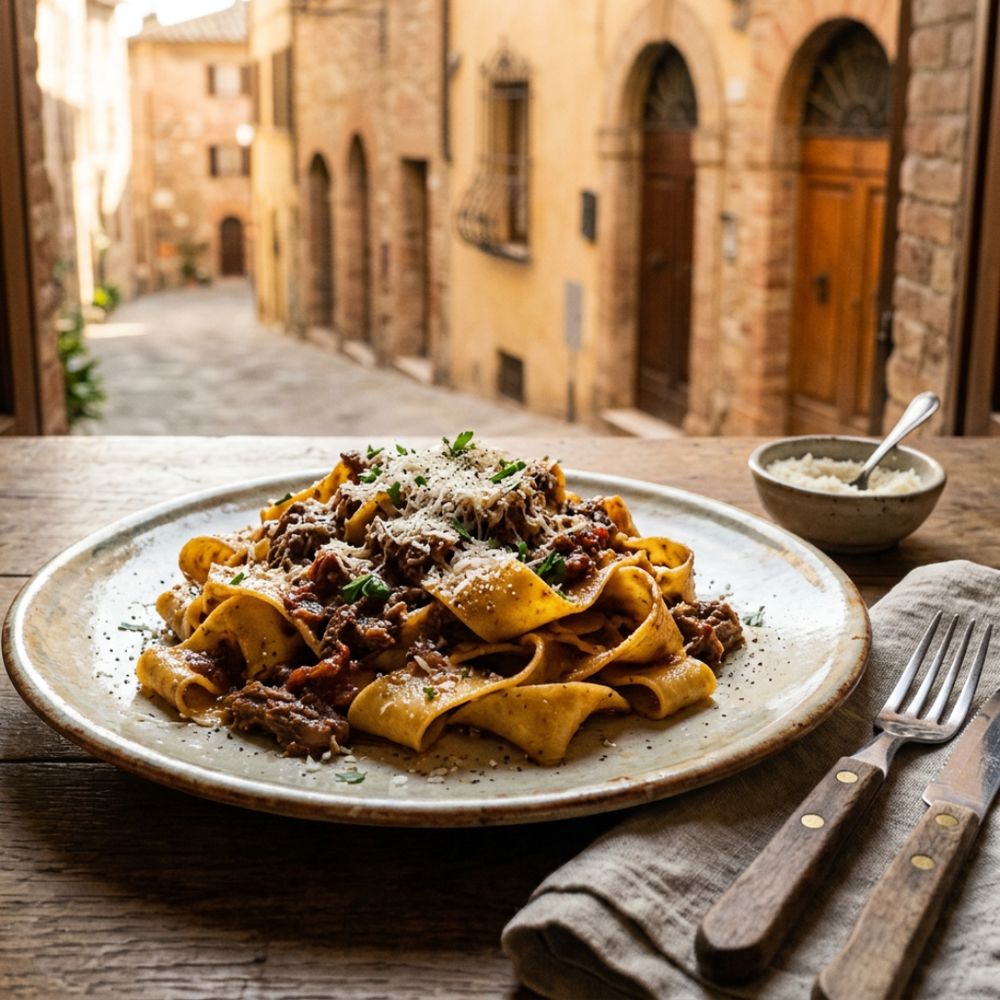
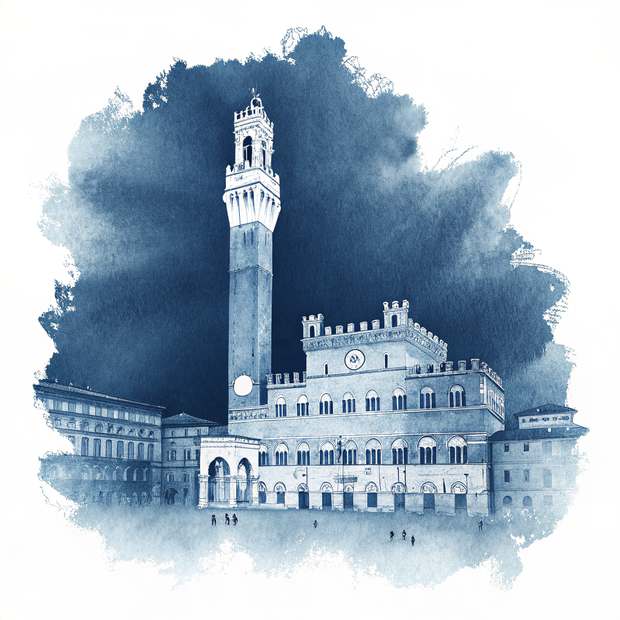
Siena is one of those cities that stops you mid-step. Its medieval core, built from a warm honey-colored stone locals call tufo, glows amber at sunrise and deepens to burnt sienna by late afternoon, as if the city itself is slowly warming from within. The fan-shaped Piazza del Campo has drawn crowds for centuries, from merchants and pilgrims to the thundering horses of the Palio, a bareback race so fierce and so beloved that it shapes the identity of every Sienese from birth. Unlike Florence, just an hour north, Siena never industrialized and never really modernized either, which means wandering its steep cobbled lanes still feels like reading a very old, very beautiful letter written in stone. The city is divided into seventeen contrade, or neighborhoods, each with its own animal symbol, church, and museum, and loyalty to one's contrada runs deeper than almost any other civic bond in Italy.
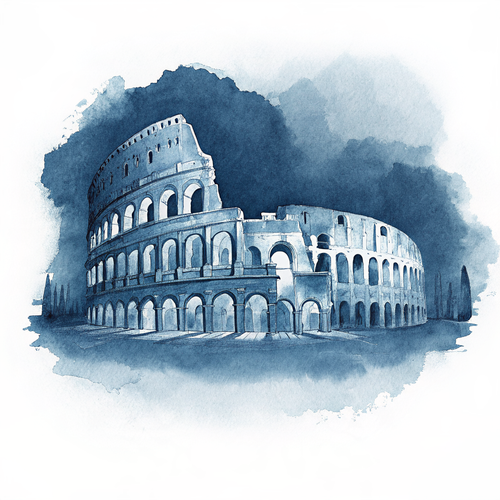
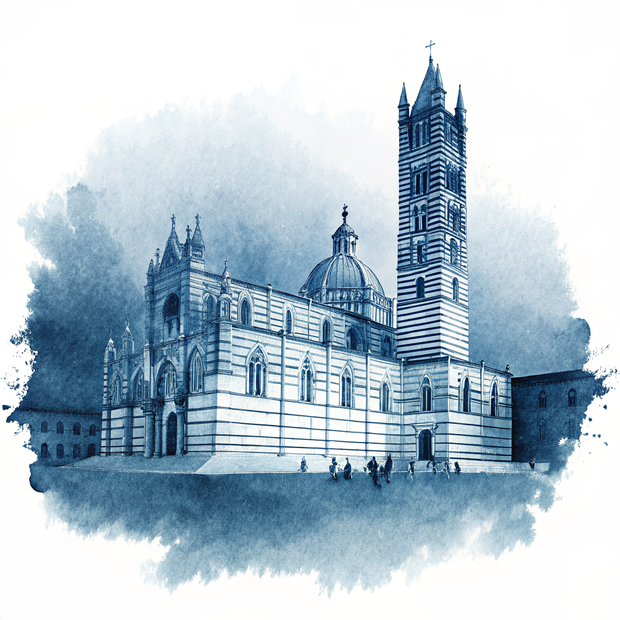
The watercolor palette here almost paints itself. Burnt sienna and raw umber anchor every composition, pulled straight from the earth that surrounds this hilltop city and the very pigment that bears its name. Warm ochres and dusty terra cottas fill the rooftops and facades, softened by the pale silvery greens of olive groves glimpsed through archways, with the striped black and white marble of the Duomo offering a striking counterpoint that asks for a fine brush and a steady hand.
We hope you love getting lost in Siena through the art below — and that one of these canvases finds a home on your wall. Happy travels, from all of us at The Painted Passport.