Shop the Collection

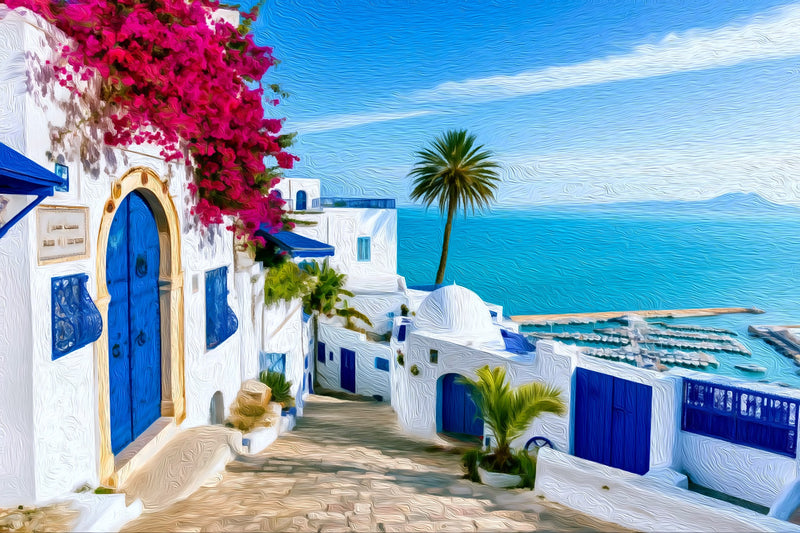
To help you build your own global archive, we've prepared this collection of watercolor studies from our research into Sidi Bou Said, Tunisia. These artifacts are designed to bring the stillness of this corner of the world into your home.

Original Series Decorative Magnet

A personal study of Sidi Bou Said, Tunisia, captured in high-fidelity watercolor and prepared for your collection.

Sidi Bou Said, Tunisia | Original Series Decorative Magnet
Add to Collection / $18
Exclusive Series Artifact

Original Series Gallery Canvas

This high-fidelity canvas is a beautiful way to anchor a room and keep your memories of Sidi Bou Said, Tunisia fresh long after you've returned home.

Sidi Bou Said, Tunisia | Original Series Gallery Canvas detail Sidi Bou Said, Tunisia | Original Series Gallery Canvas detail Sidi Bou Said, Tunisia | Original Series Gallery Canvas detail Sidi Bou Said, Tunisia | Original Series Gallery Canvas detail
Add to Collection / $65

Original Series Hardboard Coaster

A personal study of Sidi Bou Said, Tunisia, captured in high-fidelity watercolor and prepared for your collection.

Sidi Bou Said, Tunisia | Original Series Hardboard Coaster
Add to Collection / $18
Exclusive Series Artifact

The Spirit of the Land

Archival Note: A curated field study of Sidi Bou Said, Tunisia, prioritizing the specific atmospheric stillness of the region. These artifacts have been meticulously sourced from our global archival partners to represent the area’s unique cultural frequency and environmental character. This selection serves as a formal observation for our ongoing global archive, vetted for its visual accuracy and archival merit.

Sidi Bou Said, Tunisia study No. 01
Sidi Bou Said, Tunisia / 01 VIA / Mahmoud Yahyaoui
Step into a sanctuary of timeless tranquility, where the vibrant blue of the window beautifully contrasts with the intricate warmth of traditional Tunisian tilework. Sunlight gently illuminates a peaceful corner adorned with plush cushions and sacred art, inviting you to pause, breathe, and connect with the rich heritage of Sidi Bou Said. It is a stunning reminder of how history and artistry can weave together to create a space of pure comfort and spiritual harmony.
Sidi Bou Said, Tunisia study No. 02
Sidi Bou Said, Tunisia / 02 VIA / Mahmoud Yahyaoui
Tucked away in a quiet corner of Sidi Bou Said, this serene courtyard captures the timeless charm of Mediterranean life. The soothing presence of a central stone fountain pairs beautifully with the village's signature vibrant blue bench and shuttered window, framed by cascading green vines. It is an enchanting, sun-dappled retreat that invites you to slow down and lose yourself in the peaceful rhythm of Tunisia.
Sidi Bou Said, Tunisia study No. 03
Sidi Bou Said, Tunisia / 03 VIA / Kotek Miau
Vibrant bursts of magenta bougainvillea canopy a sun-drenched cobblestone alley, perfectly framing the iconic white-washed walls and brilliant blue accents of Sidi Bou Said. Woven wicker crafts and local artisan storefronts peek through the historic stone archway, capturing the lively yet peaceful essence of village life. It is an inspiring glimpse into a Mediterranean dream, where every winding path tells a story of artistry, culture, and coastal warmth.

Where to wander

Archival Note: A curated field study of Sidi Bou Said, Tunisia, prioritizing cultural relevance and archival merit. While we haven't touched down here yet, we’ve meticulously vetted these locations through our global network of contributors to ensure they represent the most authentic atmosphere for your own expedition.

Local Cuisine Spotlight
Immerse your senses in the vibrant heart of a traditional market, where perfectly sculpted pyramids of aromatic spices rise in brilliant shades of amber, gold, and crimson. From the earthy warmth of ground cumin and turmeric to the rich intensity of local harissa and precious saffron, each display tells a story of culinary heritage and ancient trade routes. It is an inspiring celebration of flavor and culture, capturing the lively spirit and sensory magic of a Tunisian souk.
Credits: Kotek Miau
Local cuisine study in Sidi Bou Said, Tunisia

☕︎ Local Flavor

Restaurant Dar Zarrouk

Rating: 4.8★ | Price: $$$ | Coordinates: 36.8698° N, 10.3460° E

The most celebrated restaurant in Sidi Bou Said, occupying a whitewashed terrace house whose dining rooms and garden terrace directly overlook the Gulf of Tunis. The kitchen is organized around the specific culinary tradition of the Tunisian coast: brick pastry filled with egg and tuna (the archetypal brik à l'oeuf), grilled sea bream with harissa, the slow-cooked lamb of the interior, and the orange blossom water-scented pastries that close every serious Tunisian meal. The combination of the view — the village rooftops dropping toward the sea at sunset — and the food makes it the finest single table in the village. Reserve in advance; the terrace fills early and the view is the reason.

View Entry Details

Café Sidi Chabaane

Rating: 4.7★ | Price: $$ | Coordinates: 36.8699° N, 10.3455° E

Built directly into the cliff face at the western edge of the village, Café Sidi Chabaane offers the most dramatic panoramic view available in Sidi Bou Said: the entire Gulf of Tunis spread below the terrace from the ruins of Carthage on the left to the Cap Bon peninsula on the right, with the fishing boats of La Goulette visible on the water and the mountains of the Sahel on the far shore. The café serves mint tea, pine nut coffee, fresh-squeezed orange juice, and a small selection of Tunisian pastries. It is the correct answer to the question of where to watch the sun set in North Africa. Arrive 45 minutes before sunset and take the front terrace.

View Entry Details

Tunisian Home Cooking Class

Rating: 5★ | Price: $$$ | Coordinates: 36.8698° N, 10.3460° E

Enter a traditional Tunisian kitchen above the Gulf of Tunis to document the foundational recipes of a culinary tradition shaped by Berber, Arab, Ottoman, Andalusian, and French influences over two thousand years of North African history. The curriculum covers the brik à l'oeuf (the pastry that defines Tunisian street food), the slow-cooked lamb tagine with olives and preserved lemon, the grilled mechouia salad of roasted peppers and tomatoes with harissa, and the orange blossom water pastries that close every significant meal. The session ends on the terrace with the view of the gulf and the understanding that Tunisian cuisine is one of the most underestimated in the Mediterranean world.

View Entry Details

Tunis Medina Street Food Tour

Rating: 4.9★ | Price: $$ | Coordinates: 36.7986° N, 10.1712° E

Navigate the food geography of the Tunis medina — a UNESCO World Heritage Site whose souks have been organized by trade for a thousand years — with a local guide who knows which stall has the finest lablabi (chickpea soup with harissa and cumin), which bakery produces the best bambalouni (fried dough ring dusted in sugar), the correct address for merguez grilled on charcoal at the Halfaouine market, and the spice merchant whose ras el hanout blend encodes the specific flavor profile that distinguishes Tunisian cooking from every other North African cuisine. The walk connects Sidi Bou Said’s aesthetic beauty to its culinary depth, and the two are inseparable.

View Entry Details

🛌︎ Boutique Stays

Dar Saïd

Rating: 4.8★ | Price: $$$$ | Coordinates: 36.8700° N, 10.3467° E

The most celebrated boutique hotel in Sidi Bou Said and the finest expression of traditional Tunisian domestic architecture available to overnight guests: a 19th-century palace of carved plaster, hand-painted tiles, and inlaid cedar ceilings organized around a series of courtyard gardens where jasmine and bougainvillea press against the white walls. The 24 rooms are individually furnished with antique Tunisian pieces and embroidered textiles. The rooftop terrace looks over the village roofscape and the Gulf of Tunis to the ruins of Carthage on the plain below. Dar Saïd is the kind of property that makes the destination make sense — everything about the village becomes legible through the building you are sleeping in.

View Entry Details

Hotel Sidi Bou Fares

Rating: 4.6★ | Price: $$$ | Coordinates: 36.8698° N, 10.3471° E

A restored traditional house in the heart of the village, steps from the main Rue Habib Thameur and the blue-and-white alleyways. The rooms are built around a central courtyard with a fountain and a terrace that captures both the sea breeze and the evening call to prayer from the mosque across the lane. The combination of location, traditional architecture, and the specific quality of waking up inside the village rather than approaching it from a hotel outside makes this the most atmospherically correct base in Sidi Bou Said for a traveler who has come for the place itself rather than the amenities.

View Entry Details

Villa Didon

Rating: 4.9★ | Price: $$$$ | Coordinates: 36.8550° N, 10.3306° E

Perched on the Carthage hill between the ancient ruins and the Gulf of Tunis, Villa Didon is the most dramatically positioned hotel in the greater Tunis region: 22 rooms in a contemporary white villa whose rooftop pool, infinity terrace, and panoramic restaurant deliver an uninterrupted view of the gulf, the Cap Bon peninsula, and on clear days the silhouette of Sicily. Named for Dido, the legendary founder of Carthage, the hotel is a 10-minute drive from Sidi Bou Said village and a five-minute walk from the Antonine Baths. For a traveler combining Carthage, Sidi Bou Said, and the Gulf, it is the most strategically placed and most visually spectacular address available.

View Entry Details

Dar El Médina

Rating: 4.7★ | Price: $$$ | Coordinates: 36.7986° N, 10.1712° E

A restored 19th-century palace in the Tunis medina, 20 minutes from Sidi Bou Said, whose carved plaster arches, hand-painted blue-and-white tiles, and colonnaded courtyard make it the most authentic and most beautiful traditional riad-style accommodation in greater Tunis. The 14 rooms are individually decorated with Tunisian antiques, handwoven kilims, and embroidered textiles. Staying here and making the 20-minute TGM train journey to Sidi Bou Said each day is the best way to combine both places without sacrificing the experience of either — the medina in the evening, the village at sunrise.

View Entry Details

📍︎ Field Study

Café des Nattes

Rating: 5★ | Price: $ | Coordinates: 36.8694° N, 10.3462° E

At the top of the main staircase of Sidi Bou Said, Café des Nattes has been serving mint tea, pine nut coffee, and shisha to artists, writers, and travelers since the 1920s — it was here that Paul Klee and August Macke sat in 1914 when the light of North Africa changed their painting forever, and where Simone de Beauvoir and André Gide later wrote in the same blue-shuttered room. The rush mat (natte) seating on the terrace, the brass tea service, and the view over the village rooftops toward the gulf constitute one of the most historically charged café experiences in the Mediterranean world. Order the pine nut coffee and stay as long as the afternoon allows.

View Entry Details

Carthage Archaeological Site

Rating: 4.9★ | Price: $$ | Coordinates: 36.8526° N, 10.3228° E

Carthage, the city that challenged Rome for dominance of the Mediterranean world and was destroyed so completely in 146 BCE that the phrase 'Carthago delenda est' became a byword for absolute annihilation, is a ten-minute taxi ride from Sidi Bou Said. The archaeological park spreads across several hilltop sites: the Byrsa Hill with its Punic tophet and the Carthage National Museum; the Antonine Baths, the largest Roman baths ever built outside Rome, whose columns frame the Gulf of Tunis; the Roman amphitheater; and the Punic ports. A full day visits all four sites. A Sidi Bou Said trip without Carthage is a trip to the wrong century.

View Entry Details

Sidi Bou Said Village Walking Tour

Rating: 5★ | Price: $$ | Coordinates: 36.8700° N, 10.3467° E

The village of Sidi Bou Said occupies a single clifftop promontory above the Gulf of Tunis and can be walked entirely in two hours — but to understand what you are looking at requires a guide who knows the specific history of each building, why the blue-and-white color scheme became law under Baron Rodolphe d'Erlanger in 1915, which courtyard contains the tomb of the Sufi saint after whom the village is named, and where Paul Klee actually sat when he wrote in his diary that the light here had given him color entirely. The combination of the palace architecture, the artisan workshops, the clifftop views, and the café culture makes it the most concentrated expression of Tunisian aesthetic identity available in a single walk.

View Entry Details

Bardo National Museum

Rating: 4.9★ | Price: $$ | Coordinates: 36.8187° N, 10.1338° E

The Bardo National Museum in Tunis houses the largest and most important collection of ancient Roman mosaics in the world — 3,000 square meters of floor and wall mosaics removed from the Carthage region, the Roman province of Africa, and the rest of Tunisia, displayed in the rooms of a 19th-century Husainid palace whose own architecture is as remarkable as the collection it contains. The mosaics document the full arc of North African Roman culture from the 2nd to the 6th century CE: the portraits, the mythological scenes, the hunting and fishing compositions, and the exquisite Neptune mosaic from the Antonine Baths are the anchors of a collection that has no peer in the Mediterranean world.

View Entry Details

Typography

Archival Note: A formal technical study of Sidi Bou Said, Tunisia—archiving the coordinates, elevation, and environmental data that define the region. This data serves as a vital record for our ongoing global field study, allowing us to reconstruct the regional atmosphere with archival precision before our physical arrival.

Botanical and pigment specimen study for Sidi Bou Said, Tunisia Colors of Sidi Bou Said, Tunisia
Coordinates
36.8700° N, 10.3467° E — Northern Tunisia, Gulf of Tunis, above Carthage
Historical Epoch
Berber/Punic settlement (c. 9th century BCE) — Ottoman conquest 1574 CE — French Protectorate 1881 CE — d’Erlanger blue-and-white law 1915 CE
Elevation
130 m / 427 ft — clifftop village above the Gulf of Tunis, directly over the ruins of Carthage
Atmosphere
Mediterranean (Csa) — warm dry summers, mild wet winters, constant sea breeze from the Gulf
Observation Hour
18:15 — Cliff-edge café terraces at golden hour, white walls turning amber above the Gulf of Tunis
Primary Pigment
Cobalt Blue (#0047AB) and Sidi White (#F8F6F0)
Best Time to Visit
April through June, September through October — the spring and early autumn bring mild temperatures, clear blue skies, and the Gulf at its most vivid before summer heat and August crowds from Tunis
Avoid Visiting
July through August — peak summer heat above 35°C with intense weekend crowds from Tunis filling the narrow lanes and the café terraces from noon onwards

The Local Tongue

Language is the invisible architecture of Sidi Bou Said, Tunisia. These entries document the regional vocabulary—capturing the "texture" of local speech that standard translations often miss. Hand-curated expressions reflecting the specific spirit and daily rhythm of the region.
Archival study of Arabic (Tunisian Arabic) cultural texture

via / Mahmoud Yahyaoui

Primary Language Arabic (Tunisian Arabic)
Regional Dialect Tunisian Darija

Sabbah el-khir (صباح الخير)

Good morning in Tunisian Arabic — the greeting that opens every interaction in Sidi Bou Said’s cafés and artisan workshops. The response is “sabbah el-nour” (morning of light), and in a village where the morning light on white walls is the entire reason the artists came, the phrase is accurate in both directions.

Yizzi (يزي)

Enough, thank you in Tunisian Darija — the most important phrase for a visitor to know in a culture where hospitality requires the host to keep offering until the guest refuses. In Sidi Bou Said, where a café owner will refill your tea glass unbidden and a shopkeeper will bring out a third tray of silver before you have looked at the second, the ability to decline warmly is both a practical necessity and a social skill.

Inti barsha zina (إنتي برشا زينة)

You are very beautiful in Tunisian Arabic — the compliment that Tunisian speakers direct at the village itself as readily as at any person. Sidi Bou Said locals say it of their own village with genuine and unironic pride. As a visitor’s response to the blue doors, the white walls, and the light on the Gulf, it is the most efficient possible sentence.

Wait! before you go...

Before you head over to Sidi Bou Said, Tunisia, we’ve audited the essential data points for this corner of the world. These notes cover the logistics—from currency ratios to transit hubs—to help you navigate the landscape with clarity.
🚲 Getting Around The TGM light rail connects Tunis city center to Sidi Bou Said station in 40 minutes — the most atmospheric and most practical transport option. Taxis from Tunis take 20 minutes. The village itself is walkable in two hours. Most visitors combine Sidi Bou Said with Carthage in a single day trip from Tunis.
⚖️ Cash or Card 80% Cash / 20% Card. The village economy runs on Tunisian Dinar (TND) cash. Most cafés, artisan shops, and small restaurants are cash only. Some larger hotels and restaurants accept cards. ATMs are available at Sidi Bou Said station and in central Tunis.
☁️ Good to Know Modest dress is appreciated in the village’s religious sites and artisan workshops. Bargaining is expected in the souvenir and silver shops — the opening price is always higher than the final one, and walking away politely is a legitimate tactic. The village is extremely safe for visitors. Photography of residents requires permission.
🏧 ATMs ATMs at Sidi Bou Said TGM station and throughout Tunis city center. Banque de Tunisie and Attijari Bank machines reliably accept international Visa and Mastercard. Withdraw in Tunis before arriving in the village; the ATM at the station occasionally runs out on busy weekends.
💳 Currency The Tunisian Dinar (TND), a closed currency that cannot be purchased outside Tunisia. Exchange euros or dollars at the airport or at licensed bureaux de change in Tunis. The exchange rate at the airport is acceptable; the rate in Tunis city center is marginally better.
🔌 Plugs Tunisia uses Type C and Type E plugs — the round two-prong European-style socket. Standard voltage is 230V at 50Hz. Most modern electronics are dual-voltage and need only a plug adapter.
🛡️ Safety Sidi Bou Said is one of Tunisia’s safest destinations. The main considerations are the summer heat (35°C+, arrive early or after 4 PM), the weekend crowds from Tunis (visit on a weekday morning for the empty village), and the attention from souvenir sellers on the main street (polite and easy to deflect).
✈️ Airports Tunis-Carthage International Airport (TUN) is located 8 km from Tunis city center and 25 km from Sidi Bou Said — a 30-minute taxi ride. It receives direct flights from most European hubs. Tunisair is the national carrier. From the airport, a taxi to Sidi Bou Said direct takes 25 minutes and costs approximately 25-30 TND.

Behind The Scenes

Nathan

Note from the Founder

Hey, did you know this fun fact about Sidi Bou Said, Tunisia? The blue-and-white color scheme is the result of a single building law passed in 1915 by Baron Rodolphe d’Erlanger, a French baron who moved to Sidi Bou Said, fell in love with it, and then legally enforced its aesthetic.
Thank you for exploring the Sidi Bou Said, Tunisia series with us. We hope these notes have inspired you to add this incredible destination to your own passport—we are so glad you’re here. — Nathan

The Magnets

The Coasters

The Canvas