Shop the Collection

To help you build your own global archive, we've prepared this collection of watercolor studies from our research into Seville, Spain. These artifacts are designed to bring the stillness of this corner of the world into your home.

Original Series Decorative Magnet

A personal study of Seville, Spain, captured in high-fidelity watercolor and prepared for your collection.

Seville, Spain | Plaza de España Seville | Original Series Decorative Magnet
Add to Collection / $18
Exclusive Series Artifact

Original Series Gallery Canvas

This high-fidelity canvas is a beautiful way to anchor a room and keep your memories of Seville, Spain fresh long after you've returned home.

Seville, Spain | Plaza de España Seville | Original Series Gallery Canvas detail Seville, Spain | Plaza de España Seville | Original Series Gallery Canvas detail Seville, Spain | Plaza de España Seville | Original Series Gallery Canvas detail Seville, Spain | Plaza de España Seville | Original Series Gallery Canvas detail
Add to Collection / $65

Original Series Hardboard Coaster

A personal study of Seville, Spain, captured in high-fidelity watercolor and prepared for your collection.

Seville, Spain | Plaza de España Seville | Original Series Hardboard Coaster
Add to Collection / $18
Exclusive Series Artifact

The Spirit of the Land

Archival Note: A curated field study of Seville, Spain, prioritizing the specific atmospheric stillness of the region. These artifacts have been meticulously sourced from our global archival partners to represent the area's unique cultural frequency and environmental character. This selection serves as a formal observation for our ongoing global archive, vetted for its visual accuracy and archival merit.

Seville, Spain study No. 01
Seville, Spain / 01 VIA / FlyWithHM | HM 📸
The last light of day bleeds across Seville in shades of amber and burnt orange, catching the pale white rooftops of Triana and turning the Guadalquivir river into a sheet of dark hammered copper. From above, the city reveals itself as something ancient and unhurried — a dense tangle of narrow streets and terracotta tiles pressed right to the water's edge, held in place by centuries of habit. A single bridge cuts across the river in the dimming light, and somewhere beyond it, the Torre Sevilla stands at the edge of the frame like a quiet punctuation mark on the skyline.
Seville, Spain study No. 02
Seville, Spain / 02 VIA / AXP Photography
The golden afternoon light catches the ochre-trimmed facades of these narrow Sevillian buildings, casting warm tones that seem to emanate from the walls themselves rather than simply reflect the sun. Standing in this slender corridor of a street, a visitor would feel the particular intimacy of Andalusian urban life — the balconies close enough overhead to feel almost sheltering, the ironwork railings trailing plants that soften the geometry above. There is a stillness here that hums quietly with history, the blue sky visible only as a narrow ribbon between the buildings, making the world feel both enclosed and luminous at once.
Seville, Spain study No. 03
Seville, Spain / 03 VIA / AXP Photography
The colorful facades of Seville's Barrio Santa Cruz rise against a pale blue sky, their salmon pinks, ochre yellows, and deep crimsons telling the story of Andalusian architectural pride. What most visitors overlook is the wrought-iron balcony railing on the central building — its delicate scrollwork stands in quiet conversation with the more ornate ironwork beside it, each one handcrafted with a artisan's deliberate care. A lemon or orange tree pushes forward in the foreground, its glossy leaves catching the light, a humble reminder that in Seville, nature insists on sharing the frame.

Where to wander

Archival Note: A curated field study of Seville, Spain, prioritizing cultural relevance and archival merit. While we haven't touched down here yet, we've meticulously vetted these locations through our global network of contributors to ensure they represent the most authentic atmosphere for your own expedition.

Local Cuisine Spotlight
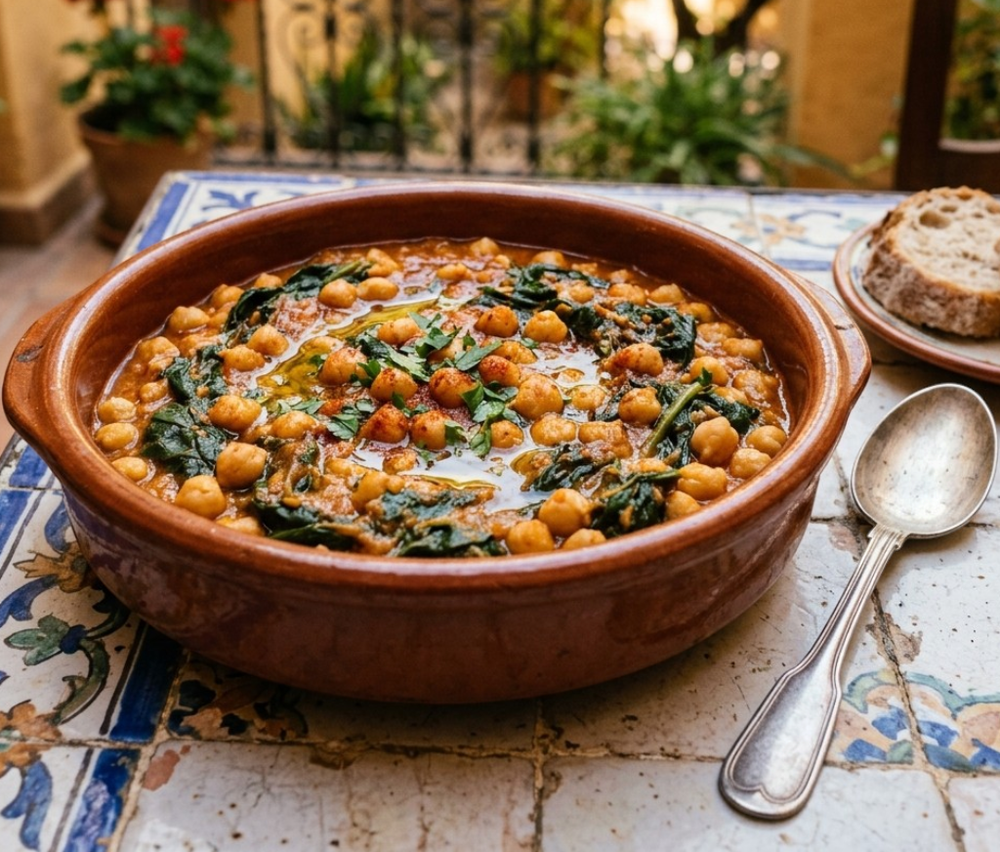
Espinacas con garbanzos is Seville's beloved tapa — golden chickpeas slow-simmered with wilted spinach in a smoky, cumin-spiced tomato broth, finished with a drizzle of fruity olive oil. Served piping hot in a rustic clay cazuela, every spoonful is earthy, rich, and deeply comforting.
Credits: THE PAINTED PASSPORT
Local cuisine study in Seville, Spain

☕︎ Local Flavor

Bar El Comercio

Rating: 5* | Price: $ | Coordinates: 37.3913° N, 5.9954° W

This no-frills, beloved tapas bar near the Mercado de Triana has been feeding locals since 1904 and shows absolutely no signs of slowing down. Order the iconic montadito de pringá — a slow-cooked meat sandwich on crusty bread — and prepare to order a second one immediately. Standing room only at the marble bar, surrounded by chattering Sevillanos, is quintessential Seville at its most authentic and joyful.

View Entry Details

Abantal Restaurant

Rating: 5* | Price: $$$$ | Coordinates: 37.3842° N, 5.9804° W

Seville's Michelin-starred gem, Abantal reimagines traditional Andalusian cuisine through a refined and deeply creative lens without ever losing sight of its roots. Chef Julio Fernández crafts tasting menus that feel like a love letter to the region — think Iberian pork with sherry reductions and delicate gazpacho reimagined in stunning new forms. The intimate dining room and flawless wine pairings elevate the whole experience into something genuinely memorable and moving.

View Entry Details

Bodeguita Romero

Rating: 5* | Price: $$ | Coordinates: 37.3875° N, 5.9950° W

Famous throughout Seville for its legendary pringá montaditos and soul-warming rabo de toro stew, Bodeguita Romero is the kind of place where locals celebrate birthdays and strangers become friends over shared plates. The warm, tiled interior feels unchanged for decades, and that steadfast commitment to tradition is precisely its charm. Arrive early or expect to wait — and trust us, the wait is absolutely worth every minute.

View Entry Details

La Azotea

Rating: 5* | Price: $$$ | Coordinates: 37.3881° N, 5.9962° W

La Azotea has quietly become one of Seville's most celebrated modern tapas destinations, drawing food lovers with its inventive small plates rooted firmly in Andalusian tradition. The tuna tataki with mango and the jamón croquetas with truffle are dishes that linger in your memory long after you've returned home. With multiple locations across the city, its consistent quality and buzzing atmosphere make it a reliable highlight of any Seville food journey.

View Entry Details

🛌︎ Boutique Stays

Hotel Alfonso XIII

Rating: 5* | Price: $$$$ | Coordinates: 37.3836° N, 5.9965° W

A breathtaking Moorish-Renaissance palace built for the 1929 Ibero-American Exposition, this legendary hotel oozes royal grandeur. Its central courtyard adorned with hand-painted azulejo tiles and gurgling fountains feels like stepping into another century. Impeccable service and a prime location beside the Real Alcázar make it Seville's most iconic address.

View Entry Details

EME Catedral Hotel

Rating: 5* | Price: $$$ | Coordinates: 37.3861° N, 5.9926° W

Perched directly opposite the Giralda tower, EME Catedral offers rooftop pool views that will genuinely take your breath away at sunset. The boutique rooms blend contemporary Andalusian design with warm terracotta tones and thoughtful local touches throughout. Its rooftop bar is arguably the best spot in the city to watch the cathedral glow golden in the evening light.

View Entry Details

Casa Romana Hotel Boutique

Rating: 4* | Price: $$ | Coordinates: 37.3894° N, 5.9901° W

Tucked into a beautifully restored 18th-century mansion in the charming Santa Cruz neighborhood, Casa Romana feels like staying in a sophisticated Sevillian home. The interior patio is a serene oasis of potted orange trees and wrought-iron lanterns that cast a romantic glow each evening. Friendly staff consistently go above and beyond to share local tips that no guidebook will tell you.

View Entry Details

Hospes Las Casas del Rey de Baeza

Rating: 4* | Price: $$$ | Coordinates: 37.3920° N, 5.9888° W

This beautifully converted 18th-century building near La Casa de Pilatos wraps around a sun-drenched Andalusian courtyard that invites long, lazy mornings with coffee and pastries. Rooms are elegant and understated, with whitewashed walls and rich wooden accents that feel authentically local rather than generic luxury. The rooftop terrace and small plunge pool make it a perfect retreat after a day of exploring.

View Entry Details

📍︎ Field Study

Real Alcázar de Sevilla

Rating: 5* | Price: $ | Coordinates: 37.3833° N, 5.9908° W

One of the most stunning royal palaces on earth, the Real Alcázar is a breathtaking layering of Moorish, Gothic, and Renaissance architecture built across centuries of Sevillian history. Wander through the intricate Mudejar halls decorated with geometric tile mosaics and ornate plasterwork that defy comprehension in their detail and beauty. The sprawling gardens, with their cooling fountains and fragrant orange trees, are an absolute sanctuary worth losing an entire afternoon within.

View Entry Details

Barrio Santa Cruz

Rating: 5* | Price: Free | Coordinates: 37.3862° N, 5.9878° W

Seville's old Jewish quarter is a labyrinth of whitewashed alleyways, flower-draped balconies, and sun-dappled plazas that feel designed specifically to make you fall in love with this city. Getting blissfully lost here is not a mistake — it is the entire point, and every wrong turn reveals a hidden courtyard or a flower-filled square more charming than the last. In the evening, the neighborhood glows warmly with candlelit restaurants and the distant sound of flamenco guitar drifting through the streets.

View Entry Details

Metropol Parasol (Las Setas)

Rating: 5* | Price: $ | Coordinates: 37.3929° N, 5.9926° W

The world's largest wooden structure rises dramatically from the ancient Plaza de la Encarnación, a futuristic mushroom-shaped landmark that has won over even the most skeptical Sevillanos since its 2011 opening. The walkway that winds along the top offers sweeping panoramic views over the city's rooftops, church towers, and the shimmer of the Guadalquivir River in the distance. Beneath it, archaeological ruins discovered during construction are visible in the fascinating underground museum below.

View Entry Details

Triana Neighborhood & Market

Rating: 5* | Price: Free | Coordinates: 37.3802° N, 5.9997° W

Across the Guadalquivir River from the historic center, Triana pulses with an energy that feels distinctly its own — this is the birthplace of Sevillian flamenco and the traditional home of the city's ceramic artisans. Wander the Mercado de Triana in the morning, where vendors sell fresh fish, olives, and local cheeses beneath a beautifully restored 19th-century iron structure. Stay into the evening to catch live flamenco in an intimate tablao and experience the passionate, fiercely proud soul of authentic Seville.

View Entry Details

Typography

Archival Note: A formal technical study of Seville, Spain—archiving the coordinates, elevation, and environmental data that define the region. This data serves as a vital record for our ongoing global field study, allowing us to reconstruct the regional atmosphere with archival precision before our physical arrival.

Botanical and pigment specimen study for Seville, Spain Colors of Seville, Spain
Coordinates
37.3891° N, 5.9845° W — City centre of Seville, Andalusia, southern Spain
Historical Epoch
Seville reached its peak splendour in the 16th century as the sole gateway to the Americas, making it the wealthiest city in the Western world. The Cathedral, Alcazar, and golden tower still carry that era in their bones.
Elevation
7-23 m / 23-75 ft - Low-lying river city in the Guadalquivir valley with virtually no significant elevation change across the historic centre
Atmosphere
Csa - Hot-summer Mediterranean. Seville bakes under one of Europe's most intense summer suns, but spring and autumn deliver warm, luminous days that feel made for walking and painting.
Observation Hour
07:30 - The early morning sun rakes low across the Alcazar walls and fills Santa Cruz with honey-gold warmth before the crowds arrive and the heat begins to flatten everything into midday white.
Primary Pigment
Terracotta Amber (#C2703A) and Azulejo Cerulean (#4A7FA5)
Best Time to Visit
March through May - Spring brings orange blossom, Semana Santa processions, and perfect warm light without the punishing summer heat.
Avoid Visiting
July through August - Temperatures regularly exceed 40C, making midday exploration exhausting and draining the pleasure from almost everything outdoors.

The Local Tongue

Language is the invisible architecture of Seville, Spain. These entries document the regional vocabulary—capturing the "texture" of local speech that standard translations often miss. Hand-curated expressions reflecting the specific spirit and daily rhythm of the region.
Archival study of Spanish (Castilian) cultural texture

via / JOSE BARON

Primary Language Spanish (Castilian)
Regional Dialect Andalusian Spanish

Duende

Duende is the untranslatable spirit of raw emotional power, the force that makes a flamenco dancer's heel strike feel like grief made physical. In Seville, locals use it not just for art but for any moment that carries an inexplicable charge, the way a particular evening light hits the Giralda and the whole street goes quiet.

Madrugada

Madrugada refers to the liminal hours between midnight and dawn, a time Seville treats as its own unofficial third act of the day. The scent of warm pavement and distant guitar drifts through the Santa Cruz alleyways during these hours, and the city seems to belong entirely to those still moving through it.

Querencia

Querencia describes a place where one feels most fully oneself, a spiritual home ground that restores rather than drains. In Seville it often surfaces in conversation at a neighborhood bar, elbow on zinc counter, small glass of Manzanilla in hand, the particular stool that has somehow become a person's own over years of returning.

Wait! before you go...

Before you head over to Seville, Spain, we’ve audited the essential data points for this corner of the world. These notes cover the logistics—from currency ratios to transit hubs—to help you navigate the landscape with clarity.
🚲 Getting Around Seville's historic centre is best explored on foot or by bicycle, with a tram line connecting key central points. The city also has an efficient metro system and a well-developed network of buses reaching every neighbourhood.
⚖️ Cash or Card Cards are widely accepted at restaurants, hotels, and larger shops throughout Seville. Smaller tapas bars, market stalls, and neighbourhood bodegas still strongly prefer cash, so carrying at least 20 to 30 euros on hand makes daily life considerably smoother.
☁️ Good to Know Meal times in Seville follow a strict internal logic: lunch rarely begins before 2pm and dinner seldom before 9pm, and arriving earlier will often earn a politely empty dining room. Sevillanos take the afternoon seriously, and many smaller shops close between 2pm and 5pm without apology.
🏧 ATMs ATMs are plentiful throughout central Seville, particularly around Avenida de la Constitucion and near the main transport hubs. Using bank-affiliated ATMs rather than independent machines helps avoid high third-party surcharge fees that can add up quickly over a longer stay.
💳 Currency Spain uses the Euro, and notes and coins are accepted everywhere with no practical issues for travellers. Larger denomination notes above 50 euros can sometimes cause friction at small local businesses, so breaking them at supermarkets or larger shops is a useful habit.
🔌 Plugs Spain uses the Type F Schuko outlet at 230V and 50Hz. A universal European adapter is sufficient for most travellers arriving from outside continental Europe.
🛡️ Safety Seville is a very safe city for travellers, though the tourist-heavy areas around the Cathedral and Barrio Santa Cruz see opportunistic pickpocketing, particularly in crowded tapas bars and on busy weekend evenings. Keeping bags zipped and close in these areas is straightforward common sense.
✈️ Airports Seville Airport (SVQ), officially Aeropuerto de Sevilla, sits roughly 10 kilometres northeast of the city centre and connects to major European hubs. A dedicated airport bus runs frequently into the city and takes around 35 minutes, making it one of the more relaxed airport arrivals in southern Spain.

Behind The Scenes

Nathan

Note from the Founder

Hey, did you know this fun fact about Seville, Spain? Seville is the only city in Europe with a functioning inland port on a major river. The Torre del Oro, built by the Almohads in 1220, once anchored the chains that controlled access to that port and the entire city.
Thank you for exploring the Seville, Spain series with us. We hope these notes have inspired you to add this incredible destination to your own passport—we are so glad you're here. — Nathan

Some of our Favorites