Shop the Collection

To help you build your own global archive, we've prepared this collection of watercolor studies from our research into Serengeti, Tanzania. These artifacts are designed to bring the stillness of this corner of the world into your home.

Original Series Decorative Magnet

A personal study of Serengeti, Tanzania, captured in high-fidelity watercolor and prepared for your collection.

Serengeti, Tanzania | Savanna Balloon Safari | Original Series Decorative Magnet
Add to Collection / $18
Exclusive Series Artifact

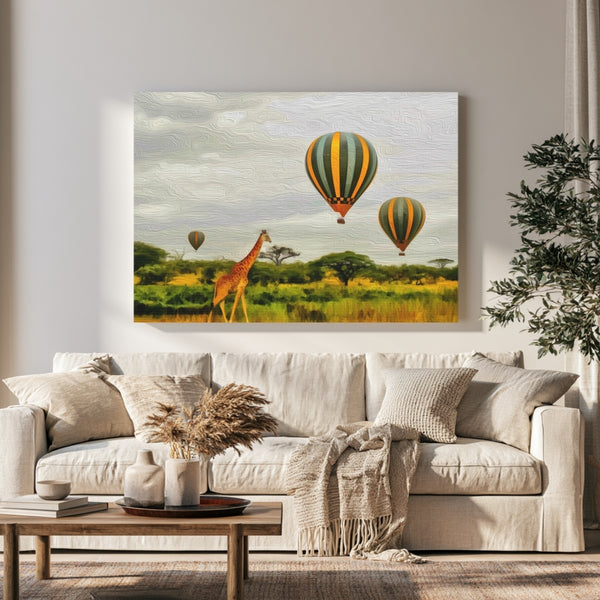
Original Series Gallery Canvas

This high-fidelity canvas is a beautiful way to anchor a room and keep your memories of Serengeti, Tanzania fresh long after you've returned home.

Serengeti, Tanzania | Savanna Balloon Safari | Original Series Gallery Canvas detail Serengeti, Tanzania | Savanna Balloon Safari | Original Series Gallery Canvas detail Serengeti, Tanzania | Savanna Balloon Safari | Original Series Gallery Canvas detail Serengeti, Tanzania | Savanna Balloon Safari | Original Series Gallery Canvas detail
Add to Collection / $65

Original Series Hardboard Coaster

A personal study of Serengeti, Tanzania, captured in high-fidelity watercolor and prepared for your collection.

Serengeti, Tanzania | Savanna Balloon Safari | Original Series Hardboard Coaster
Add to Collection / $18
Exclusive Series Artifact

The Spirit of the Land

Archival Note: A curated field study of Serengeti, Tanzania, prioritizing the specific atmospheric stillness of the region. These artifacts have been meticulously sourced from our global archival partners to represent the area's unique cultural frequency and environmental character. This selection serves as a formal observation for our ongoing global archive, vetted for its visual accuracy and archival merit.

Serengeti, Tanzania study No. 01
Serengeti, Tanzania / 01 VIA / Dirk Pothen
The midday haze softens the hills behind the plain, turning them a dusty blue that contrasts with the burnt-gold grass stretching endlessly in every direction. A single acacia anchors the frame, its flat canopy casting the only shade for miles, while a wildebeest herd moves quietly through the background like a slow tide. There is something deeply still about this moment — the scale of the land making even a migration feel unhurried.
Serengeti, Tanzania study No. 02
Serengeti, Tanzania / 02 VIA / Ákos Helgert
Standing on the Serengeti, one would feel the immensity of the ancient world — the warm savanna breeze carrying the scent of dry grass and distant rain. The soft, diffused light filters through billowing cumulus clouds, casting the herd in a timeless, cinematic glow. It is a rare and humbling convergence of giants and striped wanderers sharing the same golden earth, indifferent to the passage of centuries.
Serengeti, Tanzania study No. 03
Serengeti, Tanzania / 03 VIA / Twilight Kenya
A lone giraffe towers over a resting herd of impalas across the tawny, wind-flattened grasslands of the Serengeti under a muted gray sky. What most viewers miss is the small oxpecker bird perched quietly on the giraffe's lower neck, a subtle reminder of the savanna's intricate symbiotic relationships. The bleached golden grass stretches endlessly toward a sparse tree line, its uniform texture broken only by the warm rust-brown tones of the impalas scattered at the giraffe's feet.

Where to wander

Archival Note: A curated field study of Serengeti, Tanzania, prioritizing cultural relevance and archival merit. While we haven't touched down here yet, we've meticulously vetted these locations through our global network of contributors to ensure they represent the most authentic atmosphere for your own expedition.

Local Cuisine Spotlight
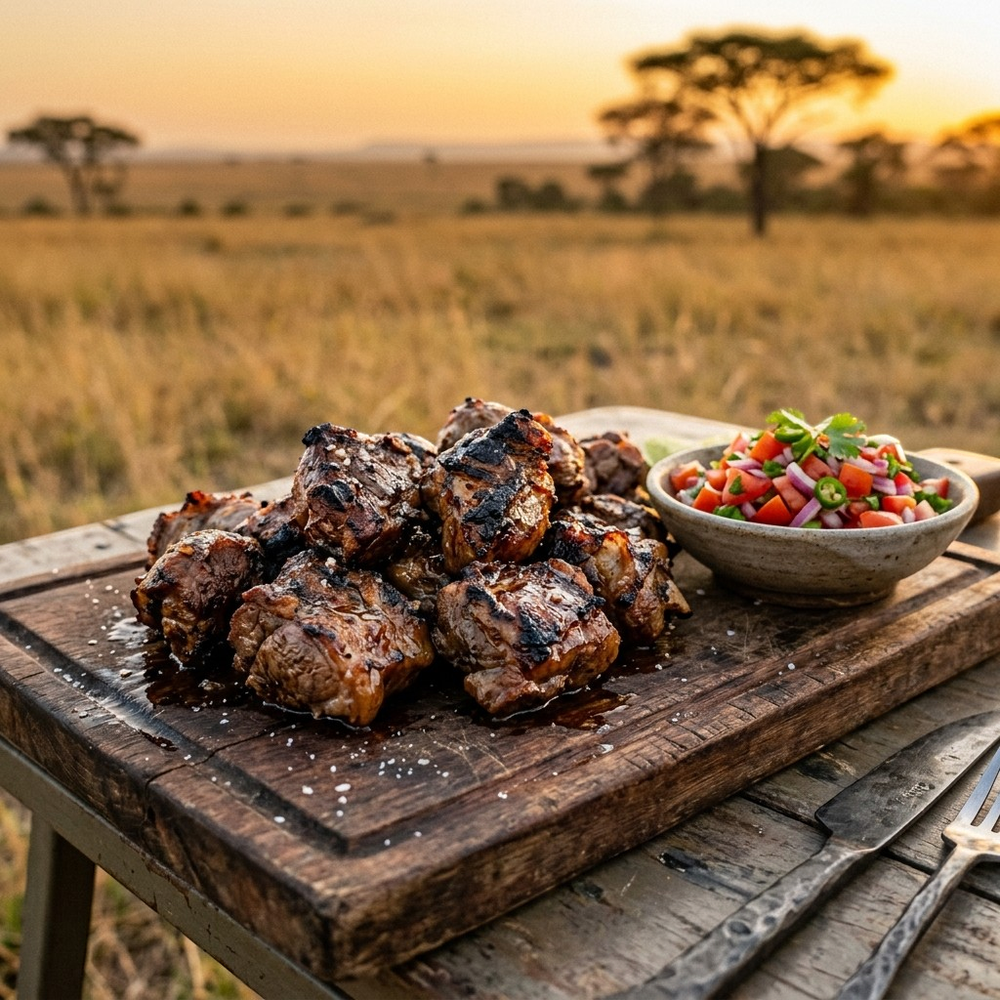
Fire-kissed and salted simply, this Tanzanian grilled meat carries the soul of the savanna in every bite. Smoky, juicy chunks rest beside a vivid tomato and chili salsa that cuts through the richness with heat and brightness. It is honest, elemental cooking at its finest.
Credits: THE PAINTED PASSPORT
Local cuisine study in Serengeti, Tanzania

☕︎ Local Flavor

The Boma at Serengeti Serena Lodge

Rating: 5* | Price: $$$ | Coordinates: -2.4500, 34.9000

The Boma transforms dinner into a full cultural ceremony with traditional Maasai music echoing under a vast open-air canopy. Roasted meats, spiced stews, and vibrant vegetable dishes are served in generous communal spreads that celebrate Tanzanian flavors proudly. The firelit atmosphere and warrior dancers create a warmth that lingers long after the last bite.

View Entry Details

Twiga Bush Dining, Singita Sabora Camp

Rating: 5* | Price: $$$$ | Coordinates: -2.0000, 34.4500

Singita Sabora's signature bush dining sets an elegantly dressed table directly on the open plains beneath acacia trees and endless sky. A private chef curates a seasonal menu of refined African-inspired dishes paired beautifully with carefully selected South African wines. Dining with only the sounds of the wilderness around you is profoundly intimate and genuinely magical.

View Entry Details

Ndarakwai Sunset Picnic Dining

Rating: 4* | Price: $$ | Coordinates: -2.2000, 34.6500

This beloved bush picnic experience takes guests out to a scenic kopje ridge for freshly prepared East African cuisine at golden hour. Handmade chapati, slow-cooked nyama choma, and seasonal fruit platters are served with cold Kilimanjaro beer against breathtaking sunset panoramas. It feels wonderfully unpretentious, joyful, and deeply connected to the land and its generous spirit.

View Entry Details

Gibb's Farm Restaurant, Day Visit

Rating: 5* | Price: $$$ | Coordinates: -3.2167, 35.5667

Though just beyond the park edge, Gibb's Farm earns its legendary reputation with garden-to-table lunches grown entirely on their lush Ngorongoro slopes property. Heirloom vegetables, freshly baked breads, and farm-reared proteins arrive on the table with extraordinary care and obvious love. The shaded terrace overlooking coffee plantations and forests makes every leisurely meal feel like a rare privilege.

View Entry Details

🛌︎ Boutique Stays

Four Seasons Safari Lodge Serengeti

Rating: 5* | Price: $$$$ | Coordinates: -2.3167, 34.8833

Perched above a natural waterhole, this lodge offers infinity pools overlooking the endless plains where wildlife roams freely below. Each suite blends sleek modern design with earthy textures, making evenings feel cinematic and deeply personal. Waking up to elephants gathering at dawn is an experience that quietly rewires your soul forever.

View Entry Details

Singita Grumeti Faru Faru Lodge

Rating: 5* | Price: $$$$ | Coordinates: -1.9833, 34.3167

Singita Faru Faru sits along the Grumeti River, offering a secluded sanctuary wrapped in fever trees and golden savanna light. The open-plan suites spill onto private decks where hippos surface lazily in the river below each morning. Conservation is woven into every detail here, making your stay feel genuinely meaningful beyond the luxury.

View Entry Details

Serengeti Bushtops Camp

Rating: 5* | Price: $$$ | Coordinates: -2.1500, 34.7000

This intimate tented camp floats above the central Serengeti with sweeping views that stretch uninterrupted to the horizon. Each luxury tent features a private plunge pool and a fire pit for stargazing beneath astonishingly clear African skies. The small guest count ensures every guide interaction feels personal, attentive, and full of genuine storytelling magic.

View Entry Details

Olakira Migration Camp

Rating: 4* | Price: $$$ | Coordinates: -1.5833, 35.0167

Olakira moves seasonally to follow the Great Migration, meaning you are always exactly where the action is happening. The classic East African canvas tents are cozy and well-appointed, channeling the romantic spirit of early explorers without sacrificing comfort. Sundowners on the open plains with wildebeest silhouetted against orange skies are simply unforgettable moments.

View Entry Details

📍︎ Field Study

The Great Migration River Crossing, Mara River

Rating: 5* | Price: $$ | Coordinates: -1.5167, 35.0333

Witnessing hundreds of thousands of wildebeest thunder into the crocodile-filled Mara River is one of nature's most raw and overwhelming spectacles. The air crackles with nervous energy as the herd hesitates, surges, and finally commits to the crossing in a chaotic, magnificent rush. No wildlife documentary truly prepares you for the noise, the dust, and the sheer primal power of it all.

View Entry Details

Seronera Valley Wildlife Corridor

Rating: 5* | Price: $ | Coordinates: -2.4500, 34.8333

Seronera sits at the heart of the Serengeti and consistently delivers the most reliable big cat sightings on the entire continent throughout the year. Lions sprawl lazily across kopjes, leopards drape themselves from sausage trees, and cheetahs sprint across open clearings with breathtaking speed and elegance. Every single game drive through this corridor feels different, alive, and charged with quiet anticipation.

View Entry Details

Olduvai Gorge Museum & Archaeological Site

Rating: 4* | Price: $ | Coordinates: -2.9833, 35.3500

Olduvai Gorge is where some of humanity's earliest ancestors walked over two million years ago, and standing at its rim is genuinely humbling. The small on-site museum displays original fossil discoveries by the Leakey family, telling the story of human evolution with surprising intimacy and clarity. Knowledgeable local guides bring the ancient landscape to life with passion, making this a profoundly moving intellectual journey.

View Entry Details

Balloon Safari over the Central Plains

Rating: 5* | Price: $$$$ | Coordinates: -2.3500, 34.8000

Drifting silently at dawn above the golden Serengeti plains in a hot air balloon is an experience that simply has no equal anywhere on earth. The world below reveals herds, predators, and rivers from a god's-eye perspective that reframes everything you thought you understood about wilderness. A champagne bush breakfast awaits upon landing, toasting your sunrise adventure in the most delightfully civilized fashion imaginable.

View Entry Details

Typography

Archival Note: A formal technical study of Serengeti, Tanzania—archiving the coordinates, elevation, and environmental data that define the region. This data serves as a vital record for our ongoing global field study, allowing us to reconstruct the regional atmosphere with archival precision before our physical arrival.

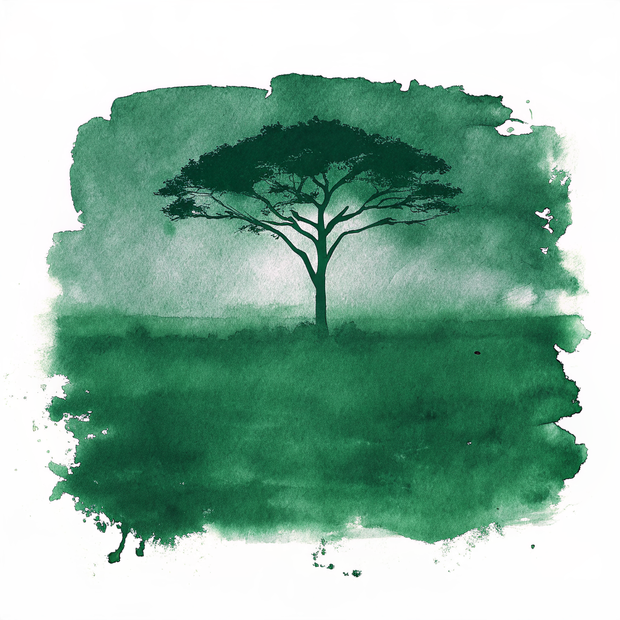
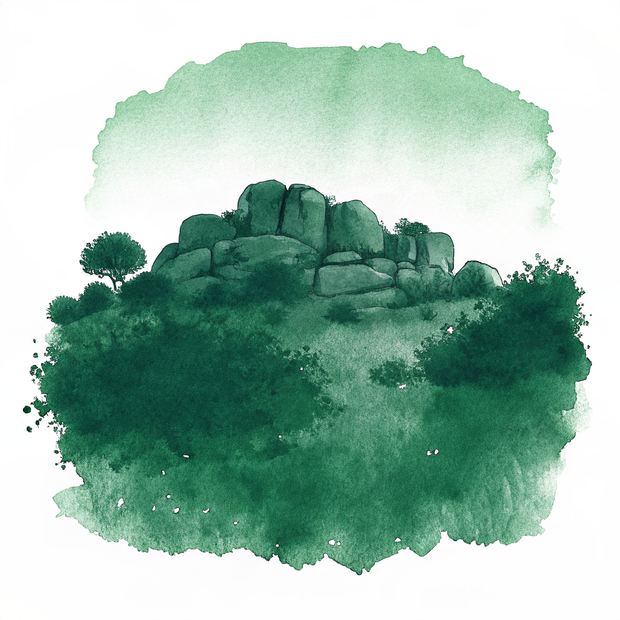
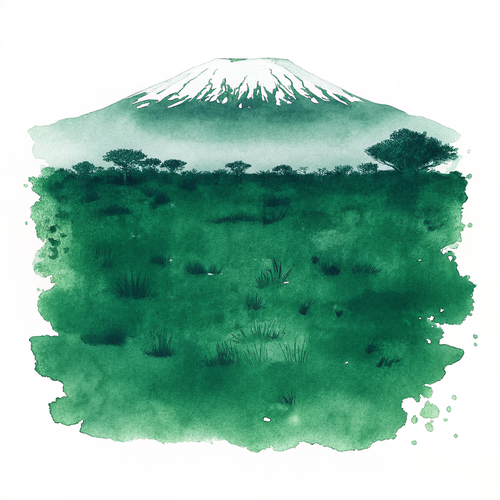
Botanical and pigment specimen study for Serengeti, Tanzania Colors of Serengeti, Tanzania
Coordinates
2.3333° S, 34.8333° E — Central Serengeti National Park, Tanzania
Historical Epoch
The Serengeti ecosystem has supported human life for at least 1.8 million years, evidenced at Olduvai Gorge. Tanzania's 1961 independence under Julius Nyerere transformed the park into a symbol of national pride and African conservation leadership.
Elevation
920-1,850 m / 3,018-6,070 ft - The plains sit around 1,000-1,200 m with the western corridor lower and the northern highlands approaching 1,850 m near the Kenya border.
Atmosphere
Aw - Tropical Savanna. Two rainy seasons bracket long dry spells. Temperatures are warm and stable year-round, rarely extreme, with crisp nights at higher elevations in the north.
Observation Hour
06:15 - Dawn in the Serengeti arrives fast and theatrical. For roughly thirty minutes the savanna glows copper and rose before the sun climbs and the palette shifts to harsher gold. Photographers and painters both chase this window hard.
Primary Pigment
Savanna Ochre (#C8922A) and Acacia Dust (#8B7355)
Best Time to Visit
July through October - peak dry season brings the dramatic Mara River crossing and dense wildlife concentrations in the northern corridor.
Avoid Visiting
April through May - long rains make tracks muddy, some camps close, and thick vegetation reduces game visibility significantly.

The Local Tongue

Language is the invisible architecture of Serengeti, Tanzania. These entries document the regional vocabulary—capturing the "texture" of local speech that standard translations often miss. Hand-curated expressions reflecting the specific spirit and daily rhythm of the region.
Archival study of Swahili (Kiswahili) cultural texture

via / Alex Levis

Primary Language Swahili (Kiswahili)
Regional Dialect Tanzanian Swahili, with Maa spoken widely among Maasai communities throughout the greater Serengeti ecosystem.

Serengeti

Serengeti derives from the Maa word 'Siringet,' meaning 'the place where the land runs on forever.' Standing at the edge of the central plains at sunrise, with nothing but grass and sky stretching to every horizon, the name stops feeling like language and starts feeling like fact.

Uhuru

Uhuru (Kiswahili) means freedom or independence, and in Tanzania it carries the full weight of a nation's birth. Park rangers use it conversationally, but when spoken at dusk with a herd of elephant moving silently across the open plain, the word takes on a resonance that no translation quite captures.

Pole pole

Pole pole (Kiswahili, pronounced 'polay polay') means slowly, slowly - and it is both instruction and philosophy in this landscape. Guides say it to guests edging too close to a pride of lions, but it also describes the unhurried pace of a Serengeti morning, when coffee is hot and the light is still deciding what it wants to be.

Wait! before you go...

Before you head over to Serengeti, Tanzania, we’ve audited the essential data points for this corner of the world. These notes cover the logistics—from currency ratios to transit hubs—to help you navigate the landscape with clarity.
🚲 Getting Around Most visitors arrive by light aircraft via scheduled bush flights from Arusha, Kilimanjaro, or Nairobi into one of several Serengeti airstrips. Road access through the park gates is possible but involves several hours on unpaved tracks, and a licensed guide vehicle is required for all game drives.
⚖️ Cash or Card Inside the park, cash is king for tips, small purchases, and local staff gratuities, so carrying a supply of US dollars or Tanzanian shillings is strongly advised. Major lodges accept credit cards, but connectivity can be patchy and transaction fees apply, so settling large balances in cash often runs more smoothly.
☁️ Good to Know Tipping is genuinely important in the Serengeti - guides, trackers, and camp staff depend on it as a significant part of their income, and a thoughtful tip at departure is considered respectful rather than optional. It is also considered good form to ask permission before photographing any Maasai community members or cultural ceremonies near the park boundaries.
🏧 ATMs There are no ATMs inside Serengeti National Park itself, so all cash must be sourced beforehand in Arusha, Karatu, or Nairobi. Lodges can sometimes facilitate emergency currency exchange, but rates are unfavorable and supply is limited, so arriving well-stocked is essential.
💳 Currency The Tanzanian Shilling (TZS) is the official currency, though US dollars printed after 2006 are accepted almost universally at lodges, airstrips, and park-adjacent services. Carrying a mix of small-denomination USD bills and local shillings covers most situations comfortably inside the ecosystem.
🔌 Plugs Tanzania uses Type D and Type G outlets at 230V / 50Hz. Bringing a universal adapter and a surge-protected power strip is worthwhile, as lodge generator power can fluctuate.
🛡️ Safety The Serengeti itself is very safe for visitors operating within established lodge and guide structures, but wildlife protocols must be taken seriously - animals here are wild, fast, and unpredictable even at close range. Travel health preparation is essential: malaria prophylaxis, yellow fever vaccination, and medical evacuation insurance are strongly recommended before any Serengeti trip.
✈️ Airports Kilimanjaro International Airport (JRO) near Arusha is the primary international gateway, with connections from Nairobi, Addis Ababa, Amsterdam, and Doha. From Arusha or the Seronera area, visitors transfer onto light aircraft with operators like Coastal Aviation or Air Excel, landing at one of the park's several grass-strip airfields.

Behind The Scenes

Nathan

Note from the Founder

Hey, did you know this fun fact about Serengeti, Tanzania? The Serengeti hosts the largest terrestrial mammal migration on earth, with approximately 1.5 million wildebeest, 400,000 zebra, and 200,000 gazelle circling over 1,800 km through Tanzania and Kenya every year, driven entirely by rainfall and grass.
Thank you for exploring the Serengeti, Tanzania series with us. We hope these notes have inspired you to add this incredible destination to your own passport—we are so glad you're here. — Nathan

Some of our Favorites