
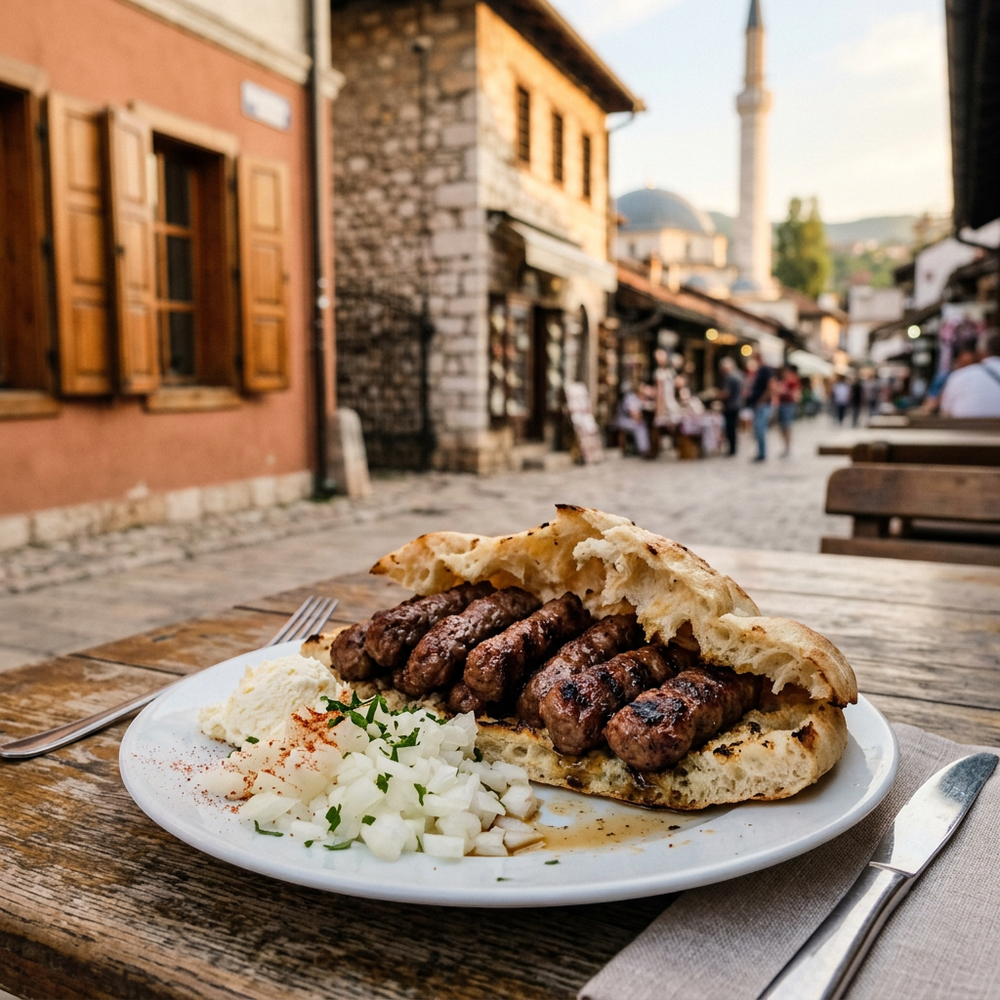
Local Cuisine Spotlight


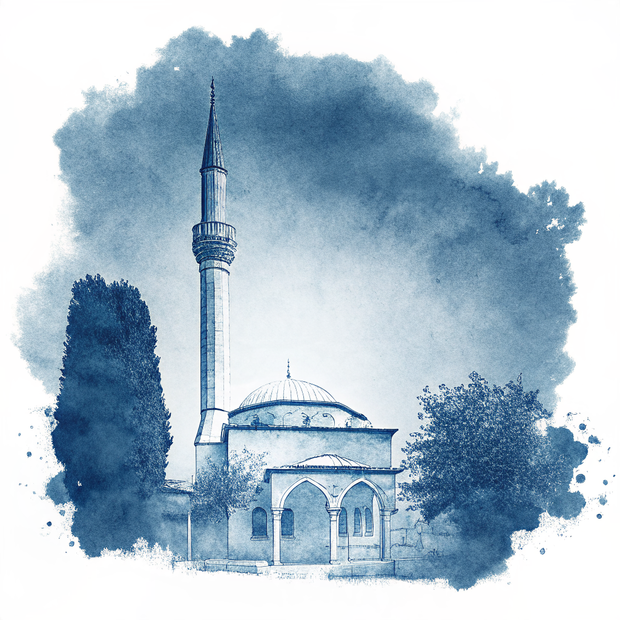
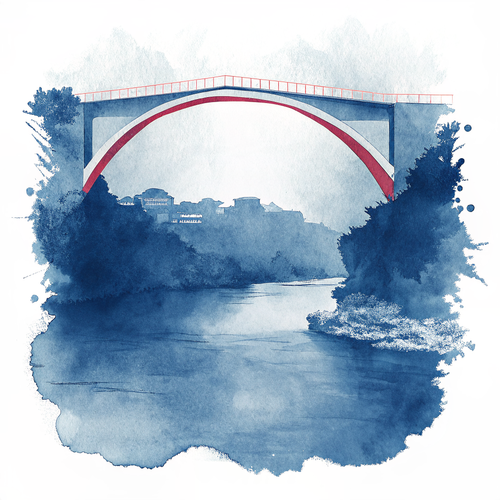
Now representing Sarajevo — 1 original piece, each hand-crafted in watercolor.
Sarajevo sits in a long valley cradled by the Dinaric Alps, a city that has absorbed centuries of Ottoman grandeur, Austro-Hungarian elegance, Yugoslav modernism, and hard-won resilience into every cobblestone and minaret. The morning light arrives late here, spilling gold over the rooftops of Bascarsija before climbing the fortress walls and igniting the copper domes of mosques that stand just steps from Orthodox churches and Catholic cathedrals. It is one of the rare cities on earth where a single street holds a mosque, a synagogue, a cathedral, and an Orthodox church within the same few hundred meters, a living map of coexistence built over five centuries. The air carries the scent of cevapi sizzling over charcoal, fresh-ground Bosnian coffee poured thick and slow into hand-painted cups, and somewhere always the sound of the ezan drifting down from the hillsides at dusk.
Every canvas is painted from a real place. Explore the map to see exactly where each scene lives — and wander Sarajevo the way a traveler would, one landmark at a time.
Keep Exploring
Archival Note: A curated field study of Sarajevo, Bosnia and Herzegovina, prioritizing the specific atmospheric stillness of the region. These artifacts have been meticulously sourced from our global archival partners to represent the area's unique cultural frequency and environmental character. This selection serves as a formal observation for our ongoing global archive, vetted for its visual accuracy and archival merit.


Archival Note: A curated field study of Sarajevo, Bosnia and Herzegovina, prioritizing cultural relevance and archival merit. These locations have been meticulously researched and vetted to ensure they represent the most authentic atmosphere for your own expedition.
Archival Note: A formal technical study of Sarajevo, Bosnia and Herzegovina, archiving the coordinates, elevation, and environmental data that define the region. This data serves as a vital record for our ongoing global field study, providing the technical foundation behind every atmospheric detail captured in our visual work.
 Colors of Sarajevo, Bosnia and Herzegovina

via / Drago Rapovac


