Shop the Collection

To help you bring a piece of your journey home, we've put together this collection of watercolor studies from our time in Sapa, Vietnam. These are our favorite ways to keep the spirit of the trip alive.

Original Series Decorative Magnet

A personal study of Sapa, Vietnam, captured in high-fidelity watercolor and prepared for your collection.

Sapa, Vietnam | Rice Terraces of Sapa | Original Series Decorative Magnet
Add to Collection / $18
Exclusive Series Artifact

Original Series Gallery Canvas

This high-fidelity canvas is a beautiful way to anchor a room and keep your memories of Sapa, Vietnam fresh long after you've returned home.

Sapa, Vietnam | Rice Terraces of Sapa | Original Series Gallery Canvas detail Sapa, Vietnam | Rice Terraces of Sapa | Original Series Gallery Canvas detail Sapa, Vietnam | Rice Terraces of Sapa | Original Series Gallery Canvas detail Sapa, Vietnam | Rice Terraces of Sapa | Original Series Gallery Canvas detail
Add to Collection / $65

Original Series Hardboard Coaster

A personal study of Sapa, Vietnam, captured in high-fidelity watercolor and prepared for your collection.

Sapa, Vietnam | Rice Terraces of Sapa | Original Series Hardboard Coaster
Add to Collection / $18
Exclusive Series Artifact

The Spirit of the Land

Archival Note: Documented personally during our time in Sapa, Vietnam. While we leverage a global network of contributors to provide these high-fidelity visual artifacts, each selection is curated to reflect the specific, quiet frequencies we experienced on the ground. These textures serve as a formal study of the unhurried light and environmental character that defined our journey.

Sapa, Vietnam study No. 01
Sapa, Vietnam / 01 VIA / Quang Nguyen Vinh
The rice terraces of Mù Căng Chải glow in layered bands of gold and green, each step carved by generations of Hmong farmers into the mountainside. Soft cloud-filtered light flattens the shadows and makes the ripening grain shimmer like hammered brass. A handful of wooden stilt houses punctuate the hillside, small and unhurried against the vast, breathing landscape.
Sapa, Vietnam study No. 02
Sapa, Vietnam / 02 VIA / Lucas Tran
A traveler standing here would feel the cool, damp air clinging to their skin as low clouds drift silently through the forested peaks above. The terraced rice fields glow with an almost luminous green in the diffused light of an overcast morning, creating a sense of quiet, timeless beauty. The mist softens every edge, pulling the mountains into a dreamlike distance and lending the valley an atmosphere of serene isolation.
Sapa, Vietnam study No. 03
Sapa, Vietnam / 03 VIA / Quang Nguyen Vinh
The terraced rice fields of Sapa, Vietnam ripple across the hillsides like brushstrokes on a living canvas, shifting from vivid chartreuse to deep harvest gold. A faint plume of smoke rises from a small village nestled in the valley below, a quiet reminder of the human life tucked between the dramatic folds of land. Most viewers miss the narrow dirt path curving along the upper left ridge — a threadlike trail that locals have worn into the mountain through generations of daily passage.

Where to wander

Archival Note: These recommendations were curated personally during our time in Sapa, Vietnam to capture the textures that defined the quiet frequencies of the trip. Every entry here is a place we genuinely love; we hope these notes inspire you to wander off the main path and discover the same stillness we found on the ground.

Local Cuisine Spotlight
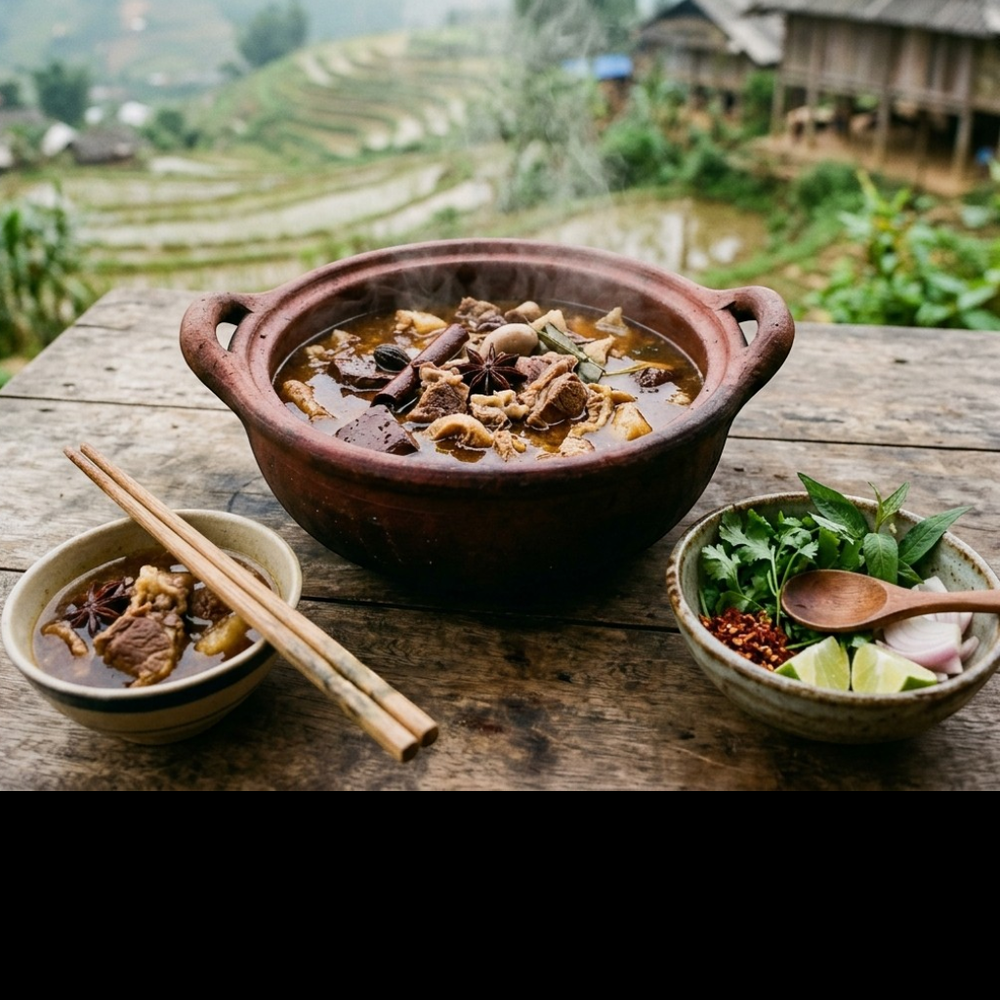
This highland clay pot stew from Sapa layers slow-braised meat, star anise, and rich broth into something deeply comforting. Served with fresh herbs, lime, and chili, every bowl invites personalization. The rustic earthenware and misty terrace backdrop make it as soul-warming to behold as it is to taste.
Credits: THE PAINTED PASSPORT
Local cuisine study in Sapa, Vietnam

☕︎ Local Flavor

The Hill Station Signature Restaurant

Rating: 5* | Price: $$$ | Coordinates: 22.3370° N, 103.8445° E

Housed in a beautifully restored colonial-era building, The Hill Station is famous for its artful charcuterie boards made from locally sourced highland meats and cheeses. The menu celebrates northwestern Vietnamese flavors elevated with thoughtful technique, from black cardamom-smoked duck to silken tofu with mountain herbs. Pair your meal with a glass of locally infused herbal liqueur while gazing out over the misty town square.

View Entry Details

Baguette & Chocolat

Rating: 4* | Price: $$ | Coordinates: 22.3375° N, 103.8448° E

A beloved Sapa institution, this cozy French-Vietnamese café serves flaky baguettes, rich hot chocolate, and hearty soups that feel like a warm hug on a cold mountain morning. The social enterprise model trains underprivileged local youth in hospitality and baking, so every croissant you enjoy truly makes a difference. Find a window seat, watch the fog roll through town, and let the smell of fresh bread slow your entire day down beautifully.

View Entry Details

Nature View Restaurant

Rating: 4* | Price: $$ | Coordinates: 22.3362° N, 103.8435° E

This open-air restaurant serves generous portions of Vietnamese mountain cuisine with sweeping views of emerald rice terraces cascading down the valley slopes. The grilled black pig marinated in lemongrass and the bamboo-tube sticky rice cooked over charcoal are absolute must-orders that showcase the bold flavors of the region. Friendly staff are happy to explain each dish's cultural origins, turning every meal into a small but meaningful lesson in H'mong tradition.

View Entry Details

Sapa Market Street Food Stalls

Rating: 4* | Price: $ | Coordinates: 22.3358° N, 103.8452° E

The bustling lanes around Sapa's central market come alive each morning with vendors ladling steaming bowls of thắng cố, a rich horse-meat stew that has warmed highland farmers for centuries. Grab a tiny plastic stool and tuck into bánh cuốn rice rolls stuffed with fragrant pork and wood-ear mushrooms while locals trade goods around you. Eating here is spontaneous, chaotic, and completely unforgettable — the most honest meal you will have in all of Vietnam.

View Entry Details

🛌︎ Boutique Stays

Topas Ecolodge

Rating: 5* | Price: $$$$ | Coordinates: 22.3364° N, 103.8438° E

Perched dramatically on a granite hilltop, Topas Ecolodge offers breathtaking panoramic views of the Muong Hoa Valley below. Each stone-and-thatch bungalow is thoughtfully designed to blend into the landscape while keeping you cozy on cool mountain nights. Falling asleep to absolute silence and waking to a sea of clouds is an experience you will carry home forever.

View Entry Details

Sapa O'Chau Eco Lodge

Rating: 4* | Price: $$ | Coordinates: 22.3360° N, 103.8442° E

Run by a local H'mong social enterprise, staying here means your money directly supports the community and empowers indigenous women through education. The warm wooden rooms are decorated with handwoven textiles that tell stories of H'mong tradition and culture. Staff are incredibly welcoming and can arrange authentic village treks led by knowledgeable local guides.

View Entry Details

Pao's Sapa Leisure Hotel

Rating: 4* | Price: $$$ | Coordinates: 22.3381° N, 103.8440° E

This charming boutique hotel sits right in the heart of Sapa town with spectacular terrace views overlooking the misty Fansipan mountain range. Rooms feature elegant dark-wood furnishings paired with floor-to-ceiling windows that frame the valley like a living painting. The rooftop fireplace lounge is the perfect spot to unwind after a long day of trekking through rice terraces.

View Entry Details

Hmong Sapa House

Rating: 3* | Price: $ | Coordinates: 22.3355° N, 103.8450° E

This family-run guesthouse offers an intimate and genuine glimpse into H'mong daily life right inside a traditional hillside home. The hosts greet you with homemade rice wine and a warmth that instantly makes you feel like a long-lost friend rather than a tourist. Simple but spotlessly clean rooms and a hearty home-cooked breakfast make this one of Sapa's most beloved budget stays.

View Entry Details

📍︎ Field Study

Fansipan Summit

Rating: 5* | Price: $$ | Coordinates: 22.3033° N, 103.7756° E

Standing at 3,143 meters, Fansipan is the highest peak in all of Indochina, earning its legendary title as the Roof of Southeast Asia. You can ride the spectacular Sun World cable car for a jaw-dropping ascent through clouds, or tackle the multi-day trek through dense primary forest for a true mountaineering adventure. Reaching the golden summit monument and looking out over an endless ripple of misty peaks is a moment of pure, overwhelming awe.

View Entry Details

Muong Hoa Valley & Rice Terraces

Rating: 5* | Price: $ | Coordinates: 22.3167° N, 103.8833° E

Stretching for kilometers between towering green peaks, the Muong Hoa Valley contains some of the most dramatically sculpted rice terraces in the entire world, especially stunning during the golden harvest months of September and October. Walking the narrow paths between paddies brings you face to face with H'mong and Dao farmers who have shaped this landscape by hand over countless generations. The terraces glow copper and gold in the late afternoon light in a way that no photograph ever fully captures.

View Entry Details

Cat Cat Village

Rating: 4* | Price: $ | Coordinates: 22.3242° N, 103.8378° E

Just a short walk downhill from Sapa town, Cat Cat is a traditional H'mong village where you can watch skilled weavers work looms with hypnotic precision, creating the vivid indigo-dyed fabrics the community is famous for. A lovely waterfall tumbles through the lower end of the village, surrounded by old French-era water wheels that once powered grain mills. The village walk is gentle enough for all ages and offers a meaningful cultural connection without venturing far from town.

View Entry Details

Bac Ha Sunday Market

Rating: 5* | Price: $ | Coordinates: 22.5314° N, 104.3097° E

Held every Sunday in a valley about two hours from Sapa, the Bac Ha Market is one of the most vibrant and authentic ethnic minority markets in all of northern Vietnam. Flower H'mong women arrive in extraordinary costumes of electric pink, green, and gold, trading buffalo, medicinal herbs, hand-embroidered clothing, and potent local corn liquor. Wandering through the color and noise of this weekly gathering feels like stepping into a living cultural celebration that has changed very little for hundreds of years.

View Entry Details

Typography

Archival Note: We have personally documented these geographic specs for Sapa, Vietnam to ensure every watercolor study is anchored in real-world data. By cataloging the precise elevation, light cycles, and historical epochs, we provide a technical foundation that justifies the atmospheric stillness captured in our visual artifacts.

Botanical and pigment specimen study for Sapa, Vietnam Colors of Sapa, Vietnam
Coordinates
22.3364° N, 103.8438° E — Sapa Town Center, Lao Cai Province, northern Vietnam
Historical Epoch
French colonists established Sapa as a hill station retreat in 1903, building villas and a railway link from Hanoi. The town was largely destroyed during the Franco-Vietnamese War and rebuilt, leaving a layered identity that mixes highland minority culture with faded colonial memory.
Elevation
1,500-1,650 m / 4,921-5,413 ft - Sapa town sits on a high plateau shelf; surrounding peaks including Fansipan reach 3,143 m / 10,312 ft
Atmosphere
Cwb -- Oceanic Highland. Cool and misty year-round, with a dry winter and a humid green summer. Snow is rare but possible December through February at higher elevations.
Observation Hour
06:30 -- Mist lifts slowly from the valley floor after dawn, leaving terraces backlit and edges soft. By mid-morning the haze thickens again. Max 220 chars.
Primary Pigment
Terrace Jade (#4A7C59) and Mountain Mist (#8FA8B8)
Best Time to Visit
September through November - harvest season brings golden terraces, settled skies, and the clearest mountain views of the year.
Avoid Visiting
June through August - heavy monsoon rains bring landslide risk, trail closures, and persistent low cloud that obscures the valley entirely.

The Local Tongue

Language is the invisible architecture of Sapa, Vietnam. These entries document the regional vocabulary—capturing the "texture" of local speech that standard translations often miss. Hand-curated expressions reflecting the specific spirit and daily rhythm of the region.
Archival study of Vietnamese cultural texture

via / GIANG VU

Primary Language Vietnamese
Regional Dialect Northern Vietnamese (with significant Hmong, Dao, and Tay spoken locally)

Ruong bac thang (ruong bac thang)

Ruong bac thang translates literally as staircase fields, the Vietnamese term for the hand-cut rice terraces that descend Sapa's hillsides in sweeping arcs. Each terrace wall was built without machinery, shaped by generations of Hmong and Dao farmers who flooded and drained each narrow shelf by hand, so that standing at the valley rim, a visitor is really looking at centuries of accumulated human patience pressed into the land.

Cho phien (cho phien)

Cho phien means periodic market, referring to the rotating highland markets that move from village to village on a fixed weekly cycle across northern Vietnam. At a place like Bac Ha, the Sunday gathering draws minority communities from remote hillsides who come not only to trade but to socialize, find news, and occasionally arrange marriages, the air thick with the scent of rice wine and indigo-dyed fabric hanging from rope lines.

Sa Pa

Sa Pa is the original Hmong place name, believed to derive from words meaning sandy flat place, though the landscape is anything but flat. The name persists as a reminder that this mountain town existed long before French cartographers arrived in the early twentieth century, and the local Hmong elder who uses it today is drawing on a linguistic thread that predates the colonial hill station by generations.

Wait! before you go...

Before you head over to Sapa, Vietnam, we wanted to share a few basic tips we picked up along the way. These notes cover the simple things—like how to get around or what to do about cash—so you can spend less time worrying and more time just enjoying the place.
🚲 Getting Around Most travelers reach Sapa by overnight train from Hanoi to Lao Cai station, followed by a 38-kilometer bus or minivan transfer up the mountain road. The journey takes roughly eight to nine hours in total and is widely considered part of the experience.
⚖️ Cash or Card Sapa operates predominantly on cash, particularly in markets, village homestays, and street food stalls where cards are not accepted at all. Larger hotels and some restaurants in town center will take Visa or Mastercard, but carrying a solid reserve of Vietnamese Dong in small denominations is strongly advised.
☁️ Good to Know Hmong women selling handicrafts in Sapa are persistent and skilled negotiators, and refusing politely but firmly without lingering is the clearest signal that a sale will not happen. Photographing local people, especially children, requires a genuine human exchange first -- a greeting, a smile, a moment of connection -- before any camera appears.
🏧 ATMs There are several ATMs in Sapa town center, including branches of Vietcombank and Agribank on the main strip near the market square. Withdrawal limits per transaction can be low, sometimes 2,000,000 to 3,000,000 VND, so planning for multiple smaller withdrawals or carrying pre-exchanged cash from Hanoi is a practical approach.
💳 Currency The Vietnamese Dong (VND) is the only legal tender, and exchange rates mean that travelers regularly handle notes in the hundreds of thousands. A rough mental anchor is that 25,000 VND sits close to one US dollar, making quick mental arithmetic easier at market stalls.
🔌 Plugs Vietnam uses Type A, B, and C outlets at 220V and 50Hz. A universal travel adapter is recommended, and voltage-sensitive devices should use a converter.
🛡️ Safety Sapa is generally very safe for travelers, though mountain trails become genuinely dangerous in fog or after rain when paths turn slippery and visibility drops sharply. Hiring a local guide from a reputable community-based operator is both a safety measure and a direct way to put income into minority community hands.
✈️ Airports Noi Bai International Airport (HAN) in Hanoi is the primary gateway, roughly 320 kilometers south of Sapa and connected by the overnight train route to Lao Cai. There is no commercial airport serving Sapa directly, making the scenic train journey the standard and preferred entry experience.

Behind The Scenes

Nathan

Note from the Founder

Hey, did you know this fun fact about Sapa, Vietnam? Fansipan, at 3,143 meters, is the highest peak in Vietnam and all of Indochina. A cable car now reaches near the summit from Sapa, though trekkers still choose the two-day ascent on foot for the full experience.
Thank you for exploring the Sapa, Vietnam series with us. We hope these notes have inspired you to add this incredible destination to your own passport—we are so glad you're here. — Nathan

Some of our Favorites