Shop the Collection

To help you build your own global archive, we've prepared this collection of watercolor studies from our research into Salar de Uyuni, Bolivia. These artifacts are designed to bring the stillness of this corner of the world into your home.

Original Series Decorative Magnet

A personal study of Salar de Uyuni, Bolivia, captured in high-fidelity watercolor and prepared for your collection.

Salar de Uyuni, Bolivia | Vast White Salt Flats | Original Series Decorative Magnet
Add to Collection / $18
Exclusive Series Artifact

Original Series Gallery Canvas

This high-fidelity canvas is a beautiful way to anchor a room and keep your memories of Salar de Uyuni, Bolivia fresh long after you've returned home.

Salar de Uyuni, Bolivia | Vast White Salt Flats | Original Series Gallery Canvas detail Salar de Uyuni, Bolivia | Vast White Salt Flats | Original Series Gallery Canvas detail Salar de Uyuni, Bolivia | Vast White Salt Flats | Original Series Gallery Canvas detail Salar de Uyuni, Bolivia | Vast White Salt Flats | Original Series Gallery Canvas detail
Add to Collection / $65

Original Series Hardboard Coaster

A personal study of Salar de Uyuni, Bolivia, captured in high-fidelity watercolor and prepared for your collection.

Salar de Uyuni, Bolivia | Vast White Salt Flats | Original Series Hardboard Coaster
Add to Collection / $18
Exclusive Series Artifact

The Spirit of the Land

Archival Note: A curated field study of Salar de Uyuni, Bolivia, prioritizing the specific atmospheric stillness of the region. These artifacts have been meticulously sourced from our global archival partners to represent the area's unique cultural frequency and environmental character. This selection serves as a formal observation for our ongoing global archive, vetted for its visual accuracy and archival merit.

Salar de Uyuni, Bolivia study No. 01
Salar de Uyuni, Bolivia / 01 VIA / Leonardo Rossatti
The midday sun bleaches the salt crust to near white, making the honeycomb-patterned surface glow against a sky so deeply blue it almost feels unreal. Distant volcanic peaks hover at the horizon like a mirage, grounding the otherwise infinite flatness of the altiplano. The cracked hexagonal tiles beneath tell a story of evaporation and time, each ridge a quiet record of the ancient lake that once filled this basin.
Salar de Uyuni, Bolivia study No. 02
Salar de Uyuni, Bolivia / 02 VIA / Alexander Rondón
Standing on the flooded salt flat, a visitor would feel suspended between two universes — the star-scattered sky above perfectly mirrored in the shallow water below. The last embers of sunset bleed coral and rose along the horizon, while deep violet overtakes the heavens, blurring the boundary between earth and cosmos. The silence would be absolute, broken only by the soft ripple of water around one's feet and the overwhelming sense of infinite solitude.
Salar de Uyuni, Bolivia study No. 03
Salar de Uyuni, Bolivia / 03 VIA / Robert Acevedo
A solitary structure of hand-cut salt bricks rises from the blinding white flats of Salar de Uyuni, its stepped left side slowly surrendering to entropy. What most visitors overlook are the dark mineral stains streaking vertically down the face of the wall, traces of brine seeping through as the salt slowly dissolves itself. The ground beneath tells its own quiet story — the faint polygonal crust patterns of the salt flat stretch in every direction, indifferent to the crumbling monument above them.

Where to wander

Archival Note: A curated field study of Salar de Uyuni, Bolivia, prioritizing cultural relevance and archival merit. While we haven't touched down here yet, we've meticulously vetted these locations through our global network of contributors to ensure they represent the most authentic atmosphere for your own expedition.

Local Cuisine Spotlight
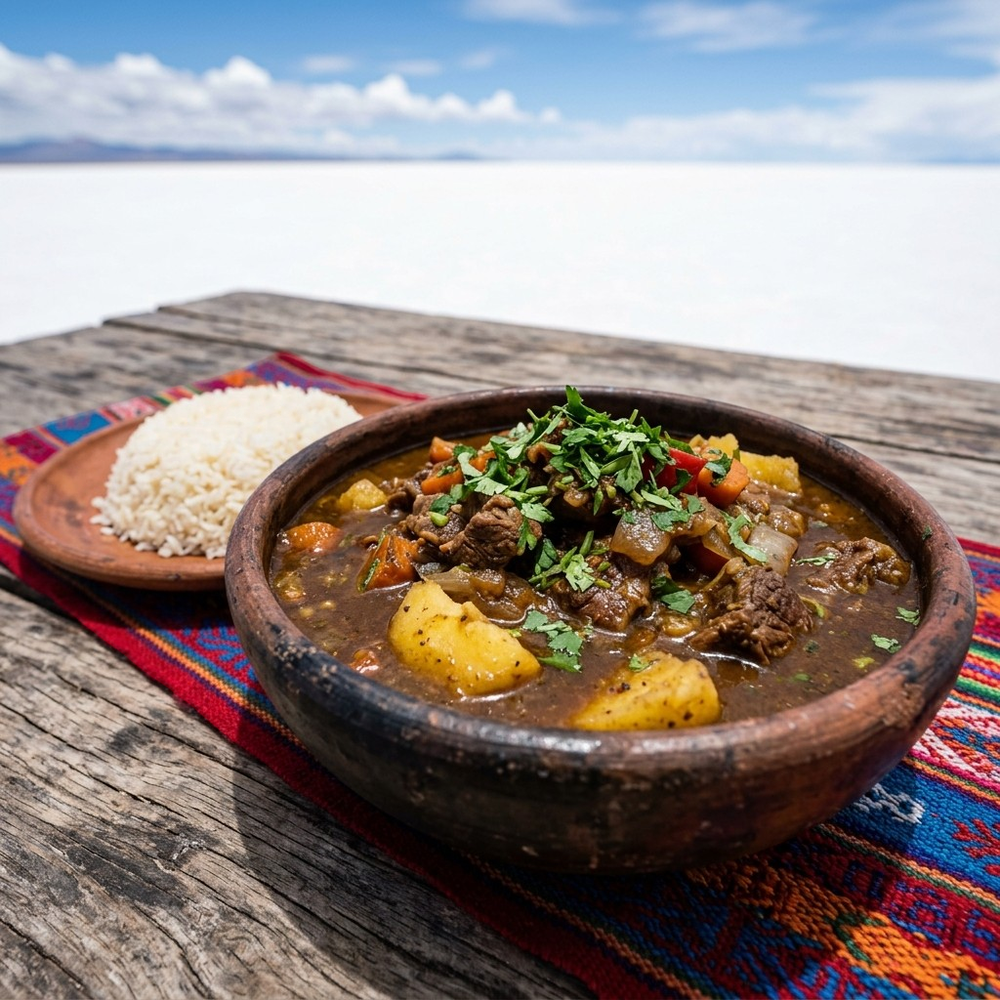
Seco de Llama, a slow-braised Andean stew served in a centuries-old clay bowl, fills the air with the earthy aroma of cumin and slow-cooked meat. Tender chunks of potato soak up the deep, spiced broth while fresh cilantro adds a bright, herbal lift. Served alongside fluffy white rice on the salt flats of Uyuni, this dish is Bolivia on a spoon.
Credits: THE PAINTED PASSPORT
Local cuisine study in Salar de Uyuni, Bolivia

☕︎ Local Flavor

Minuteman Pizza & Bolivian Kitchen

Rating: 4* | Price: $$ | Coordinates: -20.4605, -66.8260

A beloved institution among travelers passing through Uyuni, this lively spot serves surprisingly excellent pizzas alongside hearty Bolivian comfort dishes. The llama steak with quinoa risotto is an absolute must-try that beautifully showcases the region's finest ingredients. Warm lighting, communal tables, and cheerful staff make it the perfect place to swap stories after a day on the salt.

View Entry Details

Restaurant Arcoiris

Rating: 4* | Price: $$ | Coordinates: -20.4612, -66.8251

Arcoiris is a colorful, welcoming restaurant in central Uyuni known for generous portions of traditional Bolivian cuisine bursting with authentic Andean flavor. Their sopa de maní, a rich peanut-based soup, is the ideal warming dish after cold mornings exploring the flats. The friendly family atmosphere and reasonable prices make it a true local favorite worth seeking out.

View Entry Details

Lithium Restaurant & Bar

Rating: 4* | Price: $$ | Coordinates: -20.4608, -66.8248

Named after the vast lithium reserves hidden beneath the salt crust, this modern restaurant cleverly fuses Bolivian tradition with contemporary culinary creativity. The quinoa-crusted trout served with purple potato puree is a standout dish that surprises and delights every palate. As evening falls, the bar transforms into a lively gathering spot with excellent local singani cocktails.

View Entry Details

Café Todo Natural

Rating: 4* | Price: $ | Coordinates: -20.4600, -66.8255

This bright, plant-filled café is a genuine gem for health-conscious travelers seeking fresh, organic fare in the heart of the altiplano. Smoothies made from Bolivian fruits, freshly baked empanadas, and steaming bowls of quinoa porridge fuel long adventure days beautifully. The relaxed, sunlit atmosphere and friendly service make it the perfect morning ritual before heading out to the flats.

View Entry Details

🛌︎ Boutique Stays

Palacio de Sal Hotel

Rating: 5* | Price: $$$ | Coordinates: -20.2833, -67.5167

This iconic hotel is constructed almost entirely from salt blocks harvested directly from the flats, making every wall and surface a tactile wonder. Wake up to panoramic views of the endless white expanse stretching to the horizon. The warm, rustic rooms and attentive staff create an unforgettable desert sanctuary unlike anywhere on Earth.

View Entry Details

Luna Salada Hotel

Rating: 4* | Price: $$$ | Coordinates: -20.1500, -67.6833

Perched at the edge of the salt flat, Luna Salada blends eco-conscious design with genuine Bolivian warmth and hospitality. Each room features salt-brick walls and large windows perfectly framed for watching surreal sunrises paint the flat in gold and pink. The rooftop terrace is an exceptional spot for stargazing in one of the world's darkest skies.

View Entry Details

Tambo Sal Uyuni

Rating: 4* | Price: $$ | Coordinates: -20.4603, -66.8255

Tambo Sal offers a cozy and authentic mid-range experience in the heart of Uyuni town, perfect for adventurers returning from long days on the flats. Rooms are tastefully decorated with local textiles, handwoven blankets, and artisan crafts that tell the story of Bolivian culture. The friendly owners provide invaluable personalized tips on hidden corners of the salt desert.

View Entry Details

Atipax Hotel Boutique

Rating: 4* | Price: $$ | Coordinates: -20.4617, -66.8243

This charming boutique hotel in Uyuni town delivers a refined stay with a deeply personal touch and thoughtfully curated local décor. The heated rooms are a true comfort after chilly nights on the altiplano, welcoming you like a warm embrace. Guests consistently praise the exceptional breakfast spread featuring fresh local quinoa porridge and homemade jams.

View Entry Details

📍︎ Field Study

Salar de Uyuni Salt Flat

Rating: 5* | Price: $ | Coordinates: -20.1338, -67.4891

The world's largest salt flat stretches over 10,000 square kilometers, creating a blindingly white mirror that seems to erase the boundary between earth and sky. During the wet season, a thin layer of water transforms the surface into a perfect, otherworldly reflection of the clouds and mountains above. Standing at its center, surrounded by infinite silence and light, is one of the most profoundly moving experiences on the planet.

View Entry Details

Isla Incahuasi

Rating: 5* | Price: $ | Coordinates: -20.2431, -67.6234

Rising dramatically from the middle of the salt flat like a prehistoric island, Incahuasi is covered in ancient giant cacti that can reach up to ten meters tall. The hike to the summit rewards visitors with a 360-degree panoramic view of the white expanse that is genuinely breathtaking and humbling in equal measure. Centuries-old coral formations visible along the trails are quiet reminders that this entire landscape was once a vast prehistoric ocean.

View Entry Details

Train Cemetery (Cementerio de Trenes)

Rating: 4* | Price: $ | Coordinates: -20.4881, -66.8305

Just outside Uyuni town, this hauntingly beautiful graveyard of 19th-century British steam locomotives rusts magnificently against the vast Andean sky. The abandoned trains tell the story of Bolivia's ambitious but ultimately ill-fated railway expansion era, and exploring them feels like stepping into a gorgeous open-air history museum. At sunrise or sunset, the warm golden light bathing the weathered iron creates some of the most dramatic and memorable photographs imaginable.

View Entry Details

Laguna Colorada

Rating: 5* | Price: $ | Coordinates: -22.1667, -67.7833

This strikingly vivid red lake in the remote Eduardo Avaroa Reserve owes its extraordinary color to red sediment and unique algae blooming beneath the high-altitude surface. Thousands of flamingos wade gracefully through its shallow crimson waters, creating an almost surreal natural spectacle that stops visitors completely in their tracks. The surrounding volcanic landscape of white borax islands and steaming geysers amplifies the feeling of standing on another planet entirely.

View Entry Details

Typography

Archival Note: A formal technical study of Salar de Uyuni, Bolivia—archiving the coordinates, elevation, and environmental data that define the region. This data serves as a vital record for our ongoing global field study, allowing us to reconstruct the regional atmosphere with archival precision before our physical arrival.

Botanical and pigment specimen study for Salar de Uyuni, Bolivia Colors of Salar de Uyuni, Bolivia
Coordinates
20.1338° S, 67.4891° W — Center of the Salar de Uyuni salt flat, Potosi Department, Bolivia
Historical Epoch
The region was part of the Inca Empire before Spanish colonization in the 16th century. Bolivia gained independence in 1825, and the salt flat's surrounding area later became central to the 19th-century silver and tin mining economy that shaped the nation.
Elevation
3,653 m / 11,985 ft - The salt flat itself sits at a remarkably consistent elevation, making it one of the highest and flattest places on Earth, used by NASA to calibrate satellite altimeters.
Atmosphere
BWk - Cold Desert Climate. Days are intensely sunny and dry for most of the year, nights are freezing at any season, and the brief wet season from December to March transforms the flat into a mirror.
Observation Hour
06:30 - At dawn the low sun rakes across the hexagonal salt crust and casts long pale shadows, while the sky shifts from deep indigo to rose before settling into brilliant blue. The cold is sharp but the light is extraordinary.
Primary Pigment
Salt Crust White (#F0EDE4) and Altiplano Cerulean (#6FA8C9)
Best Time to Visit
May through October - The dry season brings clear skies, firm salt crust for driving, and the best conditions for perspective photography and stargazing.
Avoid Visiting
January through February - Peak wet season brings flooding that can make large portions of the flat inaccessible and tours unpredictable.

The Local Tongue

Language is the invisible architecture of Salar de Uyuni, Bolivia. These entries document the regional vocabulary—capturing the "texture" of local speech that standard translations often miss. Hand-curated expressions reflecting the specific spirit and daily rhythm of the region.
Archival study of Spanish cultural texture

via / Maria Camila Castaño

Primary Language Spanish
Regional Dialect Bolivian Spanish, with significant Quechua and Aymara influence in vocabulary and place names across the Altiplano region.

Salar

Salar means salt flat or salt lake basin, derived from the Spanish word for salt. On the Altiplano, the word carries a weight beyond geography - locals use it to describe not just the terrain but a kind of silence that is physical, the hush that settles over a traveler the first time they step onto the crust and realize the horizon has no end.

Pachamama

Pachamama translates as Mother Earth or World Mother in both Quechua and Aymara, and she is not a metaphor but a living presence in Bolivian Andean culture. Offerings of coca leaves, alcohol, and food are buried in her honor before construction or planting, and on the salt flat, the ritual feels especially charged under a sky so close it seems to press down with intention.

Apacheta

Apacheta refers to a cairn or pile of stones left at a mountain pass or crossroads as a spiritual offering and a marker for those who follow. On the high passes surrounding the Salar, travelers still stop to add a stone, a gesture that connects the modern tourist van to centuries of llama herders navigating the same wind-scoured routes by instinct and prayer.

Wait! before you go...

Before you head over to Salar de Uyuni, Bolivia, we’ve audited the essential data points for this corner of the world. These notes cover the logistics—from currency ratios to transit hubs—to help you navigate the landscape with clarity.
🚲 Getting Around Most visitors fly into Uyuni Airport from La Paz or Sucre, with short domestic flights taking under two hours. From the town of Uyuni, guided 4x4 tours are the standard and safest way to explore the salt flat and surrounding lagoons, typically lasting one to three days.
⚖️ Cash or Card Cash is essential across the Salar region, as most tour operators, small restaurants, and market vendors in Uyuni work exclusively in bolivianos. Card acceptance is extremely limited outside of a handful of hotels, so travelers should arrive from La Paz with enough cash to cover the full duration of their stay.
☁️ Good to Know Bargaining is not customary in the way it is in some other parts of South America - prices for tours and goods are generally set and asking for a steep discount can feel disrespectful to small local operators. A polite and genuine curiosity about the salt flat and Bolivian culture goes much further than haggling ever will.
🏧 ATMs There are ATMs in the town of Uyuni, but they are limited in number and frequently run out of cash, especially on weekends and during high season. The safest approach is to withdraw everything needed before leaving La Paz or Sucre, where banking infrastructure is far more reliable.
💳 Currency The official currency is the Boliviano, abbreviated BOB or Bs, and it trades at a fairly stable rate that makes Bolivia one of the most affordable travel destinations in South America. Small denomination notes are useful for markets and tips, as change can be scarce in remote areas around the salt flat.
🔌 Plugs Bolivia uses Type A and Type C outlets at 220V, 50Hz. A universal travel adapter is strongly recommended as both flat and round pin sockets appear.
🛡️ Safety The Salar and surrounding Altiplano are considered safe for tourists, but altitude sickness is a real concern at over 3,600 meters and should be taken seriously, especially in the first 24 to 48 hours. Travelers with heart or respiratory conditions should consult a doctor before visiting, and everyone should stay hydrated, avoid alcohol on arrival, and consider coca tea, which is widely available and genuinely helpful.
✈️ Airports Joya Andina Airport in Uyuni is the closest airport, served by Boliviana de Aviacion and Amaszonas with connections from La Paz and Sucre. El Alto International Airport in La Paz is the main international hub with connections to Lima, Buenos Aires, and other South American cities.

Behind The Scenes

Nathan

Note from the Founder

Hey, did you know this fun fact about Salar de Uyuni, Bolivia? The Salar de Uyuni contains roughly half of the world's known lithium reserves, locked beneath the salt crust in brine deposits. Its surface is so flat that elevation varies less than one meter across the entire 10,582 square kilometers.
Thank you for exploring the Salar de Uyuni, Bolivia series with us. We hope these notes have inspired you to add this incredible destination to your own passport—we are so glad you're here. — Nathan

Some of our Favorites