Shop the Collection

To help you bring a piece of your journey home, we've put together this collection of watercolor studies from our time in Pyramids of Giza, Egypt. These are our favorite ways to keep the spirit of the trip alive.

Original Series Decorative Magnet

A personal study of Pyramids of Giza, Egypt, captured in high-fidelity watercolor and prepared for your collection.

Pyramids of Giza, Egypt | Original Series Decorative Magnet
Add to Collection / $18
Exclusive Series Artifact

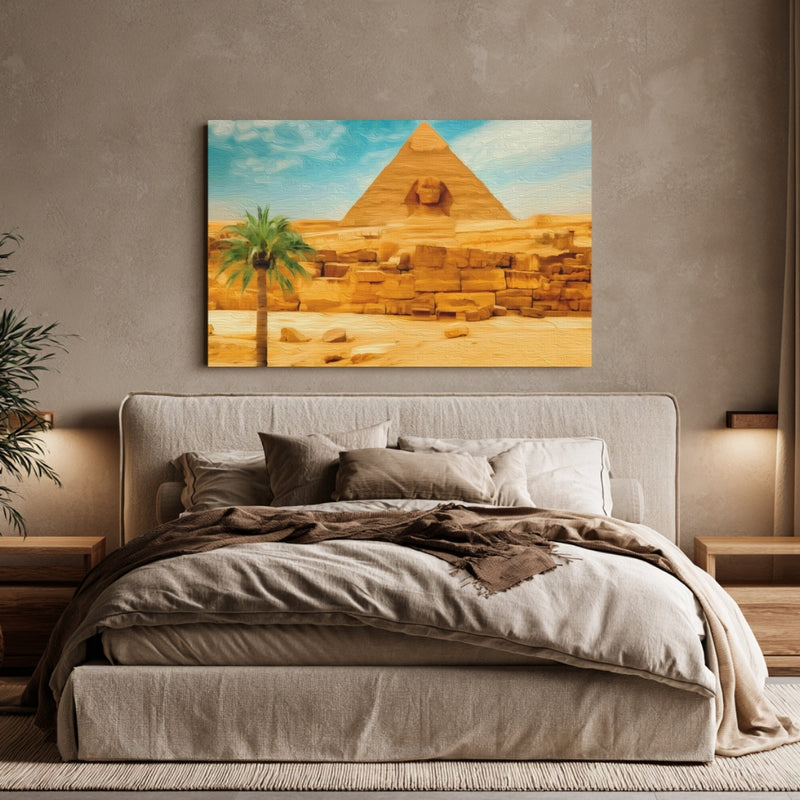
Original Series Gallery Canvas

This high-fidelity canvas is a beautiful way to anchor a room and keep your memories of Pyramids of Giza, Egypt fresh long after you've returned home.

Pyramids of Giza, Egypt | Original Series Gallery Canvas detail Pyramids of Giza, Egypt | Original Series Gallery Canvas detail Pyramids of Giza, Egypt | Original Series Gallery Canvas detail Pyramids of Giza, Egypt | Original Series Gallery Canvas detail
Add to Collection / $65

Original Series Hardboard Coaster

A personal study of Pyramids of Giza, Egypt, captured in high-fidelity watercolor and prepared for your collection.

Pyramids of Giza, Egypt | Original Series Hardboard Coaster
Add to Collection / $18
Exclusive Series Artifact

The Spirit of the Land

Archival Note: Documented personally during our time in Pyramids of Giza, Egypt. While we leverage a global network of contributors to provide these high-fidelity visual artifacts, each selection is curated to reflect the specific, quiet frequencies we experienced on the ground. These textures serve as a formal study of the unhurried light and environmental character that defined our journey.

Pyramids of Giza, Egypt study No. 01
Pyramids of Giza, Egypt / 01 VIA / Osama Elsayed
Standing majestic against a bright, expansive sky, the ancient Pyramids of Giza endure as a breathtaking testament to human wonder and timeless ambition. The golden sands stretch out peacefully under the soft clouds, offering a moment of quiet awe and a deep connection to history. It is an inspiring reminder of what we can achieve when we dare to build for eternity.
Pyramids of Giza, Egypt study No. 02
Pyramids of Giza, Egypt / 02 VIA / Noel Schläfli
The Great Sphinx stands in quiet grandeur, a timeless guardian carved from the earth to watch over the horizons of history. Side by side with the monumental pyramid, it reminds us of the incredible heights human creativity and dedication can reach. Looking at this enduring scene, a profound sense of peace washes over, connecting us directly to the dreams of the ancient world.
Pyramids of Giza, Egypt study No. 03
Pyramids of Giza, Egypt / 03 VIA / FotoFlo
A gentle camel adorned in colorful, traditional gear offers a friendly welcome to the vast and timeless landscape of Giza. In the background, the grand pyramid rises gracefully into the clear blue sky, perfectly blending the warmth of local life with the awe of ancient history. It is a peaceful, uplifting snapshot that captures the true heart and soul of a desert journey.

Where to wander

Archival Note: These recommendations were curated personally during our time in Pyramids of Giza, Egypt to capture the textures that defined the quiet frequencies of the trip. Every entry here is a place we genuinely love; we hope these notes inspire you to wander off the main path and discover the same stillness we found on the ground.

Local Cuisine Spotlight
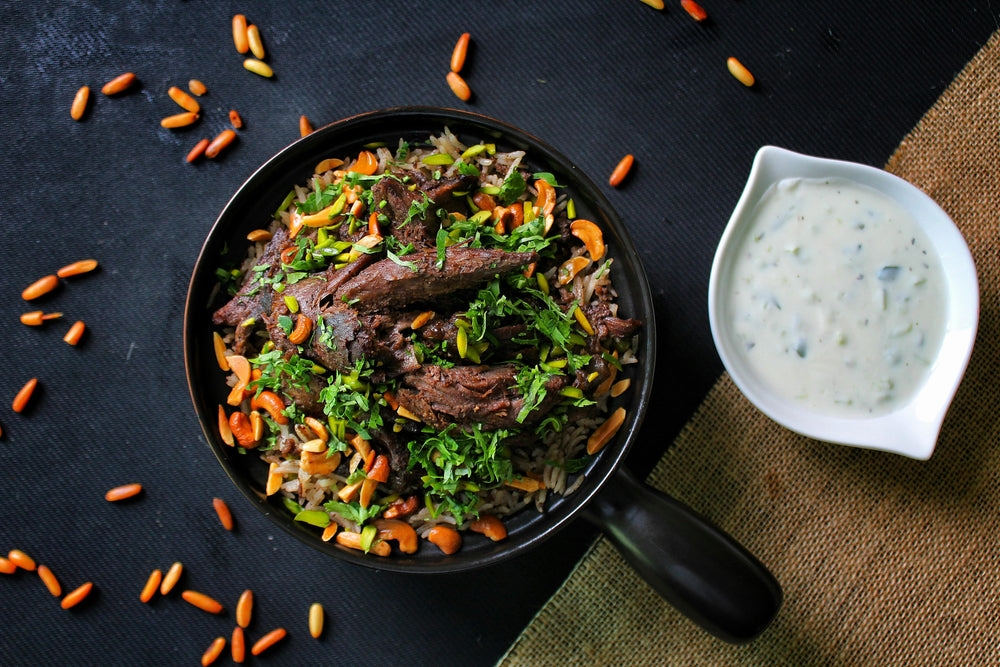
A beautifully prepared Egyptian meat and rice dish comes alive with a fragrant blend of local spices, vibrant fresh herbs, and golden toasted nuts, celebrating the timeless tradition of warm hospitality. Paired with a cool, refreshing yogurt sauce, this culinary creation invites you to slow down and savor the authentic, comforting flavors found in the heart of Cairo's bustling kitchens. It is a delicious reminder of how a meal made with ancient care can truly warm the soul and inspire the senses.
Credits: Shameel mukkath
Local cuisine study in Pyramids of Giza, Egypt

☕︎ Local Flavor

139 Pavilion at Mena House

Rating: 4.7★ | Price: $$$ | Coordinates: 29.9869° N, 31.1378° E

An open-air garden terrace within the Mena House compound, framing an unbroken sightline to the Great Pyramid only a few hundred meters away. The kitchen documents a confident bilingual menu of Egyptian classics — molokhia, grilled pigeon, baba ganoush — alongside continental standards refined for the hotel’s century-old clientele. A reserved sunset table is the single most cinematic dining experience on the plateau.

View Entry Details

Khufu's by Mohamed Ali Group

Rating: 4.6★ | Price: $$$$ | Coordinates: 29.9760° N, 31.1356° E

The only restaurant licensed to operate inside the plateau archaeological zone itself, set just below the eastern face of the Great Pyramid. The dining room is a contemporary, low-slung structure designed to disappear into the desert, while the menu reinterprets Egyptian heritage cuisine through a fine-dining lens. Each table is a controlled archive of taste, light, and limestone — booked weeks in advance.

View Entry Details

Andrea Mariouteya

Rating: 4.5★ | Price: $$ | Coordinates: 30.0319° N, 31.0833° E

A garden grill house along the Mariouteya canal between Giza and the airport — the quintessential Friday-lunch ritual for Cairene families. The kitchen is built around two beloved technologies: a charcoal rotisserie producing famously crisp chicken, and a stone oven turning out flaky, layered feteer meshaltet. The bougainvillea-shaded courtyards function as a living archive of Egyptian middle-class leisure.

View Entry Details

Felfela Restaurant (Downtown Cairo)

Rating: 4.5★ | Price: $ | Coordinates: 30.0476° N, 31.2371° E

A 1959 Cairene institution two blocks from Tahrir Square, serving the foundational repertoire of Egyptian street food in a sit-down setting: foul medames, taameya, koshari, and shawarma assembled with the rigor of a museum collection. The wood-and-lantern interior preserves the mid-century downtown aesthetic, and the menu doubles as a quick, reliable field guide to Egyptian cuisine before or after a day at the plateau.

View Entry Details

🛌︎ Boutique Stays

Marriott Mena House

Rating: 5★ | Price: $$$$ | Coordinates: 29.9869° N, 31.1378° E

A 19th-century khedival palace converted into a hotel, anchoring the eastern flank of the Giza plateau. The 40-acre garden compound functions as a primary archive of colonial-era hospitality in Egypt, where Cecil Rhodes, Agatha Christie, and Winston Churchill all logged their pyramid pilgrimages. The pyramid-view rooms preserve a sightline that has been the most photographed hotel vista on earth for more than a century.

View Entry Details

Four Seasons Hotel Cairo at The First Residence

Rating: 5★ | Price: $$$$ | Coordinates: 30.0316° N, 31.2225° E

A high-rise institution set above the Botanical Gardens of Giza, framing a wide Nile-and-pyramids panorama from its upper floors. The property functions as a contemporary counterpoint to Mena House, archiving a modern, marble-and-glass Cairene luxury that emerged in the post-1990s economic shift. Its proximity to both the plateau and downtown makes it a logistical anchor for any thorough Giza expedition.

View Entry Details

Le Méridien Pyramids Hotel & Spa

Rating: 4.5★ | Price: $$$ | Coordinates: 29.9925° N, 31.1525° E

A mid-century resort scaled for the modern pyramid traveler, set along the Al-Haram corridor between central Giza and the plateau gate. The property documents the late-20th-century evolution of Egyptian tourism architecture — vast pools, terrace dining, and a rooftop sightline aimed squarely at Khufu. It is the most efficient base for travelers who want plateau proximity without paying the Mena House premium.

View Entry Details

Pyramids View Inn Bed & Breakfast

Rating: 4.6★ | Price: $ | Coordinates: 29.9842° N, 31.1369° E

A family-run guesthouse tucked into the village edge of Nazlet El-Semman, the historic settlement that has grown up against the plateau walls. The rooftop terrace serves as a working archive of the daily plateau rhythm — sunrise camels, midday tour buses, and the call to prayer rolling across the dunes. The proximity is so close that the Great Pyramid functions as the structure’s actual backyard.

View Entry Details

📍︎ Field Study

The Great Pyramid of Khufu (Interior Climb)

Rating: 5★ | Price: $$ | Coordinates: 29.9792° N, 31.1342° E

A vertical archive of Old Kingdom engineering, built around 2560 BCE and the only surviving wonder of the ancient world. The supplementary ticket grants passage up the steep Grand Gallery and into the bare granite King’s Chamber — a hot, low, narrow climb that physically demonstrates the precision of a structure assembled from 2.3 million stone blocks. The interior holds no decoration, only silence, scale, and the geometric ambition of the Fourth Dynasty.

View Entry Details

The Great Sphinx of Giza

Rating: 5★ | Price: $ | Coordinates: 29.9753° N, 31.1376° E

Carved from a single outcrop of bedrock limestone, the Sphinx is the largest monolithic statue on earth and the keystone of the Giza necropolis. The early-morning viewing terrace offers the cleanest archival angle, where the rising sun illuminates the eroded face exactly as the Fourth-Dynasty builders intended. The monument records four and a half millennia of weather, plunder, restoration, and reverence in a single eastward gaze.

View Entry Details

The Grand Egyptian Museum (GEM)

Rating: 5★ | Price: $$ | Coordinates: 29.9933° N, 31.1192° E

The largest archaeological museum in the world, set two kilometers from the plateau and engineered as a permanent home for the complete Tutankhamun collection. The Grand Staircase functions as a chronological corridor of monumental statuary, terminating in a glass window aimed directly at the pyramids. This is the new central repository of the Egyptian archaeological archive — built to consolidate a century of dispersed scholarship under one roof.

View Entry Details

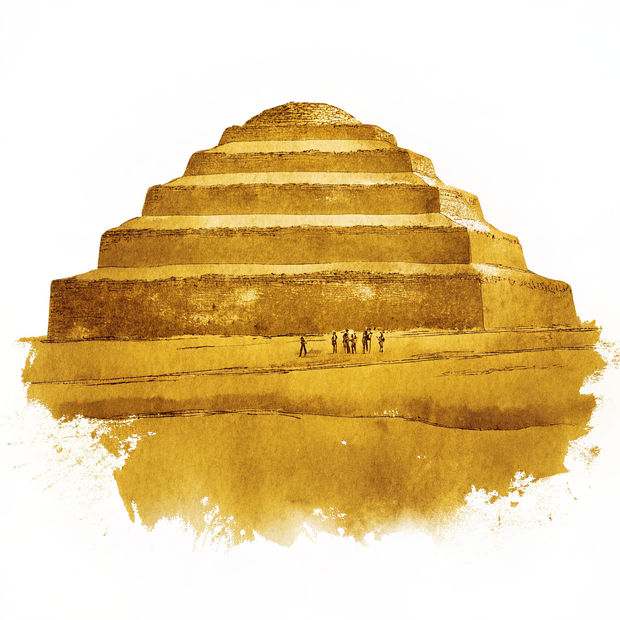
Saqqara: The Step Pyramid of Djoser

Rating: 4.8★ | Price: $ | Coordinates: 29.8716° N, 31.2167° E

The prototype pyramid — designed by the polymath Imhotep around 2670 BCE — and the architectural ancestor of every pyramid that followed at Giza. A short drive south of the plateau, Saqqara preserves the experimental geometry of the early Old Kingdom, where the step form represented the literal staircase a pharaoh would climb toward the sun. It is the necessary first chapter for any serious reading of the Giza complex.

View Entry Details

Typography

Archival Note: We have personally documented these geographic specs for Pyramids of Giza, Egypt to ensure every watercolor study is anchored in real-world data. By cataloging the precise elevation, light cycles, and historical epochs, we provide a technical foundation that justifies the atmospheric stillness captured in our visual artifacts.

Botanical and pigment specimen study for Pyramids of Giza, Egypt Colors of Pyramids of Giza, Egypt
Coordinates
29.9792° N, 31.1342° E — Northern Egypt, Giza Plateau, Nile west bank
Historical Epoch
Old Kingdom Egypt — Fourth Dynasty (c. 2613–2494 BCE)
Elevation
60 m / 197 ft — limestone desert plateau overlooking the Nile Valley
Atmosphere
Hot Desert (BWh) — searing dry summers, virtually no rainfall
Observation Hour
05:50 AM — Golden Hour as limestone pyramids turn warm honey before the crowds
Primary Pigment
Limestone Honey (#D9B679) and Nile Dusk (#2E5B8A)
Best Time to Visit
October through April — the Egyptian winter brings mild temperatures and clear desert air, making the Giza plateau walkable and the sphinx accessible at sunrise
Avoid Visiting
June through August — temperatures on the open limestone plateau exceed 42°C with no shade between the monuments, and the midday sun makes photography impossible

The Local Tongue

Language is the invisible architecture of Pyramids of Giza, Egypt. These entries document the regional vocabulary—capturing the "texture" of local speech that standard translations often miss. Hand-curated expressions reflecting the specific spirit and daily rhythm of the region.
Archival study of Arabic cultural texture

via / Antoine Demare

Primary Language Arabic
Regional Dialect Masri (Egyptian Arabic)

Ahram (أهرام)

The Arabic word for "pyramids" — the simple, sturdy name Egyptians use for the monuments at the heart of their national identity. You hear it everywhere on the plateau, from the children selling postcards to the camel guides pointing across the sand, and it carries the same quiet pride a New Yorker feels saying "the Statue of Liberty."

Sahra (صحراء)

This is the desert — the great Sahara that begins, in earnest, right at the edge of the Giza plateau. The word holds both the romance and the severity of the landscape: endless, ancient, beautifully empty, and not to be underestimated. It is the silence the pyramids were built to face.

Shams (شمس)

The word for "sun" — and at Giza, it is everything. The sun set the orientation of the pyramids, painted the limestone in honey at dawn, and was worshipped by the pharaohs as Ra, the source of all creation. To watch the shams rise over the plateau is to understand, in an instant, why an entire civilization built its monuments to greet it.

Wait! before you go...

Before you head over to Pyramids of Giza, Egypt, we wanted to share a few basic tips we picked up along the way. These notes cover the simple things—like how to get around or what to do about cash—so you can spend less time worrying and more time just enjoying the place.
🚲 Getting Around The Giza plateau sits about 20 kilometers southwest of central Cairo and is most easily reached by Uber or Careem ride-hail, by a metered white-and-black taxi, or by Cairo Metro Line 2 to Giza Station followed by a short taxi onward. Once on the plateau, walking is best for the close-up monuments, while camel and horse rides give you the cinematic distance shots from the southern dune.
⚖️ Cash or Card 80% Cash / 20% Card. The plateau ticket booth accepts cards, but everything else — camel rides, baksheesh, mint tea at the Sphinx tea stalls, postcards, and the friendly papyrus shops on the access road — is strictly cash and small Egyptian pounds.
☁️ Good to Know Touts and unofficial guides are very persistent at the entrance and along the plateau road — a polite, firm "la shukran" (no thank you) and steady walking pace handles most of it. Hire camels and horses only from the official stables marked by the tourist police booth, and always settle the full price (with return trip included) before you mount.
🏧 ATMs ATMs are available at the Grand Egyptian Museum, along Pyramids Road (Al-Haram), and inside the Mena House Hotel. Look for CIB (Commercial International Bank) or Banque Misr — both reliably accept international cards. Withdraw before you reach the plateau itself; there are none on the sand.
💳 Currency The Egyptian Pound (EGP). Bring small bills for baksheesh, camel guides, and tea stalls on the plateau. Larger purchases at the Grand Egyptian Museum and nearby hotels accept cards.
🔌 Plugs Egypt uses Type C and Type F plugs — the round two-prong European-style sockets. Standard voltage is 220V at 50Hz, so most modern dual-voltage devices work with a simple plug adapter.
🛡️ Safety The Giza plateau is well-policed by a dedicated tourist police force and is generally very safe during the day. The main risks are sun exposure, dehydration, and the occasional overpriced camel ride — bring water, a hat, and small bills for tips, and ride only with official stables. Avoid the plateau after sunset unless you are on a ticketed sound-and-light show.
✈️ Airports Cairo International Airport (CAI) is the primary gateway, roughly 45 minutes northeast of the Giza plateau by car. The newer Sphinx International Airport (SPX), just west of Giza, handles a growing slate of regional and seasonal carriers and sits only 25 minutes from the pyramids.

Behind The Scenes

Nathan

Note from the Founder

Hey, did you know this fun fact about Pyramids of Giza, Egypt? The Great Pyramid of Khufu stood as the tallest human-made structure on Earth for nearly 3,800 years — built around 2560 BCE, it held the record until the Lincoln Cathedral spire was completed in 1311 CE.
Thank you for exploring the Pyramids of Giza, Egypt series with us. We hope these notes have inspired you to add this incredible destination to your own passport—we are so glad you’re here. — Nathan

The Magnets

The Coasters

The Canvas