
Shop the Collection

To help you build your own global archive, we've prepared this collection of watercolor studies from our research into Provence, France. These artifacts are designed to bring the stillness of this corner of the world into your home.

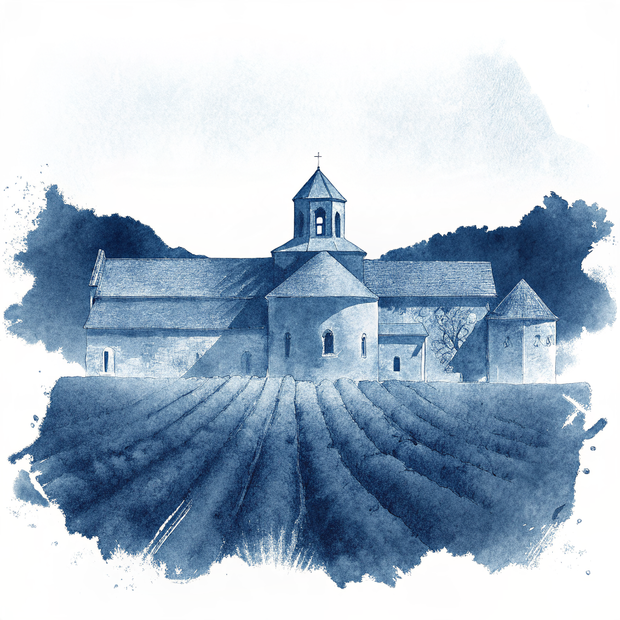
Original Series Decorative Magnet

A personal study of Provence, France, captured in high-fidelity watercolor and prepared for your collection.

Provence, France | Lavender Fields Abbey Provence | Original Series Decorative Magnet
Add to Collection / $18
Exclusive Series Artifact

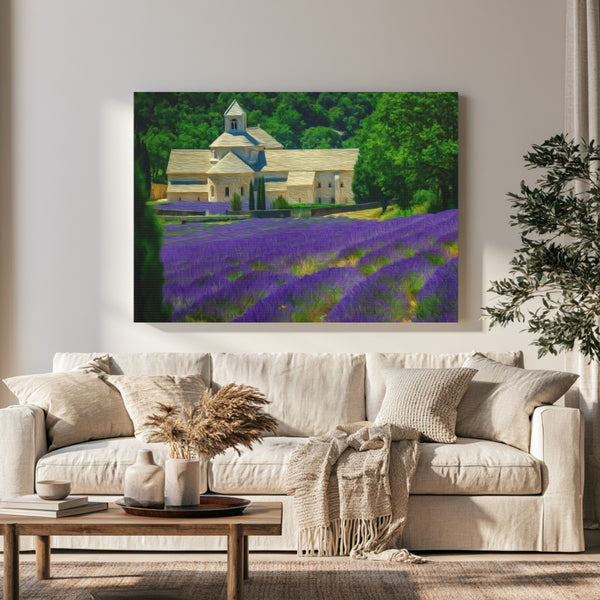
Original Series Gallery Canvas

This high-fidelity canvas is a beautiful way to anchor a room and keep your memories of Provence, France fresh long after you've returned home.

Provence, France | Lavender Fields Abbey Provence | Original Series Gallery Canvas detail Provence, France | Lavender Fields Abbey Provence | Original Series Gallery Canvas detail Provence, France | Lavender Fields Abbey Provence | Original Series Gallery Canvas detail Provence, France | Lavender Fields Abbey Provence | Original Series Gallery Canvas detail
Add to Collection / $65

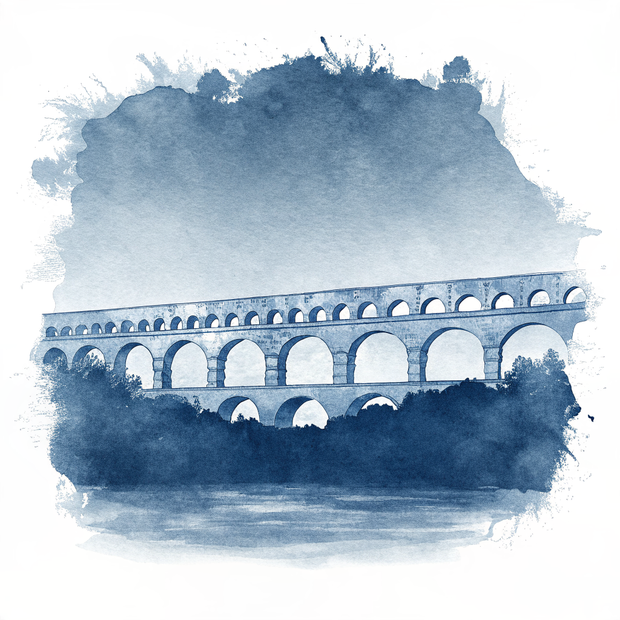
Original Series Hardboard Coaster

A personal study of Provence, France, captured in high-fidelity watercolor and prepared for your collection.

Provence, France | Lavender Fields Abbey Provence | Original Series Hardboard Coaster
Add to Collection / $18
Exclusive Series Artifact

The Spirit of the Land

Archival Note: A curated field study of Provence, France, prioritizing the specific atmospheric stillness of the region. These artifacts have been meticulously sourced from our global archival partners to represent the area's unique cultural frequency and environmental character. This selection serves as a formal observation for our ongoing global archive, vetted for its visual accuracy and archival merit.

Provence, France study No. 01
Provence, France / 01 VIA / Susanne Jutzeler, suju-foto
The warm ochre and honey-toned stone buildings of what appears to be Gordes tumble down the hillside in quiet defiance of gravity, their ancient walls softened by centuries of Provençal sun. Cypress trees punctuate the terraced slopes like dark green exclamation points, while the diffused light of a partly cloudy afternoon keeps the colors honest — no dramatic shadows, just the true, unhurried palette of limestone, olive leaf, and terracotta. What makes the scene feel lived-in rather than postcard-perfect is the way the village simply continues beyond the frame, indifferent to being admired.
Provence, France study No. 02
Provence, France / 02 VIA / Le sixième rêve
The warm, honeyed light of golden hour bathes the ancient stone village in a soft luminescence, as if the hillside itself is exhaling after a long summer day. Standing before this scene, one would feel the quiet weight of centuries — the terraced cliffs, cypress trees, and sun-worn facades composing a landscape that seems almost too still, too perfect to be entirely real. There is a meditative hush to it, the kind that makes the rest of the world feel very far away.
Provence, France study No. 03
Provence, France / 03 VIA / Fuka jaz
The warm honey-toned limestone facades of these medieval buildings absorb the brilliant southern light, their irregular stone courses telling centuries of patient craftsmanship. What most visitors overlook is the dormant wisteria vine crawling across the timber pergola in the lower left — its twisted, skeletal branches suggest that come spring, this courtyard transforms entirely beneath cascading purple blooms. A single street lantern mounted between the buildings stands as a quiet sentinel, bridging the village's ancient bones with the rhythm of modern daily life.

Where to wander

Archival Note: A curated field study of Provence, France, prioritizing cultural relevance and archival merit. While we haven't touched down here yet, we've meticulously vetted these locations through our global network of contributors to ensure they represent the most authentic atmosphere for your own expedition.

Local Cuisine Spotlight
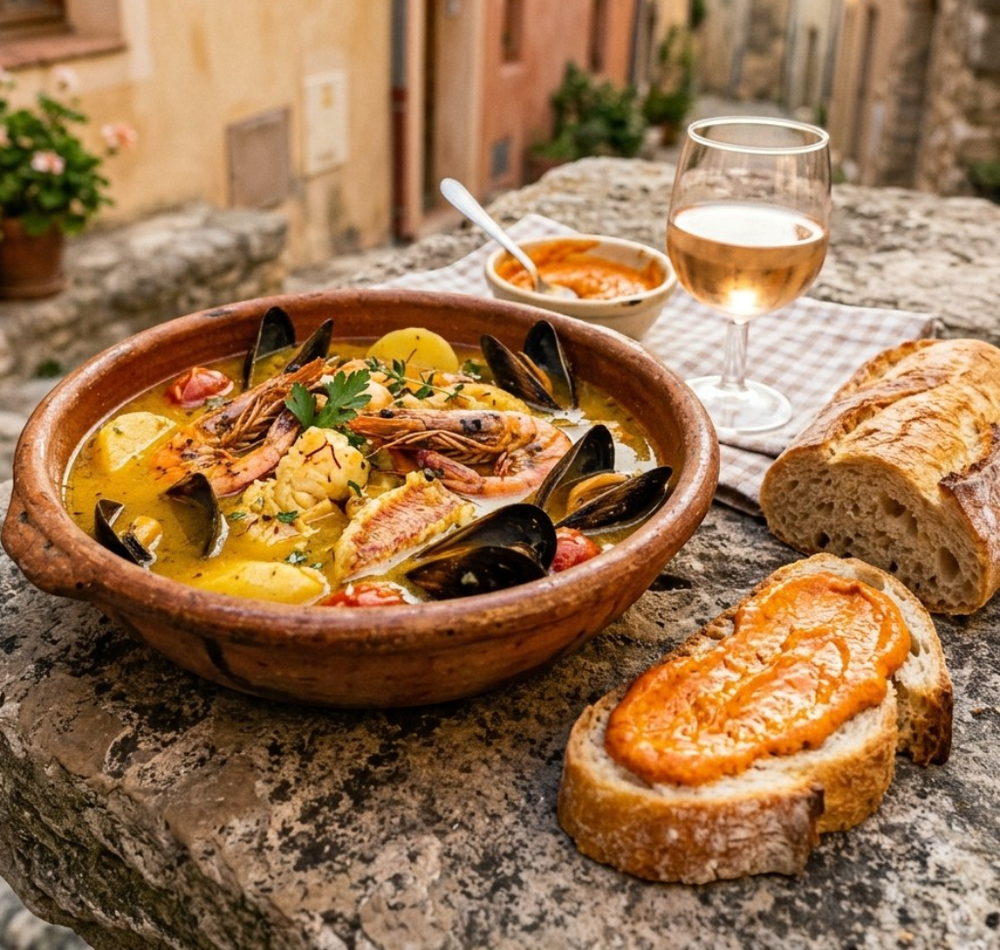
Bouillabaisse, Provence's legendary saffron-golden fish stew, brims with plump mussels, langoustines, and tender fish fillets. Served alongside crusty bread slathered with rusty rouille, this ancient fisherman's dish carries the briny soul of the Mediterranean in every aromatic spoonful.
Credits: THE PAINTED PASSPORT
Local cuisine study in Provence, France

☕︎ Local Flavor

Le Vivier

Rating: 5* | Price: $$$ | Coordinates: 43.9181° N, 4.8055° E

On the banks of the Rhône in Isle-sur-la-Sorgue, Chef Romain Silve serves luminous seafood with a distinctly Provençal soul. Dishes like sea bass with fennel pollen and saffron bisque feel simultaneously refined and deeply rooted in the local terroir. The terrace table overlooking the water wheel is worth booking weeks in advance.

View Entry Details

La Chassagnette

Rating: 5* | Price: $$$ | Coordinates: 43.5633° N, 4.6367° E

Tucked into the wild Camargue marshlands, this Michelin-starred gem sources nearly everything from its own certified organic kitchen garden. Armand Arnal's plates are edible landscapes — expect vibrant tomato tartares, smoked eggplant, and herb-crusted lamb that tastes purely of place. Dining beneath the plane trees in summer is a poetic, unhurried ritual.

View Entry Details

Chez Serge

Rating: 4* | Price: $$ | Coordinates: 43.9544° N, 4.7603° E

In the heart of Carpentras, Serge Ghoukassian has been turning humble Provençal ingredients into honest, joyful plates for decades. The truffle-laced dishes during winter truffle market season are legendary among locals and savvy food tourists alike. The convivial wine list, anchored in Ventoux and Gigondas bottles, pairs beautifully with everything on the menu.

View Entry Details

Le Café de la Fontaine

Rating: 4* | Price: $ | Coordinates: 43.7456° N, 5.9581° E

Helmed by celebrated chef Bruno Clément in the charming village of La Garde Freinet, this relaxed café punches far above its price point. Simple tables spill onto a sun-dappled square where you can linger over soupe au pistou and rosé for a blissful afternoon. It perfectly captures the unhurried, generous spirit that makes Provençal village eating so deeply satisfying.

View Entry Details

🛌︎ Boutique Stays

La Bastide de Gordes

Rating: 5* | Price: $$$$ | Coordinates: 43.9117° N, 5.1997° E

Perched dramatically above the village of Gordes, this Renaissance bastide offers breathtaking views over the Luberon valley. Stone-vaulted rooms blend medieval grandeur with silky linens and Provençal ceramics. The infinity pool glowing at dusk with lavender hills stretching beyond is simply unforgettable.

View Entry Details

Domaine de Fontenille

Rating: 5* | Price: $$$ | Coordinates: 43.7800° N, 5.3167° E

Nestled among private vineyards near Lauris, this intimate estate feels like a secret only locals are supposed to know. Rooms are dressed in sun-bleached linens and warm terracotta tones that echo the surrounding countryside perfectly. Guests can harvest grapes, join wine tastings, and drift to sleep serenaded by Provençal cicadas.

View Entry Details

Le Couvent des Minimes

Rating: 5* | Price: $$$ | Coordinates: 43.8333° N, 5.7833° E

A beautifully restored 17th-century convent in Mane, this L'Occitane-partnered retreat is pure aromatic bliss. Lavender gardens, herb-scented spa treatments, and cloistered courtyards create a monastic calm that melts every stress away. The on-site Fasting & Wellbeing programs make it equally beloved by wellness seekers and romantic escapists.

View Entry Details

Hôtel de l'Image

Rating: 4* | Price: $$ | Coordinates: 43.7869° N, 4.8358° E

Set in a converted cinema in Saint-Rémy-de-Provence, this stylish boutique hotel charms with its creative spirit and lush garden pool. Rooms mix exposed stone walls with playful vintage film memorabilia and bright Souleiado fabrics. It sits just a short stroll from the Saturday morning market and Van Gogh's famous asylum at Saint-Paul-de-Mausole.

View Entry Details

📍︎ Field Study

Abbaye de Sénanque

Rating: 5* | Price: $ | Coordinates: 43.9283° N, 5.1869° E

Few images capture Provence more completely than this 12th-century Cistercian abbey rising from a valley of purple lavender in full July bloom. Resident monks still chant Gregorian vespers within its honey-stone walls, lending the place an otherworldly serenity. Arrive at dawn before the tour buses to experience the silence and fragrance in their full, undisturbed glory.

View Entry Details

Les Carrières de Lumières

Rating: 5* | Price: $$ | Coordinates: 43.7167° N, 4.7833° E

Inside the dramatic limestone quarries of Les Baux-de-Provence, monumental digital art projections transform cathedral-like cave walls into immersive, floor-to-ceiling masterpieces. Each year a new artistic programme — often celebrating painters like Cézanne or Klimt — fills the 7,000 square metres with sound and colour. It is equally magical for children, art lovers, and anyone who simply wants to be astonished.

View Entry Details

Valensole Plateau

Rating: 5* | Price: Free | Coordinates: 43.8369° N, 5.9897° E

From late June through mid-July, the sweeping plateau above Valensole turns an electric violet that seems almost too beautiful to be real. Rows of lavender stretch to the horizon under a blazing Provençal sky, and the warm air hums heavily with bees and fragrance. Local farmstands sell fresh lavender sachets, honey, and soaps, making a morning drive through the fields a feast for every sense.

View Entry Details

Pont du Gard

Rating: 5* | Price: $$ | Coordinates: 43.9474° N, 4.5353° E

This astonishing three-tiered Roman aqueduct spanning the Gardon river has stood for nearly 2,000 years and still commands pure awe. Swimming in the cool, jade-green river directly beneath its massive arches on a hot afternoon is one of southern France's greatest simple pleasures. The on-site museum beautifully contextualises Roman engineering ambition in a way that makes the structure feel even more miraculous.

View Entry Details

Typography

Archival Note: A formal technical study of Provence, France—archiving the coordinates, elevation, and environmental data that define the region. This data serves as a vital record for our ongoing global field study, allowing us to reconstruct the regional atmosphere with archival precision before our physical arrival.

Botanical and pigment specimen study for Provence, France Colors of Provence, France
Coordinates
43.9252° N, 5.3678° E — Central Luberon, Provence, France
Historical Epoch
Rome planted its deepest roots outside Italy here. The Via Domitia crossed this land in 118 BC and left behind the Pont du Gard, amphitheaters, and a Latin sensibility that never fully left the culture or the language.
Elevation
200-1,912 m / 656-6,273 ft - From the Rhone plain to the summit of Mont Ventoux
Atmosphere
Csa - Hot-summer Mediterranean. Dry, sunny summers with lavender in full bloom by July and mild, wetter winters. The mistral can arrive any season and clears the air spectacularly.
Observation Hour
06:30 - The low morning sun hits the limestone villages sideways, painting every wall in warm gold and casting long blue shadows across the cobblestones before the midday glare flattens the scene.
Primary Pigment
Lavender Mist (#B8A9C9) and Provencal Ochre (#D4975A)
Best Time to Visit
June through July - Lavender is in bloom, days are long and warm, and the light is at its most painterly before the deep summer crowds peak in August.
Avoid Visiting
August - Peak tourist season brings serious overcrowding at key sites, higher prices, intense heat, and a loss of the easy, unhurried atmosphere that makes Provence so special.

The Local Tongue

Language is the invisible architecture of Provence, France. These entries document the regional vocabulary—capturing the "texture" of local speech that standard translations often miss. Hand-curated expressions reflecting the specific spirit and daily rhythm of the region.
Archival study of French cultural texture

via / AXP Photography

Primary Language French
Regional Dialect Provencal French with traces of Occitan

Mistral

The mistral is a cold, dry, and fierce wind that tears down the Rhone Valley and scours the sky to an almost impossible blue. Locals build their houses with small north-facing windows and plant cypress windbreaks to defend against it, and on mistral days, even a sunny afternoon can feel sharp enough to cut.

Garrigue

Garrigue refers to the wild, scrubby landscape of low-growing herbs, stones, and sun-bleached vegetation that covers the hillsides between villages. Walking through it releases a wave of thyme, rosemary, and warm resin that is so specific to Provence that it functions almost like a smell-memory of the region itself.

Farniente

Farniente is borrowed from the Italian but lives comfortably in the Provencal vocabulary, meaning the pleasant art of doing nothing at all. It captures the particular quality of a summer afternoon when the heat is too serious for activity and the only reasonable response is a chair in the shade, a glass of rose, and the sound of cicadas doing all the work.

Wait! before you go...

Before you head over to Provence, France, we’ve audited the essential data points for this corner of the world. These notes cover the logistics—from currency ratios to transit hubs—to help you navigate the landscape with clarity.
🚲 Getting Around Provence is best navigated by rental car, as the most beautiful villages, lavender fields, and gorges sit well beyond any train line. The TGV connects Paris to Avignon in roughly 2.5 hours and serves as the most efficient gateway into the region.
⚖️ Cash or Card Cards are widely accepted in hotels, restaurants, and larger shops across Provence, but cash remains genuinely useful for village markets, roadside honey stalls, and smaller cafes in rural communes. Carrying 30 to 50 euros in small notes is a practical habit that avoids friction in the loveliest out-of-the-way spots.
☁️ Good to Know Lunch in Provence is a serious, unhurried affair and many small restaurants outside cities still close firmly between 2pm and 7pm - arriving at 1:45pm hoping to be seated is a reliable way to start on the wrong foot. The afternoon pause is not laziness but culture, and travelers who lean into it rather than fight it tend to have a significantly better time.
🏧 ATMs ATMs are reliably available in all towns and larger villages across Provence, with Avignon, Aix-en-Provence, and Arles offering multiple machines near central squares and train stations. In very small hilltop villages like Gordes or Moustiers-Sainte-Marie, ATMs exist but may run low during busy summer weekends, so drawing cash in a larger town beforehand is sensible.
💳 Currency France uses the Euro (EUR), and it is one of the most stable and widely accepted currencies in the world, with no real surprises for travelers arriving from other developed economies. Exchange rates are generally favorable at in-network ATMs compared to airport currency desks, and pre-trip card notification to your bank remains worthwhile.
🔌 Plugs France uses the Type E outlet (round two-pin with grounding hole) at 230V and 50Hz. Most modern electronics handle the voltage automatically but a plug adapter is essential for North American and UK devices.
🛡️ Safety Provence is a very safe destination for most travelers, though pickpocketing can occur in busier tourist centers like Avignon and Aix-en-Provence during peak summer months, particularly around markets and festival crowds. The main practical hazard in summer is the heat, which can be severe on the plateaus, and the mistral wind, which can make driving on exposed roads unexpectedly challenging.
✈️ Airports Marseille Provence Airport (MRS) is the primary international gateway, sitting roughly 30 kilometers from Aix-en-Provence and offering direct connections to major European cities as well as some transatlantic routes via hubs. Avignon Caumont Airport (AVN) serves smaller regional and charter flights and is a convenient arrival point for those heading directly into the Luberon or the Rhone Valley.

Behind The Scenes

Nathan

Note from the Founder

Hey, did you know this fun fact about Provence, France? Provence produces roughly 80 percent of the world's lavender essential oil, and the Valensole Plateau alone hosts over 10,000 hectares of cultivated lavender, with peak bloom typically falling between late June and mid-July depending on the altitude and the year.
Thank you for exploring the Provence, France series with us. We hope these notes have inspired you to add this incredible destination to your own passport—we are so glad you're here. — Nathan

Some of our Favorites