Shop the Collection

To help you build your own global archive, we've prepared this collection of watercolor studies from our research into Pamukkale, Turkey. These artifacts are designed to bring the stillness of this corner of the world into your home.

Original Series Decorative Magnet

A personal study of Pamukkale, Turkey, captured in high-fidelity watercolor and prepared for your collection.

Pamukkale, Turkey | Cotton Castle Thermal Terraces | Original Series Decorative Magnet
Add to Collection / $18
Exclusive Series Artifact

Original Series Gallery Canvas

This high-fidelity canvas is a beautiful way to anchor a room and keep your memories of Pamukkale, Turkey fresh long after you've returned home.

Pamukkale, Turkey | Cotton Castle Thermal Terraces | Original Series Gallery Canvas detail Pamukkale, Turkey | Cotton Castle Thermal Terraces | Original Series Gallery Canvas detail Pamukkale, Turkey | Cotton Castle Thermal Terraces | Original Series Gallery Canvas detail Pamukkale, Turkey | Cotton Castle Thermal Terraces | Original Series Gallery Canvas detail
Add to Collection / $65

Original Series Hardboard Coaster

A personal study of Pamukkale, Turkey, captured in high-fidelity watercolor and prepared for your collection.

Pamukkale, Turkey | Cotton Castle Thermal Terraces | Original Series Hardboard Coaster
Add to Collection / $18
Exclusive Series Artifact

The Spirit of the Land

Archival Note: A curated field study of Pamukkale, Turkey, prioritizing the specific atmospheric stillness of the region. These artifacts have been meticulously sourced from our global archival partners to represent the area's unique cultural frequency and environmental character. This selection serves as a formal observation for our ongoing global archive, vetted for its visual accuracy and archival merit.

Pamukkale, Turkey study No. 01
Pamukkale, Turkey / 01 VIA / Maciej Cisowski
The white calcium-rich terraces catch the soft, even light of midday, making each scalloped edge glow faintly against the vivid turquoise pools they hold. The water shifts between pale aqua and deep teal depending on depth, a contrast that feels almost too vivid to be natural. There is something quietly meditative about the way the layers recede into the distance, each pool a small world of its own.
Pamukkale, Turkey study No. 02
Pamukkale, Turkey / 02 VIA / From Salih
Standing at the edge of Pamukkale's terraces, a visitor would feel suspended between earth and sky, the blinding white calcium formations contrasting sharply with the electric turquoise of the mineral-rich pools. The midday sun bathes everything in an almost surreal clarity, making the scene feel more like a painting than a natural landscape. Below, the patchwork of green fields and red-roofed village grounds the otherworldly scene in quiet, everyday life.
Pamukkale, Turkey study No. 03
Pamukkale, Turkey / 03 VIA / Abdullah BEGTAŞ
Ancient sarcophagi sit half-consumed by the slow creep of calcium-white travertine formations at Pamukkale, as if the earth itself is quietly reclaiming them. Most visitors focus on the terraced pools, overlooking the way the mineral deposits drape in delicate frozen ripples beneath the tomb edges like melted wax. The juxtaposition of Roman funerary stone and geological time creates an atmosphere of layered erasure that few photographs manage to capture simultaneously.

Where to wander

Archival Note: A curated field study of Pamukkale, Turkey, prioritizing cultural relevance and archival merit. While we haven't touched down here yet, we've meticulously vetted these locations through our global network of contributors to ensure they represent the most authentic atmosphere for your own expedition.

Local Cuisine Spotlight
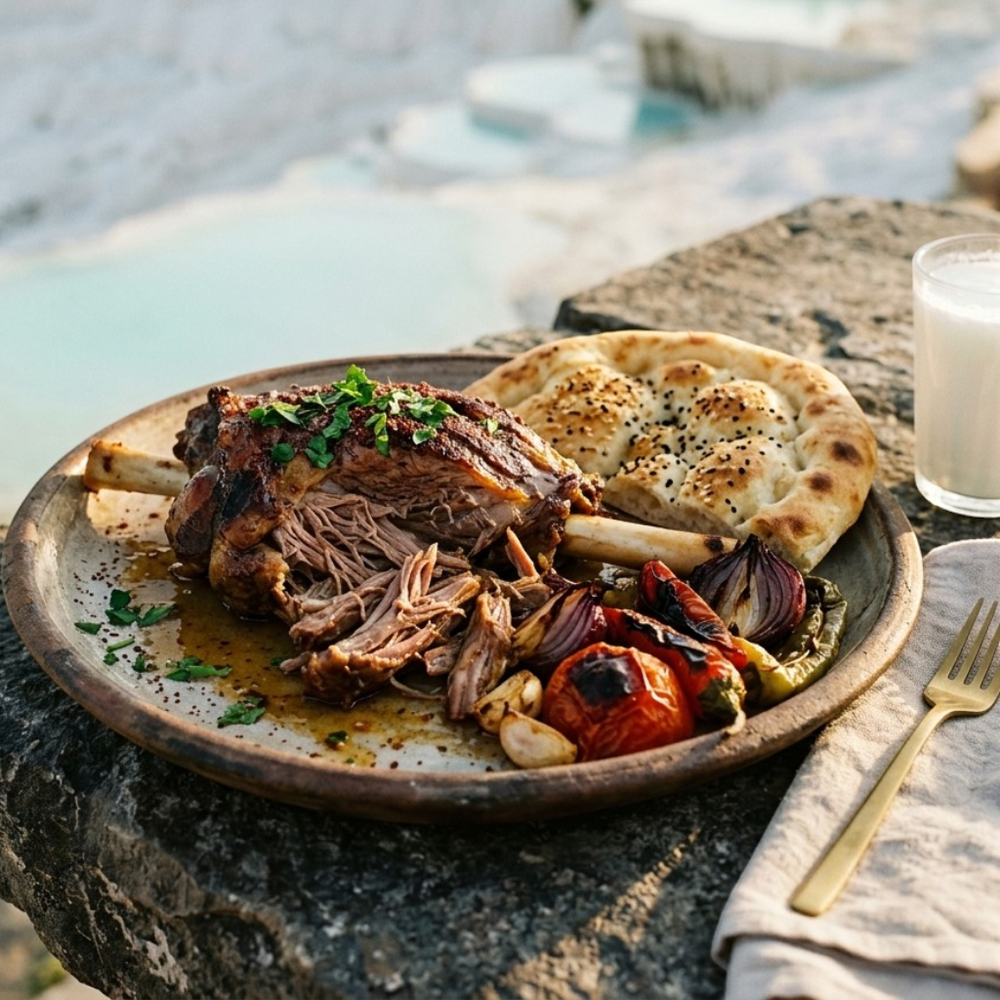
Tender slow-roasted lamb shank, fragrant with spices and fresh herbs, rests beside smoky roasted vegetables and a sesame-studded flatbread on a weathered clay plate. Set against Pamukkale's luminous travertine pools, this classic Turkish comfort dish invites a long, unhurried meal in the open air.
Credits: THE PAINTED PASSPORT
Local cuisine study in Pamukkale, Turkey

☕︎ Local Flavor

Travertine Table Restaurant

Rating: 5* | Price: $$$ | Coordinates: 37.9201° N, 29.1178° E

With open-air terraces overlooking the limestone formations, dining here is as much a visual feast as a culinary one, especially at sunset when the terraces turn golden. The menu celebrates Aegean Turkish cuisine with slow-roasted lamb, herb-stuffed eggplant, and silky hummus made fresh each morning. Every dish arrives with house-baked flatbread still steaming from the stone oven, impossible to resist.

View Entry Details

Hierapolis Kebap House

Rating: 4* | Price: $$ | Coordinates: 37.9188° N, 29.1202° E

A beloved local institution where charcoal smoke drifts lazily through an open kitchen and perfectly skewered Adana kebabs arrive sizzling on handmade lavash bread. The portions are enormously generous, and the chili-laced cacık yogurt dip is cool, creamy, and utterly addictive alongside the bold smoky meats. Regulars swear by finishing with künefe, a warm cheese-filled pastry soaked in sweet syrup that is simply extraordinary.

View Entry Details

Mineral Spring Café

Rating: 4* | Price: $ | Coordinates: 37.9233° N, 29.1191° E

Tucked beneath ancient plane trees near the ancient Hierapolis ruins, this casual café pours strong Turkish tea and fresh-squeezed pomegranate juice to thirsty explorers at wonderfully honest prices. The gözleme station out front produces hand-stretched flatbreads stuffed with spinach, white cheese, or spiced potato, cooked golden on a wide iron griddle. It is the kind of simple, honest eating spot that becomes a daily ritual within your first afternoon.

View Entry Details

Denizli Sofrası

Rating: 5* | Price: $$ | Coordinates: 37.9155° N, 29.1230° E

This warmly lit restaurant proudly showcases the regional Denizli province cuisine, including its famous roast chicken marinated overnight in yogurt, garlic, and local spices. The meze selection is extraordinary — over twenty small plates of pickled vegetables, smoked eggplant, and walnut-stuffed vine leaves create a colorful, flavor-packed table spread. The proprietor often joins guests after dinner for complimentary raki and animated stories about the area's history.

View Entry Details

🛌︎ Boutique Stays

Bellamaritima Hotel

Rating: 4* | Price: $$$ | Coordinates: 37.9225° N, 29.1233° E

Perched with stunning views of the white travertine terraces, Bellamaritima offers elegant rooms with private balconies overlooking nature's masterpiece. The rooftop thermal pool lets you soak under the stars while gazing at glowing calcium formations below. Breakfast is a lavish spread of local cheeses, olives, and fresh pastries that perfectly starts your day.

View Entry Details

Thermal Paradise Pamukkale

Rating: 4* | Price: $$ | Coordinates: 37.9198° N, 29.1189° E

This charming hotel channels the healing spirit of Pamukkale with in-room thermal water access and beautifully tiled bathrooms that feel authentically Turkish. The staff greets every guest with warm tea and genuine hospitality that makes you feel immediately at home. Its garden courtyard with bubbling thermal fountains creates a deeply relaxing atmosphere after long days exploring the terraces.

View Entry Details

Cotton Castle Boutique Hotel

Rating: 5* | Price: $$$$ | Coordinates: 37.9241° N, 29.1215° E

Named after Pamukkale's Turkish meaning, this luxurious boutique hotel wraps guests in white-themed interiors that beautifully mirror the iconic cotton-white landscape outside. Every suite features floor-to-ceiling windows framing the terraces, creating an unforgettable visual experience from the comfort of plush beds. The spa uses locally sourced thermal mud and mineral waters for treatments that leave skin remarkably refreshed.

View Entry Details

Hierapolice Guesthouse

Rating: 3* | Price: $ | Coordinates: 37.9167° N, 29.1244° E

This family-run guesthouse offers heartfelt hospitality and spotlessly clean rooms at a price that leaves plenty of budget for exploration and local food adventures. The owners personally guide guests on hidden paths to the terraces during golden hour, a genuinely priceless local tip. Simple but delicious home-cooked dinners featuring stuffed peppers and lentil soup make evenings here feel wonderfully communal and warm.

View Entry Details

📍︎ Field Study

Pamukkale Travertine Terraces

Rating: 5* | Price: $ | Coordinates: 37.9213° N, 29.1208° E

The UNESCO-listed terraces are an otherworldly cascade of snow-white calcium carbonate shelves filled with milky turquoise thermal water, unlike anything else on the planet. Visitors walk barefoot along designated paths, feeling warm mineral water rushing gently over their feet while panoramic valley views stretch endlessly in every direction. Arriving at dawn rewards you with dramatic mist rising from the pools and the entire landscape entirely to yourself.

View Entry Details

Ancient City of Hierapolis

Rating: 5* | Price: $ | Coordinates: 37.9267° N, 29.1267° E

Directly above the travertines lies remarkably preserved Hierapolis, a Greco-Roman city whose colonnaded streets, grand theater, and sprawling necropolis tell two thousand years of layered history. The theater alone seats twelve thousand people and its carved stage backdrop remains strikingly detailed, offering one of Turkey's most atmospheric ancient sites. Walking through the monumental gate at golden hour while swallows circle the old stones creates a genuinely moving sense of deep time.

View Entry Details

Antique Pool (Cleopatra's Pool)

Rating: 5* | Price: $$ | Coordinates: 37.9249° N, 29.1251° E

Submerged Roman columns lie scattered across the floor of this natural thermal swimming pool, giving swimmers the surreal sensation of floating through an ancient archaeological site. The water maintains a constant 35°C and is rich in minerals that leave skin silky soft long after you have dried off and dressed. Legend claims Cleopatra herself bathed here, and even if the story is embellished, soaking among genuine Roman ruins makes the experience feel genuinely magical.

View Entry Details

Hierapolis Archaeology Museum

Rating: 4* | Price: $ | Coordinates: 37.9258° N, 29.1244° E

Housed inside the beautifully restored Roman baths, this compact but thoughtfully curated museum displays stunning sarcophagi, detailed marble friezes, and ancient jewelry excavated directly from Hierapolis over decades of careful archaeological work. The centerpiece marble reliefs depicting mythological scenes are carved with astonishing delicacy and rival anything found in Istanbul's grandest collections. Spending an hour here before visiting the ruins above transforms the experience from sightseeing into genuine understanding.

View Entry Details

Typography

Archival Note: A formal technical study of Pamukkale, Turkey—archiving the coordinates, elevation, and environmental data that define the region. This data serves as a vital record for our ongoing global field study, allowing us to reconstruct the regional atmosphere with archival precision before our physical arrival.

Botanical and pigment specimen study for Pamukkale, Turkey Colors of Pamukkale, Turkey
Coordinates
37.9213° N, 29.1208° E — Pamukkale Travertine Terraces, Denizli Province, southwestern Turkey
Historical Epoch
Founded around 190 BCE by the Seleucid king Eumenes II, Hierapolis flourished as a Greco-Roman spa city famed for its sacred hot springs. It later became an early Christian center, home to the Apostle Philip.
Elevation
354-400 m / 1,161-1,312 ft - The travertine terraces sit at approximately 354 m at the base, rising to around 400 m at the Hierapolis plateau above the cliffs.
Atmosphere
Csa - Mediterranean. Hot dry summers and mild wet winters. Spring and autumn bring ideal warmth for exploring ruins and soaking in the pools without the intensity of midsummer heat.
Observation Hour
07:00 - The early morning light washes the white travertines in warm gold and peach tones before crowds arrive. The thermal pools mirror a soft pastel sky and the air holds a gentle mineral mist.
Primary Pigment
Travertine Chalk (#EDE8DC) and Thermal Turquoise (#5BBFB5)
Best Time to Visit
April through June - warm, uncrowded, and wildflowers dot the surrounding plains; the terraces glow softly in spring light.
Avoid Visiting
July through August - peak summer heat exceeds 38 degrees Celsius, crowds are dense, and midday visits to the terraces can feel overwhelming.

The Local Tongue

Language is the invisible architecture of Pamukkale, Turkey. These entries document the regional vocabulary—capturing the "texture" of local speech that standard translations often miss. Hand-curated expressions reflecting the specific spirit and daily rhythm of the region.
Archival study of Turkish cultural texture

via / Abdus Samad Mahkri

Primary Language Turkish
Regional Dialect Aegean Turkish (Ege Turkcesi), spoken with softer consonants and a melodic rhythm distinct from Istanbul standard Turkish.

Pamuk (pamuk)

Pamuk means cotton in Turkish, and it is the very root of Pamukkale's name, which translates to Cotton Castle. The word captures the impossible softness of the travertine terraces when seen from a distance, gleaming white and billowing against the hillside like vast bolts of cloth laid out to dry in the Aegean sun.

Misafirperverlik (misafirperverlik)

Misafirperverlik means hospitality, but the word carries far more weight than any English equivalent can hold. In Pamukkale's family-run guesthouses, it manifests as a glass of strong cay pressed into a traveler's hands the moment they step through the door, before a room key is even mentioned.

Huzur (huzur)

Huzur describes a state of deep inner peace and tranquility that goes beyond mere relaxation. Locals use it to name what happens when a person slips into one of the warm thermal pools at dusk, with steam rising around marble ruins and the valley darkening to violet far below, and the noise of the world simply falls away.

Wait! before you go...

Before you head over to Pamukkale, Turkey, we’ve audited the essential data points for this corner of the world. These notes cover the logistics—from currency ratios to transit hubs—to help you navigate the landscape with clarity.
🚲 Getting Around The nearest major hub is Denizli Cardak Airport, roughly 65 km from Pamukkale, with regular bus and dolmus connections. From Denizli city center, shared minibuses run frequently to Pamukkale village and take around 30 to 40 minutes.
⚖️ Cash or Card Pamukkale skews cash-dependent outside the larger hotels. Village restaurants, small guesthouses, and market stalls almost universally prefer Turkish Lira in hand. Carrying a mix is wise, with cash covering at least 60 percent of daily spending.
☁️ Good to Know Visitors are required to remove their shoes before walking on the travertine terraces to protect the delicate calcium formations. Bring a small bag to carry footwear, and expect the wet mineral-rich surface to feel surprisingly silky and warm underfoot.
🏧 ATMs ATMs are available in Pamukkale village and are more plentiful in nearby Denizli city, where all major Turkish banks are represented. It is advisable to withdraw cash in Denizli before arriving, as the village ATMs can run low during peak season weekends.
💳 Currency The Turkish Lira (TRY) is the sole official currency, and prices at the terraces, museum, and Cleopatra's Pool are denominated in Turkish Lira. Exchange rates can be favorable for visitors from Europe and North America, making this destination genuinely good value.
🔌 Plugs Turkey uses Type F outlets (Schuko), operating at 230V and 50Hz. Most European plugs fit without an adapter, while visitors from the US, UK, and Australia will need one.
🛡️ Safety Pamukkale is considered a very safe destination for travelers of all backgrounds, with a strong local tourism infrastructure and a welcoming community. Standard urban awareness applies in Denizli city, but the village itself is calm, well-patrolled, and oriented entirely around visitor comfort.
✈️ Airports Denizli Cardak Airport (DNZ) is the closest gateway, approximately 65 km from Pamukkale with regular domestic connections from Istanbul and Ankara. Izmir Adnan Menderes Airport (ADB), around 210 km away, offers broader international routes and connects via intercity bus to Denizli.

Behind The Scenes

Nathan

Note from the Founder

Hey, did you know this fun fact about Pamukkale, Turkey? Pamukkale's thermal waters emerge from the earth at approximately 35 degrees Celsius and are rich in calcium bicarbonate. As the water flows over the hillside and loses carbon dioxide, calcium carbonate precipitates and slowly builds the dazzling white travertine formations over thousands of years.
Thank you for exploring the Pamukkale, Turkey series with us. We hope these notes have inspired you to add this incredible destination to your own passport—we are so glad you're here. — Nathan

Some of our Favorites