Shop the Collection

To help you build your own global archive, we've prepared this collection of watercolor studies from our research into Orvieto, Italy. These artifacts are designed to bring the stillness of this corner of the world into your home.

Original Series Decorative Magnet

A personal study of Orvieto, Italy, captured in high-fidelity watercolor and prepared for your collection.

Orvieto, Italy | Hilltop Medieval Cliff Town | Original Series Decorative Magnet
Add to Collection / $18
Exclusive Series Artifact

Original Series Gallery Canvas

This high-fidelity canvas is a beautiful way to anchor a room and keep your memories of Orvieto, Italy fresh long after you've returned home.

Orvieto, Italy | Hilltop Medieval Cliff Town | Original Series Gallery Canvas detail Orvieto, Italy | Hilltop Medieval Cliff Town | Original Series Gallery Canvas detail Orvieto, Italy | Hilltop Medieval Cliff Town | Original Series Gallery Canvas detail Orvieto, Italy | Hilltop Medieval Cliff Town | Original Series Gallery Canvas detail
Add to Collection / $65

Original Series Hardboard Coaster

A personal study of Orvieto, Italy, captured in high-fidelity watercolor and prepared for your collection.

Orvieto, Italy | Hilltop Medieval Cliff Town | Original Series Hardboard Coaster
Add to Collection / $18
Exclusive Series Artifact

The Spirit of the Land

Archival Note: A curated field study of Orvieto, Italy, prioritizing the specific atmospheric stillness of the region. These artifacts have been meticulously sourced from our global archival partners to represent the area's unique cultural frequency and environmental character. This selection serves as a formal observation for our ongoing global archive, vetted for its visual accuracy and archival merit.

Orvieto, Italy study No. 01
Orvieto, Italy / 01 VIA / Marián Moravčík
The afternoon sun bathes Orvieto's medieval buildings in warm amber tones, making the distant cathedral dome glow against a pale blue sky. Cypress trees stand like sentinels along the winding road in the foreground, their dark silhouettes framing the sprawling town that rises majestically from its clifftop. This quiet moment captures the timeless beauty of Tuscany—a landscape where history and nature exist in perfect, unhurried harmony.
Orvieto, Italy study No. 02
Orvieto, Italy / 02 VIA / Gildo Cancelli
The golden afternoon light bathes the cathedral's elaborate facade, illuminating centuries of carved stonework and painted religious scenes with a warm, ethereal glow. Standing before this monumental Gothic entrance would inspire awe—the concentric arches draw the eye inward in an almost hypnotic rhythm, while the gleaming gold leaf and rich colors of the frescoes seem to shimmer and come alive. The interplay of shadow and light across the deeply carved ornamentation creates a sense of reverence and timelessness that transcends the centuries.
Orvieto, Italy study No. 03
Orvieto, Italy / 03 VIA / merwak. raw
This photograph captures the stunning medieval architecture of Orvieto perched dramatically atop a volcanic plateau in Umbria. The warm terracotta and golden stone facades create a unified palette across centuries of construction, while the Cathedral's elegant bell tower rises majestically above the densely packed buildings. Often overlooked amidst the grandeur is the delicate interplay of shadows cast by the afternoon sun, which reveals the intricate textures of weathered brick and carved stone details that speak to centuries of history etched into every surface.

Where to wander

Archival Note: A curated field study of Orvieto, Italy, prioritizing cultural relevance and archival merit. While we haven't touched down here yet, we've meticulously vetted these locations through our global network of contributors to ensure they represent the most authentic atmosphere for your own expedition.

Local Cuisine Spotlight
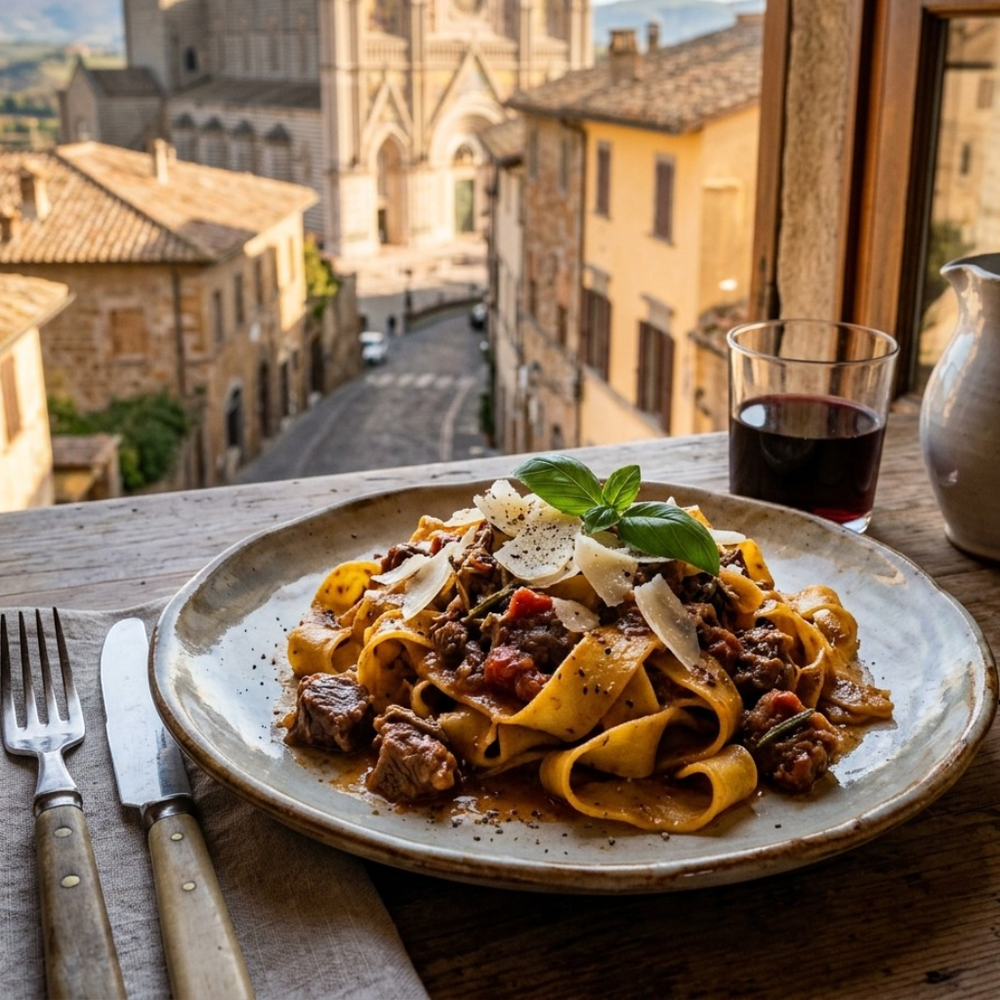
Tagliatelle al ragù showcases the Umbrian tradition of slow-simmered meat sauces coating silken, hand-rolled pasta. Each forkful reveals tender beef in a deeply flavored tomato reduction, crowned with fresh basil and shaved cheese. This classic dish embodies generations of Italian culinary heritage and comfort.
Credits: THE PAINTED PASSPORT
Local cuisine study in Orvieto, Italy

☕︎ Local Flavor

Trattoria del Moro Aronne

Rating: 5* | Price: $$ | Coordinates: 42.7162° N, 12.1105° E

This beloved family trattoria has been feeding locals and savvy travelers for generations with recipes that haven't needed updating since grandmother wrote them down. The wild boar ragù clinging to hand-rolled pici pasta is a dish of stunning simplicity that somehow tastes like the entire Umbrian landscape distilled into one bowl. Pair it with a carafe of house Orvieto Classico and let the unhurried meal stretch well into the afternoon.

View Entry Details

Ristorante I Sette Consoli

Rating: 5* | Price: $$$$ | Coordinates: 42.7168° N, 12.1099° E

Set within a deconsecrated church apse, dining at I Sette Consoli is an occasion that lingers in the imagination long after the last course clears. Chef Giulio Palombini crafts seasonal Umbrian tasting menus where black truffle, pigeon, and freshwater fish appear in precise, quietly thrilling compositions. The garden terrace on warm evenings, lit softly beneath ancient stone, turns a dinner into something genuinely close to ceremony.

View Entry Details

Enoteca al Duomo

Rating: 4* | Price: $$$ | Coordinates: 42.7165° N, 12.1096° E

With the cathedral's striped marble façade literally across the piazza, Enoteca al Duomo offers one of the most theatrical dining settings imaginable in all of central Italy. The wine list is a deep celebration of local Orvieto Classico alongside broader Italian selections curated with genuine enthusiasm and expertise. Truffle bruschetta and local cheese platters arrive quickly, making it equally perfect for a full lunch or a lingering late afternoon aperitivo.

View Entry Details

Caffè Montanucci

Rating: 4* | Price: $ | Coordinates: 42.7161° N, 12.1110° E

Since 1913, Montanucci has anchored the social life of Corso Cavour with its gleaming pastry cases and the intoxicating smell of freshly pulled espresso drifting onto the cobblestones. The homemade chocolates and marzipan confections displayed in glass cases are crafted with a pride bordering on reverence for the old Umbrian confectionery tradition. Pull up a stool, order a cornetto still warm from the oven, and watch Orvieto's morning unfold at its own unhurried pace.

View Entry Details

🛌︎ Boutique Stays

Hotel Maitani

Rating: 4* | Price: $$$ | Coordinates: 42.7167° N, 12.1097° E

Perched steps from the iconic cathedral, Hotel Maitani offers rooms with breathtaking façade views that feel almost unreal at golden hour. The interiors blend exposed stone walls with elegant Umbrian fabrics, creating a cozy authenticity you rarely find in tourist-heavy towns. Waking up to espresso on a terrace overlooking medieval piazza life is a memory you'll carry home forever.

View Entry Details

Palazzo Piccolomini

Rating: 4* | Price: $$$ | Coordinates: 42.7171° N, 12.1134° E

This lovingly restored Renaissance palazzo wraps guests in centuries of Orvietan history without sacrificing a single modern comfort. Vaulted ceilings soar overhead while soft lighting highlights original frescoed details that restoration experts spent years uncovering. The courtyard garden is a quiet sanctuary where afternoon prosecco tastes infinitely better surrounded by old stone and climbing roses.

View Entry Details

Agriturismo Custodi

Rating: 4* | Price: $$ | Coordinates: 42.7089° N, 12.1201° E

Nestled among the olive groves and vineyards just outside the city walls, this family-run agriturismo offers a deeply grounding Umbrian countryside experience. Rooms are simple yet warmly decorated with handmade quilts and terracotta floors that cool pleasantly on summer afternoons. Breakfasts feature estate olive oil, homemade jams, and ricotta so fresh it practically introduces itself.

View Entry Details

B&B La Magnolia

Rating: 3* | Price: $$ | Coordinates: 42.7155° N, 12.1118° E

Tucked along a quiet cobbled lane, La Magnolia is the kind of intimate guesthouse where the owner remembers your coffee order by day two. The handful of rooms are cheerfully furnished with vintage Umbrian ceramics and windows that frame rooftop views of terracotta and sky. Its central location means the cathedral, wine bars, and the famous well are all reachable within a leisurely ten-minute stroll.

View Entry Details

📍︎ Field Study

Orvieto Cathedral (Duomo)

Rating: 5* | Price: $ | Coordinates: 42.7167° N, 12.1097° E

Few buildings anywhere in the world announce themselves with the sheer visual force of Orvieto's cathedral, its golden Gothic façade erupting from the tufa plateau like a jeweled vision. Inside, Luca Signorelli's apocalyptic frescoes in the Cappella di San Brizio rank among the most powerful Renaissance paintings on earth, influencing Michelangelo's own Sistine ceiling. Allow yourself unhurried hours here — every mosaic, every carved relief, every filtered shaft of light through alabaster windows rewards slow, patient attention.

View Entry Details

Pozzo di San Patrizio

Rating: 5* | Price: $ | Coordinates: 42.7183° N, 12.1073° E

Commissioned by Pope Clement VII after his harrowing flight from Rome during the 1527 sack, this extraordinary well was engineered so donkeys could descend and ascend simultaneously on two interlocking helical staircases without ever crossing paths. Spiraling 53 meters into the volcanic tufa, the descent feels genuinely other-worldly, cool and echoing and lit by 72 arched windows cut into the central shaft. It is one of the Renaissance's great feats of practical engineering, and walking it remains quietly unforgettable.

View Entry Details

Orvieto Underground (Città Sotterranea)

Rating: 5* | Price: $ | Coordinates: 42.7160° N, 12.1108° E

Beneath the living city runs a labyrinth of over 1,200 caves, tunnels, and chambers carved by Etruscan hands more than two thousand years ago and continuously expanded through medieval times. Guided tours wind through ancient olive presses, Etruscan wells, pigeon houses, and wartime shelters, each chamber whispering a different chapter of an extraordinarily long story. The temperature stays a refreshing constant year-round, making an underground visit both culturally illuminating and physically welcome on a hot Umbrian afternoon.

View Entry Details

Museo Nazionale Etrusco di Villa Giulia Annex

Rating: 4* | Price: $ | Coordinates: 42.7172° N, 12.1125° E

Orvieto sits atop one of ancient Etruria's most significant settlements, and the local archaeological collection gathers the finest artifacts uncovered from surrounding necropoli into a thoughtfully arranged civic museum. Delicate bucchero pottery, bronze votives, and painted terracotta antefixes reveal a sophisticated civilization whose artistry still manages to feel startlingly immediate across twenty-five centuries. The museum's modest scale means you can move through it slowly and intimately, without the crowd fatigue that haunts larger Italian collections.

View Entry Details

Typography

Archival Note: A formal technical study of Orvieto, Italy—archiving the coordinates, elevation, and environmental data that define the region. This data serves as a vital record for our ongoing global field study, allowing us to reconstruct the regional atmosphere with archival precision before our physical arrival.

Botanical and pigment specimen study for Orvieto, Italy Colors of Orvieto, Italy
Coordinates
42.7167° N, 12.1097° E — Historic center of Orvieto atop the tufa plateau, Umbria, central Italy
Historical Epoch
Founded by the Etruscans as Velzna around the 9th century BC, Orvieto became one of the most powerful cities of the Etruscan federation before Rome destroyed it in 264 BC and rebuilt it as a papal stronghold through the medieval period.
Elevation
325 m / 1,066 ft - Orvieto's historic plateau sits approximately 325 meters above sea level, rising dramatically from the surrounding Paglia River valley
Atmosphere
Csa - Mediterranean with Continental influence. Warm, dry summers and cool, occasionally misty winters make spring and autumn the most painterly and comfortable seasons.
Observation Hour
17:30 - The late afternoon sun strikes the cathedral's gold mosaics and tufa facades at a low angle, flooding the piazza in amber and copper tones that last well into the early evening.
Primary Pigment
Raw Sienna (#C68642) and Antique Gold (#C9A84C)
Best Time to Visit
April through June - mild temperatures, blooming countryside, fewer crowds, and the best light for painting the cathedral facade and valley views.
Avoid Visiting
July through August - peak summer heat concentrates day-trippers on the small plateau, making the main piazza crowded and the narrow streets uncomfortably warm by midday.

The Local Tongue

Language is the invisible architecture of Orvieto, Italy. These entries document the regional vocabulary—capturing the "texture" of local speech that standard translations often miss. Hand-curated expressions reflecting the specific spirit and daily rhythm of the region.
Archival study of Italian cultural texture

via / Antek Korczak

Primary Language Italian
Regional Dialect Umbrian Italian

Rupe

Rupe means cliff or rocky outcrop, but in Orvieto it refers specifically to the volcanic tufa plateau on which the entire city rests. Locals speak of the rupe the way others speak of a founding ancestor, with reverence and quiet pride, and its sheer golden walls are the first and last thing visible as the funicular descends toward the valley.

Classico

Classico in this context refers to Orvieto Classico, the DOC white wine produced from the surrounding volcanic hillsides, and it carries the full weight of centuries of winemaking tradition. When a local recommends ordering the classico at a trattoria, they are not simply suggesting a wine but extending an invitation into the region's oldest agricultural identity.

Sotterraneo

Sotterraneo means underground, but in Orvieto it describes an entire parallel city carved into the tufa below street level over more than two thousand years of continuous habitation. The air inside the tunnels stays cool and damp regardless of the season above, and the faint smell of ancient stone and earth is unlike anything encountered in the sunlit streets overhead.

Wait! before you go...

Before you head over to Orvieto, Italy, we’ve audited the essential data points for this corner of the world. These notes cover the logistics—from currency ratios to transit hubs—to help you navigate the landscape with clarity.
🚲 Getting Around Orvieto has a mainline train station at the base of the cliff, served by direct Trenitalia services from Rome Termini in roughly 75 minutes and from Florence in about 2 hours. From the station, a historic funicular climbs to the old town center in under five minutes, connecting directly to the main bus loop.
⚖️ Cash or Card Most restaurants, hotels, and shops in Orvieto accept major credit cards, but smaller trattorias, market stalls, and artisan ceramics workshops often prefer or require cash. Carrying at least 30 to 50 euros in cash is a practical habit, particularly for wine purchases directly from producers and for entry to smaller museum annexes.
☁️ Good to Know Orvieto observes a genuine riposo in the early afternoon, with many shops closing between roughly 1pm and 3:30pm, and this rhythm should be respected rather than resisted. Visiting the cathedral and underground tunnels in the morning leaves the afternoon free to slow down over a long lunch, which is exactly what the city seems to encourage.
🏧 ATMs There are several Bancomat ATMs in Orvieto's historic center, clustered primarily along Corso Cavour and near Piazza della Repubblica, and they reliably accept major international cards. Lines can form in summer, so drawing cash in the morning before tourist traffic peaks is a practical approach.
💳 Currency Italy uses the Euro (EUR), and exchange rates are generally most favorable when withdrawing directly from ATMs rather than using airport or hotel exchange services. Notifying a bank or card provider before travel helps avoid temporary blocks, which can be inconvenient in a small town with limited banking options.
🔌 Plugs Italy uses Type F and Type L outlets at 230V/50Hz. A universal travel adapter is recommended, particularly for Type L three-pin plugs found in older buildings.
🛡️ Safety Orvieto is an exceptionally safe destination with very low rates of petty crime relative to larger Italian cities, though standard awareness around crowded piazzas during peak summer months is always sensible. The cobblestone streets and steep steps around the tufa edges require good footwear, particularly after rain when surfaces become slick.
✈️ Airports The closest major international airport is Rome Fiumicino (FCO), approximately 130 kilometers south, with frequent direct trains to Orvieto making it the most practical arrival point for most international travelers. Rome Ciampino (CIA) is a secondary option slightly farther in travel time, and Florence Peretola (FLR) works well for those arriving from northern Europe or connecting via central Italy.

Behind The Scenes

Nathan

Note from the Founder

Hey, did you know this fun fact about Orvieto, Italy? Orvieto's tufa plateau contains over 1,200 documented caves and tunnels carved over two millennia, used variously as Etruscan cisterns, medieval pigeon lofts, olive oil presses, and wartime shelters. The city beneath the city is as layered as the one above.
Thank you for exploring the Orvieto, Italy series with us. We hope these notes have inspired you to add this incredible destination to your own passport—we are so glad you're here. — Nathan

Some of our Favorites