
Shop the Collection

To help you build your own global archive, we've prepared this collection of watercolor studies from our research into Notting Hill, London. These artifacts are designed to bring the stillness of this corner of the world into your home.

Original Series Decorative Magnet

A personal study of Notting Hill, London, captured in high-fidelity watercolor and prepared for your collection.

Notting Hill, London | Colorful Notting Hill Townhouses | Original Series Decorative Magnet
Add to Collection / $18
Exclusive Series Artifact

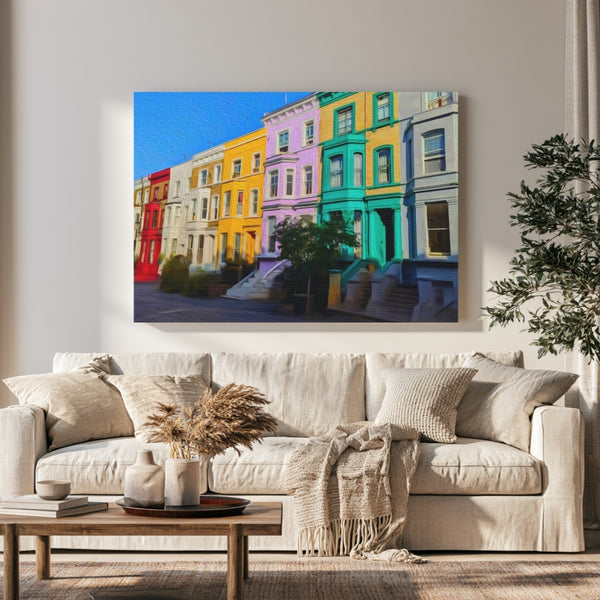
Original Series Gallery Canvas

This high-fidelity canvas is a beautiful way to anchor a room and keep your memories of Notting Hill, London fresh long after you've returned home.

Notting Hill, London | Colorful Notting Hill Townhouses | Original Series Gallery Canvas detail Notting Hill, London | Colorful Notting Hill Townhouses | Original Series Gallery Canvas detail Notting Hill, London | Colorful Notting Hill Townhouses | Original Series Gallery Canvas detail Notting Hill, London | Colorful Notting Hill Townhouses | Original Series Gallery Canvas detail
Add to Collection / $65

Original Series Hardboard Coaster

A personal study of Notting Hill, London, captured in high-fidelity watercolor and prepared for your collection.

Notting Hill, London | Colorful Notting Hill Townhouses | Original Series Hardboard Coaster
Add to Collection / $18
Exclusive Series Artifact

The Spirit of the Land

Archival Note: A curated field study of Notting Hill, London, prioritizing the specific atmospheric stillness of the region. These artifacts have been meticulously sourced from our global archival partners to represent the area's unique cultural frequency and environmental character. This selection serves as a formal observation for our ongoing global archive, vetted for its visual accuracy and archival merit.

Notting Hill, London study No. 01
Notting Hill, London / 01 VIA / Anastasiia Vyshnevska
The lane sits still in the kind of flat, pale autumn light that makes London feel like a watercolor left to dry. Pastel facades — butter yellow, powder blue, soft white — line the right side like a quiet argument against the grey city. Fallen leaves and damp asphalt give the scene a lived-in calm that no tourist map ever quite captures.
Notting Hill, London study No. 02
Notting Hill, London / 02 VIA / AXP Photography
A visitor standing before these candy-coloured Victorian façades would feel as though they had stepped into a watercolour painting, the muted pastel hues of lilac, rose pink, butter yellow, and powder blue glowing softly in the cool winter light. The ornate white plasterwork and elegant bay windows lend the street a quiet grandeur, while the bare tree branches and crisp air hint at the stillness of an early London morning. There is a gentle, unhurried beauty to this corner of Notting Hill — photogenic yet somehow intimate, as though the street exists just slightly outside of time.
Notting Hill, London study No. 03
Notting Hill, London / 03 VIA / AXP Photography
The row of pastel-painted Georgian terraces stretches along one of Notting Hill's most photographed streets, their mint, lilac, and pink facades glowing in the cool London light. What most visitors miss are the terracotta pots of neatly clipped topiary resting on a window ledge of the grey house — a small, deliberate act of domestic pride amid the vibrant chaos. The fleur-de-lis ironwork of the front railings, repeated rhythmically down the entire row, speaks to a Victorian craftsmanship that quietly anchors the street's flamboyant color palette.

Where to wander

Archival Note: A curated field study of Notting Hill, London, prioritizing cultural relevance and archival merit. While we haven't touched down here yet, we've meticulously vetted these locations through our global network of contributors to ensure they represent the most authentic atmosphere for your own expedition.

Local Cuisine Spotlight
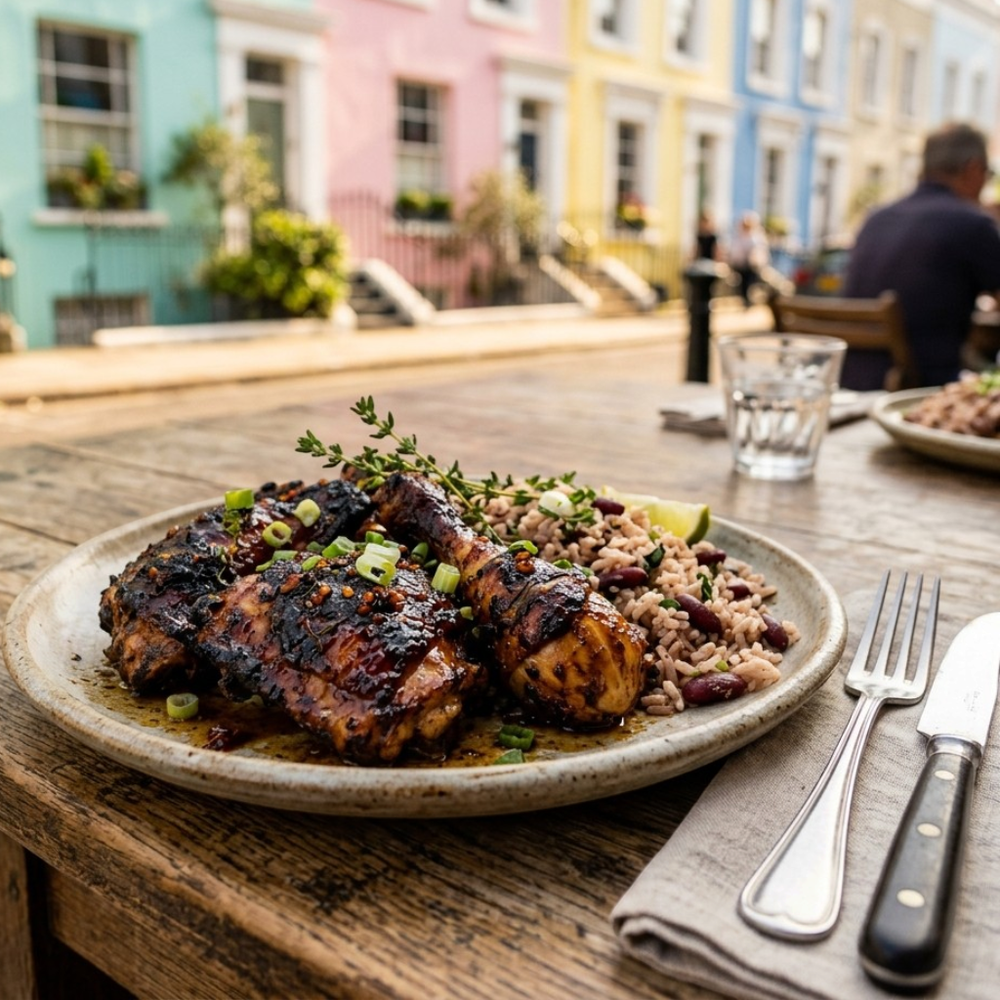
Deeply charred jerk chicken rests atop coconut rice and peas at this Notting Hill gem, its smoky crust laced with allspice, thyme, and scotch bonnet fire. Scallions add a fresh bite, while a wedge of lime brightens every forkful against the warm Caribbean-inspired backdrop.
Credits: THE PAINTED PASSPORT
Local cuisine study in Notting Hill, London

☕︎ Local Flavor

Ottolenghi Notting Hill

Rating: 5* | Price: $$$ | Coordinates: 51.5155, -0.2011

Yotam Ottolenghi's original deli and restaurant on Ledbury Road remains a neighbourhood institution, piled high with jewel-coloured salads, slow-roasted meats, and pastries that look almost too beautiful to eat. The all-white interior feels calm and Nordic against the vibrant food, and the communal table encourages lingering over lunch. Do not leave without picking up a slab of his legendary lemon cake to take away.

View Entry Details

The Shed Restaurant

Rating: 5* | Price: $$$ | Coordinates: 51.5148, -0.2024

Run by the Gladwin brothers, The Shed champions hyper-seasonal British produce sourced directly from their family farm in West Sussex, changing the menu as the land dictates. The rustic interior of salvaged wood and mismatched chairs creates a warm, unpretentious atmosphere that feels entirely at odds with its exceptional cooking. The small plates encourage sharing and exploring, and the natural wine list is genuinely exciting.

View Entry Details

Farmacy

Rating: 4* | Price: $$$ | Coordinates: 51.5161, -0.2009

Farmacy has quietly become one of London's most creative plant-based restaurants, drawing in sceptics and devotees alike with dishes that are bold, nourishing, and genuinely delicious rather than worthy. The earthy, greenhouse-inspired interior on Westbourne Grove feels like a sanctuary from the city's pace. Their weekend brunch, with golden turmeric waffles and house-made nut milks, has become a Notting Hill ritual worth building a morning around.

View Entry Details

Gold Restaurant

Rating: 4* | Price: $$$ | Coordinates: 51.5172, -0.2044

Sitting above the beloved Gold deli on Portobello Road, this neighbourhood restaurant offers seasonal British-Mediterranean cooking in a richly decorated space of velvet banquettes and warm candlelight. It is the kind of place that rewards lingering, with a crowd that is well-heeled but unpretentious and a menu that shifts confidently with the seasons. The set lunch is outstanding value for the quality and setting you receive.

View Entry Details

🛌︎ Boutique Stays

The Portobello Hotel

Rating: 4* | Price: $$$ | Coordinates: 51.5134, -0.2007

A legendary boutique hideaway tucked along a leafy Victorian terrace, the Portobello has hosted rock stars and romantics alike for decades. Each of its 21 rooms is individually decorated with antiques, round beds, and clawfoot tubs that feel genuinely theatrical. Its intimate scale and neighbourhood charm make it feel like staying in a very glamorous friend's townhouse.

View Entry Details

Guesthouses West London

Rating: 4* | Price: $$ | Coordinates: 51.5145, -0.2031

This beautifully restored Georgian guesthouse sits just moments from the bustle of Portobello Road, offering a calm and considered retreat at the end of a long day exploring. Rooms blend period cornicing and sash windows with crisp linen and thoughtful modern touches. Breakfasts are generous and genuinely home-style, setting you up perfectly for a morning at the market.

View Entry Details

The Main House

Rating: 5* | Price: $$$ | Coordinates: 51.5138, -0.2018

Housed in a grand Victorian townhouse on Colville Road, The Main House offers just four beautifully appointed suites, each with high ceilings, original fireplaces, and a serene sense of space that larger hotels simply cannot replicate. Owners Caroline and Vicente bring a genuinely personal warmth to every stay, from the flowers in your room to their handwritten local recommendations. It is quiet, elegant, and completely unforgettable.

View Entry Details

Notting Hill Gate Hotel

Rating: 3* | Price: $$ | Coordinates: 51.5089, -0.1968

Perfectly positioned at the southern edge of the neighbourhood near the tube, this smartly refurbished hotel offers reliable comfort without pretension. Rooms are compact but cleverly designed with warm tones, good storage, and blackout curtains for a proper night's rest. It is an excellent base for first-time visitors who want to explore both Notting Hill and central London with equal ease.

View Entry Details

📍︎ Field Study

Portobello Road Market

Rating: 5* | Price: Free | Coordinates: 51.5168, -0.2044

The world's largest antiques market stretches along Portobello Road every Saturday, a glorious procession of silver candlesticks, vintage clothing, rare prints, and street food that rewards unhurried browsing. Arrive before ten to beat the crowds and give yourself time to negotiate with the dealers at the northern end of the market. Even if you buy nothing, the atmosphere alone — all colour and chatter and discovery — is worth the journey.

View Entry Details

Notting Hill Bookshop

Rating: 5* | Price: Free | Coordinates: 51.5135, -0.1989

The real-life inspiration behind the famous travel bookshop in the 1999 film, this charming independent on Blenheim Crescent is a genuine treasure trove of travel writing, fiction, and photography books curated with real editorial care. The staff are knowledgeable and enthusiastic in a way that only passionate independent booksellers can be, offering recommendations that feel personal rather than algorithmic. Even on a grey afternoon, an hour spent here feels like an authentic Notting Hill experience.

View Entry Details

Museum of Brands

Rating: 4* | Price: $ | Coordinates: 51.5162, -0.2076

Tucked away on Lancaster Road, this wonderfully eccentric museum houses over twelve thousand original consumer products spanning two hundred years of British cultural history, from Victorian tins to 1980s crisp packets. Walking through the timeline tunnel is a deeply nostalgic and strangely moving experience, triggering memories you didn't know you had stored. It is thoughtfully curated, never overwhelming, and completely unlike anything else you will find in London.

View Entry Details

Kensal Green Cemetery

Rating: 4* | Price: Free | Coordinates: 51.5300, -0.2246

One of London's magnificent seven Victorian cemeteries, Kensal Green is an extraordinary open-air museum of funerary architecture, where moss-covered angels, Egyptian Revival chapels, and elaborate mausoleums stand among ancient limes and yews. The sheer scale and ambition of the monuments reflects a Victorian confidence about death that feels both alien and fascinating to modern eyes. Sunday guided tours led by knowledgeable volunteers bring the remarkable stories of its residents vividly back to life.

View Entry Details

Typography

Archival Note: A formal technical study of Notting Hill, London—archiving the coordinates, elevation, and environmental data that define the region. This data serves as a vital record for our ongoing global field study, allowing us to reconstruct the regional atmosphere with archival precision before our physical arrival.

Botanical and pigment specimen study for Notting Hill, London Colors of Notting Hill, London
Coordinates
51.5130° N, 0.2010° W — Notting Hill neighbourhood, Royal Borough of Kensington and Chelsea, West London
Historical Epoch
Notting Hill transformed through the 20th century from elegant Victorian suburb to Windrush-era Caribbean hub to the creative, affluent neighbourhood it is today. Each layer remains visible if one looks carefully enough.
Elevation
15-35 m / 49-115 ft - Low-lying residential neighbourhood with gentle hill undulation toward Portobello Road
Atmosphere
Cfb - Oceanic Temperate. Notting Hill enjoys mild, overcast conditions year-round, with rare extremes. Expect soft grey skies and frequent drizzle that keeps the garden squares a vivid green.
Observation Hour
08:15 - Morning light in Notting Hill falls low and golden along the east-facing terraces, turning the pastel facades warm and painterly. The streets are quiet enough to photograph before the market crowds arrive.
Primary Pigment
Chalky Rose (#E8C4B8) and Dusty Sage (#A3B49A)
Best Time to Visit
May through September - Long days, blooming garden squares, and the neighbourhood at its most vibrant, culminating in the August Carnival.
Avoid Visiting
November through January - Short grey days, limited market activity, and the neighbourhood at its quietest and most overcast.

The Local Tongue

Language is the invisible architecture of Notting Hill, London. These entries document the regional vocabulary—capturing the "texture" of local speech that standard translations often miss. Hand-curated expressions reflecting the specific spirit and daily rhythm of the region.
Archival study of English cultural texture

via / Rahimat Onize Shaibu

Primary Language English
Regional Dialect British English (London)

Mews

A mews is a row of houses converted from former stable blocks, typically tucked behind grander streets. In Notting Hill, stumbling into a mews feels like finding a hidden village within the city, with hanging baskets and cobblestones that muffle the noise of the main road entirely.

Carnival

Carnival here refers specifically to the Notting Hill Carnival, Europe's largest street festival rooted in Trinidadian and wider Caribbean culture. Every August bank holiday, the streets fill with steel pan music so loud it vibrates in the chest, and the air turns thick with the scent of jerk chicken and rum punch.

Portobello

Portobello has become shorthand for an entire way of life, a Saturday ritual of browsing antiques, tasting street food, and watching the neighbourhood perform its best version of itself. The name comes from a pub that was named after the Battle of Portobello in 1739, yet today it conjures entirely the sensory world of a crowded, sun-warmed market lane.

Wait! before you go...

Before you head over to Notting Hill, London, we’ve audited the essential data points for this corner of the world. These notes cover the logistics—from currency ratios to transit hubs—to help you navigate the landscape with clarity.
🚲 Getting Around The London Underground serves Notting Hill Gate station on the Central, Circle, and District lines, placing visitors within easy reach of the whole city. The number 328 and 52 buses also run through the neighbourhood and are useful for reaching areas not covered by the tube.
⚖️ Cash or Card Notting Hill is almost entirely card-friendly, with contactless payments accepted at markets, cafes, and shops without hesitation. It is worth carrying a small amount of cash for certain Portobello Road antique stalls and occasional street food vendors who prefer it.
☁️ Good to Know Locals take their Saturday market ritual seriously, arriving early for the antiques section near Notting Hill Gate and moving north toward the food stalls as the morning progresses. Arriving after midday on a Saturday means navigating significant crowds, so an early start rewards the patient visitor with a more authentic experience.
🏧 ATMs ATMs are readily available along Notting Hill Gate and Pembridge Road, operated by major UK banks including Barclays, HSBC, and NatWest. Most machines are free to use for cardholders with standard international accounts, though some independent machines in corner shops may charge a small withdrawal fee.
💳 Currency The currency is the British Pound Sterling, noted as GBP and symbolised by the pound sign. Notes come in denominations of five, ten, twenty, and fifty pounds, with coins ranging from one penny to two pounds.
🔌 Plugs The United Kingdom uses Type G three-pin plug sockets operating at 230V and 50Hz. Visitors from the US, EU, and Australia will need an adapter.
🛡️ Safety Notting Hill is a very safe neighbourhood for visitors, with low rates of serious crime and a strong residential community presence. Normal city awareness applies, particularly around the busy market on Saturdays when pickpockets may operate in crowded sections of Portobello Road.
✈️ Airports London Heathrow Airport (LHR) is the closest major international gateway, located approximately 20 kilometres west and reachable by the Piccadilly line tube or the Heathrow Express to Paddington, then onward by tube. London Gatwick (LGW) and London City (LCY) airports also serve the city with extensive domestic and European connections.

Behind The Scenes

Nathan

Note from the Founder

Hey, did you know this fun fact about Notting Hill, London? Notting Hill Carnival began in 1966 and now draws over one million visitors across two days each August bank holiday weekend, making it the largest street festival in Europe and one of the largest in the world.
Thank you for exploring the Notting Hill, London series with us. We hope these notes have inspired you to add this incredible destination to your own passport—we are so glad you're here. — Nathan

Some of our Favorites