


The Real Milos
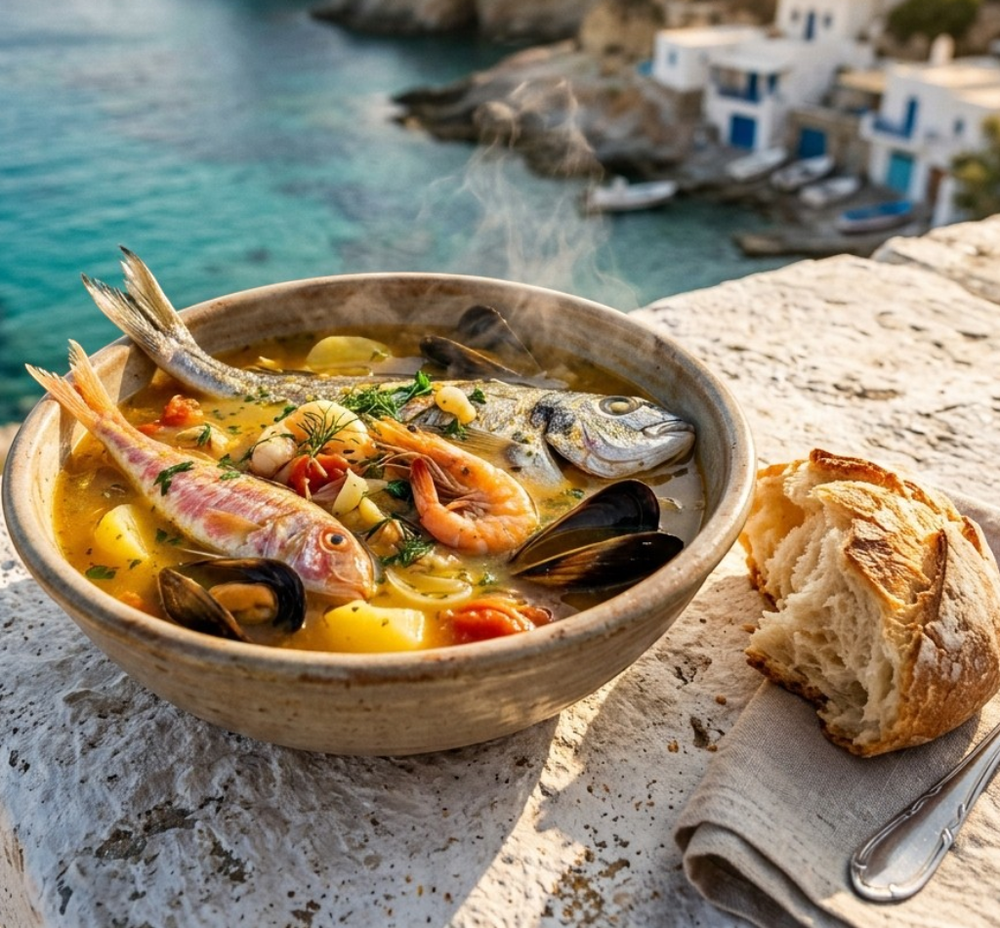
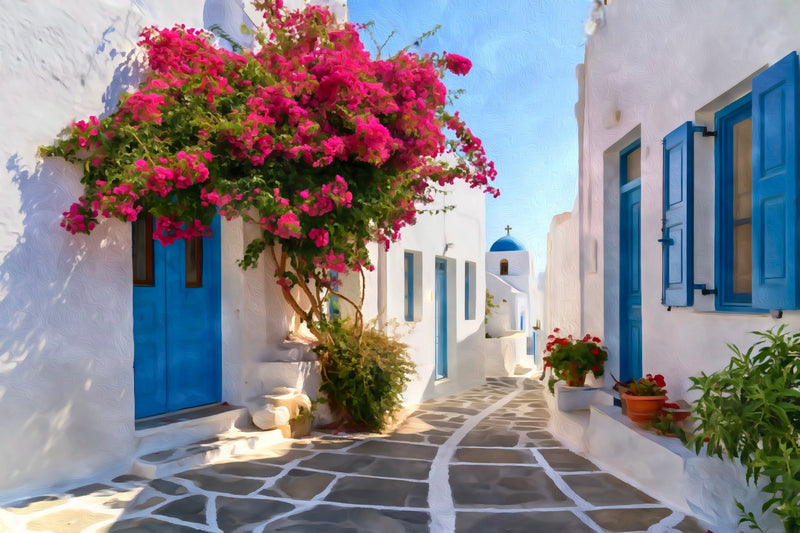
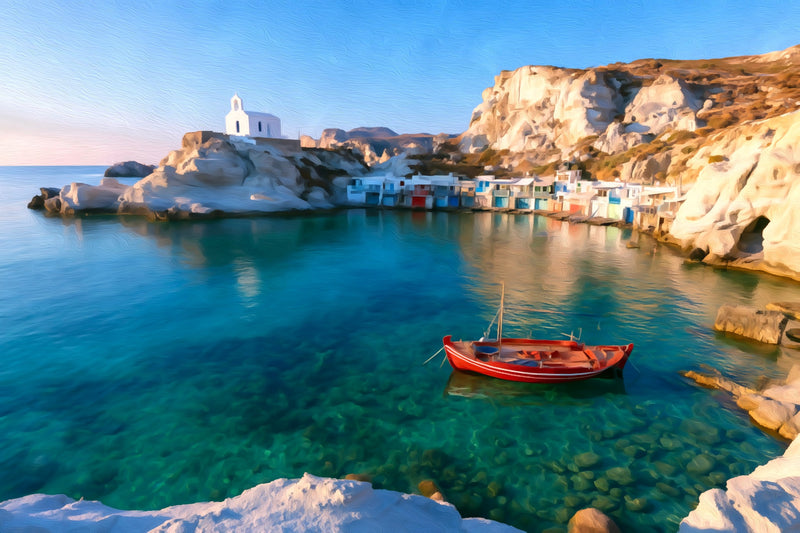
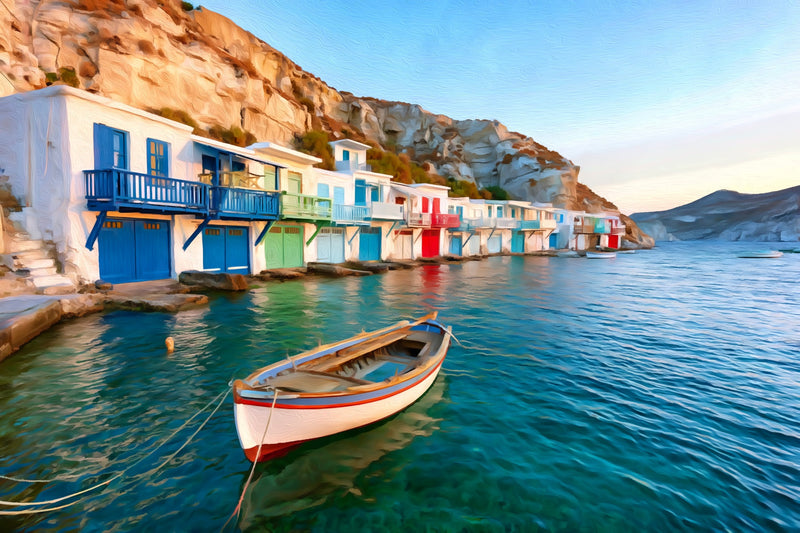
More than a shop, each page is an immersive guide to the real Milos: local tips and tricks, the language you'll hear, where to eat, stay, and explore, the lay of the land, and a fun fact to carry home — every canvas mapped to the very spot it was captured.
Milos, Greece | 'The Island the Sea Carved from Moonstone'
Milos is unlike any other island in the Aegean. Born from volcanic fury and softened over millennia by wind and salt water, it carries a landscape so strange and luminous that it feels less like a Greek island and more like a fever dream painted in chalk and rust. The same restless geology that once pushed obsidian up through the seabed gave the world the Venus de Milo, unearthed here in 1820 from warm Cycladic soil. Fishing villages like Klima cling to the shoreline in pastel syrmata, boathouses whose arched doors open directly onto the water, a way of living so old it barely notices the centuries passing. Milos rewards the slow traveler, the one who rises before the tour boats and walks the switchback paths up to Plaka at dusk, watching the light turn the caldera bay to hammered copper.
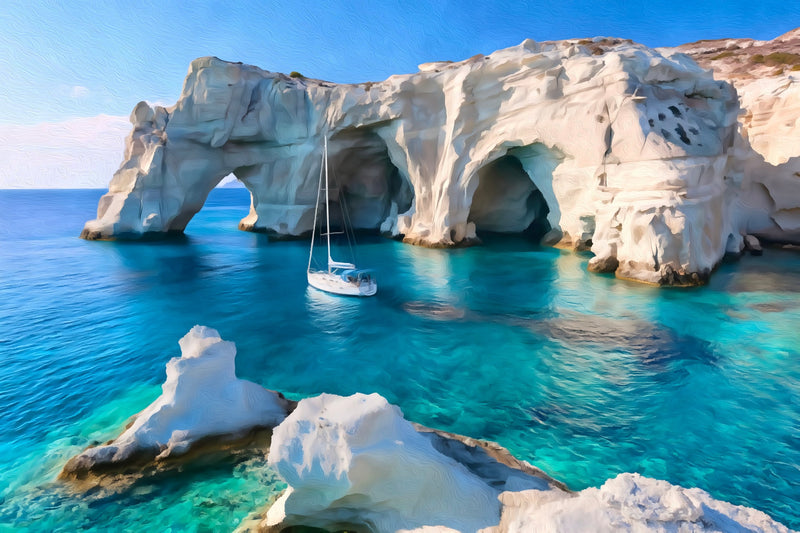
The watercolor palette of Milos is volcanic and oceanic in equal measure, built on the contrast between bleached white pumice and the impossible turquoise of sheltered coves. Think warm whites veering into bone and cream, the sulfurous ochres and deep terracotta of the rock formations at Sarakiniko, and the dusty sage of hillside capers in bloom. Where the sea meets the cliffs at Kleftiko, the water shifts from pale jade to a saturated cobalt that seems to absorb and hold the afternoon sun like stained glass.
We hope you love getting lost in Milos through the art above — and that one of these canvases finds a home on your wall. Happy travels, from all of us at The Painted Passport.