Shop the Collection

To help you build your own global archive, we've prepared this collection of watercolor studies from our research into Meteora, Greece. These artifacts are designed to bring the stillness of this corner of the world into your home.

Original Series Decorative Magnet

A personal study of Meteora, Greece, captured in high-fidelity watercolor and prepared for your collection.

Meteora, Greece | Monastery on Rock Pillars | Original Series Decorative Magnet
Add to Collection / $18
Exclusive Series Artifact

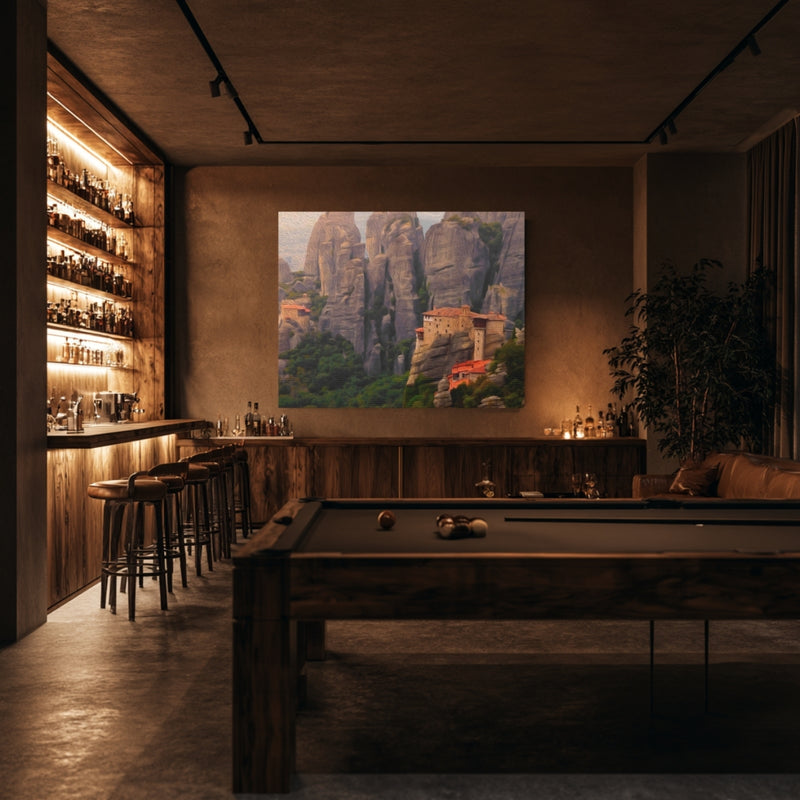
Original Series Gallery Canvas

This high-fidelity canvas is a beautiful way to anchor a room and keep your memories of Meteora, Greece fresh long after you've returned home.

Meteora, Greece | Monastery on Rock Pillars | Original Series Gallery Canvas detail Meteora, Greece | Monastery on Rock Pillars | Original Series Gallery Canvas detail Meteora, Greece | Monastery on Rock Pillars | Original Series Gallery Canvas detail Meteora, Greece | Monastery on Rock Pillars | Original Series Gallery Canvas detail
Add to Collection / $65

Original Series Hardboard Coaster

A personal study of Meteora, Greece, captured in high-fidelity watercolor and prepared for your collection.

Meteora, Greece | Monastery on Rock Pillars | Original Series Hardboard Coaster
Add to Collection / $18
Exclusive Series Artifact

The Spirit of the Land

Archival Note: A curated field study of Meteora, Greece, prioritizing the specific atmospheric stillness of the region. These artifacts have been meticulously sourced from our global archival partners to represent the area's unique cultural frequency and environmental character. This selection serves as a formal observation for our ongoing global archive, vetted for its visual accuracy and archival merit.

Meteora, Greece study No. 01
Meteora, Greece / 01 VIA / Sorin Cicos
A monastery with terracotta roofs and honey-colored stone walls clings to the edge of a massive rock pillar, its windows catching the soft afternoon light. The towering sandstone formations rise in pale grays and tans, their surfaces striped with darker streaks from centuries of water and weather, while patches of green vegetation find purchase in the crevices below. The scene feels suspended between earth and sky, where human devotion met geological wonder and carved out a place to stay.
Meteora, Greece study No. 02
Meteora, Greece / 02 VIA / Clement Souchet
The evening light softens the massive rock pillars, casting them in layers of blue and amber as distant mountains fade into haze. A monastery clings to its stone perch among the green valleys below, neither dominating nor diminished by the ancient formations surrounding it. The air appears still and cool, the kind of quiet that settles over high places when the day begins to end.
Meteora, Greece study No. 03
Meteora, Greece / 03 VIA / Denis Neagu
The terra-cotta roofs of the monastery blend almost perfectly with the sandstone cliffs, as if the builders chose their tiles to disappear into the landscape rather than stand against it. Vertical streaks of black and gray stripe down the rock faces where centuries of rain have left their mark, giving the ancient pillars the appearance of weathered fabric. A few dark cypress trees punctuate the valley below, their narrow forms barely visible against the massive geological formations that dwarf everything human-made.

Where to wander

Archival Note: A curated field study of Meteora, Greece, prioritizing cultural relevance and archival merit. While we haven't touched down here yet, we’ve meticulously vetted these locations through our global network of contributors to ensure they represent the most authentic atmosphere for your own expedition.

Local Cuisine Spotlight
This golden semolina cake, known as ravani, soaks in honey syrup and carries the essence of Greek monastery baking traditions. Topped with crushed walnuts and caramel, the dessert's tender crumb absorbs sweet syrup while maintaining its structure. Against Meteora's ancient rock formations, this simple yet refined confection reflects centuries of monastic recipes passed down through generations.
Credits: The Painted Passport
Local cuisine study in Meteora, Greece

☕︎ Local Flavor

Taverna Gardenia

Rating: 5* | Price: $$ | Coordinates: 39.7045 N, 21.6251 E

In a vine-covered courtyard beneath the rocks, this family taverna has served slow-cooked lamb kleftiko in the same wood oven since 1978. The grandmother still rolls the phyllo for spanakopita each morning, paper-thin sheets you can read through. Order the mushrooms foraged from the Meteora forests, sautéed with local wine and wild oregano that tastes nothing like the dried stuff back home.

View Entry Details

Paramithi Tavern

Rating: 5* | Price: $ | Coordinates: 39.7018 N, 21.6287 E

This unassuming spot in Kastraki serves what the monks might eat if they descended for dinner: simple, honest food from the surrounding valleys. The village sausage comes from a butcher three doors down, grilled over charcoal and served with hand-cut fries and tzatziki made from sheep's milk yogurt. Sit outside where elderly men play tavli and the conversation, though in Greek, feels like a language you almost understand.

View Entry Details

Meteora Restaurant

Rating: 5* | Price: $$ | Coordinates: 39.7067 N, 21.6302 E

Positioned on Kalambaka's main square, this establishment elevates Thessalian cooking without losing its soul, presenting regional dishes with a thoughtful touch. Their kontosouvli, spit-roasted pork seasoned with mountain herbs, arrives at the table still crackling. The wine list celebrates small Thessalian producers whose vineyards cling to impossible slopes, bottles you won't find beyond these mountains.

View Entry Details

Valia Calda

Rating: 5* | Price: $$$ | Coordinates: 39.7052 N, 21.6268 E

Named for a protected forest reserve, this refined taverna sources ingredients from named farmers and shepherds, listing each on the menu like credits. The chef trained in Athens but returned home to cook the dishes of his childhood, now plated with precision yet retaining their fundamental warmth. Try the wild boar stifado when available, slow-braised until the meat yields to your fork, sauce dark with wine and cinnamon.

View Entry Details

🛌︎ Boutique Stays

Meteora Hotel

Rating: 5* | Price: $$ | Coordinates: 39.7074 N, 21.6308 E

Perched at the edge of Kalambaka, this family-run hotel offers balconies where you wake to the sight of monasteries floating in morning mist. The owners, three generations deep in this landscape, serve breakfast with homemade pites and local honey while sharing stories of monks and climbers. Each room frames the rock pillars like a living painting, shifting color from rose to amber as the day unfolds.

View Entry Details

Tsikeli Hotel

Rating: 5* | Price: $ | Coordinates: 39.7015 N, 21.6289 E

This stone guesthouse in Kastraki village sits so close to the rock formations you can hear swifts nesting in the cliffs at dusk. The rooms are simple but spotless, with wooden shutters and thick walls that keep the summer heat at bay. Maria, who tends the small garden courtyard, makes a walnut cake that travelers return for years later, recipe unchanged since her grandmother's time.

View Entry Details

Dellas Boutique Hotel

Rating: 5* | Price: $$$ | Coordinates: 39.7056 N, 21.6274 E

Built into a restored mansion, this intimate property pairs exposed stone walls with contemporary Greek design, all crisp linens and handwoven textiles from Metsovo. The rooftop terrace becomes a theater at sunset when the rocks ignite in shades you'll spend the rest of your life trying to recreate. Their spa uses herbs gathered from the mountain slopes, the same ones monks once cultivated for healing.

View Entry Details

Alsos House

Rating: 5* | Price: $$ | Coordinates: 39.7021 N, 21.6295 E

Tucked into Kastraki's quiet lanes, this traditional home turned guesthouse preserves its original chestnut beams and stone hearth where bread was once baked. The hosts are climbers who know every route on these rocks, and they'll sketch you paths to hidden chapels tourists never find. Breakfast happens around a shared table, Greek coffee strong enough to fuel the day's explorations, conversation flowing easily between strangers.

View Entry Details

📍︎ Field Study

Great Meteoron Monastery

Rating: 5* | Price: $ | Coordinates: 39.7192 N, 21.6308 E

The largest and oldest of the monasteries, founded in the 14th century, contains frescoes that survived Ottoman rule by existing in a place deemed unreachable. The katholikon's paintings still shimmer with gold leaf, depicting saints with Byzantine eyes that follow you through centuries. Standing in the refectory where monks dined in silence, you understand why they chose this impossible height between earth and heaven.

View Entry Details

Holy Trinity Monastery

Rating: 5* | Price: $ | Coordinates: 39.7229 N, 21.6139 E

Reached by 140 steps carved into the rock face, this monastery sits atop perhaps the most dramatic pillar in the complex, a location so precipitous it featured in a Bond film. The handful of monks who still live here maintain the gardens and ring the bells for vespers, their voices echoing across the valley. From the courtyard, the view stretches across the entire Pindus range, a geography of stone and sky that makes your heart seize.

View Entry Details

Theopetra Cave

Rating: 5* | Price: $ | Coordinates: 39.7007 N, 21.6861 E

This archaeological site preserves 130,000 years of human habitation, including evidence of the oldest known man-made structure on Earth, a stone wall built 23,000 years ago. The cave's vast mouth opens onto the Lithaios River valley, the same view early humans watched for game and weather. Walking here connects you to the deep time of this landscape, long before monks ever dreamed of building in the sky.

View Entry Details

Meteora Hiking Trail to Hidden Hermitages

Rating: 5* | Price: $$ | Coordinates: 39.7156 N, 21.6247 E

Ancient paths thread between the main monasteries, passing forgotten hermit cells carved into cliff faces where solitary monks once lived on bread and prayer. Your guide points out handholds chiseled into vertical rock, the original access routes before steps and bridges. In spring, the trail explodes with wildflowers, and you'll find yourself alone with the buzzards circling overhead, the silence so complete you hear your own breathing.

View Entry Details

Typography

Archival Note: A formal technical study of Meteora, Greece—archiving the coordinates, elevation, and environmental data that define the region. This data serves as a vital record for our ongoing global field study, allowing us to reconstruct the regional atmosphere with archival precision before our physical arrival.

Botanical and pigment specimen study for Meteora, Greece Colors of Meteora, Greece
Coordinates
39.7156° N, 21.6308° E — Thessalian Plain, Central Greece
Historical Epoch
Hermit monks arrived in the 9th century, sheltering in cliff caves. The golden age came in the 14th century when twenty-four monasteries rose on the peaks, refuges from Ottoman expansion. Today six remain active, preserving frescoes and manuscripts that survived centuries suspended above the changing world below.
Elevation
313–550 m / 1,027–1,804 ft — Kalambaka town square to Great Meteoron summit
Atmosphere
Csa - Hot-summer Mediterranean. Winters bring occasional snow that transforms the monasteries into frosted temples, while summer heat concentrates in the valley, making early morning hikes the wisest choice.
Observation Hour
17:30. The late afternoon sun strikes the western faces of the rock pillars at an angle that sets the sandstone ablaze in amber and gold, while the monasteries cast long purple shadows across the valley. The air itself seems to glow.
Primary Pigment
Meteora Amber (#D4A574) and Byzantine Violet (#6B5B8E)
Best Time to Visit
May or September deliver perfect light without the summer heat, wildflowers bloom across the valley floor, and the monasteries feel peaceful rather than packed with tour groups.
Avoid Visiting
July and August bring scorching heat that concentrates in the valley, midday temperatures making the exposed monastery staircases punishing and the crowds turning every photo opportunity into a negotiation.

The Local Tongue

Language is the invisible architecture of Meteora, Greece. These entries document the regional vocabulary—capturing the "texture" of local speech that standard translations often miss. Hand-curated expressions reflecting the specific spirit and daily rhythm of the region.
Archival study of Greek cultural texture

via / Miltiadis Fragkidis

Primary Language Greek
Regional Dialect Thessalian Greek

Μετέωρα (Meteora)

Meteora means 'suspended in air' or 'hovering,' derived from the ancient Greek word for things lifted up or elevated. The name captures precisely what visitors feel when they first see these monasteries perched impossibly on rock pinnacles, as if divine hands placed them between earth and sky rather than human labor.

Καλαμπάκα (Kalambaka)

Kalambaka refers to the small town nestled at the base of the rock formations, its name possibly coming from Turkish meaning 'strong fortress.' The town wakes each morning to shadows cast by the pillars, its tavernas and guesthouses offering the last taste of ordinary life before the ascent into the sacred realm above.

Κενοβίτης (Kenovitis)

Kenovitis translates to 'cenobite' or communal monk, the term used for those who lived together in the Meteora monasteries rather than as hermits. These monks developed intricate pulley systems and rope ladders to move between earth and their clifftop homes, some still visible carved into the rock faces today.

Wait! before you go...

Before you head over to Meteora, Greece, we’ve audited the essential data points for this corner of the world. These notes cover the logistics—from currency ratios to transit hubs—to help you navigate the landscape with clarity.
🚲 Getting Around The town of Kalambaka sits at the base, walkable end to end in fifteen minutes, but the monasteries require wheels. Renting a car offers freedom to chase light between peaks, though organized minibus tours handle the winding roads for those who prefer to gaze rather than navigate the hairpin turns.
⚖️ Cash or Card 60/40 cash to card feels about right here. Monastery entrance fees are cash only, as are many of the family-run tavernas in Kalambaka and the roadside honey vendors who appear along the routes between peaks with jars of wild thyme honey.
☁️ Good to Know Each monastery keeps different opening days and hours, and they close for midday break without exception. Locals recommend visiting Great Meteoron first thing in the morning, then working your way to the smaller monasteries as the day progresses, rather than trying to see them all in geographical order.
🏧 ATMs National Bank of Greece and Alpha Bank both have ATMs along the main street in Kalambaka, right near the central square. Check with your home bank about international fees before you arrive, as the nearest major city banks are an hour away in Trikala.
💳 Currency The Euro makes transactions simple throughout Meteora. A generous taverna meal runs 12-18 euros, monastery entrance sits at 3 euros each, and a decent bottle of local wine from the Thessalian plains costs around 8 euros in town shops.
🔌 Plugs Type C and F plugs, 230V. The round two-pin European standard, so bring an adapter if traveling from outside the EU.
🛡️ Safety The monastery staircases carved into rock can be steep and slippery after rain, and guard rails are minimal by modern standards. That said, millions navigate them safely each year, and the only real danger is losing track of time and missing the last opening hours at your chosen monasteries.
✈️ Airports Thessaloniki Airport (SKG) sits 230 kilometers northeast, roughly three hours by bus or rental car. Most travelers take the KTEL bus to Kalambaka, which runs twice daily and costs around 25 euros, offering views of the plains as the rocks gradually appear on the horizon.

Behind The Scenes

Nathan

Note from the Founder

Hey, did you know this fun fact about Meteora, Greece? During World War II, resistance fighters used the rope and pulley systems that once hauled monks to their monasteries to instead transport ammunition and supplies up the cliffs, the same Byzantine technology serving a very different sacred purpose.
Thank you for exploring the Meteora, Greece series with us. We hope these notes have inspired you to add this incredible destination to your own passport—we are so glad you're here. — Nathan

Some of our Favorites