

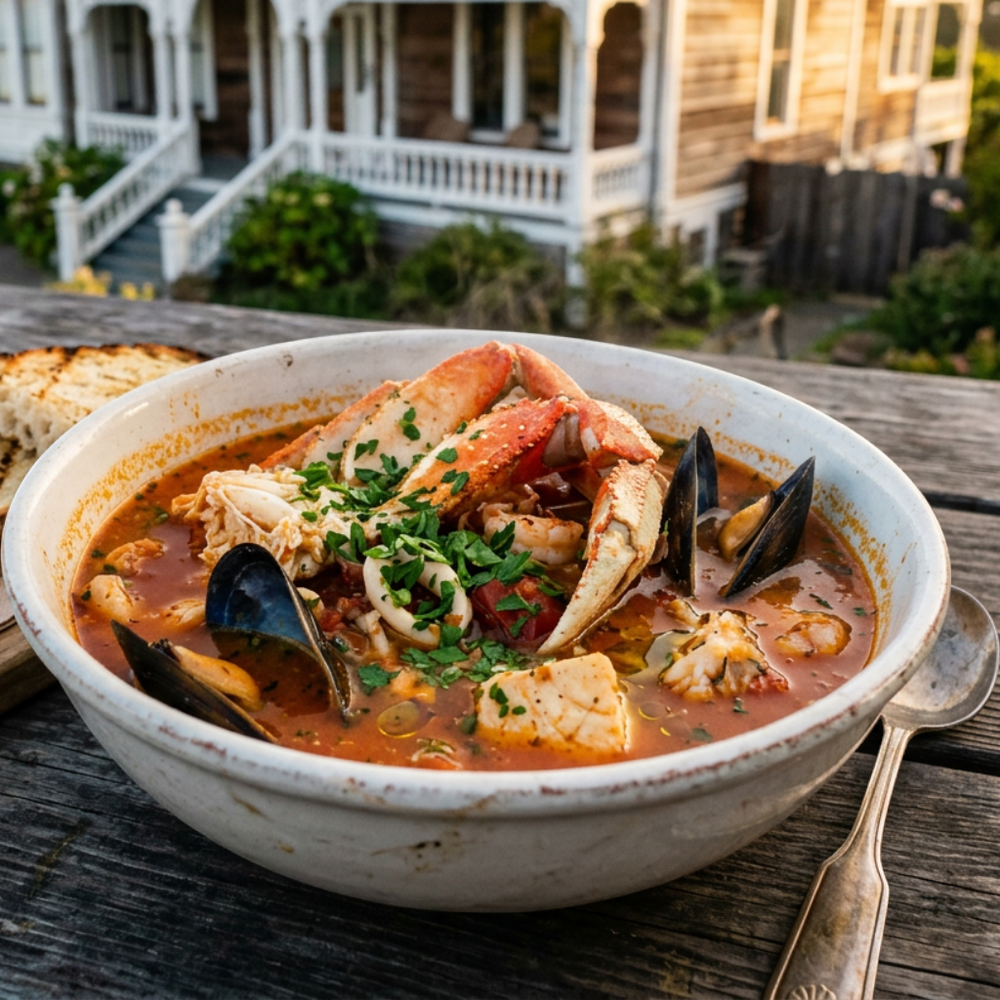
Local Cuisine Spotlight

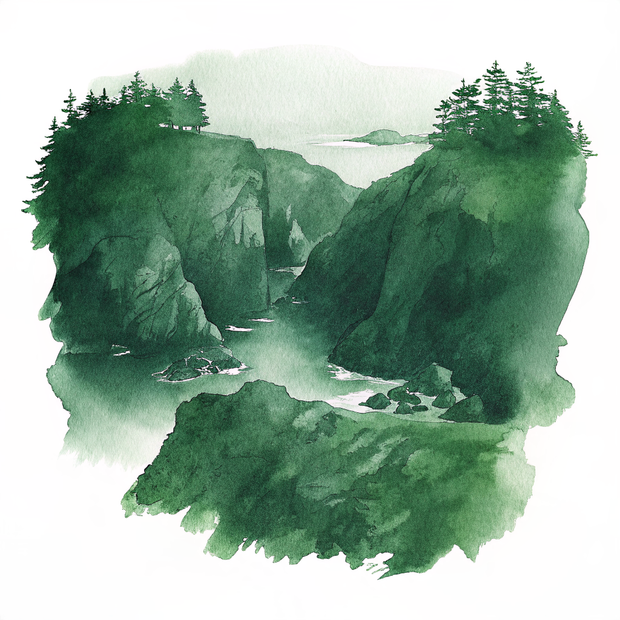
Now representing Mendocino — 1 original piece, each hand-crafted in watercolor.
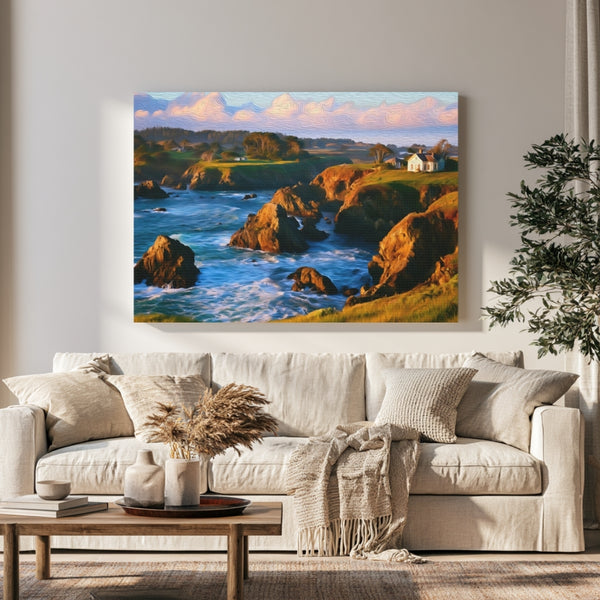
Perched on a dramatic headland above the churning Pacific, Mendocino carries the gentle contradictions of a place that has always attracted dreamers. Founded in the 1850s as a logging town, its Victorian water towers and white-steepled church have since made it one of the most recognizable silhouettes on the California coast, so distinctive that Hollywood has borrowed it more than once. The light here arrives soft and diffused, filtered through marine layers that roll in from the ocean and settle over the bluffs like a slow exhale. Artists began arriving in earnest in the 1950s, and the town never quite shook that creative restlessness, which is precisely why it still feels so alive.
Every canvas is painted from a real place. Explore the map to see exactly where each scene lives — and wander Mendocino the way a traveler would, one landmark at a time.
Keep Exploring
Archival Note: A curated field study of Mendocino, California, prioritizing the specific atmospheric stillness of the region. These artifacts have been meticulously sourced from our global archival partners to represent the area's unique cultural frequency and environmental character. This selection serves as a formal observation for our ongoing global archive, vetted for its visual accuracy and archival merit.


Archival Note: A curated field study of Mendocino, California, prioritizing cultural relevance and archival merit. These locations have been meticulously researched and vetted to ensure they represent the most authentic atmosphere for your own expedition.
Archival Note: A formal technical study of Mendocino, California, archiving the coordinates, elevation, and environmental data that define the region. This data serves as a vital record for our ongoing global field study, providing the technical foundation behind every atmospheric detail captured in our visual work.
 Colors of Mendocino, California

via / Werner Redlich


