




The Real Marrakech
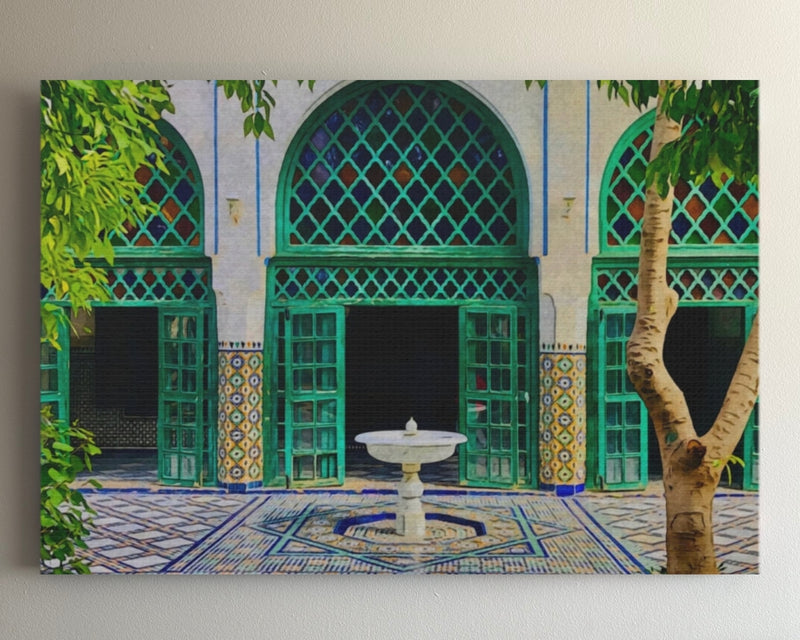
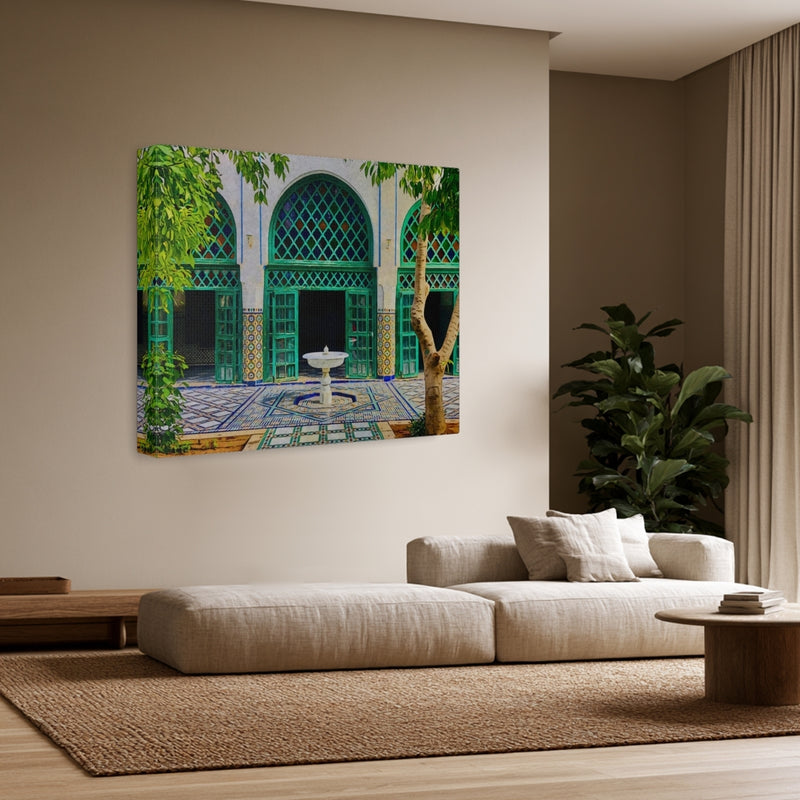
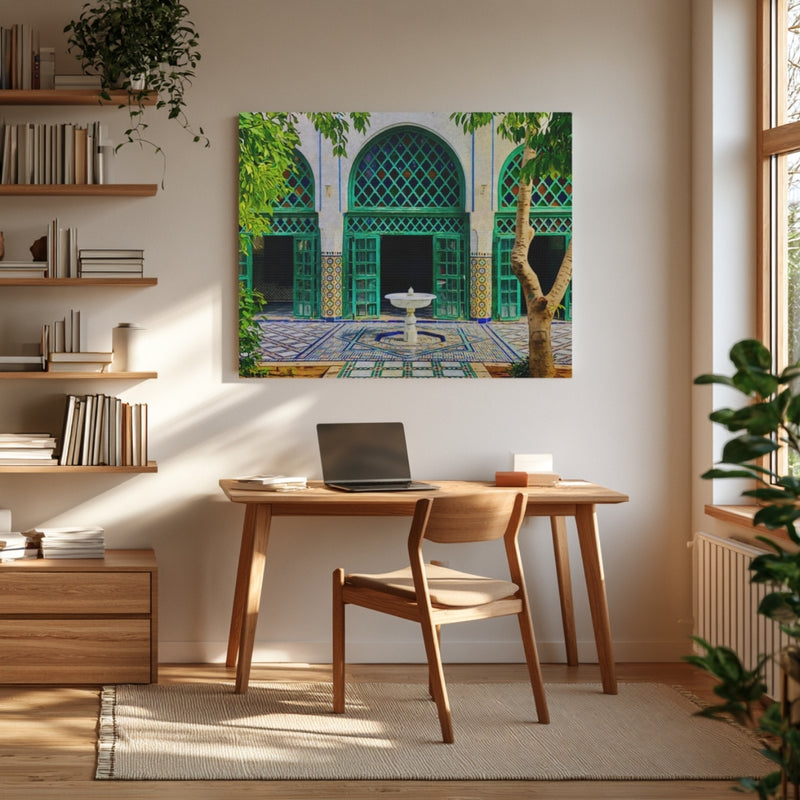
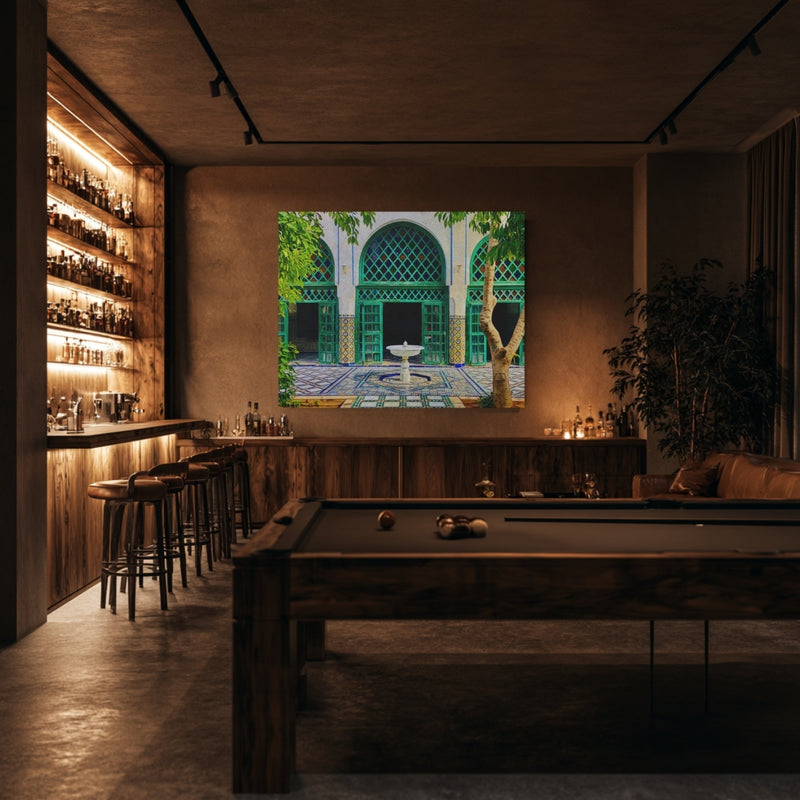
More than a shop, each page is an immersive guide to the real Marrakech: local tips and tricks, the language you'll hear, where to eat, stay, and explore, the lay of the land, and a fun fact to carry home — every canvas mapped to the very spot it was painted.
MARRAKECH, MOROCCO | "المدينة الحمراء, The Red City"
Marrakech is the most sensory-intense city in North Africa, a medieval imperial capital of one million people at the foot of the High Atlas Mountains where the 12th century Koutoubia minaret, the souks of the medina, the tanneries of the Chouara, and the extraordinary evening theater of the Djemaa el-Fna square create an urban experience of such concentrated cultural vitality that the square itself has been inscribed by UNESCO as an Intangible Cultural Heritage of Humanity. The city was founded in 1062 CE by the Almoravid dynasty and served as the capital of an empire stretching from Morocco to Spain, accumulating the mosques, madrasas, and palaces of the Almoravid, Almohad, Saadian, and Alaouite dynasties over nine centuries of successive imperial ambition. The medina walls, built of pisé (rammed earth) and painted the specific terracotta-rose that gives the city its name, enclose a 1,000-year urban landscape of such complexity that the traditional Berber, Arab, Jewish, and sub-Saharan African communities that built it are still legible in the layout of the neighborhoods.
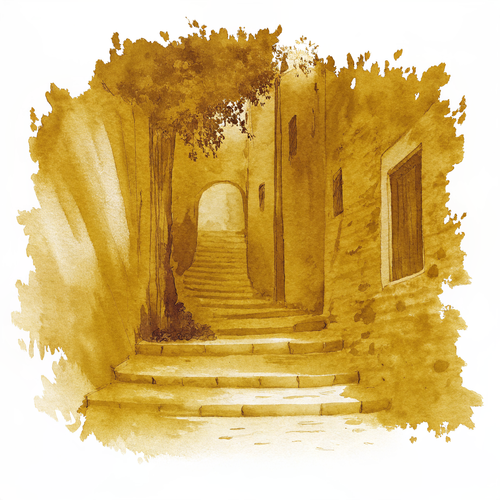
The colors are the specific palette of a Saharan-edge imperial city: the deep terracotta-rose of the pisé medina walls that gives Marrakech its name, the brilliant blue of the Majorelle Garden against the amber light of the High Atlas, the deep gold of the Saadian Tombs marble catching the afternoon light through the latticed windows, and the extraordinary amber-to-violet of the Djemaa el-Fna at dusk when the food stalls ignite their gas lanterns and the square transforms from a market into the most theatrically lit public space in the world.
We hope you love getting lost in Marrakech through the art above — and that one of these canvases finds a home on your wall. Happy travels, from all of us at The Painted Passport.