Shop the Collection

To help you build your own global archive, we've prepared this collection of watercolor studies from our research into Mackinac Island, Michigan. These artifacts are designed to bring the stillness of this corner of the world into your home.

The Painted Passport®

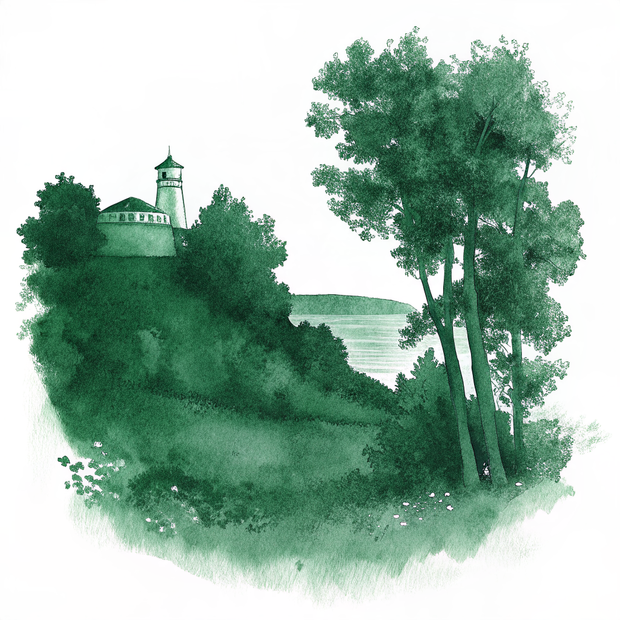
A lovely, high-res reminder for your fridge or workspace. This watercolor magnet is the perfect small token to remember your Mackinac Island, Michigan adventure.

Mackinac Island, Michigan | Original Series Decorative Magnet | The Painted Passport®
Add to Collection / $18
Exclusive Series Artifact

The Painted Passport®

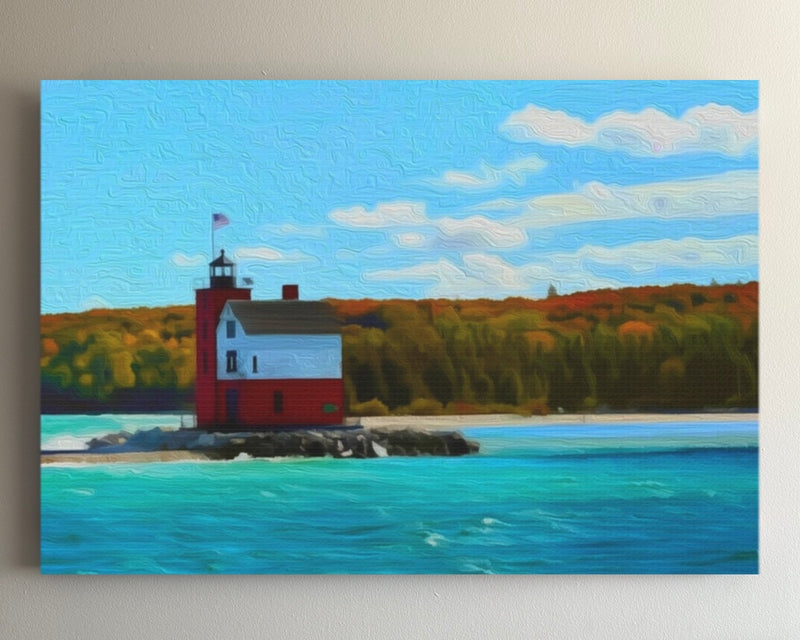
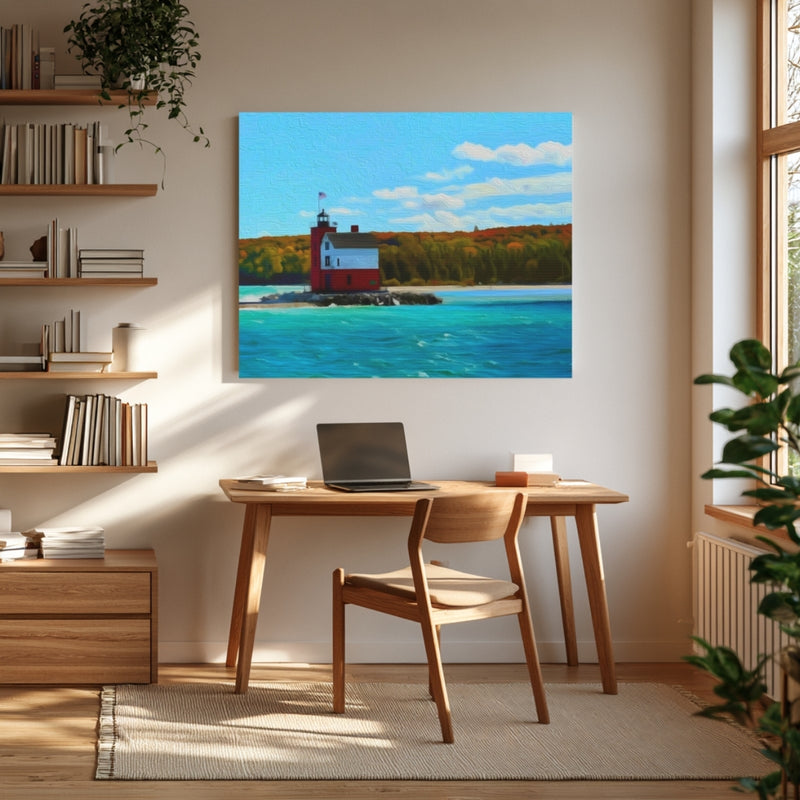
This high-fidelity canvas is a beautiful way to anchor a room and keep your memories of Mackinac Island, Michigan fresh long after you've returned home.

Mackinac Island, Michigan | Original Series Gallery Canvas | The Painted Passport® detail Mackinac Island, Michigan | Original Series Gallery Canvas | The Painted Passport® detail Mackinac Island, Michigan | Original Series Gallery Canvas | The Painted Passport® detail Mackinac Island, Michigan | Original Series Gallery Canvas | The Painted Passport® detail
Add to Collection / $65

The Painted Passport®

A wonderful companion for your morning coffee. This coaster captures the atmosphere of Mackinac Island, Michigan in a functional, beautiful way.

Mackinac Island, Michigan | Original Series Hardboard Coaster | The Painted Passport®
Add to Collection / $18
Exclusive Series Artifact

The Spirit of the Land

Archival Note: A curated field study of Mackinac Island, Michigan, prioritizing the specific atmospheric stillness of the region. These artifacts have been meticulously sourced from our global archival partners to represent the area's unique cultural frequency and environmental character. This selection serves as a formal observation for our ongoing global archive, vetted for its visual accuracy and archival merit.

Mackinac Island, Michigan study No. 01
Mackinac Island, Michigan / 01 VIA / Craig Washington
The white steeple of the church rises gracefully above the waterfront homes, a gentle landmark against the deep green hillside that frames this timeless community. Sailboats rest quietly in the blue water, their masts swaying slightly, while the Victorian houses seem to climb the slope in layers of history and color. There's a stillness here that invites you to slow down—the kind of place where the afternoon light catches on painted shutters and copper roofs, and you can almost hear the peaceful rhythm of island life in the gentle lap of waves against the shore.
Mackinac Island, Michigan study No. 02
Mackinac Island, Michigan / 02 VIA / Emily Studer
Three draft horses stand ready in their harnesses, their chestnut coats gleaming in the dappled sunlight that filters through the island's canopy of trees. The polished carriage behind them speaks to a gentler pace of life, where the clip-clop of hooves replaces the hum of engines, and time seems to move at the speed of a summer afternoon. There's something deeply calming about watching these patient animals wait in the shade, embodying the island's commitment to preserving a way of travel that invites you to simply slow down and breathe.
Mackinac Island, Michigan study No. 03
Mackinac Island, Michigan / 03 VIA / Michaela Zuzula
Standing before Arch Rock, you can feel the patient work of wind and water carved into ancient limestone, creating this natural window that perfectly frames Lake Huron's tranquil blue waters. The interplay of rough, weathered stone and delicate greenery clinging to the cliff face tells a story of resilience and adaptation. There's something profoundly calming about gazing through this geological masterpiece, where the boundary between solid earth and endless sky dissolves into a single, breathtaking vista.

Where to wander

Archival Note: A curated field study of Mackinac Island, Michigan, prioritizing cultural relevance and archival merit. While we haven't touched down here yet, we’ve meticulously vetted these locations through our global network of contributors to ensure they represent the most authentic atmosphere for your own expedition.

Local Cuisine Spotlight
The delicate, flaky whitefish from Lake Michigan arrives at your table as a pristine block of tender flesh, crowned with toasted walnuts and nestled in a bed of creamy risotto. This Great Lakes specialty has sustained island communities for generations, its mild sweetness amplified by simple preparations that honor the fish's sublime texture and the cold, clear waters from which it came.
Credits: The Painted Passport
Local cuisine study in Mackinac Island, Michigan

☕︎ Local Flavor

The Pink Pony

Rating: 4.7★ | Price: $$ | Coordinates: 45.8492° N, 84.6171° W

The Pink Pony is the most institutionally important bar and restaurant on Mackinac Island — the waterfront saloon at the Chippewa Hotel whose outdoor deck directly above the harbor serves as the finish line watch party for the Port Huron-to-Mackinac sailboat race, the longest freshwater sailboat race in the world, when the entire island population converges on the deck each July to watch the fleet complete its 294-mile passage across Lake Huron. The whitefish chowder, the lake perch sandwich, the cold Oberon Ale poured in the specific late-July heat of the sailboat race weekend, and the view of the Mackinac Bridge framing the harbor to the west are the four sensory anchors of a waterfront bar that has been operating as the civic living room of summer Mackinac since 1947.

View Entry Details

The Carriage House at Hotel Iroquois

Rating: 4.9★ | Price: $$$ | Coordinates: 45.8494° N, 84.6174° W

The most serious restaurant on Mackinac Island operates from the Iroquois Hotel's waterfront dining room — a kitchen where the sourcing is organized around the specific Great Lakes and Michigan agricultural calendar, the whitefish and lake trout arriving from the commercial fishermen who still work the Straits of Mackinac, and the Michigan cherry and apple preparations that document the fruit belt of the lower peninsula at its most culinarily intelligent. The room's direct harbor view makes it the most precisely atmospheric dining address on the island — the Mackinac Bridge visible to the west and the ferry traffic to the east framing a meal that constitutes the most honest engagement with the island's actual culinary geography, as opposed to the fudge-and-whitefish tourist economy that defines the Main Street restaurants.

View Entry Details

Horn's Gaslight Bar

Rating: 4.6★ | Price: $$ | Coordinates: 45.8498° N, 84.6193° W

Horn's Gaslight Bar is the oldest operating bar on Mackinac Island — a low-ceilinged Victorian tavern on Main Street whose neon signs, pool tables, and institutional draft beer selection have served the island's year-round working community and the summer visitors who find the Grand Hotel's dress code and the Pink Pony's tourist premium equally resistible. The bar operates as the most accurate sociological document of what Mackinac Island actually is when the ferry schedule and the fudge shops and the carriage tour operators are set aside: a small island town of 500 year-round residents whose economy vanishes in October and whose identity is defined entirely by the specific and extraordinary landscape of the Straits of Mackinac. The whitefish basket and the cold domestic draft are the correct order.

View Entry Details

Grand Hotel Main Dining Room

Rating: 4.7★ | Price: $$$$ | Coordinates: 45.8628° N, 84.6204° W

The Grand Hotel's Main Dining Room has served a five-course dinner every evening since 1887 in a room that seats 500 people at tables set with starched linen, silver service, and the full choreography of the formal American resort dining tradition — a meal format that was standard at every major resort hotel on the Eastern Seaboard at the turn of the 20th century and that has survived intact at the Grand Hotel as both operational continuity and deliberate historical performance. The menu rotates seasonally but maintains the formal structure: consommé, salad, fish course, entrée, dessert, presented by a service staff in white jackets at a pace that makes a summer dinner in this room the most concentrated available experience of what the American summer resort was before the interstate highway made it obsolete everywhere except here.

View Entry Details

🛌︎ Boutique Stays

Grand Hotel

Rating: 4.7★ | Price: $$$$ | Coordinates: 45.8628° N, 84.6204° W

The Grand Hotel is the defining architectural fact of Mackinac Island — a 660-room Victorian resort built in 93 days in 1887 whose 660-foot front porch, the longest in the world, occupies the full facade of a white clapboard structure that looks down from the island's eastern bluff over the Straits of Mackinac with the specific confidence of an era that believed in the moral value of summer. The hotel has operated continuously for over 130 years on a schedule of formal dinners, afternoon teas, croquet lawns, and a dress code after 6 PM that has not been relaxed in living memory — a deliberate maintenance of the Gilded Age summer resort protocol that makes the Grand Hotel the most intact example of the form in North America. The geranium-bordered front porch, the horse-drawn carriage arrivals, and the five-course dinners in the main dining room are not themed experiences but operational continuities.

View Entry Details

Hotel Iroquois

Rating: 4.9★ | Price: $$$$ | Coordinates: 45.8494° N, 84.6174° W

Hotel Iroquois occupies the most precisely positioned building on Mackinac Island — a white Victorian inn directly on the waterfront at the foot of Main Street, where the harbor, the Mackinac Bridge, the Upper Peninsula shoreline, and the ferry traffic from Mackinaw City and St. Ignace compose a panoramic study in Great Lakes maritime geography from every room above the ground floor. The inn has been owned by the same family since 1954 and operates with the specific warmth and institutional knowledge of a property that has spent seventy years refining its understanding of what the island's best summer experience requires. The Carriage House restaurant, the terrace bar above the harbor wall, and the rooms with direct water views make this the most atmospherically precise address for understanding Mackinac Island from the waterline rather than the bluff.

View Entry Details

Inn on Mackinac

Rating: 4.7★ | Price: $$$ | Coordinates: 45.8497° N, 84.6190° W

The Inn on Mackinac is the most practical and well-positioned mid-range property on the island — a Main Street Victorian inn within walking distance of the ferry docks, the fudge shops, and the Market Street carriage tour operators, with a front porch facing the harbor and room configurations that accommodate families and couples with equal efficiency. The inn represents the specific Mackinac Island value proposition that exists between the Grand Hotel's formal luxury and the island's more basic summer hostelry — comfortable, well-run, and honest about what the island experience is: a bicycle ride through the interior, a visit to Fort Mackinac, and the specific smell of fudge and horse manure that defines the sensory register of a place that has banned the automobile since 1898.

View Entry Details

Mission Point Resort

Rating: 4.6★ | Price: $$$ | Coordinates: 45.8494° N, 84.6074° W

Mission Point Resort occupies the eastern tip of the island's Main Street waterfront — a sprawling lakeside compound of Victorian cottages, a theater, tennis courts, and an outdoor pool where the view east across Lake Huron to the Upper Peninsula shore provides the most expansive open-water perspective available from any hotel on the island. The resort was originally built as a college campus in 1954 and the architectural scale of the original buildings — large, collegiate, and set back from the waterfront — gives Mission Point a different spatial character from the compressed Main Street Victorian hotels: more air, more lawn, more distance from the fudge-shop corridor. The resort's 1852 Grill and the outdoor fire pits facing the water make it the most relaxed waterfront evening address on the island.

View Entry Details

📍︎ Field Study

Fort Mackinac

Rating: 4.8★ | Price: $$ | Coordinates: 45.8553° N, 84.6170° W

Fort Mackinac is the most historically significant military installation in the American Great Lakes — a British-built limestone fortification on the island's central bluff that has commanded the Straits of Mackinac since 1780, passed between British and American control three times during the Revolutionary War and the War of 1812, and now operates as the most complete surviving example of a late 18th-century American frontier fort, with fourteen original buildings preserved in their operational condition. The cannon firings, the musket demonstrations, and the costumed historical interpreters are the conventional presentation layer; the real archival document is the view from the fort's sally port over the Straits — the same view that controlled the entire commercial geography of the Great Lakes fur trade for a century, with the Mackinac Bridge now bisecting the horizon exactly where the birchbark canoe routes once converged.

View Entry Details

Mackinac Island Bicycle Circuit

Rating: 4.9★ | Price: $ | Coordinates: 45.8492° N, 84.6175° W

The 8.2-mile paved road that circumnavigates the perimeter of Mackinac Island — M-185, the only state highway in the United States where motor vehicles are prohibited year-round — is the definitive way to document the island's shoreline geology, its Victorian cottage district, its limestone arch formations, and its relationship to the water on all sides. The road passes Arch Rock (a 50-foot natural limestone arch 146 feet above Lake Huron), the Sugar Loaf limestone pillar, the British Landing where the British retook the island from the Americans in 1812, and the full sequence of the island's southern and western shoreline where the Mackinac Bridge frames the entrance to the Straits. Rent a bicycle from Ryba's or Mackinac Wheels on Main Street and complete the circuit at a pace that allows stopping at each of the geological formations and the historic markers — 90 minutes minimum, two hours correct.

View Entry Details

Arch Rock & the Island Interior Trails

Rating: 4.9★ | Price: $ | Coordinates: 45.8597° N, 84.6095° W

Arch Rock is a 50-foot natural limestone arch standing 146 feet above Lake Huron on the island's eastern bluff — formed by wave and freeze-thaw erosion of the Mackinac Formation dolomite over thousands of years into a free-standing span whose opening frames a specific view of Lake Huron that functions as one of the most compositionally precise natural viewpoints in the Great Lakes region. The interior trail network leading from Arch Rock to the island's central plateau passes through the Mackinac Island State Park forest of cedar and birch — 80% of the island is state park — to the British Landing, Sugar Loaf, and the overlooks above the Straits. The absence of motor vehicles on the island makes the interior trails genuinely quiet: the only sounds are the wind in the cedars, the hoofbeats of passing carriage horses on the perimeter road below, and the foghorns of the ore freighters moving through the Straits.

View Entry Details

Mackinac Island Fudge & Main Street Walk

Rating: 4.8★ | Price: $ | Coordinates: 45.8492° N, 84.6179° W

Mackinac Island produces more fudge per square mile than any other location on earth — fourteen fudge shops operating in a half-mile stretch of Main Street, where the confectioners work in open windows using copper pots and marble slabs in a production process unchanged since the first Murdick's Candy Kitchen opened in 1887, the same year as the Grand Hotel. The fudge tradition is not a tourist novelty grafted onto the island's Victorian resort identity but a structural component of it: the same summer visitors who arrived by steamship to the Grand Hotel in the 1890s were stopping at Murdick's on the way up the hill, and the marble slab technique, the specific ratio of cream to sugar, and the dozen-variety menu are all direct continuities from that era. The combination of the fudge smell, the horse-drawn carriage traffic, and the Victorian Main Street architecture makes Mackinac Island's sensory environment unlike any other in North America.

View Entry Details

Typography

Archival Note: A formal technical study of Mackinac Island, Michigan—archiving the coordinates, elevation, and environmental data that define the region. This data serves as a vital record for our ongoing global field study, allowing us to reconstruct the regional atmosphere with archival precision before our physical arrival.

Botanical and pigment specimen study for Mackinac Island, Michigan Colors of Mackinac Island, Michigan
Coordinates
45.8492° N, 84.6175° W — Mackinac County, Michigan, Straits of Mackinac, Lake Huron
Historical Epoch
Ojibwe Homeland / British Fur Trade Fort 1780 / Gilded Age Resort 1887
Elevation
177–284 m / 580–931 ft — lake surface at 177m to Fort Mackinac bluff and the island's central limestone plateau
Atmosphere
Humid Continental (Dfb). Short, brilliant summers with Great Lakes breezes keeping the island 10°F cooler than the mainland, spectacular fall color in late September, and heavy lake-effect snow winters navigated by the 500 year-round residents on snowmobiles.
Observation Hour
19:30. The midsummer window when the low northwest sun illuminates the Grand Hotel's white facade from the water side — the 660-foot porch in direct amber light above the harbor, the Mackinac Bridge framing the western Straits behind it.
Primary Pigment
Grand Hotel White (#F4F1E8) and Straits Cobalt (#1B5E8A)
Best Time to Visit
June through September, with late July for the sailboat race — fully operational, Lake Huron at its clearest, and the Grand Hotel porch in the long golden Midwestern summer evening.
Avoid Visiting
November through April — the island closes after Columbus Day, ferry service reduces to minimal, most hotels and restaurants shut, and the 500 year-round residents have it to themselves.

The Local Tongue

Language is the invisible architecture of Mackinac Island, Michigan. These entries document the regional vocabulary—capturing the "texture" of local speech that standard translations often miss. Hand-curated expressions reflecting the specific spirit and daily rhythm of the region.
Archival study of English cultural texture

via / Hyukman Kwon

Primary Language English
Regional Dialect Great Lakes Midwestern (Upper Michigan)

Fudgie

Fudgie is the affectionate and slightly derisive term that Mackinac Island year-rounders use for day-trippers who arrive by ferry primarily to buy fudge and leave by the last boat — a visitor category constituting the overwhelming majority of the island's three million annual visitors. The term is not purely contemptuous: the fudge economy has sustained the island for over 130 years, and the year-round residents who use it most fluently are also the ones who depend most directly on the summer tourism it describes.

The Straits

The Straits of Mackinac — pronounced MACK-in-aw — is the five-mile channel connecting Lake Michigan and Lake Huron between Michigan's two peninsulas, the most strategically important waterway in the Great Lakes basin. The fur trade, the timber trade, and the iron ore shipping that built the American Midwest all passed through the Straits, and the Mackinac Bridge now spanning it is the fifth-longest suspension bridge in the world. The island sits in the center of the Straits, and its entire history is a direct function of that geographical position.

Mackinaw

Mackinaw and Mackinac are the same word spelled two ways — the French phonetic rendering of an Ojibwe place name meaning "land of the great turtle," describing the island's profile from the water. Mackinac Island and Mackinac Bridge use the French spelling but the Ojibwe pronunciation MACK-in-aw; Mackinaw City on the Lower Peninsula uses the phonetic spelling and the same pronunciation. The distinction confuses virtually every first-time visitor and serves locals as a reliable indicator of whether someone has been to the Straits before.

Wait! before you go...

Before you head over to Mackinac Island, Michigan, we’ve audited the essential data points for this corner of the world. These notes cover the logistics—from currency ratios to transit hubs—to help you navigate the landscape with clarity.
🚲 Getting Around Mackinac Island is car-free by law — transit options are horse-drawn carriage, bicycle, and walking. Ferries depart Mackinaw City and St. Ignace throughout the day from May through October; Arnold Line, Shepler's, and Star Line all operate, with Star Line's 16-minute crossing from Mackinaw City the fastest. The Mackinac Bridge connects the two peninsulas eight miles west; ferry terminals on both sides sit immediately adjacent to the bridge's approaches.
⚖️ Cash or Card 80% Card, 20% Cash. Cards are accepted at the Grand Hotel, the major restaurants, the ferry terminals, and the bicycle rental shops. Keep cash for the smaller fudge shops along Main Street that still operate cash-preferred windows, the island's horse-drawn carriage tours, and the historic Fort Mackinac entry booths. ATM access is limited on the island — withdraw cash at Mackinaw City or St. Ignace before boarding the ferry.
☁️ Good to Know The Grand Hotel charges non-guests a $10 grounds fee to access the front porch and enforces its 6 PM dress code — jackets for men, dresses or slacks for women — with genuine consistency. The entire island economy operates May through October; most hotels and restaurants close after Columbus Day and reopen Memorial Day weekend. The Port Huron-to-Mackinac Race in late July doubles the island population overnight; book accommodation one year in advance for race week.
🏧 ATMs There is one ATM on Mackinac Island — at Doud's Market on Main Street — and it runs dry on busy summer weekends. Withdraw adequate cash at Mackinaw City or St. Ignace before boarding the ferry. The Grand Hotel, Hotel Iroquois, and Mission Point accept cards at all service points, but smaller fudge shops, carriage tour operators, and bicycle rental shops maintain strong cash preferences.
💳 Currency The US Dollar is the currency. Mackinac Island prices at a significant premium for a seasonal resort — a night at the Grand Hotel runs $300–$900 including breakfast and dinner, a room at Hotel Iroquois or Mission Point runs $180–$500, and a horse-drawn carriage tour costs $30–$80 per person. The fudge shops average $14–$18 per pound. Ferry tickets are $30–$35 round-trip per adult from either dock.
🔌 Plugs Type A and B (120V, 60Hz) — standard North American outlets throughout. No adapters needed for US devices. European visitors need a Type C or G adapter. The Grand Hotel's historic rooms have limited outlet access due to the age of the original electrical infrastructure; request a room in the newer wings if charging multiple devices is a priority. The smaller Victorian inns on Main Street uniformly have limited outlet placement.
🛡️ Safety Mackinac Island is one of the lowest-crime destinations in American tourism. Primary hazards are bicycle-related: the perimeter road has no separation between cyclists and carriage traffic, and several interior trail sections require walking the bike. Lake Huron stays 55–65°F in summer — not suitable for extended swimming. Check ferry schedules before departing if a storm is moving through the Straits; crossings are occasionally suspended in high wind.
✈️ Airports Pellston Regional Airport (PLN) is 15 miles south of Mackinaw City and receives seasonal service from Detroit via Delta Connection — the most direct gateway with immediate ferry access. Chippewa County International Airport (CIU) in Sault Ste. Marie is 50 miles east with limited scheduled service. Most visitors fly into Detroit Metropolitan (DTW) or Chicago O'Hare (ORD) and drive the 4.5–5 hours north on I-75 to the ferry terminals at Mackinaw City.

Behind The Scenes

Nathan

Note from the Founder

Hey, did you know this fun fact about Mackinac Island, Michigan? Mackinac Island's 1898 automobile ban — one of the first in the world — was not initially a preservation decision but a public safety measure: the island's horses refused to tolerate the few early automobiles that had arrived. The ban has remained in force ever since, making Mackinac Island the largest car-free community in the United States and the only place where the 19th-century resort infrastructure still operates entirely on its original terms.
Thank you for exploring the Mackinac Island, Michigan series with us. We hope these notes have inspired you to add this incredible destination to your own passport—we are so glad you're here. — Nathan

Some of our Favorites