Shop the Collection

To help you build your own global archive, we've prepared this collection of watercolor studies from our research into Lofoten Islands, Norway. These artifacts are designed to bring the stillness of this corner of the world into your home.

The Painted Passport®

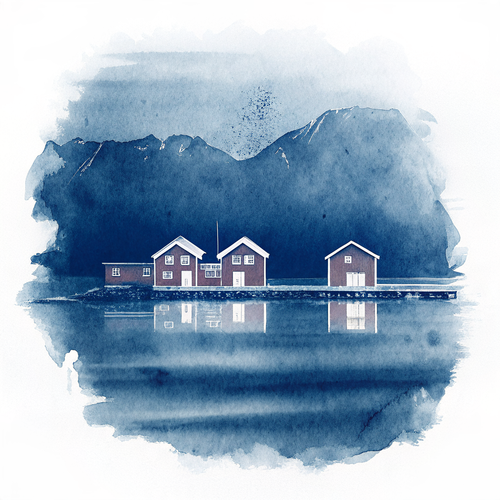
A lovely, high-res reminder for your fridge or workspace. This watercolor magnet is the perfect small token to remember your Lofoten Islands, Norway adventure.

Lofoten Islands, Norway | Original Series Decorative Magnet | The Painted Passport®
Add to Collection / $18
Exclusive Series Artifact

The Painted Passport®

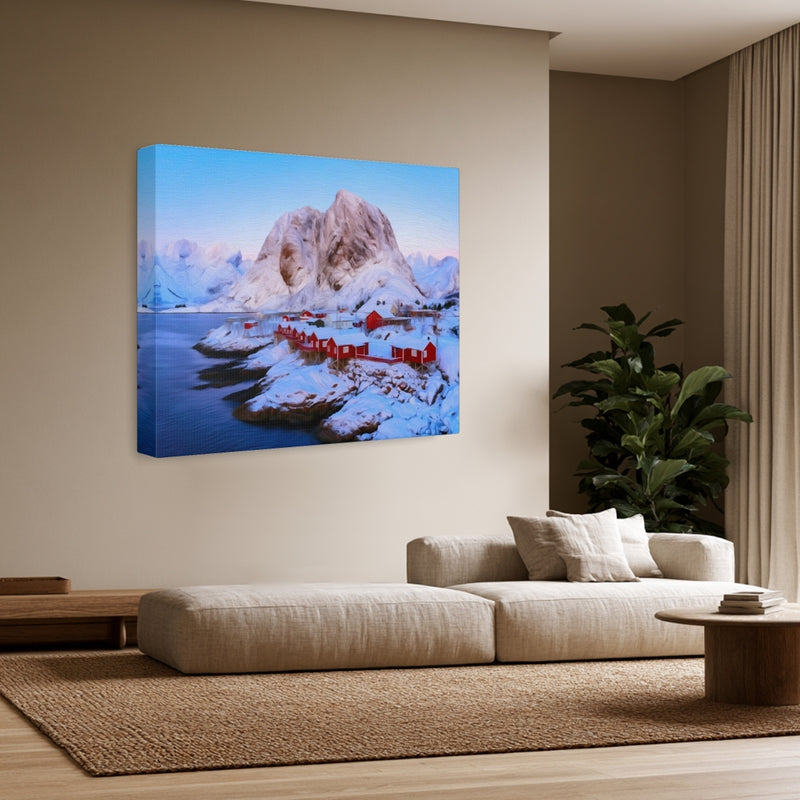
This high-fidelity canvas is a beautiful way to anchor a room and keep your memories of Lofoten Islands, Norway fresh long after you've returned home.

Lofoten Islands, Norway | Original Series Gallery Canvas | The Painted Passport® detail Lofoten Islands, Norway | Original Series Gallery Canvas | The Painted Passport® detail Lofoten Islands, Norway | Original Series Gallery Canvas | The Painted Passport® detail Lofoten Islands, Norway | Original Series Gallery Canvas | The Painted Passport® detail
Add to Collection / $65

The Painted Passport®

A wonderful companion for your morning coffee. This coaster captures the atmosphere of Lofoten Islands, Norway in a functional, beautiful way.

Lofoten Islands, Norway | Original Series Hardboard Coaster | The Painted Passport®
Add to Collection / $18
Exclusive Series Artifact

The Spirit of the Land

Archival Note: A curated field study of Lofoten Islands, Norway, prioritizing the specific atmospheric stillness of the region. These artifacts have been meticulously sourced from our global archival partners to represent the area's unique cultural frequency and environmental character. This selection serves as a formal observation for our ongoing global archive, vetted for its visual accuracy and archival merit.

Lofoten Islands, Norway study No. 01
Lofoten Islands, Norway / 01 VIA / Benoit Deschasaux
The late afternoon light bathes these traditional red fishing cabins, called rorbuer, as they stand quietly along the rocky shore beneath towering granite peaks. There's something deeply calming about the way these small structures rest so confidently against such dramatic mountains, as if the people here have long understood how to live in harmony with this magnificent landscape. The still fjord waters mirror the sky's gentle blue, and you can almost feel the crisp Arctic air and hear the soft lapping of waves against ancient stone.
Lofoten Islands, Norway study No. 02
Lofoten Islands, Norway / 02 VIA / Joshua Kettle
The red fishing cabins stand on weathered stilts above mirror-still waters, their warm glow defying the moody Arctic twilight. Mountains rise sharply behind these traditional *rorbuer*, while a few boats rest peacefully at their moorings, suggesting lives lived in rhythm with the sea. There's something deeply calming about this scene—the way the buildings reflect perfectly in the harbor, the soft light spilling from windows, the sense that time moves differently here along Norway's northern coast.
Lofoten Islands, Norway study No. 03
Lofoten Islands, Norway / 03 VIA / Rudi De Meyer
The stillness of this alpine lake mirrors the jagged peaks above, their green slopes dotted with late summer snow that catches the clear northern light. Waterfalls trace delicate lines down the mountainsides, their presence more felt than heard across the quiet water. Standing here, you can sense the ancient rhythm of this landscape—patient, enduring, and generous with its beauty to those who take the time to simply look.

Where to wander

Archival Note: A curated field study of Lofoten Islands, Norway, prioritizing cultural relevance and archival merit. While we haven't touched down here yet, we’ve meticulously vetted these locations through our global network of contributors to ensure they represent the most authentic atmosphere for your own expedition.

Local Cuisine Spotlight
In the crystalline waters of Lofoten, skrei—the migrating Arctic cod—arrives each winter, prized for its firm, sweet flesh. Here, a perfectly seared fillet rests in warm brown butter, topped with salmon roe that bursts with briny sweetness. It's a dish that honors centuries of Norwegian fishing heritage, where simplicity allows the ocean's purity to shine through each delicate, flaky bite.
Credits: The Painted Passport
Local cuisine study in Lofoten Islands, Norway

☕︎ Local Flavor

Anita's Sjømat

Rating: 4.9★ | Price: $$ | Coordinates: 68.2344° N, 14.5683° E

Pull up a stool at this legendary quayside shack in Svolvær where the singular offering — a stockfish burger served in a soft bun with pickled onion and sharp mustard — achieves the compression of an entire regional economy into a single bite. The centuries-old practice of wind-drying Arctic cod on wooden hjell racks reaches its most democratic and satisfying form here, demanding no ceremony and offering nothing but the clean, concentrated flavour of the Lofoten winter. This is the essential archive of a maritime identity that has sustained these islands for a thousand years.

View Entry Details

Kyst Restaurant

Rating: 4.8★ | Price: $$$ | Coordinates: 68.0935° N, 13.6117° E

Navigate a menu built entirely on the hyper-local produce of the surrounding coastline — hand-dived scallops from Vestfjorden, foraged sea herbs, and line-caught skrei presented in a language of modernist Nordic restraint. The open kitchen and harbour-facing windows create a continuous conversation between the cooking and the ecosystem that supplies it, collapsing the distance between the ocean and the plate. This restaurant is a vital piece of the Lofoten puzzle, documenting how the archipelago's fishing culture has evolved from subsistence to one of Europe's most compelling culinary destinations.

View Entry Details

Børsen Spiseri

Rating: 4.7★ | Price: $$$ | Coordinates: 68.2351° N, 14.5702° E

Ascend to a converted fish warehouse above Svolvær harbour where exposed timber beams and the residual salt of a century of commerce frame a menu centred on the archipelago's most prized ingredient: the seasonal Arctic cod. The kitchen applies classical Norwegian technique to supremely fresh local catches, articulating the profound difference between stockfish as preserved memory and skrei as living phenomenon. Dining here is an archival exercise, anchoring the visitor to the biological rhythm that has governed life on these islands since the Viking Age.

View Entry Details

Lofoten Cooking Class & Fishing Trip

Rating: 5.0★ | Price: $$$ | Coordinates: 67.9344° N, 13.0876° E

Cast a hand-line from an open boat in the shadow of the Reinebringen massif before returning to a rorbu kitchen to prepare your catch under the guidance of a local fisherman. The process — from the cold resistance of the line in your hands to the hiss of fresh cod meeting a cast-iron pan — compresses the entire Lofoten economy into a single sensory sequence. This experience is a living archive, preserving the unbroken chain of knowledge between the sea and the table that has defined Arctic coastal culture for generations.

View Entry Details

🛌︎ Boutique Stays

Eliassen Rorbuer

Rating: 4.8★ | Price: $$$ | Coordinates: 68.1042° N, 13.4483° E

Suspend yourself above the glassy waters of Hamnøy in a traditional fisherman's cabin where the architecture of necessity has become the architecture of wonder. The red-painted timber rorbu, mounted on barnacled stilts, offers an unfiltered study in how a working culture transforms its infrastructure into something deeply, unexpectedly beautiful. This is the definitive anchor for understanding the visual identity of the Lofoten archipelago.

View Entry Details

Hattvika Lodge

Rating: 4.9★ | Price: $$$$ | Coordinates: 68.2011° N, 13.7236° E

Discover a collection of modernist cabins built into the black rock shoreline of Ballstad, where floor-to-ceiling glass frames the surrounding mountain tableau like a living canvas. The interior utilizes local pine and raw stone to ground the space in the archipelago's geological character, creating a sensory dialogue between the built and the elemental. It serves as a physical manuscript of contemporary Norwegian design at the edge of the Arctic.

View Entry Details

Nusfjord Arctic Resort

Rating: 4.7★ | Price: $$$ | Coordinates: 68.0747° N, 13.5231° E

Step into one of Norway's best-preserved 19th-century fishing villages, where ochre and crimson storehouses ring a still harbor that operates as a mirror for the surrounding peaks. The restored rorbu accommodations preserve the spatial logic of the original fishermen's quarters — compact, purposeful, and radiantly warm — offering a rare immersion into a vernacular architectural tradition that remains entirely intact. This stay is a vital piece of the region's identity, preserving the lineage of cod-fishing culture that placed Lofoten on the map of global commerce.

View Entry Details

Storvaganet Resort

Rating: 4.6★ | Price: $$$ | Coordinates: 68.2158° N, 14.5523° E

Occupy a shoreside compound at the gateway to the archipelago where the mountains of Svolværgeita rise directly from the fjord. The property combines traditional Lofoten timber construction with modern Nordic interiors, creating a calibrated counterpoint between local materiality and Scandinavian restraint. It functions as an essential base of operations for documenting the eastern archipelago, placing you within reach of its most iconic peaks and sea-kayaking corridors.

View Entry Details

📍︎ Field Study

Reinebringen Summit Hike

Rating: 5.0★ | Price: $$ | Coordinates: 67.9271° N, 13.0683° E

There is a specific vertigo that arrives at 448 metres above the Reinefjord, where the mountain drops in a near-vertical wall to a village that appears, from this elevation, to be no larger than a brushstroke on a watercolour. The panorama from Reinebringen is one of the most arresting compositions in European geography — a fractal jigsaw of inlets, peaks, and white sand beaches that justifies every breathless metre of the ascent. This hike is an essential archival act, committing the visual logic of the archipelago to memory with the permanence that only physical effort can provide.

View Entry Details

Trollfjord Boat Safari

Rating: 4.9★ | Price: $$$ | Coordinates: 68.3549° N, 15.1002° E

Enter a fjord so narrow that the towering granite walls — rising over 1,000 metres on both sides — eliminate the horizon and reduce the sky to a thin, luminous corridor above you. The RIB boat cuts through water so cold and still it replicates the stone above it, creating a vertiginous tunnel of reflected light and shadow. To document the Trollfjord from the waterline is to record the geological ambition of Norway at its most compressed and theatrical, a landscape of pure, tectonic force.

View Entry Details

Lofotr Viking Museum

Rating: 4.8★ | Price: $$ | Coordinates: 68.1607° N, 13.8353° E

Walk the length of the world's largest reconstructed Viking longhouse — a 83-metre timber hall at Borg where the chieftain of the Lofoten islands once held court over the Norse world. The museum presents not the mythologized Viking but the administrative, agricultural, and nautical reality of a people whose reach extended from Newfoundland to Constantinople. This site is a foundational data point, preserving the lineage of a maritime civilisation whose relationship to the archipelago's resources created the cultural template still visible in every fishing village today.

View Entry Details

Northern Lights Photography Expedition

Rating: 4.9★ | Price: $$$ | Coordinates: 68.2344° N, 14.5683° E

Follow a professional aurora guide into the dark interior of the archipelago to position yourself beneath the electromagnetic spectacle of the boreal winter sky, with the serrated Lofoten peaks and their reflections in the fjord below. The guide reads solar wind data in real time, moving the group to positions where the mountains frame the aurora as a compositional element rather than an undifferentiated backdrop. This expedition is a vital archive of the Arctic experience, documenting the collision of terrestrial and cosmic geography that makes this latitude one of the most photographically significant on the planet.

View Entry Details

Typography

Archival Note: A formal technical study of Lofoten Islands, Norway—archiving the coordinates, elevation, and environmental data that define the region. This data serves as a vital record for our ongoing global field study, allowing us to reconstruct the regional atmosphere with archival precision before our physical arrival.

Botanical and pigment specimen study for Lofoten Islands, Norway Colors of Lofoten Islands, Norway
Coordinates
68.1042° N, 13.4483° E — Northern Norway, Nordland County, Arctic Circle
Historical Epoch
Norse settlement from around 800 CE. Viking chieftain stronghold at Borg documented at Lofotr. Stockfish trade established with Bergen from the 12th century. UNESCO nomination for cultural landscape in progress.
Elevation
0–1,161 m / 0–3,809 ft — sea-level rorbuer to the summit of Higravtinden
Atmosphere
Subarctic Oceanic (Cfc). Remarkably mild winters for the latitude due to the Gulf Stream, summer Arctic light from May through July, northern lights season from September through March, frequent high winds year-round.
Observation Hour
23:00. The midnight sun in late June when the sky never fully darkens and the low Arctic light rakes across the Reinebringen summit and the rorbuer facades of Reine harbor, turning the Vestfjord surface to hammered copper below the granite peaks.
Primary Pigment
Rorbu Red (#A63226) and Vestfjord Cobalt (#005B8E)
Best Time to Visit
June through August — the midnight sun is above the horizon, all hiking trails are accessible, and the Vestfjord is at its most vivid cobalt under the long Arctic days.
Avoid Visiting
November through February — the polar night reduces daylight to three or four hours, most rorbu accommodations are closed, and the mountain roads require winter driving experience.

The Local Tongue

Language is the invisible architecture of Lofoten Islands, Norway. These entries document the regional vocabulary—capturing the "texture" of local speech that standard translations often miss. Hand-curated expressions reflecting the specific spirit and daily rhythm of the region.
Archival study of Norwegian cultural texture

via / Colin Moldenhauer

Primary Language Norwegian
Regional Dialect Northern Norwegian (Nordnorsk)

Hjell (Tørkestativ)

The wooden rack used for air-drying Arctic cod, one of the most characteristic structures of the Lofoten landscape — tall timber A-frames hung with thousands of split fish through the winter months. Hjell are so fundamental to the archipelago's economy and visual identity that their distinctive silhouette is inseparable from any view of the fishing villages.

Midnattsol

The midnight sun — the phenomenon above the Arctic Circle where the sun remains above the horizon for weeks without setting in midsummer. On Lofoten, the midnattsol runs from late May through mid-July, bathing the granite peaks in a warm amber light that photographers come from across the world to document at the hours the rest of the world reserves for sleep.

Utepils

Literally "outdoor beer," the specific Norwegian pleasure of drinking a cold beer outside in the first warmth of spring. In Lofoten, an utepils on a rorbu deck with the Reinebringen massif reflected in the harbor water beside you is the precise cultural gesture of a people who have earned the sun after a long Arctic winter.

Wait! before you go...

Before you head over to Lofoten Islands, Norway, we’ve audited the essential data points for this corner of the world. These notes cover the logistics—from currency ratios to transit hubs—to help you navigate the landscape with clarity.
🚲 Getting Around The E10 highway runs the length of the archipelago from Å to Fiskebøl — the most scenic road drive in Norway, passable year-round. Car rental from Bodø or Svolvær airport is the most practical option. The Hurtigruten coastal ferry provides the most dramatic arrival, sailing directly past the Lofotveggen wall into Svolvær harbor.
⚖️ Cash or Card 15% Cash, 85% Card. Norway is among the most cashless societies on earth — cards and mobile payments are accepted everywhere from rorbu accommodations and ferry terminals to mountain huts. Keep some cash for the smallest village kiosks and market stalls in peak summer.
☁️ Good to Know Book rorbu accommodations six to twelve months ahead for peak summer — the iconic red cabins at Hamnøy, Sakrisøy, and Nusfjord are among the most sought-after in Europe. The E10 road is free and open year-round, but winter driving requires careful attention to sudden snowfall and wind conditions on exposed sections.
🏧 ATMs ATMs are available in Svolvær, Leknes, and Stamsund — the three main service towns of the archipelago. The smaller fishing villages have no banking services at all. Withdraw cash in Svolvær before traveling to the western islands if any cash-only transactions are anticipated.
💳 Currency The Norwegian Krone (NOK) is the currency. Norway is expensive by most international standards — a simple lunch can exceed 200 NOK and a rorbu cabin is typically 1,500–4,000 NOK per night. Cards and Vipps mobile payments handle virtually all transactions seamlessly.
🔌 Plugs Norway uses Type C and Type F plugs at 230V, standard European two round-pin sockets. Most modern electronics are dual voltage and require only a simple adapter. USB charging is available in most rorbu accommodations and hotels throughout the archipelago.
🛡️ Safety Lofoten is exceptionally safe and well-signposted. The primary risk is the mountain weather — conditions change rapidly on the exposed ridge trails and unexpected wind and rain can arrive within minutes on peaks like Reinebringen. Check yr.no (the Norwegian meteorological service) before any summit hike.
✈️ Airports Svolvær Airport (SVJ) handles domestic routes from Oslo, Bergen, and Bodø with short-haul turboprop aircraft — the landing approach between the Lofoten peaks is among the most dramatic in commercial aviation. Bodø (BOO) is the primary regional hub for larger aircraft, connecting to Oslo in 1.5 hours with onward ferry or car to the islands.

Behind The Scenes

Nathan

Note from the Founder

Hey, did you know this fun fact about Lofoten Islands, Norway? Despite sitting above the Arctic Circle, Lofoten never gets as cold as you might expect — the Gulf Stream keeps winter temperatures around 0°C and the sea rarely freezes. This means the famous stockfish can dry in the open winter air without freezing solid, which is exactly what gives it its unique texture and flavor!
Thank you for exploring the Lofoten Islands, Norway series with us. We hope these notes have inspired you to add this incredible destination to your own passport—we are so glad you're here. — Nathan

Some of our Favorites