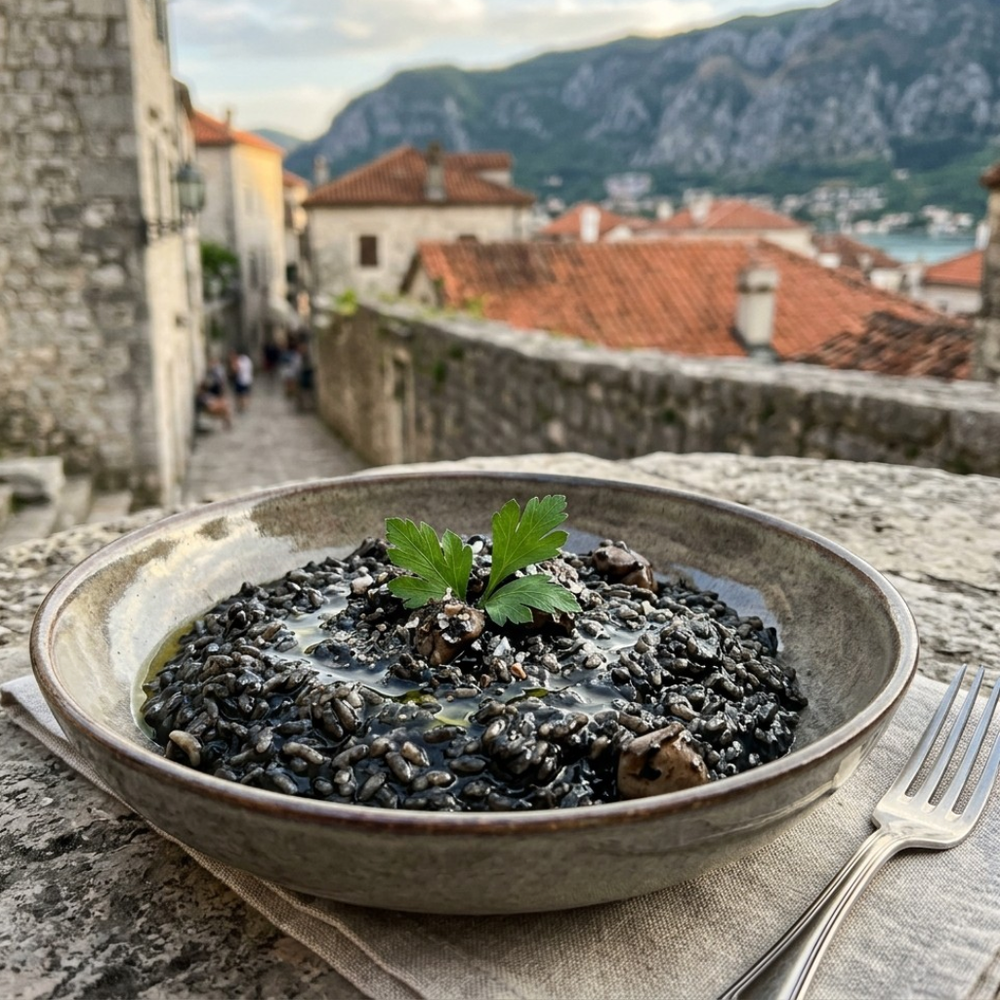
Kotor, Montenegro | 'The Walled City at the Edge of the Adriatic'
Kotor is the kind of place that stops you mid-step. Ringed by medieval stone walls that climb impossibly steep limestone cliffs, this UNESCO-listed old town sits at the innermost fold of the Bay of Kotor, one of Southern Europe's most dramatic natural harbors. The light here behaves differently than almost anywhere else on the Mediterranean coast -- it bounces off the water, scatters across terracotta rooftops, and pools in the narrow flagstone lanes in ways that shift dramatically from morning to dusk. Venetian palaces press against Romanesque churches, baroque doorways open onto quiet piazzas, and stray cats -- legendary residents in their own right -- stretch across sun-warmed stone as if they have always belonged here. Kotor carries centuries of Illyrian, Roman, Byzantine, and Venetian influence all at once, wearing its layered past with an easy, unhurried confidence that is entirely its own.
The watercolor palette of Kotor draws from a world of warm stone and cool water. Think raw sienna and weathered ochre for the ancient walls that glow amber at golden hour, then deep Prussian blue and soft slate for the bay's shifting surface and the shadowed clefts between buildings. A blush of terracotta and faded rose lifts the rooftops, while muted sage and lichen green creep across the oldest stonework -- those subtle, quiet tones that only reveal themselves when the painter slows down and truly looks.