Shop the Collection

To help you build your own global archive, we've prepared this collection of watercolor studies from our research into Kilimanjaro, Tanzania. These artifacts are designed to bring the stillness of this corner of the world into your home.

Original Series Decorative Magnet

A personal study of Kilimanjaro, Tanzania, captured in high-fidelity watercolor and prepared for your collection.

Kilimanjaro, Tanzania | Mount Kilimanjaro Autumn Forest | Original Series Decorative Magnet
Add to Collection / $18
Exclusive Series Artifact

Original Series Gallery Canvas

This high-fidelity canvas is a beautiful way to anchor a room and keep your memories of Kilimanjaro, Tanzania fresh long after you've returned home.

Kilimanjaro, Tanzania | Mount Kilimanjaro Autumn Forest | Original Series Gallery Canvas detail Kilimanjaro, Tanzania | Mount Kilimanjaro Autumn Forest | Original Series Gallery Canvas detail Kilimanjaro, Tanzania | Mount Kilimanjaro Autumn Forest | Original Series Gallery Canvas detail Kilimanjaro, Tanzania | Mount Kilimanjaro Autumn Forest | Original Series Gallery Canvas detail
Add to Collection / $65

Original Series Hardboard Coaster

A personal study of Kilimanjaro, Tanzania, captured in high-fidelity watercolor and prepared for your collection.

Kilimanjaro, Tanzania | Mount Kilimanjaro Autumn Forest | Original Series Hardboard Coaster
Add to Collection / $18
Exclusive Series Artifact

The Spirit of the Land

Archival Note: A curated field study of Kilimanjaro, Tanzania, prioritizing the specific atmospheric stillness of the region. These artifacts have been meticulously sourced from our global archival partners to represent the area's unique cultural frequency and environmental character. This selection serves as a formal observation for our ongoing global archive, vetted for its visual accuracy and archival merit.

Kilimanjaro, Tanzania study No. 01
Kilimanjaro, Tanzania / 01 VIA / Sergey Pesterev
Morning mist clings to the base of Kilimanjaro, softening the boundary between the rust-colored savanna and the mountain's snow-covered summit. The flat-topped acacia trees stand in quiet silhouette against the haze, their dark forms grounding the vastness of the scene. Warm ochre soil in the foreground anchors the image, making the distant peak feel both monumental and intimate.
Kilimanjaro, Tanzania study No. 02
Kilimanjaro, Tanzania / 02 VIA / Penfran Tanzania
Standing near the summit of Kilimanjaro, one would feel the thin, cold air pressing in from all sides, the silence broken only by the faint crunch of volcanic gravel underfoot. The glacial wall catches the high-altitude light with an almost luminous intensity, its blue-white face a startling contrast against the rust-brown scree. There is a profound stillness here, a sense of standing at the edge of the world, suspended between earth and sky.
Kilimanjaro, Tanzania study No. 03
Kilimanjaro, Tanzania / 03 VIA / Joseph Ruwa
From above, Kilimanjaro reveals its true scale — a solitary volcanic giant emerging through a collar of cumulus clouds as though surfacing from a white sea. What most overlook are the pale erosion channels etched into the lower slopes, veining downward like rivers frozen mid-flow across the reddish earth. The snow clings unevenly to the summit crater's rim, streaking down in jagged white fingers that betray the mountain's slow, ongoing loss of its glacial crown.

Where to wander

Archival Note: A curated field study of Kilimanjaro, Tanzania, prioritizing cultural relevance and archival merit. While we haven't touched down here yet, we've meticulously vetted these locations through our global network of contributors to ensure they represent the most authentic atmosphere for your own expedition.

Local Cuisine Spotlight
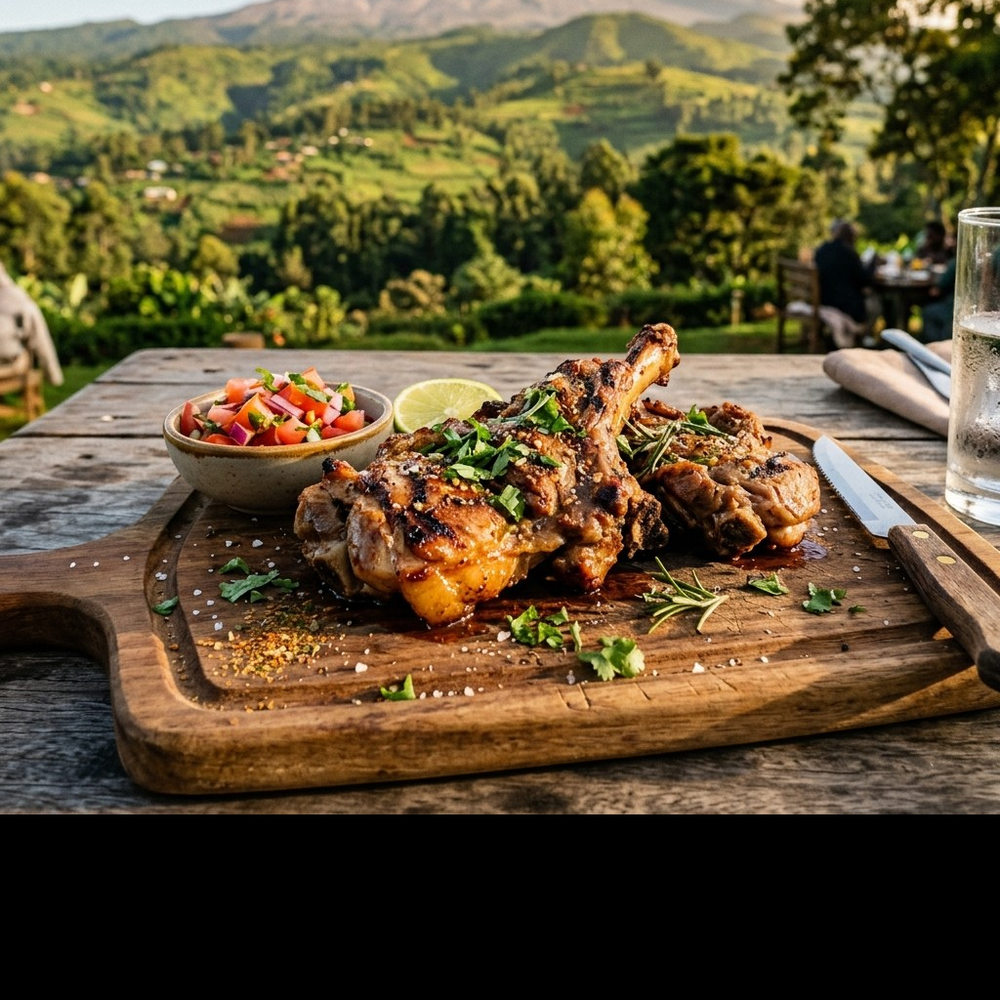
Kilimanjaro-style grilled chicken arrives golden and fragrant, kissed by open flame and dusted with aromatic spices. Topped with fresh herbs and served alongside a bright tomato salsa and lime, every bite carries the warmth of East African tradition against a backdrop of rolling highland valleys.
Credits: THE PAINTED PASSPORT
Local cuisine study in Kilimanjaro, Tanzania

☕︎ Local Flavor

Indoitaliano Restaurant

Rating: 4* | Price: $$ | Coordinates: -3.3601, 37.3378

A beloved Moshi institution, Indoitaliano delightfully fuses Indian spices with Italian pasta in dishes that somehow feel completely natural and deeply satisfying. The relaxed garden seating, strung with soft lights, creates a romantic atmosphere ideal for celebrating a successful summit. Do not leave without trying their fragrant butter chicken pizza, a quirky house specialty that earns loyal fans.

View Entry Details

The Coffee Shop Moshi

Rating: 5* | Price: $ | Coordinates: -3.3555, 37.3401

Serving some of the finest locally grown Arabica coffee in all of Tanzania, this cozy café is the perfect morning ritual before a big day of exploring or acclimatizing. Freshly baked mandazi, fruit platters, and wholesome sandwiches complement every carefully brewed cup with homegrown pride. The friendly baristas love sharing the story behind each bean, making every visit a small coffee education.

View Entry Details

Ujanja Rooftop Bar & Grill

Rating: 4* | Price: $$$ | Coordinates: -3.3541, 37.3447

Climb just a few flights of stairs and arrive at Moshi's most scenic dining deck, where Kilimanjaro dominates the horizon like a living painting at golden hour. Grilled nyama choma, fresh tilapia, and creative cocktails make this rooftop a crowd-pleasing destination for hungry trekkers and curious travelers alike. The warm evening breeze and lively atmosphere create the kind of night you will talk about long after leaving Tanzania.

View Entry Details

Mama Africa Restaurant

Rating: 4* | Price: $ | Coordinates: -3.3588, 37.3362

Step inside this vibrant, colorfully decorated local favorite for an authentic taste of Tanzanian home cooking served with enormous generosity and pride. Hearty ugali, slow-cooked beans, and tender braised goat arrive at your table in generous portions that could fuel a mountain ascent. The joyful owner greets every guest personally, making dining here feel less like a restaurant visit and more like a family meal.

View Entry Details

🛌︎ Boutique Stays

Legendary Lodge

Rating: 5* | Price: $$$$ | Coordinates: -3.2705, 37.2088

Perched on a coffee estate with sweeping views of Kilimanjaro's snow-capped peak, Legendary Lodge offers cottages wrapped in lush gardens and colonial charm. Each morning begins with fresh estate-grown coffee served on your private veranda as mist rolls across the mountain. The attentive staff and serene atmosphere make it a truly unforgettable basecamp.

View Entry Details

Springlands Hotel

Rating: 4* | Price: $$ | Coordinates: -3.3547, 37.3442

A favorite among trekkers, Springlands Hotel in Moshi offers comfortable rooms, a welcoming pool, and reliable gear storage for climbers preparing their ascent. The hotel's warm staff genuinely celebrate returning hikers with cold towels and congratulatory cheers. Its central location puts great restaurants and local markets just a short walk from your door.

View Entry Details

Kibo Palace Hotel

Rating: 4* | Price: $$$ | Coordinates: -3.3562, 37.3391

Kibo Palace Hotel blends modern comfort with Tanzanian hospitality, featuring spacious rooms adorned with local artwork and a beautiful rooftop terrace framing Kilimanjaro on clear days. The on-site restaurant serves hearty meals perfectly suited for fueling pre-climb energy and recovering post-summit muscles. A tranquil pool and friendly concierge service round out this polished Moshi retreat.

View Entry Details

Marangu Hotel

Rating: 4* | Price: $$ | Coordinates: -3.2333, 37.5167

Tucked into a lush highland village near the Marangu Gate, this historic family-run hotel has welcomed climbers since 1932 with genuine warmth and old-world charm. Flower-lined pathways connect cozy cottages, and evenings are spent around the fireplace swapping trail stories with fellow adventurers. The knowledgeable staff offer invaluable local insight that guidebooks simply cannot replicate.

View Entry Details

📍︎ Field Study

Uhuru Peak — Kilimanjaro Summit

Rating: 5* | Price: $$$$ | Coordinates: -3.0674, 37.3556

Standing at 5,895 meters above sea level, reaching Uhuru Peak is one of the most profoundly moving accomplishments any traveler can achieve on this planet. The thin air, glacial silence, and endless African sky stretching below create an almost spiritual sense of awe and personal triumph. Whether you choose the Lemosho, Machame, or Marangu route, the journey reshapes you long before the summit ever comes into view.

View Entry Details

Kilimanjaro National Park Gate, Marangu

Rating: 4* | Price: $$ | Coordinates: -3.2422, 37.5094

The Marangu Gate serves as both a practical entry point and a thrilling ceremonial threshold where the real Kilimanjaro adventure officially begins with stamps, briefings, and buzzing anticipation. Lush montane forest begins almost immediately, alive with the calls of exotic birds and occasional colobus monkeys swinging through the canopy overhead. Even a short day hike from the gate rewards visitors with incredible biodiversity and the intoxicating scent of highland rainforest.

View Entry Details

Materuni Waterfalls & Coffee Tour

Rating: 5* | Price: $ | Coordinates: -3.2011, 37.4522

Hidden on the lush lower slopes of Kilimanjaro, the thundering Materuni Waterfall plunges into a cool jungle pool surrounded by ferns, volcanic rock, and birdsong that fills every quiet moment. The guided half-day tour winds through traditional Chagga coffee farms where villagers demonstrate the entire bean-to-cup process with contagious enthusiasm. Sharing a hand-brewed cup beside the waterfall, with mist on your face and forest all around, is one of Tanzania's most quietly perfect experiences.

View Entry Details

Chagga Cultural Museum, Moshi

Rating: 4* | Price: $ | Coordinates: -3.3571, 37.3405

This intimate museum in the heart of Moshi brings the rich history and traditions of the Chagga people — Kilimanjaro's indigenous community — to vivid life through artifacts, photographs, and oral storytelling. Knowledgeable local guides walk you through ancient irrigation systems, ceremonial practices, and the Chagga's deep spiritual relationship with the great mountain above their homeland. Visiting before your climb adds meaningful cultural depth to what might otherwise feel like purely a physical adventure.

View Entry Details

Typography

Archival Note: A formal technical study of Kilimanjaro, Tanzania—archiving the coordinates, elevation, and environmental data that define the region. This data serves as a vital record for our ongoing global field study, allowing us to reconstruct the regional atmosphere with archival precision before our physical arrival.

Botanical and pigment specimen study for Kilimanjaro, Tanzania Colors of Kilimanjaro, Tanzania
Coordinates
3.0674° S, 37.3556° E — Uhuru Peak, Kilimanjaro summit, Tanzania
Historical Epoch
The Chagga kingdoms of the 18th and 19th centuries built sophisticated irrigation furrows called mifereji across Kilimanjaro's slopes. European missionaries and traders arrived in the 1840s, and German colonial administration followed in 1885, leaving a legacy still visible in Moshi's older civic architecture.
Elevation
800-5,895 m / 2,625-19,341 ft - Moshi town sits at roughly 800 m, with Kilimanjaro's Uhuru Peak rising to 5,895 m, the highest point in Africa.
Atmosphere
Aw - Tropical Savanna. Moshi is warm year-round with two rainy seasons. Mornings are often crystalline clear before afternoon clouds roll in from the Indian Ocean.
Observation Hour
06:30 - The early morning hour before cloud build-up reveals Kilimanjaro fully, its glaciers catching gold and rose light above mist-softened green foothills. By mid-morning the summit typically vanishes into cloud.
Primary Pigment
Kilimanjaro Sienna (#A0522D) and Glacial Cobalt (#6A8EAE)
Best Time to Visit
January through March - dry season with excellent summit visibility, cooler nights, and the mountain often snow-dusted above the cloud line.
Avoid Visiting
April through May - long rains make trails muddy, cloud cover is persistent, and summit views become rare and unpredictable.

The Local Tongue

Language is the invisible architecture of Kilimanjaro, Tanzania. These entries document the regional vocabulary—capturing the "texture" of local speech that standard translations often miss. Hand-curated expressions reflecting the specific spirit and daily rhythm of the region.
Archival study of Swahili (Kiswahili) cultural texture

via / Alex Levis

Primary Language Swahili (Kiswahili)
Regional Dialect Kilimanjaro Swahili with Chagga linguistic influence, particularly in village and market settings around Moshi and Marangu.

Pole pole

Pole pole means slowly, slowly in Swahili, and it is the cardinal rule of Kilimanjaro. Guides repeat it as a mantra on the mountain trails because altitude sickness does not discriminate, and the slow rhythmic breath required on the upper slopes demands a surrender of urgency that changes the climber long after descent.

Ubuntu

Ubuntu carries the meaning of I am because we are, a philosophy of shared humanity woven deeply into East African communal life. In the villages around Marangu, its presence is felt in the way a neighbor's harvest difficulty becomes a collective concern, with hands appearing unannounced to help carry or sort or cook without being asked.

Mbege

Mbege is the traditional banana beer of the Chagga people, brewed from ripe bananas and eleusine millet on the fertile slopes of Kilimanjaro. It is shared at ceremonies, land agreements, and homecomings, with the earthy, slightly tart scent of fermentation rising from clay pots in the shade of banana groves as families gather and decisions are made together.

Wait! before you go...

Before you head over to Kilimanjaro, Tanzania, we’ve audited the essential data points for this corner of the world. These notes cover the logistics—from currency ratios to transit hubs—to help you navigate the landscape with clarity.
🚲 Getting Around Most visitors arrive by road from Arusha or Dar es Salaam, with shared minibus daladala services connecting Moshi to surrounding villages. Private safari-style transfers are widely available and the preferred option for those heading to trailheads or lodges outside the town center.
⚖️ Cash or Card Cash is essential throughout the Kilimanjaro region, especially beyond Moshi town where card terminals are rare or unreliable. US dollars are widely accepted for park fees and lodge deposits, while Tanzanian shillings are needed for local markets, street food, daladalas, and small guesthouses.
☁️ Good to Know Greetings carry genuine social weight in Kilimanjaro culture - a quick transaction without a proper habari exchange is considered abrupt and slightly rude. Taking a moment to ask after someone's health and family before any business, however small, smooths every interaction and signals respect for local values.
🏧 ATMs Several reliable ATMs are available in Moshi town, with CRDB and NMB branches being the most dependable for international Visa and Mastercard withdrawals. Withdrawing sufficient cash before heading to Marangu, Materuni, or any trailhead is strongly advised as ATM access disappears quickly outside of town.
💳 Currency The Tanzanian Shilling (TZS) is the official currency and essential for daily life including markets, local transport, and small restaurants. US dollars printed after 2009 are widely accepted for larger tourism-related payments, but change will almost always be given in shillings.
🔌 Plugs Tanzania uses Type D and Type G outlets at 230V and 50Hz. A universal travel adapter with surge protection is recommended, particularly in older lodge properties.
🛡️ Safety Moshi and the Kilimanjaro region are considered among the safer areas in Tanzania for travelers, though standard awareness around bag security in busy market areas and at transport hubs is sensible. On the mountain itself, altitude sickness is the primary risk - no amount of fitness substitutes for slow acclimatization and listening to a licensed guide.
✈️ Airports Kilimanjaro International Airport (JRO) sits roughly 50 km from Moshi and serves direct flights from Nairobi, Addis Ababa, Doha, and Amsterdam among others, making it the primary gateway for the region. Julius Nyerere International Airport in Dar es Salaam (DAR) is an alternative hub with broader connections for those combining the mountain with a coastal stay.

Behind The Scenes

Nathan

Note from the Founder

Hey, did you know this fun fact about Kilimanjaro, Tanzania? Kilimanjaro is a stratovolcano, not technically dormant - Kibo crater still emits sulphuric gases. The mountain hosts five distinct ecological zones from cultivated farmland at the base to arctic desert near the summit, all crossable within a single ascent.
Thank you for exploring the Kilimanjaro, Tanzania series with us. We hope these notes have inspired you to add this incredible destination to your own passport—we are so glad you're here. — Nathan

Some of our Favorites