Shop the Collection

To help you build your own global archive, we've prepared this collection of watercolor studies from our research into Johannesburg, South Africa. These artifacts are designed to bring the stillness of this corner of the world into your home.

Original Series Decorative Magnet

A personal study of Johannesburg, South Africa, captured in high-fidelity watercolor and prepared for your collection.

Johannesburg, South Africa | Original Series Decorative Magnet
Add to Collection / $18
Exclusive Series Artifact

Original Series Gallery Canvas

This high-fidelity canvas is a beautiful way to anchor a room and keep your memories of Johannesburg, South Africa fresh long after you've returned home.

Johannesburg, South Africa | Original Series Gallery Canvas detail Johannesburg, South Africa | Original Series Gallery Canvas detail Johannesburg, South Africa | Original Series Gallery Canvas detail Johannesburg, South Africa | Original Series Gallery Canvas detail
Add to Collection / $65

Original Series Hardboard Coaster

A personal study of Johannesburg, South Africa, captured in high-fidelity watercolor and prepared for your collection.

Johannesburg, South Africa | Original Series Hardboard Coaster
Add to Collection / $18
Exclusive Series Artifact

The Spirit of the Land

Archival Note: A curated field study of Johannesburg, South Africa, prioritizing the specific atmospheric stillness of the region. These artifacts have been meticulously sourced from our global archival partners to represent the area’s unique cultural frequency and environmental character. This selection serves as a formal observation for our ongoing global archive, vetted for its visual accuracy and archival merit.

Johannesburg, South Africa study No. 01
Johannesburg, South Africa / 01 VIA / Clodagh Da Paixao
A sweeping view of Johannesburg captures the vibrant heartbeat of the city, where striking urban architecture meets wide, open skies. The prominent tower stands tall against the horizon, serving as a beacon of growth and endless possibility. Bathed in the gentle light of day, this bustling metropolis feels both dynamic and remarkably peaceful, showcasing the beautiful harmony of a modern landscape.
Johannesburg, South Africa study No. 02
Johannesburg, South Africa / 02 VIA / Simon Hurry
The city skyline comes alive as the warm, golden glow of sunset bathes the urban landscape in a brilliant light. Towering skyscrapers stand proud against the radiant sky, symbolizing the energy, resilience, and bright future of this bustling metropolis. It is a peaceful yet deeply inspiring moment that captures the quiet majesty of a city winding down its day.
Johannesburg, South Africa study No. 03
Johannesburg, South Africa / 03 VIA / Steward Masweneng
Brightly colored minibus taxis line the streets, perfectly framing the unmistakable skyline of Johannesburg in the distance. The iconic Ponte City apartments and Hillbrow Tower rise proudly into the clear blue sky, serving as enduring symbols of the city's rich history and unstoppable drive forward. It is a peaceful, sun-drenched snapshot of daily urban life, capturing the authentic spirit and beautiful rhythm of South Africa’s vibrant heart.

Where to wander

Archival Note: A curated field study of Johannesburg, South Africa, prioritizing cultural relevance and archival merit. While we haven't touched down here yet, we’ve meticulously vetted these locations through our global network of contributors to ensure they represent the most authentic atmosphere for your own expedition.

Local Cuisine Spotlight
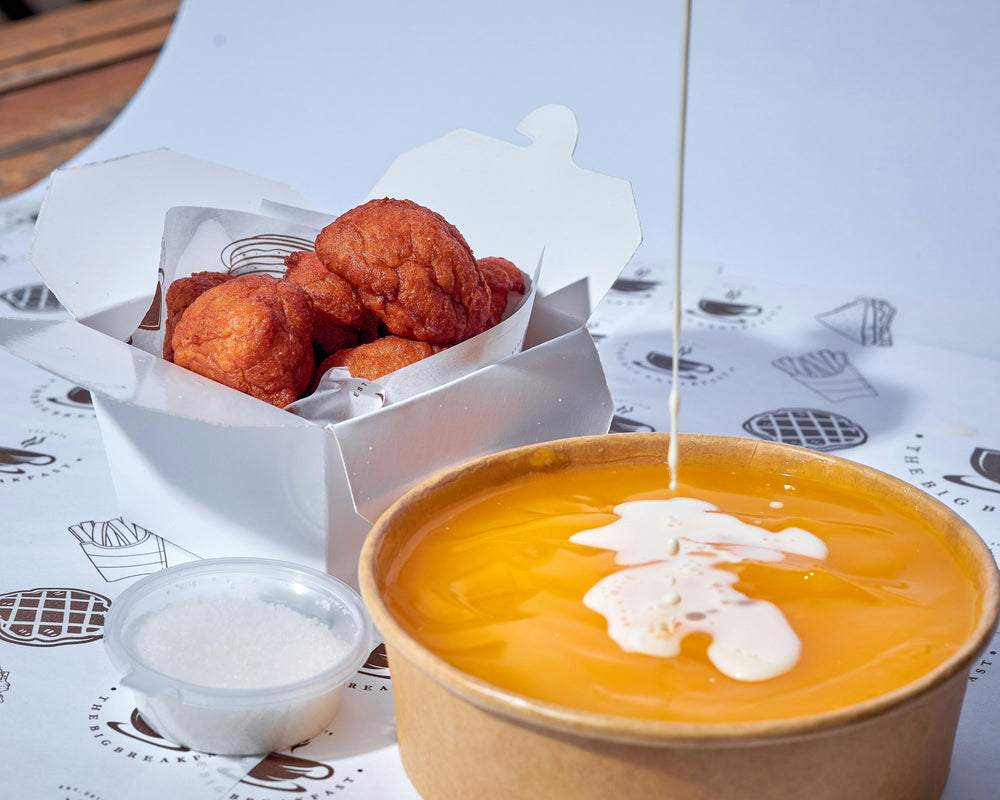
A beautifully prepared bowl of golden, smooth breakfast porridge is gently drizzled with rich milk, creating a comforting and inviting morning ritual. Beside it sits a fresh box of warm, golden-brown fried dough treats, offering a perfect balance of flavors that promises a nourishing start to the day. This deeply satisfying meal brings a sense of warmth, peace, and rich culinary heritage to the table, capturing the diverse flavors loved throughout Johannesburg.
Credits: Tochukwu Ekeh
Local cuisine study in Johannesburg, South Africa

☕︎ Local Flavor

The Test Kitchen

Rating: 4.9★ | Price: $$$$ | Coordinates: 26.1870° S, 28.0436° E

Occupy one of the most coveted tables in Africa at Luke Dale-Roberts's flagship restaurant, where the open kitchen produces a tasting menu that treats the Highveld pantry — game meats, indigenous herbs, fermented grains — as primary source material rather than regional curiosity. The menu is a live archive of post-apartheid South African cuisine, documenting the convergence of Cape Malay, Nguni, Indian, and European food traditions into a coherent contemporary culinary language. The Test Kitchen has held its position as the continent's most technically ambitious restaurant for over a decade and remains the definitive address for understanding where South African fine dining is going.

View Entry Details

Marble Restaurant

Rating: 4.8★ | Price: $$$$ | Coordinates: 26.1452° S, 28.0761° E

Ascend to the rooftop fire-kitchen above the Rosebank skyline, where chef David Higgs constructs a menu around the wood-fired grill and the precise documentation of South African protein culture — dry-aged Highveld beef, Karoo lamb, Mozambican prawns, and line fish from both the Atlantic and Indian Ocean coasts. The open kitchen is organized around a central fire that is visible from every seat, functioning as a theatrical demonstration of the braai tradition elevated to fine dining register. Marble is the most important document of modern South African grill culture in Johannesburg.

View Entry Details

Neighbourgoods Market

Rating: 4.7★ | Price: $$ | Coordinates: 26.1967° S, 28.0436° E

Navigate the concrete warehouse floors of the Neighbourgoods Market in Braamfontein every Saturday morning, where the stalls document the full range of the post-apartheid Johannesburg food economy: artisanal sourdough alongside kota sandwiches, specialty coffee alongside umqombothi sorghum beer, and the entire vocabulary of the South African braai tradition in miniature. The market is a weekly census of the city's culinary demographics, providing a more accurate cross-section of who eats what in Jo'burg than any restaurant review can capture.

View Entry Details

The Cosmopolitan, Soweto

Rating: 4.6★ | Price: $$ | Coordinates: 26.2485° S, 27.8546° E

Enter the most famous shebeen-turned-restaurant in Soweto, where the menu is organized around the core vocabulary of township cuisine — pap and chakalaka, umngqusho samp and beans, mogodu tripe stew, and the slow-braised oxtail that has been the signature of Soweto communal cooking for generations. The Cosmopolitan is a functioning archive of the food culture that sustained the township during the apartheid era and continues to define the culinary identity of the most historically significant urban settlement in South Africa.

View Entry Details

🛌︎ Boutique Stays

Saxon Hotel, Villas and Spa

Rating: 4.9★ | Price: $$$$ | Coordinates: 26.1089° S, 28.0614° E

Inhabit the ten-acre Sandhurst estate where Nelson Mandela completed the final edits of Long Walk to Freedom after his release from Victor Verster Prison, now operating as the most discreet and historically significant luxury hotel on the African continent. Each of the twenty-four suites is positioned within the indigenous gardens of the former Oppenheimer estate, and the property functions as a living archive of the post-apartheid transition — the physical space where the manuscript that defined the new South Africa was finished. The Saxon's art collection is the finest private assembly of contemporary South African painting in a hospitality context.

View Entry Details

The Capital on the Park

Rating: 4.8★ | Price: $$$ | Coordinates: 26.1041° S, 28.0573° E

Occupy a fully serviced apartment in the Sandton financial district, where the floor-to-ceiling windows frame the northern Johannesburg skyline and the Magaliesberg range on the horizon. The property is positioned within walking distance of the Sandton City mall, the Gautrain station, and the Nelson Mandela Square — the commercial and civic center of post-apartheid prosperity in South Africa. It functions as the most practical base for understanding the economic geography of Johannesburg's northern suburbs, where the majority of the country's corporate and financial architecture is concentrated.

View Entry Details

The Peech Hotel

Rating: 4.7★ | Price: $$$ | Coordinates: 26.1452° S, 28.0541° E

Settle into a garden boutique hotel in the Melrose suburb, where the seventeen rooms are arranged around indigenous garden courtyards and the architecture employs local stone, reclaimed timber, and natural fiber textiles in a vocabulary that references the Highveld grassland biome rather than the conventional luxury hotel aesthetic. The Peech is the most ecologically coherent small hotel in Johannesburg, operating on solar power and rainwater harvesting within the leafy residential corridor between Rosebank and Hyde Park. It serves as a useful counterpoint to the corporate glass towers of Sandton.

View Entry Details

The Munro Boutique Hotel

Rating: 4.6★ | Price: $$$ | Coordinates: 26.1967° S, 28.0436° E

Occupy a carefully restored 1930s Art Deco building in the Braamfontein creative district, where the rooms document the architectural vocabulary of Johannesburg's first boom era — pressed ceilings, terrazzo floors, and steel-framed windows overlooking the rooftops of a neighborhood now occupied by design studios, independent bookshops, and the Saturday Neighbourgoods Market. The Munro is the most historically embedded accommodation option for understanding Johannesburg as an architectural artifact, positioned at the precise intersection of the city's colonial past and its post-apartheid creative present.

View Entry Details

📍︎ Field Study

Apartheid Museum

Rating: 4.9★ | Price: $ | Coordinates: 26.2389° S, 27.9985° E

Enter through one of two doors — one marked 'Whites', one marked 'Non-Whites' — assigned randomly at the ticket desk, and proceed through the most important archive of institutionalized racial segregation ever assembled in a museum context. The Apartheid Museum documents fifty years of systematic dispossession, resistance, and eventual negotiated transition through a sequence of galleries that deploy original documentary material, personal testimony, and architectural metaphor with exceptional precision. It is the primary historical instrument for understanding how South Africa became what it is today, and it is impossible to understand Johannesburg without it.

View Entry Details

Soweto: Guided Historical Tour

Rating: 4.8★ | Price: $$ | Coordinates: 26.2485° S, 27.8546° E

Navigate the streets of the South Western Townships with a guide who grew up within them, moving from the Hector Pieterson Memorial — which marks the precise location where the 1976 student uprising began — to the double Nobel Prize block on Vilakazi Street, where both Nelson Mandela and Archbishop Desmond Tutu had their family homes. Soweto is the most politically and culturally significant urban settlement in modern African history, and a guided tour is the only way to decode the spatial logic of a township that was deliberately designed to be invisible from the white suburbs of northern Johannesburg.

View Entry Details

Cradle of Humankind: Day Trip

Rating: 4.7★ | Price: $$$ | Coordinates: 25.9742° S, 27.8021° E

Drive forty-five minutes northwest of Johannesburg to the UNESCO World Heritage Site that has produced more hominid fossils than anywhere else on earth, where the dolomite caves of the Sterkfontein system have yielded specimens dating back 3.5 million years. The Maropeng visitor center provides the stratigraphic context for understanding how the Highveld plateau became the nursery of Homo sapiens, and the cave system itself is accessible by guided descent. This is the most important paleoanthropological site in the world and functions as the deepest possible archive of what it means to be human.

View Entry Details

Maboneng Precinct: Art & Architecture Walk

Rating: 4.6★ | Price: $$ | Coordinates: 26.2021° S, 28.0612° E

Walk the regenerated warehouse district of Maboneng in eastern Johannesburg, where the post-apartheid creative economy has colonized the derelict industrial buildings of the old city with galleries, studios, independent cinemas, and the Arts on Main weekend market. Maboneng is the most concentrated document of what urban regeneration looks like in a post-conflict African city — a neighborhood that did not exist as a creative district twenty years ago and now represents the most internationally legible version of contemporary Johannesburg culture. The architecture is a palimpsest of industrial heritage and adaptive reuse.

View Entry Details

Typography

Archival Note: A formal technical study of Johannesburg, South Africa—archiving the coordinates, elevation, and environmental data that define the region. This data serves as a vital record for our ongoing global field study, allowing us to reconstruct the regional atmosphere with archival precision before our physical arrival.

Botanical and pigment specimen study for Johannesburg, South Africa Colors of Johannesburg, South Africa
Coordinates
26.2041° S, 28.0473° E — Witwatersrand gold reef on the Highveld plateau, Gauteng Province, South Africa
Historical Epoch
Gold reef discovery in 1886. Randlord mining era through 1910. Apartheid era 1948 to 1994. Democratic transition in 1994.
Elevation
1,753 m / 5,751 ft. High on the Highveld plateau, perched above the gold reef that built the city.
Atmosphere
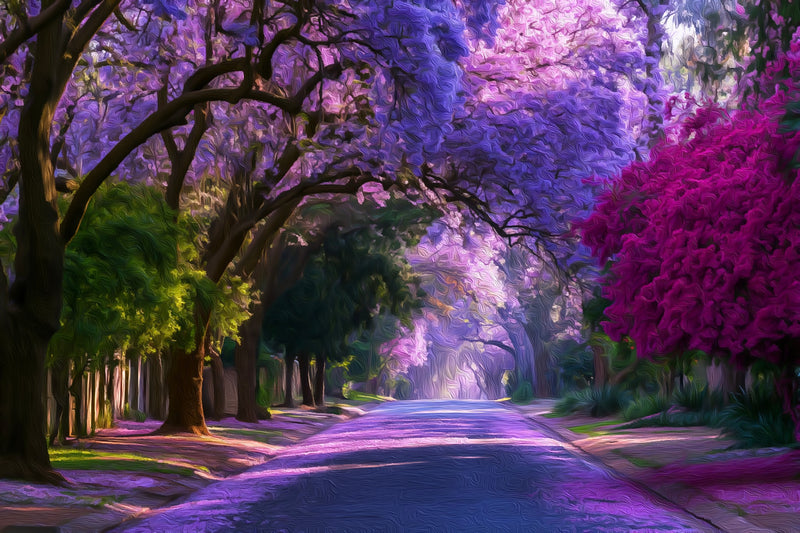
Humid Subtropical Highland (Cwb). Warm wet summers with afternoon thunderstorms, dry sunny winters with cold nights and clear skies, jacaranda bloom in October.
Observation Hour
06:30 AM. Thin high-altitude air carries amber dawn light across the entire skyline, producing the rose-gold palette that defines the city at first light.
Primary Pigment
Highveld Amber (#C8852A) and Jacaranda Violet (#6B5B95)
Best Time to Visit
May through August. Cloudless Highveld winter skies, crisp clear days between 18 and 22°C and the clearest light of the year for photography.
Avoid Visiting
December through February. Daily afternoon thunderstorms, high humidity and peak holiday prices throughout the city.

The Local Tongue

Language is the invisible architecture of Johannesburg, South Africa. These entries document the regional vocabulary—capturing the "texture" of local speech that standard translations often miss. Hand-curated expressions reflecting the specific spirit and daily rhythm of the region.
Archival study of Zulu cultural texture

via / Michael Schofield

Primary Language Zulu
Regional Dialect Gauteng Zulu

Sawubona (saʊˈbɔːnə)

I see you in Zulu, and a philosophical statement of mutual recognition, not just a greeting. The response Yebo, sawubona returns that recognition and using it correctly signals that you understand something about where you are.

Eish (eɪʃ)

The South African expression of exasperation, disbelief or wonder all at once. Eish covers everything from traffic to load-shedding to bureaucracy and is the default Joburg response to the general improvised quality of daily life.

Lekker (ˈlɛkər)

The Afrikaans word for pleasant, delicious or enjoyable adopted across all eleven official languages. Calling something lekker in Johannesburg is the single fastest way to signal that you understand the city's social register.

Wait! before you go...

Before you head over to Johannesburg, South Africa, we’ve audited the essential data points for this corner of the world. These notes cover the logistics—from currency ratios to transit hubs—to help you navigate the landscape with clarity.
🚲 Getting Around The Gautrain rapid rail is the only truly reliable public transit connecting OR Tambo, Sandton and Pretoria efficiently. Uber covers everything else throughout the city and works very well for getting around.
⚖️ Cash or Card Johannesburg is the most card-friendly city in Africa with Visa and Mastercard accepted almost universally. Lean about 85% card and keep 15% cash for township markets, street food and tipping.
☁️ Good to Know Book the Apartheid Museum and Soweto tours in advance during peak season from June through August since they fill up. Load-shedding (scheduled power cuts) is a regular feature of city life so carry a portable charger and the Gautrain is your most reliable public transit option at all hours.
🏧 ATMs ATMs are at OR Tambo Airport, Sandton City Mall, Rosebank Mall, Nelson Mandela Square and all major shopping centers. Standard Bank, FNB, Absa and Nedbank all work reliably with international cards so you'll never struggle to find one.
💳 Currency You'll be spending South African Rand (ZAR) and the exchange rate is very favorable for visitors from the USA, EU and UK. Credit and debit cards are widely accepted almost everywhere in the city.
🔌 Plugs South Africa uses Type M plugs, the large three round-pin socket unique to southern Africa, at 230V. It also accepts Type C European two-pin plugs. Bring a South African adapter or a good universal adapter to cover everything.
🛡️ Safety Johannesburg is safe in the main visitor areas including Sandton, Rosebank, Melrose and Hyde Park which are all walkable and welcoming. Use Uber rather than street taxis, avoid walking alone in the CBD after dark and Soweto is excellent for guided tours during the day.
✈️ Airports OR Tambo International Airport (JNB) is the busiest airport in Africa, 24 km east of Sandton with a Gautrain connection to Sandton in just 15 minutes. Direct flights connect from London (11 hrs), New York (15 hrs), Dubai (8 hrs), Sydney (14 hrs) and all major African capitals.

Behind The Scenes

Nathan

Note from the Founder

Hey, did you know this fun fact about Johannesburg, South Africa? Johannesburg sits on the largest gold reef ever discovered and the Witwatersrand formation has produced approximately half of all the gold ever mined in human history since the first reef was struck in 1886!
Thank you for exploring the Johannesburg, South Africa series with us. We hope these notes have inspired you to add this incredible destination to your own passport—we are so glad you’re here. — Nathan

The Magnets

The Coasters

The Canvas