Shop the Collection

To help you build your own global archive, we've prepared this collection of watercolor studies from our research into Jerusalem, Israel. These artifacts are designed to bring the stillness of this corner of the world into your home.

Original Series Decorative Magnet

A personal study of Jerusalem, Israel, captured in high-fidelity watercolor and prepared for your collection.

Jerusalem, Israel | Al-Aqsa Mosque Old City | Original Series Decorative Magnet
Add to Collection / $18
Exclusive Series Artifact

Original Series Gallery Canvas

This high-fidelity canvas is a beautiful way to anchor a room and keep your memories of Jerusalem, Israel fresh long after you've returned home.

Jerusalem, Israel | Al-Aqsa Mosque Old City | Original Series Gallery Canvas detail Jerusalem, Israel | Al-Aqsa Mosque Old City | Original Series Gallery Canvas detail Jerusalem, Israel | Al-Aqsa Mosque Old City | Original Series Gallery Canvas detail Jerusalem, Israel | Al-Aqsa Mosque Old City | Original Series Gallery Canvas detail
Add to Collection / $65

Original Series Hardboard Coaster

A personal study of Jerusalem, Israel, captured in high-fidelity watercolor and prepared for your collection.

Jerusalem, Israel | Al-Aqsa Mosque Old City | Original Series Hardboard Coaster
Add to Collection / $18
Exclusive Series Artifact

The Spirit of the Land

Archival Note: A curated field study of Jerusalem, Israel, prioritizing the specific atmospheric stillness of the region. These artifacts have been meticulously sourced from our global archival partners to represent the area's unique cultural frequency and environmental character. This selection serves as a formal observation for our ongoing global archive, vetted for its visual accuracy and archival merit.

Jerusalem, Israel study No. 01
Jerusalem, Israel / 01 VIA / Duc Tinh Ngo
The golden dome catches even the muted overcast light, burning bright against the blue tilework and the pale Jerusalem stone that stretches in every direction. From this elevated vantage on the Mount of Olives, the city reveals its unlikely layering — ancient walls and cypress trees in the foreground, minarets and church towers in the middle distance, and glass office towers rising behind it all. It is the kind of view that makes the weight of the place feel immediate and undeniable.
Jerusalem, Israel study No. 02
Jerusalem, Israel / 02 VIA / Yasir Gürbüz
Standing on the Mount of Olives, a visitor would feel the weight of millennia compressed into a single sweeping view. The warm afternoon light bathes the ancient limestone walls in amber, making the golden Dome of the Rock shimmer against a partly clouded sky. The contrast between the timeless Old City and the modern cranes rising in the background creates a striking tension between past and present.
Jerusalem, Israel study No. 03
Jerusalem, Israel / 03 VIA / Haley Black
The ancient city of Jerusalem reveals itself in layers of honey-colored limestone, each building absorbing and reflecting the warm Mediterranean light in subtly different tones. A closer look reveals the rooftops tell their own quiet story — water tanks, satellite dishes, and laundry lines punctuate the otherwise timeless skyline, bridging centuries in a single glance. The sparse cypress trees standing tall between the buildings offer the only vertical interruption in an otherwise horizontal sprawl of stone and history.

Where to wander

Archival Note: A curated field study of Jerusalem, Israel, prioritizing cultural relevance and archival merit. While we haven't touched down here yet, we've meticulously vetted these locations through our global network of contributors to ensure they represent the most authentic atmosphere for your own expedition.

Local Cuisine Spotlight
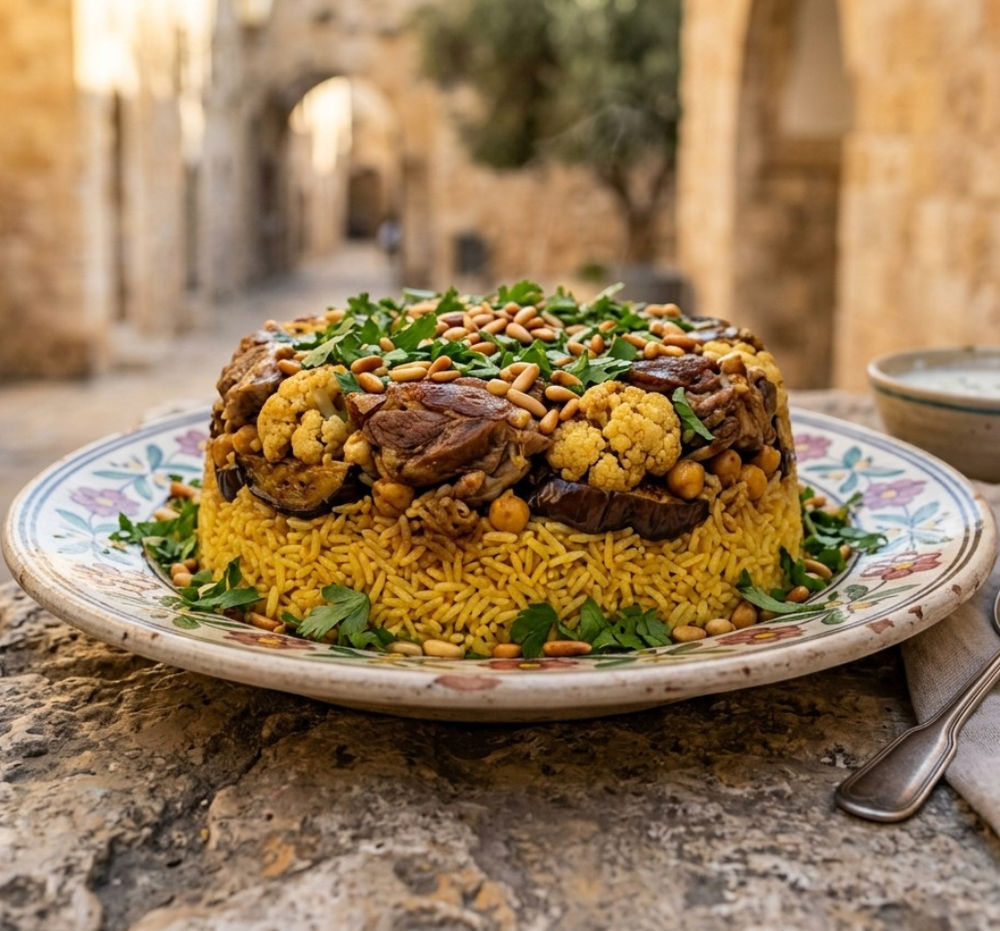
Maqluba, meaning upside-down in Arabic, is a showstopping Palestinian classic of spiced rice layered with eggplant, cauliflower, and slow-cooked meat, then dramatically flipped onto a platter. Topped with toasted pine nuts and fresh parsley, every bite carries warmth, history, and deep Levantine soul.
Credits: THE PAINTED PASSPORT
Local cuisine study in Jerusalem, Israel

☕︎ Local Flavor

Machneyuda Restaurant

Rating: 5* | Price: $$$ | Coordinates: 31.7848° N, 35.2112° E

One of Jerusalem's most celebrated restaurants, Machneyuda turns the Mahane Yehuda market into its personal pantry with gloriously seasonal Israeli cuisine. The open kitchen buzzes with energy as chefs sing, joke, and plate extraordinary dishes with theatrical flair. Book weeks in advance and prepare for a meal that will genuinely change how you think about food.

View Entry Details

Azura

Rating: 5* | Price: $ | Coordinates: 31.7851° N, 35.2130° E

A tiny, no-frills gem tucked inside the Mahane Yehuda market serving slow-cooked Sephardic Jewish recipes that have barely changed in decades. The lamb stew and stuffed vegetables emerge from ancient pots with a depth of flavor that feels almost miraculous. Arrive early, claim a small table, and let the friendly chaos of the market wash over you.

View Entry Details

Tmol Shilshom

Rating: 4* | Price: $$ | Coordinates: 31.7833° N, 35.2140° E

A beloved literary café hidden inside a beautiful stone building near Nahalat Shiva, lined with bookshelves and glowing with warm afternoon light. The menu is hearty and vegetarian-friendly, with excellent shakshuka, salads, and homemade cakes that pair perfectly with a strong Israeli coffee. It's the kind of place where you sit down for lunch and somehow stay until dusk.

View Entry Details

Abu Shukri

Rating: 5* | Price: $ | Coordinates: 31.7793° N, 35.2299° E

Legendary among locals and savvy travelers alike, this unpretentious spot on Al-Wad Street in the Muslim Quarter serves what many consider the finest hummus in all of Jerusalem. Silky, warm, and generously drizzled with olive oil and whole chickpeas, it arrives with fresh pita still warm from the oven. Eating here is not just a meal — it is a rite of passage.

View Entry Details

🛌︎ Boutique Stays

King David Hotel

Rating: 5* | Price: $$$$ | Coordinates: 31.7764° N, 35.2181° E

A legendary Jerusalem landmark that has hosted royalty, presidents, and dignitaries since 1931. The grand stone façade and lush garden terrace overlooking the Old City walls create an unforgettable first impression. Impeccable service, a stunning pool, and richly appointed rooms make every stay feel genuinely historic.

View Entry Details

Mamilla Hotel

Rating: 5* | Price: $$$$ | Coordinates: 31.7784° N, 35.2197° E

Sleek and contemporary, Mamilla sits just steps from the Jaffa Gate with breathtaking views of the ancient city walls. Rooftop bar evenings here are pure magic, blending cool cocktails with one of the world's most dramatic skylines. The design-forward rooms feel like a stylish sanctuary after long days of exploration.

View Entry Details

American Colony Hotel

Rating: 5* | Price: $$$ | Coordinates: 31.7862° N, 35.2317° E

Tucked inside a 19th-century Ottoman pasha's palace, this beloved hotel radiates tranquility and old-world charm in East Jerusalem. Ivy-draped courtyards, a gorgeous summer pool, and a storied bar frequented by journalists and diplomats give it a unique character. It feels less like a hotel and more like a beautifully kept secret.

View Entry Details

The Harmony Hotel

Rating: 4* | Price: $$ | Coordinates: 31.7832° N, 35.2138° E

A warm and thoughtfully designed boutique hotel nestled in the vibrant Nahalat Shiva neighborhood, perfect for travelers who love being at the heart of city life. Rooms are bright, comfortable, and filled with clever local design touches that reflect Jerusalem's creative spirit. The rooftop breakfast with city views is a genuinely lovely way to start each morning.

View Entry Details

📍︎ Field Study

The Old City & Western Wall

Rating: 5* | Price: Free | Coordinates: 31.7767° N, 35.2346° E

Walking through the ancient stone gates into Jerusalem's UNESCO-listed Old City is one of the most profound experiences available anywhere on earth. The Western Wall, holiest accessible site in Judaism, hums with prayer, emotion, and centuries of accumulated meaning at any hour of the day. Wander the Armenian, Jewish, Muslim, and Christian quarters to feel the extraordinary layering of civilizations in one small place.

View Entry Details

Yad Vashem Holocaust Memorial

Rating: 5* | Price: Free | Coordinates: 31.7745° N, 35.1763° E

Israel's official Holocaust memorial and museum is a deeply moving, architecturally striking institution set among the pine forests of Mount Herzl. The main museum guides visitors through the full narrative of the Holocaust with extraordinary personal testimonies, artifacts, and photographic evidence. Allow at least half a day, visit with an open heart, and leave with a renewed appreciation for memory and human dignity.

View Entry Details

Mahane Yehuda Market

Rating: 5* | Price: Free | Coordinates: 31.7848° N, 35.2115° E

Jerusalem's most vibrant outdoor market spills across two long parallel streets packed with vendors selling spices, halva, fresh produce, pastries, and almost everything in between. By day it is a sensory wonderland of color and aroma; by night the stalls transform into buzzing bars and street-food counters with live music. This is where the city truly comes alive, and no visit to Jerusalem is complete without losing yourself here for a few hours.

View Entry Details

Church of the Holy Sepulchre

Rating: 5* | Price: Free | Coordinates: 31.7784° N, 35.2297° E

Built over the sites traditionally identified as Golgotha and the tomb of Jesus, this ancient church is one of Christianity's most sacred and fascinating places of pilgrimage. Shared by six different Christian denominations, its interior is a layered, incense-filled labyrinth of chapels, mosaics, and flickering candlelight that feels genuinely timeless. Going early in the morning, before the crowds arrive, transforms the experience into something quiet and deeply contemplative.

View Entry Details

Typography

Archival Note: A formal technical study of Jerusalem, Israel—archiving the coordinates, elevation, and environmental data that define the region. This data serves as a vital record for our ongoing global field study, allowing us to reconstruct the regional atmosphere with archival precision before our physical arrival.

Botanical and pigment specimen study for Jerusalem, Israel Colors of Jerusalem, Israel
Coordinates
31.7767° N, 35.2346° E — Jerusalem Old City, near the Western Wall Plaza
Historical Epoch
Continuously inhabited for over 5,000 years, Jerusalem has passed through Canaanite, Israelite, Babylonian, Persian, Hellenistic, Roman, Byzantine, Islamic, Crusader, Ottoman, and British hands, each leaving its mark on the living stone.
Elevation
754-826 m / 2,474-2,710 ft - Jerusalem sits high in the Judean Hills, giving it cooler temperatures than the coast and occasional winter snow.
Atmosphere
Csa - Hot-summer Mediterranean. Warm dry summers and mild wet winters. Snow is rare but possible in January. Spring and autumn are ideal.
Observation Hour
06:30 - Dawn light catches the Jerusalem stone at its warmest, turning the Old City walls a deep amber gold. Shadows are long and soft, and the early quiet amplifies every detail.
Primary Pigment
Jerusalem Stone Ochre (#C8A97A) and Dome Gold (#D4A843)
Best Time to Visit
March through May - Spring brings mild temperatures, wildflowers in the Judean Hills, and golden light without summer's intense heat or winter's rain.
Avoid Visiting
July through August - Peak summer heat, maximum tourist crowds, and the highest prices of the year converge to make this the least comfortable window for exploration.

The Local Tongue

Language is the invisible architecture of Jerusalem, Israel. These entries document the regional vocabulary—capturing the "texture" of local speech that standard translations often miss. Hand-curated expressions reflecting the specific spirit and daily rhythm of the region.
Archival study of Hebrew cultural texture

via / Karolína Balogová

Primary Language Hebrew
Regional Dialect Israeli Hebrew, with significant Arabic spoken throughout East Jerusalem and the Old City quarters.

Davka (דווקא)

Davka carries the meaning of 'specifically' or 'on purpose,' often with a hint of irony or defiance. It captures the Jerusalem spirit perfectly: the feeling of choosing something precisely because it is complicated, like pausing at the Western Wall davka on the most crowded Friday afternoon, when the plaza is electric with prayer and the air smells of candle wax and eucalyptus.

Yalla (יאללה / يلا)

Yalla is a call to action meaning 'let's go' or 'come on,' borrowed from Arabic and absorbed completely into everyday Israeli Hebrew. Vendors in Mahane Yehuda Market use it as punctuation, tossing it between price offers and handfuls of za'atar, so that the whole covered shuk seems to hum with a warm, forward-moving energy that carries shoppers deeper into the fragrant stalls.

Makom (מקום)

Makom means 'place' in Hebrew, but in Jewish thought it is also one of the names for the divine, implying that place and presence are inseparable. Standing at the junction of the Armenian, Jewish, Christian, and Muslim quarters, where four distinct worlds share a single cobblestone crossroads, the weight of that word - place as something sacred - becomes entirely physical.

Wait! before you go...

Before you head over to Jerusalem, Israel, we’ve audited the essential data points for this corner of the world. These notes cover the logistics—from currency ratios to transit hubs—to help you navigate the landscape with clarity.
🚲 Getting Around Jerusalem has no major airport of its own; most visitors arrive via Ben Gurion International Airport in Tel Aviv, roughly 50 km away. The city is navigated by light rail, bus, and taxi, with the Old City itself accessible only on foot through its ancient narrow gates.
⚖️ Cash or Card Cards are widely accepted in hotels, restaurants, and modern shops across West Jerusalem, but cash in Israeli New Shekels is essential for the Old City markets, smaller Arab-owned shops, and street food vendors. Carrying a mix of both ensures smooth movement between the city's very different economic worlds.
☁️ Good to Know Jerusalem operates on a dual-calendar rhythm: the Jewish Sabbath runs from Friday sundown to Saturday night, when much of West Jerusalem shuts down completely, while the Muslim Quarter and Christian sites follow their own sacred schedules. Planning around these overlapping holy days prevents frustrating closures and reveals the city's true ceremonial character.
🏧 ATMs ATMs are reliably found throughout West Jerusalem, near the Jaffa Gate entrance to the Old City, along Ben Yehuda Street, and inside the major hotels. It is worth withdrawing cash before heading deep into the Old City or the Mahane Yehuda Market area, where ATM access becomes sparse and vendors strongly prefer cash.
💳 Currency The Israeli New Shekel (ILS) is the official currency, abbreviated as NIS and symbolized as. Credit cards are widely accepted in modern establishments, but smaller denominations of cash are indispensable for markets, tips, and sites within the Old City where card machines simply do not exist.
🔌 Plugs Israel uses Type H outlets exclusively, a three-pin configuration unique to the country. Visitors from Europe or North America will need a specific adapter, as most universal adapters do not include the Type H.
🛡️ Safety Jerusalem is generally safe for tourists, with a visible security presence around major religious sites and transit hubs. Visitors should stay informed about current regional conditions through their government's travel advisory, and exercise standard awareness in crowded areas, particularly around flashpoints like the Temple Mount during religious holidays.
✈️ Airports Ben Gurion International Airport (TLV) in Tel Aviv is the primary international gateway for Jerusalem, located approximately 50 km west and served by most major global carriers. The journey to Jerusalem takes around 45 to 60 minutes by train, sherut shared taxi, or private transfer, with the train being the most affordable and straightforward option.

Behind The Scenes

Nathan

Note from the Founder

Hey, did you know this fun fact about Jerusalem, Israel? Jerusalem stone is not just a tradition but a legal requirement: a 1918 British Mandate ordinance, still enforced today, mandates that all buildings in Jerusalem be faced with the pale local limestone, preserving the city's visual unity across millennia.
Thank you for exploring the Jerusalem, Israel series with us. We hope these notes have inspired you to add this incredible destination to your own passport—we are so glad you're here. — Nathan

Some of our Favorites