Shop the Collection

To help you build your own global archive, we've prepared this collection of watercolor studies from our research into Jerash, Jordan. These artifacts are designed to bring the stillness of this corner of the world into your home.

Original Series Decorative Magnet

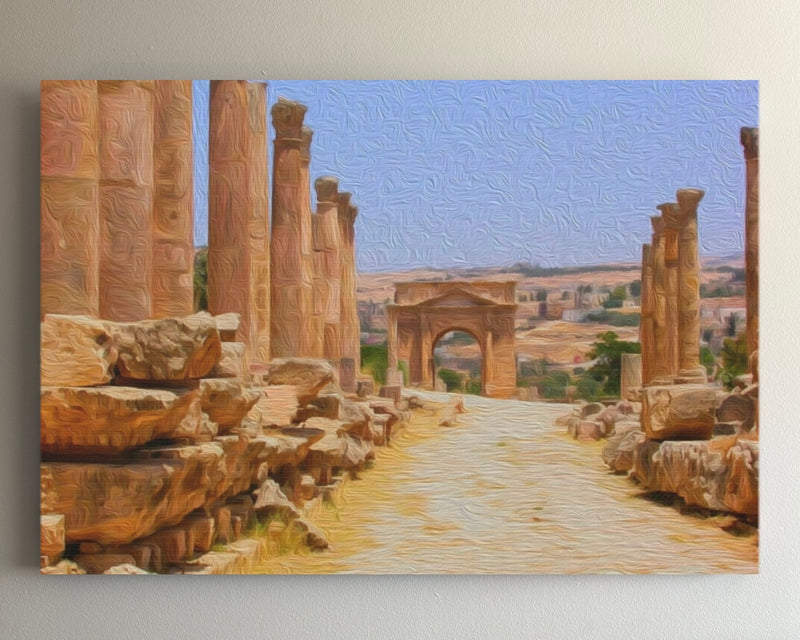
A personal study of Jerash, Jordan, captured in high-fidelity watercolor and prepared for your collection.

Jerash, Jordan | Ancient Roman Ruins Pathway | Original Series Decorative Magnet
Add to Collection / $18
Exclusive Series Artifact

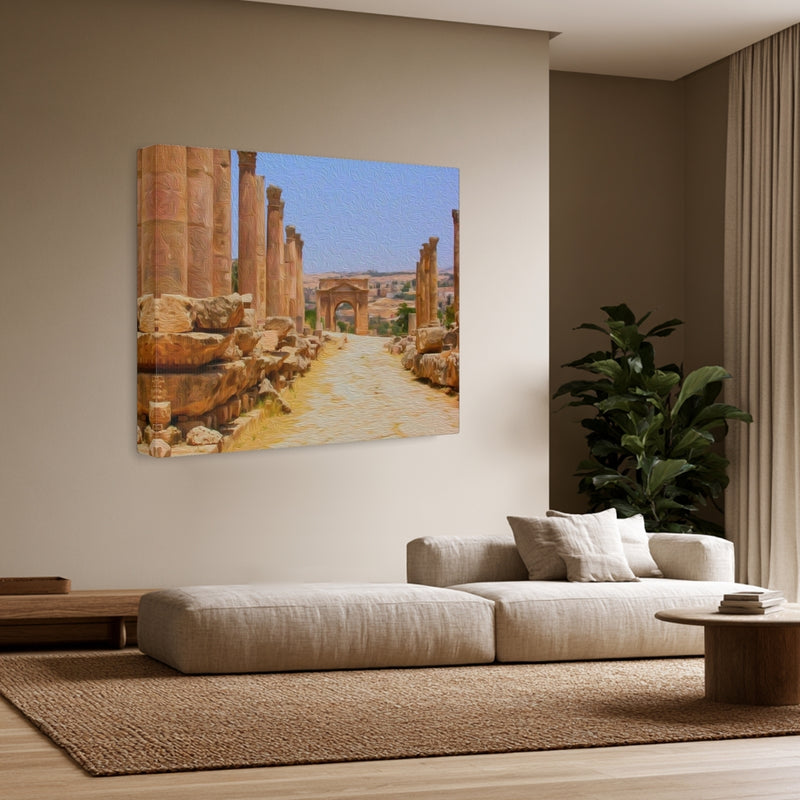
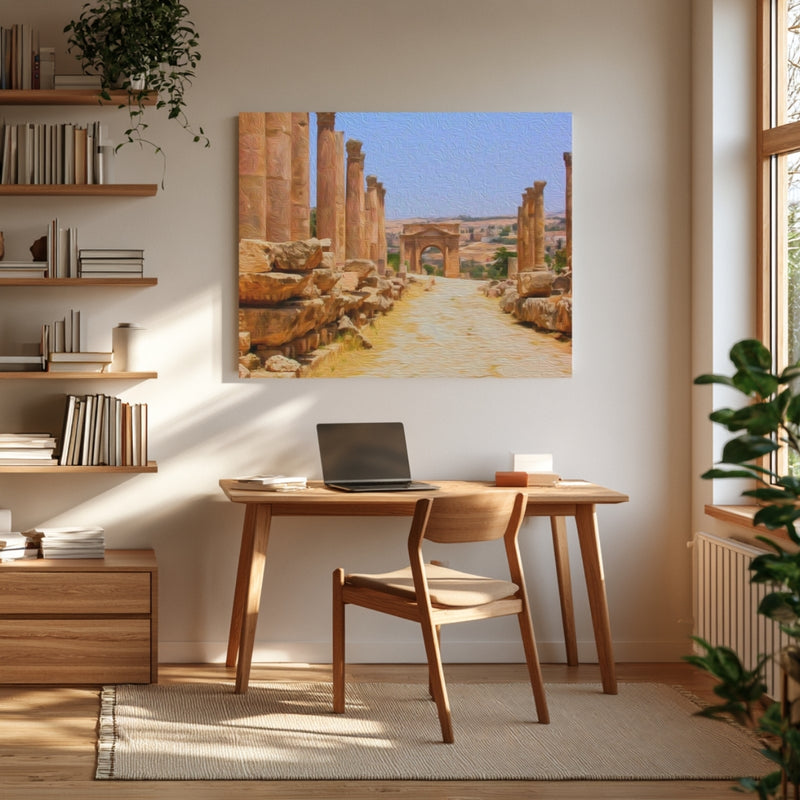
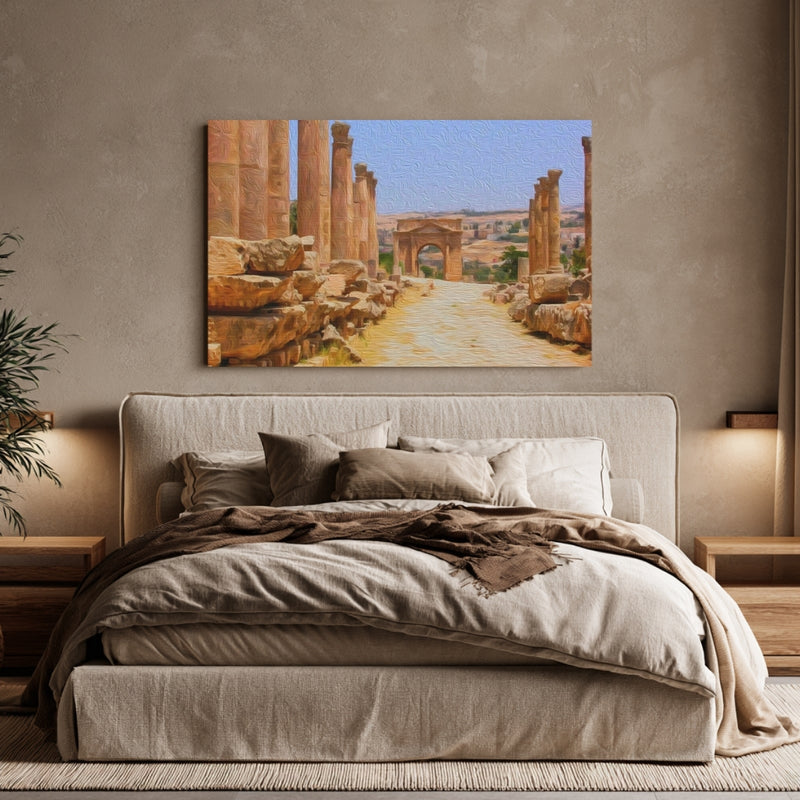
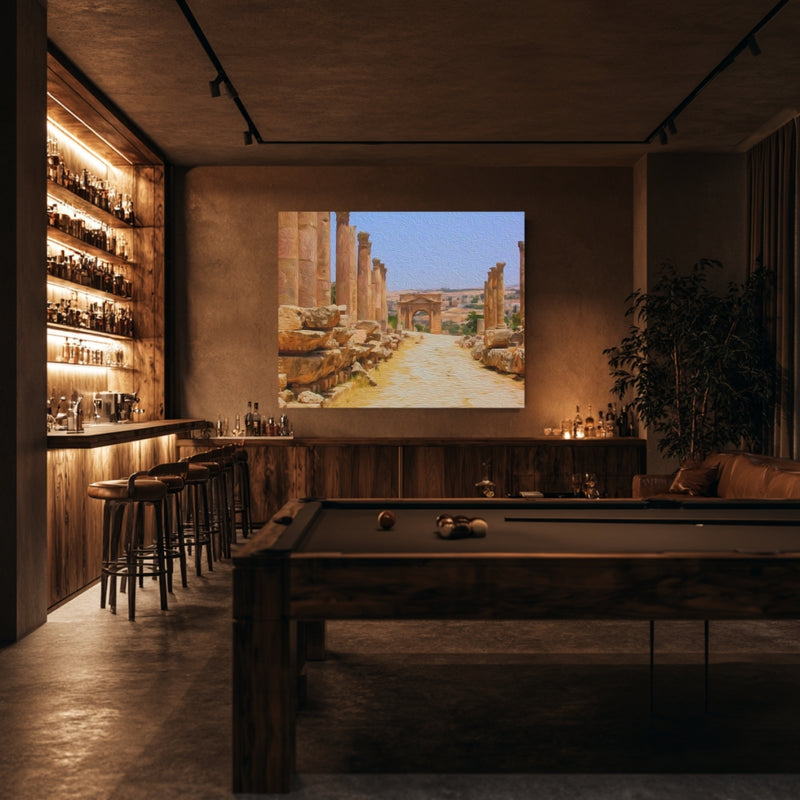
Original Series Gallery Canvas

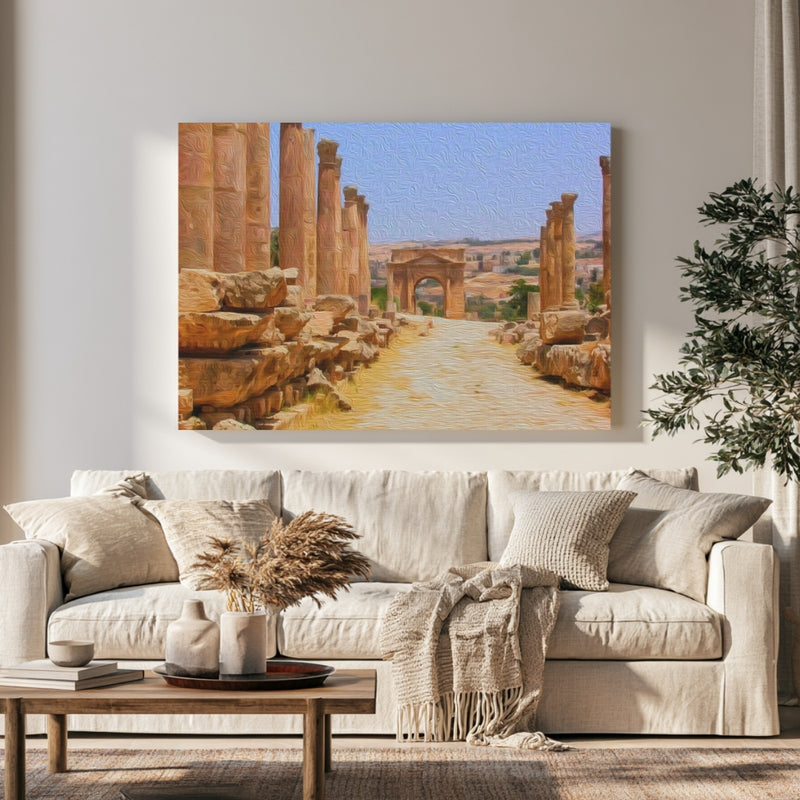
This high-fidelity canvas is a beautiful way to anchor a room and keep your memories of Jerash, Jordan fresh long after you've returned home.

Jerash, Jordan | Ancient Roman Ruins Pathway | Original Series Gallery Canvas detail Jerash, Jordan | Ancient Roman Ruins Pathway | Original Series Gallery Canvas detail Jerash, Jordan | Ancient Roman Ruins Pathway | Original Series Gallery Canvas detail Jerash, Jordan | Ancient Roman Ruins Pathway | Original Series Gallery Canvas detail
Add to Collection / $65

Original Series Hardboard Coaster

A personal study of Jerash, Jordan, captured in high-fidelity watercolor and prepared for your collection.

Jerash, Jordan | Ancient Roman Ruins Pathway | Original Series Hardboard Coaster
Add to Collection / $18
Exclusive Series Artifact

The Spirit of the Land

Archival Note: A curated field study of Jerash, Jordan, prioritizing the specific atmospheric stillness of the region. These artifacts have been meticulously sourced from our global archival partners to represent the area's unique cultural frequency and environmental character. This selection serves as a formal observation for our ongoing global archive, vetted for its visual accuracy and archival merit.

Jerash, Jordan study No. 01
Jerash, Jordan / 01 VIA / Hisham Zayadneh
The afternoon light falls across the ancient Forum of Jerash, illuminating the honey-colored columns that curve in their distinctive oval colonnade, while the modern city sprawls across the hills beyond. Ruined stone foundations in the foreground speak to layers of Roman construction, their weathered blocks casting short shadows on the paved ground. Above it all, wispy cirrus clouds stretch across a deep blue sky, the kind of clear Mediterranean afternoon that makes two thousand years feel both impossibly distant and strangely close.
Jerash, Jordan study No. 02
Jerash, Jordan / 02 VIA / Danil Ahmetsah
The late afternoon sun casts sharp shadows across the weathered stone, emphasizing every crack and carved detail in the ancient facade. The clear blue sky creates an almost severe contrast with the warm terracotta tones of the ruins, the kind of light that makes everything feel both exposed and timeless. Standing here would mean heat absorbed by centuries-old stones, stillness broken only by the occasional whisper of wind through empty archways.
Jerash, Jordan study No. 03
Jerash, Jordan / 03 VIA / Matt Jones
The Corinthian capitals atop these honey-colored columns show delicate acanthus leaves still crisp after centuries, their carved details catching shadows in the late afternoon light. Beyond the temple ruins, modern Jerash sprawls across distant hills, its white buildings a stark contrast to the warm limestone that dominates the ancient site. Green grass pushes through cracks in the paving stones below, softening the geometric precision of Roman engineering with something wild and unplanned.

Where to wander

Archival Note: A curated field study of Jerash, Jordan, prioritizing cultural relevance and archival merit. While we haven't touched down here yet, we’ve meticulously vetted these locations through our global network of contributors to ensure they represent the most authentic atmosphere for your own expedition.

Local Cuisine Spotlight
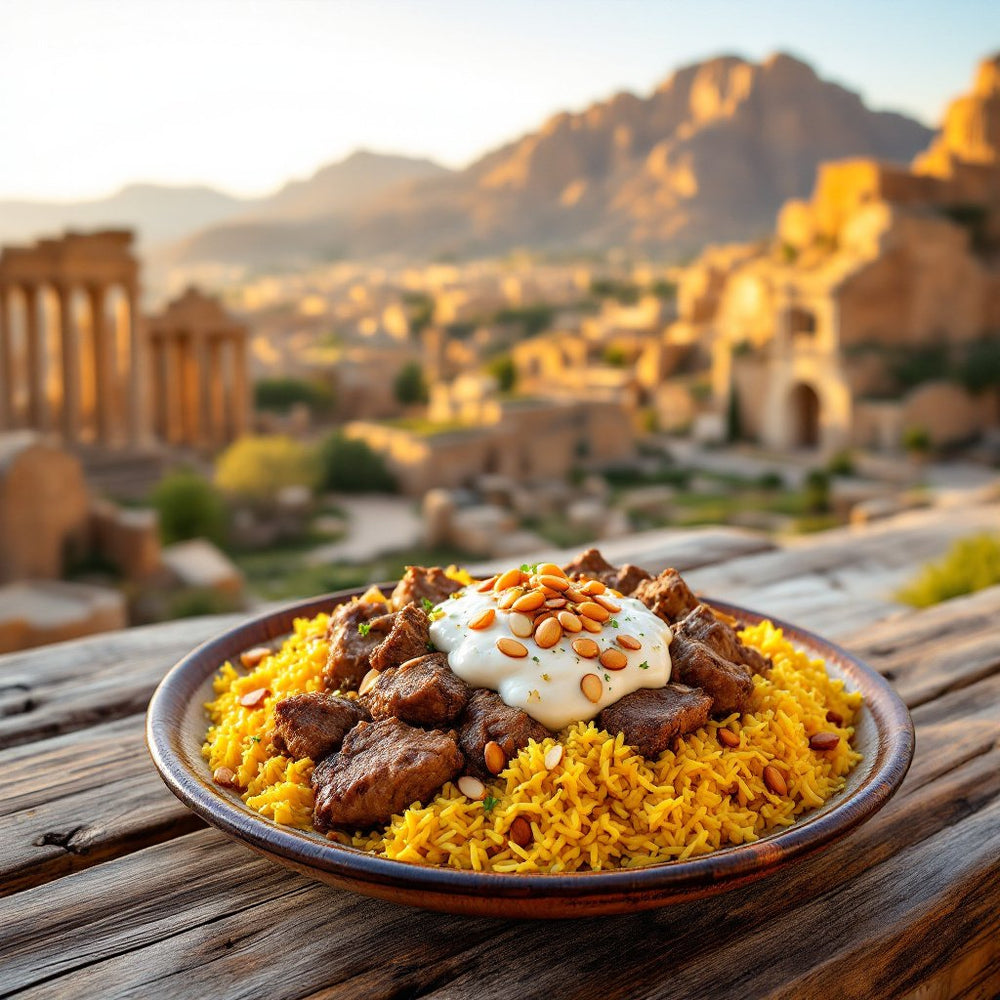
This Jordanian mansaf features tender lamb chunks nestled in golden saffron rice, crowned with creamy jameed yogurt sauce and toasted pine nuts. The dish represents Jordan's national treasure, traditionally served on special occasions where the tangy fermented yogurt balances the richly spiced meat. Against Jerash's ancient Roman ruins, this ceremonial meal connects modern tables to centuries of Bedouin hospitality.
Credits: The Painted Passport
Local cuisine study in Jerash, Jordan

☕︎ Local Flavor

Lebanese House Restaurant

Rating: 4* | Price: $$ | Coordinates: 32.2801 N, 35.8934 E

Three generations work this kitchen where recipes arrived with the owner's grandmother from the Bekaa Valley in 1948. The mezza spreads across copper trays—mutabal smoky with char, fattoush bright with sumac, and kibbeh shaped by hands that have perfected the ratio of bulgur to spiced lamb over decades. Vine leaves from the garden behind the restaurant are rolled each morning, their slight tartness balancing the richness perfectly.

View Entry Details

Um Khalil's Kitchen

Rating: 4* | Price: $ | Coordinates: 32.2785 N, 35.8912 E

Um Khalil cooks in a small storefront with just four tables, preparing each dish only when ordered, the way she feeds her own family. Her maqluba arrives inverted onto platters in a fragrant mountain of rice, eggplant, and tender chicken, perfumed with cardamom and topped with toasted almonds. The daily soup changes with what's fresh at the market, often incorporating wild herbs gathered from hills surrounding the ruins.

View Entry Details

Artemis Restaurant

Rating: 5* | Price: $$$ | Coordinates: 32.2793 N, 35.8956 E

Floor-to-ceiling windows overlook the Temple of Artemis while the chef reimagines Jordanian cuisine through techniques learned in Paris and returned home. Local freekeh is treated like risotto, absorbing saffron-tinted broth grain by grain. Lamb from Ajloun is slow-cooked with dates and pomegranate molasses, served on pottery thrown by a ceramicist from nearby Mahis village whose work echoes ancient Roman forms found in Jerash excavations.

View Entry Details

Al-Khayam Sweets & Coffee

Rating: 4* | Price: $ | Coordinates: 32.2807 N, 35.8928 E

This tiny shop has served cardamom coffee and kunafa since 1962, its walls layered with photographs of archaeological discoveries and visiting dignitaries. The kunafa is made continuously throughout the day, the cheese stretched and layered with vermicelli pastry, then soaked in orange blossom syrup. Locals gather here after Friday prayers, and the owner still remembers when farmers would unearth Roman coins while plowing and bring them here to show neighbors.

View Entry Details

🛌︎ Boutique Stays

Olive Branch Hotel

Rating: 4* | Price: $$ | Coordinates: 32.2811 N, 35.8989 E

Stone archways frame views of the ancient hippodrome from this family-run hotel where breakfast includes labneh made by the owner's mother each morning. The rooftop terrace becomes a gathering place at sunset, where guests share stories over sweet tea while swifts circle the Roman columns below. Each room features hand-embroidered pillows from local cooperatives, connecting you directly to Jerash's living textile traditions.

View Entry Details

Hadrian's Gate Resthouse

Rating: 3* | Price: $ | Coordinates: 32.2756 N, 35.8923 E

Steps from the archaeological site, this modest guesthouse occupies a renovated 1940s stone building where the proprietor's grandfather once sold provisions to early excavation teams. Morning light filters through original wooden shutters onto floors of polished limestone. The simple rooms lack luxury but offer something rarer: authentic hospitality and the owner's encyclopedic knowledge of every column and inscription in Jerash.

View Entry Details

The Columns Boutique Hotel

Rating: 5* | Price: $$$ | Coordinates: 32.2789 N, 35.8967 E

Contemporary architecture embraces Roman-era fragments discovered during construction, with original mosaic pieces protected beneath glass floor panels in the lobby. Each suite opens onto private gardens planted with herbs mentioned in ancient texts—rosemary, hyssop, and biblical mint. The property employs local archaeologists as evening guides, offering guests private after-hours access to illuminate the Forum's colonnades under starlight.

View Entry Details

Ancient City Guesthouse

Rating: 3* | Price: $ | Coordinates: 32.2798 N, 35.8945 E

This welcoming pension sits in the old town where limestone homes cluster along stepped streets unchanged for generations. The owner's wife prepares traditional mansaf upon request, patiently explaining each spice as she cooks. Window boxes overflow with geraniums, and the shared terrace offers unobstructed views of the Temple of Artemis—particularly magical when dawn first touches its Corinthian capitals.

View Entry Details

📍︎ Field Study

The Oval Plaza and Cardo Maximus

Rating: 5* | Price: $ | Coordinates: 32.2789 N, 35.8975 E

Jerash's colonnaded street stretches nearly a kilometer, its limestone columns still bearing the wheel ruts of Roman chariots worn into paving stones. The engineering feat of the oval forum—asymmetric yet perfectly balanced—reveals Roman adaptability to existing sacred sites. Visit during late afternoon when shadows emphasize the fluting on each column, and you can still see mason's marks carved by workers nearly two millennia ago, their individual signatures persisting through empires.

View Entry Details

Temple of Artemis

Rating: 5* | Price: $ | Coordinates: 32.2820 N, 35.8992 E

Eleven Corinthian columns rise from the acropolis, engineered to sway slightly in wind—place your hand against the stone and feel the ancient architect's genius in motion. This temple honored both Artemis and the Arab goddess Allat, a cultural syncretism visible in the decorative motifs blending Hellenistic and Nabataean elements. The limestone quarries that provided these massive drums lie visible in the eastern hills, where archaeologists still find abandoned columns that never completed their journey to the temple.

View Entry Details

The Hippodromes and South Theater

Rating: 5* | Price: $ | Coordinates: 32.2765 N, 35.8941 E

The theater's acoustics remain so precise that a coin dropped at center stage rings clearly in the highest seats, demonstrating Roman engineering that required no amplification for 3,000 spectators. The adjacent hippodrome hosted chariot races, and recent excavations uncovered betting tokens and graffiti cheering favorite teams—the Blues and the Greens. Modern performances here during the Jerash Festival each July prove these spaces remain alive, not merely preserved.

View Entry Details

Jerash Archaeological Museum

Rating: 4* | Price: $ | Coordinates: 32.2795 N, 35.8968 E

Small but meticulously curated, this museum houses artifacts that illuminate daily life beyond monumental architecture—glass perfume bottles, bronze surgical instruments, children's toys carved from olive wood. The coin collection traces Jerash's identity through currency: Greek, Roman, Byzantine, and Umayyad faces revealing each empire's claim on this continuously inhabited city. A stone inscription records a merchant guild's donation for street repairs in 130 CE, proof that civic pride and bureaucratic complaints are truly timeless.

View Entry Details

Typography

Archival Note: A formal technical study of Jerash, Jordan—archiving the coordinates, elevation, and environmental data that define the region. This data serves as a vital record for our ongoing global field study, allowing us to reconstruct the regional atmosphere with archival precision before our physical arrival.

Botanical and pigment specimen study for Jerash, Jordan Colors of Jerash, Jordan
Coordinates
32.2789° N, 35.8967° E — Gilead Highlands, Northern Jordan
Historical Epoch
Jerash rose as a Hellenistic city in the 2nd century BCE, then flourished spectacularly under Roman rule when it joined the Decapolis league. Earthquakes in the 8th century buried much of it under protective sand until excavations began in the 1920s, preserving this ancient grandeur like a time capsule.
Elevation
500–600 m / 1,640–1,968 ft — valley floor to surrounding Gilead hills
Atmosphere
BSh - Hot semi-arid climate. Summers blaze hot and dry while winters bring cool nights and occasional rain that briefly turns the hills green, a desert rhythm everyone plans around.
Observation Hour
16:30 - The late afternoon sun strikes the Temple of Artemis from the west, turning every fluted column into glowing honey. The whole archaeological site takes on a golden intensity that makes shadows impossibly long and every stone surface radiant.
Primary Pigment
Limestone Honey (#E6C89A) and Weathered Terracotta (#C8866B)
Best Time to Visit
April or October - the temperature hovers in the comfortable low twenties, wildflowers occasionally dot the hillsides, and the light has that crystalline desert quality perfect for photography.
Avoid Visiting
July and August - midday temperatures climb above 35°C, turning the exposed ruins into an oven with almost no shade and the glare off pale limestone intense enough to bleach out photographs.

The Local Tongue

Language is the invisible architecture of Jerash, Jordan. These entries document the regional vocabulary—capturing the "texture" of local speech that standard translations often miss. Hand-curated expressions reflecting the specific spirit and daily rhythm of the region.
Archival study of Arabic cultural texture

via / Hisham Zayadneh

Primary Language Arabic
Regional Dialect Jordanian Arabic

yalla (يلا)

Yalla means 'let's go' or 'come on,' but carries a warmth that simple translation misses. Vendors at the entrance to the ruins call it out cheerfully, taxi drivers use it to signal departure, and locals layer it into nearly every exchange as both greeting and gentle encouragement.

sahten (صحتين)

Sahten translates roughly to 'double health' and appears whenever food is served or received. The phrase floats across restaurant tables in Jerash after plates of mansaf arrive, a blessing that turns every meal into a small ceremony of gratitude and connection between host and guest.

qahwa (قهوة)

Qahwa is coffee, but in Jordan it means the cardamom-spiced version served in tiny cups as a gesture of hospitality. Shop owners throughout Jerash offer it reflexively to anyone who pauses to browse, the ritual as ancient as the columns outside, bitter and fragrant and impossibly strong.

Wait! before you go...

Before you head over to Jerash, Jordan, we’ve audited the essential data points for this corner of the world. These notes cover the logistics—from currency ratios to transit hubs—to help you navigate the landscape with clarity.
🚲 Getting Around Most visitors arrive by car or organized tour from Amman, about 50 kilometers south. Hiring a private taxi for the day runs around 40-50 JOD and gives the freedom to explore at a relaxed pace, far better value than rushed group schedules.
⚖️ Cash or Card About 60-40 in favor of cash, especially outside the main hotels. Street vendors around the archaeological site, small guesthouses, and family-run restaurants operate cash-only, and having small bills for entrance fees and tips makes everything smoother.
☁️ Good to Know Arrive at the ruins right when they open at 8am and the site is nearly empty, the stones still cool and the tour buses hours away. The difference between that quiet morning hour and midday crowds transforms the entire experience from meditative to overwhelming.
🏧 ATMs Arab Bank and Cairo Amman Bank have reliable ATMs in the town center near the main roundabout. Withdraw larger amounts in Amman before heading up if possible, as machines here sometimes run low on cash during busy tourist weekends.
💳 Currency The Jordanian Dinar is one of the strongest currencies in the region, so prices feel higher than neighboring countries. A good restaurant meal runs 8-12 JOD, a coffee costs about 1 JOD, and entrance to the ruins is 10 JOD without the Jordan Pass.
🔌 Plugs Type C, D, F, G, and J sockets at 230V. Bring a universal adapter since the variety can surprise you even within the same building.
🛡️ Safety Jerash is remarkably safe, with the most persistent challenge being enthusiastic souvenir sellers near Hadrian's Arch. A polite smile and firm 'la shukran' works wonders, and the genuine hospitality of locals far outweighs any sales pressure you might encounter.
✈️ Airports Queen Alia International Airport (AMM) sits about 85 kilometers south of Jerash, roughly 90 minutes by car. Arranging airport transfer through your accommodation beforehand costs 35-45 JOD and saves the hassle of negotiating after a long flight.

Behind The Scenes

Nathan

Note from the Founder

Hey, did you know this fun fact about Jerash, Jordan? The columns lining the Cardo Maximus still bear grooves worn by Roman cart wheels two thousand years ago, visible tracks that prove this wasn't just a ceremonial street but a working thoroughfare where daily commerce clattered past temples and fountains.
Thank you for exploring the Jerash, Jordan series with us. We hope these notes have inspired you to add this incredible destination to your own passport—we are so glad you're here. — Nathan

Some of our Favorites