Shop the Collection

To help you build your own global archive, we've prepared this collection of watercolor studies from our research into Great Wall of China. These artifacts are designed to bring the stillness of this corner of the world into your home.

Original Series Decorative Magnet

A personal study of Great Wall of China, captured in high-fidelity watercolor and prepared for your collection.

Great Wall of China | Original Series Decorative Magnet
Add to Collection / $18
Exclusive Series Artifact

Original Series Gallery Canvas

This high-fidelity canvas is a beautiful way to anchor a room and keep your memories of Great Wall of China fresh long after you've returned home.

Great Wall of China | Original Series Gallery Canvas detail Great Wall of China | Original Series Gallery Canvas detail Great Wall of China | Original Series Gallery Canvas detail Great Wall of China | Original Series Gallery Canvas detail
Add to Collection / $65

Original Series Hardboard Coaster

A personal study of Great Wall of China, captured in high-fidelity watercolor and prepared for your collection.

Great Wall of China | Original Series Hardboard Coaster
Add to Collection / $18
Exclusive Series Artifact

The Spirit of the Land

Archival Note: A curated field study of Great Wall of China, prioritizing the specific atmospheric stillness of the region. These artifacts have been meticulously sourced from our global archival partners to represent the area’s unique cultural frequency and environmental character. This selection serves as a formal observation for our ongoing global archive, vetted for its visual accuracy and archival merit.

Great Wall of China study No. 01
Great Wall of China / 01 VIA / Hanson Lu
The Great Wall stretches gracefully across these rolling hills like a golden ribbon, perfectly harmonizing with the vibrant autumn canopy. It’s a breathtaking reminder of how human ambition can stand in quiet, enduring beauty alongside the rhythms of nature. Looking at this peaceful horizon, you can’t help but feel a sense of timeless wonder and the quiet strength of history.
Great Wall of China study No. 02
Great Wall of China / 02 VIA / Max van den Oetelaar
The Great Wall stands as a silent, majestic guardian over the frost-dusted peaks, embodying a sense of profound resilience and calm. There is something deeply moving about seeing these ancient stones weathered by time yet still standing firm against the vast, winter sky. It invites us to pause and appreciate the quiet strength found in endurance and the peaceful stillness of a world at rest.
Great Wall of China study No. 03
Great Wall of China / 03 VIA / CJ
The Great Wall curves through these lush, green mountains like a testament to enduring spirit, standing in beautiful contrast against the vibrant forest. It is inspiring to see how this ancient path follows the natural flow of the earth, offering a sense of harmony and boundless perspective. This view serves as a peaceful reminder that even the grandest journeys are built stone by stone, weathered yet magnificent under the open sky.

Where to wander

Archival Note: A curated field study of Great Wall of China, prioritizing cultural relevance and archival merit. While we haven't touched down here yet, we’ve meticulously vetted these locations through our global network of contributors to ensure they represent the most authentic atmosphere for your own expedition.

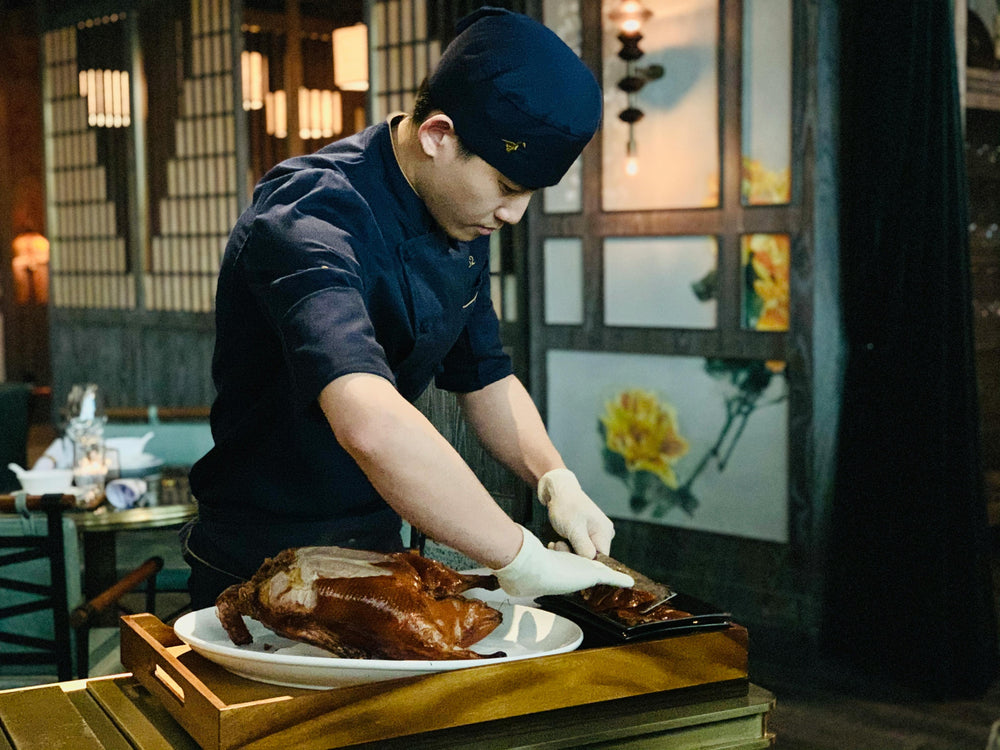
Local Cuisine Spotlight
The artistry of a master chef at work brings a deep sense of respect for tradition and the quiet focus of a craft perfected over time. Watching the careful preparation of a meal becomes a peaceful ritual, celebrating the dedication and passion that turn simple ingredients into a heartfelt experience. It is an inspiring reminder that true excellence is found in the steady, mindful details of our daily work.
Credits: MorNa Tang
Local cuisine study in Great Wall of China

☕︎ Local Flavor

Black Sesame Kitchen

Rating: 4.7★ | Price: $$$ | Coordinates: 39.9365° N, 116.4012° E

Navigate the narrow veins of the Dongcheng hutongs to unearth this communal dining sanctuary. Guests witness the preparation of seasonal dishes like Five-Flavor Eggplant within a traditional courtyard setting characterized by gray brick and timber. It serves as a living archive of the siheyuan lifestyle, preserving the intimate culinary lineages of old Beijing.

View Entry Details

TRB Hutong

Rating: 4.6★ | Price: $$$$ | Coordinates: 39.9255° N, 116.3995° E

Ascend the steps of a 600-year-old Qing Dynasty temple to experience a masterful collision of contemporary gastronomy and sacred architecture. The dining room occupies the former Zhushikou Church, where white tablecloths contrast against ancient weathered beams and minimalist art. It acts as an anchor for the city's identity, documenting the transition from imperial ritual to modern cosmopolitanism.

View Entry Details

QUANJUDE

Rating: 4.5★ | Price: $$$ | Coordinates: 39.9015° N, 116.3994° E

Observe the ritualistic carving of lacquered waterfowl in a dining hall that has echoed with the same precision since 1864. The wood-fired ovens utilize date and pear timbers to impart a distinct fruitwood smoke into the crisp skin of the roast duck. This establishment is a physical manuscript of imperial culinary technique, documenting the democratization of a once-exclusive courtly feast.

View Entry Details

Lost Plate Beijing Hutong Food Tour

Rating: 4.9★ | Price: $$ | Coordinates: 39.9387° N, 116.3925° E

Navigate the labyrinthine alleyways via tuk-tuk to unearth family-run eateries that have remained largely invisible to the casual observer. Sample hand-pulled noodles and Beijing-style sliders in the very courtyards where residents have lived for generations. The tour serves as a vital piece of the city's puzzle, documenting the survival of authentic neighborhood commerce amidst rapid urbanization.

View Entry Details

🛌︎ Boutique Stays

Aman at Summer Palace, Beijing

Rating: 4.6★ | Price: $$$$ | Coordinates: 39.9986° N, 116.2736° E

Discover a series of heritage pavilions that once housed guests of Empress Dowager Cixi, now transformed into a sanctuary of polished teak and stone. The architecture honors the Ming Dynasty aesthetic, utilizing traditional joinery and internal courtyards that provide private access to the imperial gardens. It is a vital anchor for the city's cultural continuity, preserving the lineage of royal hospitality.

View Entry Details

The Peninsula Beijing

Rating: 4.6★ | Price: $$$$ | Coordinates: 39.9142° N, 116.4093° E

Experience the grandeur of a modern palace where the entry is marked by a magnificent three-tiered pailou gate. The interior features a curated collection of contemporary Chinese art and rooms inspired by the luxury of private rail travel, utilizing marble, silk, and rosewood. This hotel documents the transition of Wangfujing from a historic well district to a center of global luxury.

View Entry Details

The PuXuan Hotel and Spa

Rating: 4.6★ | Price: $$$$ | Coordinates: 39.9238° N, 116.4069° E

Survey the capital from a modernist masterpiece designed by Ole Scheeren, which sits atop the Guardian Art Center like a crown of translucent glass. The design incorporates "pixelated" brickwork that mimics the scale of the surrounding hutongs while offering interiors of dark charcoal basalt and warm timber. It represents an architectural ambition that seeks to bridge the gap between historic preservation and futurism.

View Entry Details

Rosewood Beijing

Rating: 4.6★ | Price: $$$$ | Coordinates: 39.9198° N, 116.4604° E

Unearth an urban oasis in the Chaoyang District that prioritizes residential comfort through the use of Mongolian black granite and fine silks. The hotel’s courtyard garden offers a rare moment of repose, shielding guests from the glass towers of the Central Business District. It functions as an archival record of the "New Beijing," illustrating how nature can be integrated into a high-density vertical city.

View Entry Details

📍︎ Field Study

Great Wall of China (Mutianyu Section)

Rating: 4.8★ | Price: $$$ | Coordinates: 40.4319° N, 116.5704° E

Ascend the granite ramparts of this Ming Dynasty fortification to survey a serpentine masterpiece that contours perfectly to the ridgeline. The Mutianyu section is distinguished by its 22 watchtowers and the dense forest that flanks the stone-paved walkway. This site is a physical manuscript of military engineering, documenting the empire's historical impulse for territorial integrity.

View Entry Details

Jinshanling (Hiking Tour)

Rating: 4.9★ | Price: $$$ | Coordinates: 40.6755° N, 117.2472° E

Navigate the rugged, unrestored beauty of the Wall at dawn to witness the interplay of light on ancient brick and crumbled mortar. This section offers the most diverse array of watchtower designs, including circular, square, and tiered structures built from local stone. It remains a vital piece of the archival puzzle, preserving the raw, weathered lineage of the Ming fortifications away from modern restoration.

View Entry Details

Forbidden City (Architectural Study)

Rating: 4.6★ | Price: $$ | Coordinates: 39.9163° N, 116.3972° E

Discover the mathematical precision of the world’s largest palace complex, where every hall and gate is aligned to the central axis of the city. Ground your study in the vermilion walls, yellow-glazed roof tiles, and the intricate "dougong" bracket systems that support the massive timber roofs. The complex is a physical manuscript of Chinese cosmology, documenting the divine order of the Imperial State.

View Entry Details

Temple of Heaven

Rating: 4.6★ | Price: $$ | Coordinates: 39.8837° N, 116.4128° E

Survey the Hall of Prayer for Good Harvests, a circular masterpiece constructed entirely without nails, symbolizing the connection between Earth and Heaven. The blue-tiled roof and deep red columns represent the sky and imperial authority, set within a park where local residents preserve the lineage of traditional martial arts. It is an anchor for the city's identity, documenting the intersection of state ritual and public life.

View Entry Details

Typography

Archival Note: A formal technical study of Great Wall of China—archiving the coordinates, elevation, and environmental data that define the region. This data serves as a vital record for our ongoing global field study, allowing us to reconstruct the regional atmosphere with archival precision before our physical arrival.

Botanical and pigment specimen study for Great Wall of China Colors of Great Wall of China
Coordinates
40.4319° N, 116.5704° E — Northern China, Yanshan Mountains
Historical Epoch
Ming Dynasty (1368–1644 CE) — built over foundations from the 7th century BCE
Elevation
200–1,534 m / 656–5,033 ft — wall follows the mountain ridgeline from valley floor to highest peaks
Atmosphere
Crisp and bracing — high-altitude continental with sharp seasonal contrasts
Observation Hour
05:30–06:30 — Golden Hour igniting the watchtowers in amber
Primary Pigment
Stone Grey (#918E85) and Earth Terracotta (#B35C44)
Best Time to Visit
April through May, September through October — the autumn and spring light is extraordinary on the stone watchtowers, temperatures are perfect for climbing the wall
Avoid Visiting
June through August — 35°C+ heat with extreme UV exposure on the exposed ridgeline sections, and summer smog from Beijing can obscure the longer views

The Local Tongue

Language is the invisible architecture of Great Wall of China. These entries document the regional vocabulary—capturing the "texture" of local speech that standard translations often miss. Hand-curated expressions reflecting the specific spirit and daily rhythm of the region.
Archival study of Mandarin Chinese cultural texture

via / Tristan

Primary Language Mandarin Chinese
Regional Dialect Beijing Dialect (Běijīnghuà)

雄伟 (Xióngwěi)

This word captures the sheer, breath-taking scale of the stone ramparts as they crest over impossible mountain peaks. It reminds us that human ambition, when paired with persistence, can create something that rivals the grandeur of nature itself.

宁静 (Níngjìng)

Beyond the tourist crowds, there is a profound, ancient silence that settles over the watchtowers at dawn. It is a peaceful invitation to breathe deeply and connect with the centuries of history whispering through the mountain winds.

毅力 (Yìlì)

The Great Wall is a physical manifestation of the unbreakable human spirit and our capacity to endure. Standing on its stones fills you with a quiet strength, proving that brick by brick, any monumental challenge can be overcome.

Wait! before you go...

Before you head over to Great Wall of China, we’ve audited the essential data points for this corner of the world. These notes cover the logistics—from currency ratios to transit hubs—to help you navigate the landscape with clarity.
🚲 Getting Around The most peaceful and efficient way to reach the popular Badaling section is the S2 scenic train, which offers a comfortable ride with huge windows to watch the mountains and the wall slowly come into view.
⚖️ Cash or Card You will want to lean heavily on mobile payments by linking your credit card to Alipay or WeChat Pay before you arrive, as this is how almost everyone pays for everything from street food to souvenirs, though keeping a small amount of cash for emergency backup is a smart move.
☁️ Good to Know A beautiful cultural charm is the concept of "saving face," so you will find that remaining calm and polite even during travel hiccups will open many doors and earn you a great deal of respect from the locals.
🏧 ATMs ATMs are very easy to find in major hubs like Beijing and you should look specifically for Bank of China or ICBC machines as they are the most reliable for international cards and usually offer clear English instructions.
💳 Currency The money is called the Renminbi (RMB), often referred to as Yuan, and while you can exchange cash at the airport or banks, the vibe is shifting rapidly toward a digital-first economy where physical bills are becoming less common in daily life.
🔌 Plugs China primarily uses Type A, C, and I plugs with a standard voltage of 220V, so while many modern phone and laptop chargers are dual-voltage, you should double check your gear and bring a universal adapter for those three-pronged Type I outlets.
🛡️ Safety The Great Wall is very safe for explorers, but please keep a gentle eye on your footing as the steps can be incredibly steep and uneven, and it is always wise to stay hydrated and carry a portable power bank so your navigation tools stay charged.
✈️ Airports You will most likely fly into Beijing Capital International Airport (PEK) or the stunningly modern Beijing Daxing International Airport (PKX), both of which serve as the primary gateways to the Great Wall sections near the capital.

Behind The Scenes

Nathan

Note from the Founder

Hey, did you know this fun fact about Great Wall of China? The Great Wall is not actually one continuous line but a vast network of walls and natural barriers that, if stretched out completely, would span over thirteen thousand miles!
Thank you for exploring the Great Wall of China series with us. We hope these notes have inspired you to add this incredible destination to your own passport—we are so glad you’re here. — Nathan

The Magnets

The Coasters

The Canvas