Shop the Collection

To help you bring a piece of your journey home, we've put together this collection of watercolor studies from our time in Florence, Italy. These are our favorite ways to keep the spirit of the trip alive.

Original Series Hardboard Coaster

A wonderful companion for your morning coffee. This coaster captures the atmosphere of Florence, Italy in a functional, beautiful way.

Florence, Italy | Original Series Hardboard Coaster
Add to Collection / $18
Exclusive Series Artifact

Original Series Gallery Canvas

This high-fidelity canvas is a beautiful way to anchor a room and keep your memories of Florence, Italy fresh long after you've returned home.

Florence, Italy | Original Series Gallery Canvas detail Florence, Italy | Original Series Gallery Canvas detail Florence, Italy | Original Series Gallery Canvas detail Florence, Italy | Original Series Gallery Canvas detail
Add to Collection / $65

Original Series Decorative Magnet

A lovely, high-res reminder for your fridge or workspace. This watercolor magnet is the perfect small token to remember your Florence, Italy adventure.

Florence, Italy | Original Series Decorative Magnet
Add to Collection / $18
Exclusive Series Artifact

The Spirit of the Land

Archival Note: Documented personally during our time in Florence, Italy. While we leverage a global network of contributors to provide these high-fidelity visual artifacts, each selection is curated to reflect the specific, quiet frequencies we experienced on the ground. These textures serve as a formal study of the unhurried light and environmental character that defined our journey.

Florence, Italy study No. 01
Florence, Italy / 01 VIA / Jonathan Korner
The terracotta domes of Florence rise above the honey-colored rooftops like gentle giants, their weathered tiles catching the soft afternoon light. Brunelleschi's magnificent cupola anchors the skyline while Giotto's bell tower stands sentinel beside it, their Renaissance geometry a study in human ambition and grace. Beyond the city, the Tuscan hills fade into blue silence, reminding you that this ancient place has always existed in conversation with the landscape around it.
Florence, Italy study No. 02
Florence, Italy / 02 VIA / Ali Nuredini
The creamy afternoon light filters through the Loggia dei Lanzi, washing over Giambologna's Rape of the Sabine Women in soft, golden tones. The marble seems to breathe under these vaulted arches, each figure suspended in eternal motion while the weathered stone columns frame them like an embrace. Standing here, you feel the weight of centuries dissolving into something immediate and strangely intimate—just you, the sculpture, and the quiet hum of Renaissance Florence all around.
Florence, Italy study No. 03
Florence, Italy / 03 VIA / Alexandra Smielova
Spring unfolds across Florence's hillside in layers of pink blossoms and golden-green leaves, framing the ancient walls and terracotta rooftops that climb toward a distant chapel. The soft, overcast light wraps everything in a gentle haze, making the old buildings seem to emerge naturally from the landscape itself. Standing here, you feel the quiet rhythm of a city that has learned to grow alongside its gardens, where stone and bloom have made peace over centuries.

Where to wander

Archival Note: These recommendations were curated personally during our time in Florence, Italy to capture the textures that defined the quiet frequencies of the trip. Every entry here is a place we genuinely love; we hope these notes inspire you to wander off the main path and discover the same stillness we found on the ground.

Local Cuisine Spotlight
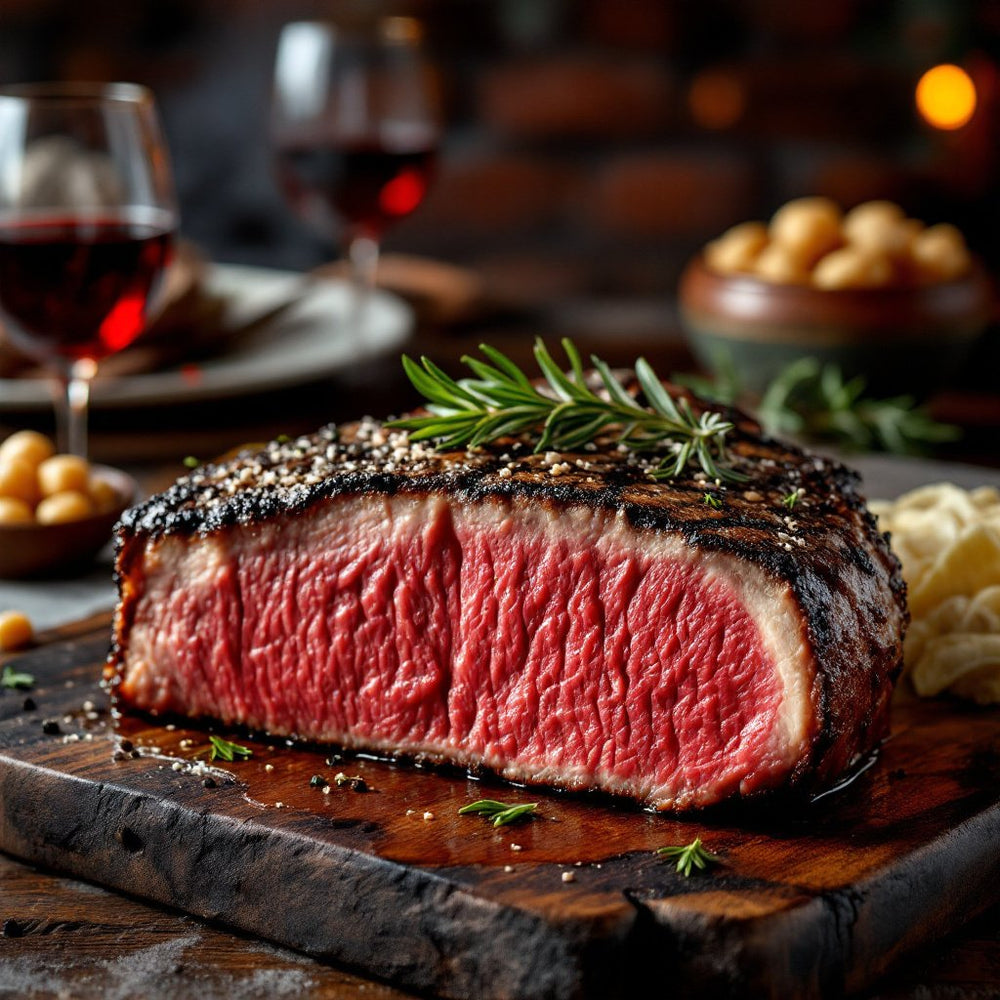
Florence's legendary T-bone steak is a monument to Tuscan simplicity: thick-cut Chianina beef, grilled over blistering charcoal until the outside chars and the interior remains deep red. Dressed only with coarse salt, black pepper, and a thread of Lunigiana olive oil — nothing more.
Credits: The Painted Passport
Local cuisine study in Florence, Italy

☕︎ Local Flavor

Trattoria Mario

Rating: 4.7★ | Price: $$ | Coordinates: 43.7745° N, 11.2530° E

Discover the most democratically Florentine eating experience in the city — a lunch-only trattoria in the San Lorenzo market that has been feeding the city since 1953 from four communal tables where you sit next to whoever arrived before you and share the ribollita, the trippa alla fiorentina, and the bistecca with complete strangers who become temporary family for the duration of a meal. The menu is handwritten daily on a chalkboard and changes with what Mario's suppliers bring that morning — Chianina beef from the Valdichiana, white beans from Sorana, wild boar from the Chianti hills. Trattoria Mario is a physical manuscript of the Florentine conviction that the best cooking is simple, seasonal, and eaten at a table shared with people you have never met, a tradition that the city has maintained continuously since the 14th century.

View Entry Details

Buca Mario

Rating: 4.6★ | Price: $$$ | Coordinates: 43.7686° N, 11.2548° E

Step into the oldest restaurant in Florence — established in 1886 in the basement of a medieval palazzo near Piazza della Repubblica, its vaulted ceilings and centuries of accumulated atmosphere producing the specific quality of a room that has been absorbing Florentine history for nearly a century and a half. The bistecca alla fiorentina, grilled over blistering Chianina charcoal in the kitchen downstairs and brought up still crackling, is the finest expression of the Florentine conviction that great beef needs nothing beyond fire, salt, and the correct breed of animal. Buca Mario preserves the lineage of the Florentine osteria as a cultural institution — a place that has been documenting the city's relationship with its own table through the entire arc of its modern history.

View Entry Details

Mercato Centrale Firenze

Rating: 4.6★ | Price: $$ | Coordinates: 43.7764° N, 11.2531° E

Navigate the iron and glass market hall that Giuseppe Mengoni built in 1874 — the same architect who designed the Galleria Vittorio Emanuele in Milan — where the ground floor remains one of the finest traditional food markets in Italy and the upper floor was reimagined in 2014 as a curated selection of the best Florentine food producers working in a single space. The ground floor stalls sell Cinta Senese pork, aged Pecorino from Pienza, fresh pasta, Lampredotto from the historical trippai who have been working this market for generations, and the specific seasonal produce of the Florentine contado. Mercato Centrale is a physical manuscript of the relationship between the Tuscan agricultural hinterland and the Florentine urban table — an institution that has been documenting that supply chain continuously since the 14th century.

View Entry Details

Enoteca Pinchiorri

Rating: 4.8★ | Price: $$$$ | Coordinates: 43.7688° N, 11.2617° E

Ascend to the most formally ambitious restaurant in Tuscany — a three-Michelin-star address in a 15th-century palazzo in the Santa Croce quarter, where Annie Féolde has been constructing multi-course menus around Tuscan ingredients and classical French technique since 1972 and where the wine cellar of over 150,000 bottles represents the most comprehensive archive of Italian wine in private hands. The ceilings are frescoed, the service is conducted with the specific unhurried formality of a room that understands the distinction between ceremony and performance, and the tasting sequences move from the raw material of the Tuscan kitchen — porcini, white truffles, Chianina beef, Lunigiana olive oil — toward preparations of extraordinary refinement. Enoteca Pinchiorri is an anchor for the argument that Tuscan cuisine has its own fine dining tradition — a restaurant that documents the specific meeting point of French classical ambition and Italian ingredient intelligence.

View Entry Details

🛌︎ Boutique Stays

Hotel Savoy Florence

Rating: 4.8★ | Price: $$$$ | Coordinates: 43.7712° N, 11.2557° E

Inhabit the most precisely located hotel in Florence — a Rocco Forte property on Piazza della Repubblica, the Roman forum of the original Florentia laid out in the 1st century BCE, where the bedroom windows look directly onto the carousel and the iron column that marks the exact centre of the ancient city. The interior by Tommaso Ziffer layers Florentine craft traditions — pietra serena stone, hand-blocked Tuscan fabrics, bespoke furniture from Florentine artisan workshops — within the original 1896 building whose Beaux-Arts facade defines the western edge of the piazza. Hotel Savoy is a physical manuscript of the layered history of this specific corner of Florence — a building that sits precisely on the intersection of Roman, medieval, Renaissance, and modern urban ambition.

View Entry Details

Portrait Firenze

Rating: 4.9★ | Price: $$$$ | Coordinates: 43.7672° N, 11.2512° E

Rest in the most intelligently designed boutique hotel in Florence — a Lungarno collection property in the Oltrarno quarter, occupying a series of connected medieval buildings directly on the Arno whose interiors were conceived by Michele Bönan as a private Florentine residence of extraordinary taste rather than a hotel. The library, the sitting rooms, and the individual suites are furnished with a density of objects — antique maps, custom-bound books, vintage photographs of Florence, pieces by contemporary Italian designers alongside 18th-century Tuscan furniture — that produces the specific quality of a room that has been lived in rather than styled. Portrait Firenze preserves the lineage of the Florentine palazzo as a domestic and intellectual space — a building that documents the tradition of the city as a place where beautiful things are accumulated, arranged, and lived alongside.

View Entry Details

AdAstra Florence

Rating: 4.7★ | Price: $$$ | Coordinates: 43.7731° N, 11.2482° E

Unearth one of the most considered small hotels in the city — a converted 14th-century tower house in the San Lorenzo quarter whose ten rooms were designed by Florentine architect Michele Bönan with the restraint and specificity of someone who understands that the building itself is the decoration: rough-hewn pietra forte stone walls, terracotta floors worn smooth by six centuries of use, and windows that frame the roofline of Renaissance Florence as a living painting. The location is deliberately residential — away from the tour group circuits of the Duomo and the Uffizi corridor — in the quarter where the market traders and the craftsmen still set up each morning as they have done since the 15th century. AdAstra documents the lineage of the Florentine domestic tower as an architectural form — a building type specific to medieval Florence that organised the city's social hierarchy vertically before the palazzo spread it horizontally.

View Entry Details

Hotel Davanzati Florence

Rating: 4.7★ | Price: $$$ | Coordinates: 43.7696° N, 11.2527° E

Sleep two minutes from the Ponte Vecchio in a family-run hotel occupying a medieval building on Via Porta Rossa — the same street that has connected the commercial heart of Florence since the 14th century — where the Davanzati family has been managing guests with a specific warmth and Florentine intelligence that no chain property can reproduce. The building's history is embedded in the street it occupies: the Palazzo Davanzati across the road, now a museum of medieval domestic life, was built by the same family who give the street its character, and the hotel sits in that architectural conversation. Hotel Davanzati preserves the lineage of the Florentine family pensione as a living cultural institution — a place that documents the tradition of Florentine hospitality as something offered by a family who live in the city rather than a corporation that operates in it.

View Entry Details

📍︎ Field Study

Uffizi Gallery Skip-the-Line Guided Tour

Rating: 4.8★ | Price: $$ | Coordinates: 43.7678° N, 11.2553° E

Navigate the most important collection of Italian Renaissance painting in the world — a U-shaped palazzo that Giorgio Vasari built for Cosimo I de' Medici in 1560 as the administrative offices of the Florentine state and that the Medici family converted into a private art gallery over the following century, bequeathing the entire collection to the city of Florence in 1743 on the condition that it never leave. Botticelli's Birth of Venus and Primavera, Leonardo's Annunciation, Caravaggio's Sacrifice of Isaac, Michelangelo's Doni Tondo — the specific sequence of rooms in the Uffizi documents the development of Western painting from Cimabue's Byzantine gold grounds to the Baroque with a density and coherence that no other institution matches. The Uffizi is the most important cultural archive in Italy — a collection assembled by a single family over three generations that has been documenting the ambitions of Florentine and Italian art since the 13th century.

View Entry Details

Florence Duomo and Brunelleschi Dome Climb

Rating: 4.9★ | Price: $ | Coordinates: 43.7731° N, 11.2560° E

Ascend the 463 steps to the lantern of Brunelleschi's dome — the largest masonry dome ever constructed, built between 1420 and 1436 using a self-supporting herringbone brick technique that Filippo Brunelleschi invented specifically for this project because no existing scaffolding system could span the 44-metre diameter of the crossing. At the summit, the entire Arno valley spreads from the Chianti hills to the south to the Apennines to the north, and the specific relationship between the cathedral, the baptistery, and the city grid below reads with a clarity that confirms that the placement of every building in the historic centre was intentional. Brunelleschi's dome is the founding document of Renaissance architecture — the structure that proved that the classical orders could be not merely quoted but reinvented, and that an individual architect's intelligence could exceed the accumulated tradition of the medieval guilds.

View Entry Details

Accademia Gallery and David Tour

Rating: 4.8★ | Price: $$ | Coordinates: 43.7767° N, 11.2587° E

Stand before Michelangelo's David in the Tribuna that Emilio de Fabris designed specifically for this sculpture in 1873 — a purpose-built rotunda of natural daylight that allows the 5.17-metre figure to be seen from every angle at the distance Michelangelo calculated when he designed it to be seen from below on the facade of Florence Cathedral before the commission changed. The David was carved between 1501 and 1504 from a single block of Carrara marble that had been abandoned for 25 years after two previous sculptors declared it impossible to work, and the veining of the stone is visible through the ankle of the right leg where the tension of the contrapposto pose is concentrated. The Accademia is the most important single-object museum in the world — an institution that preserves the defining sculpture of the Italian Renaissance in the city that commissioned it, for the civic purpose that motivated it.

View Entry Details

Oltrarno Artisan Quarter Walking Tour

Rating: 4.8★ | Price: $ | Coordinates: 43.7659° N, 11.2484° E

Walk the south bank of the Arno with a guide who can open the workshop doors of the bookbinders, goldsmiths, furniture restorers, leather workers, and mosaic makers who still practise the artisan trades that made Florence the manufacturing capital of Renaissance Europe in streets that have changed less than any other quarter of the city in five hundred years. The Oltrarno preserves the specific social and physical infrastructure of the Florentine bottega — the ground-floor workshop with the residence above and the apprentice sleeping in the back — as a living urban form rather than a heritage reconstruction. This walk documents the transition from Renaissance manufacturing city to contemporary craft economy in the quarter where that transition has been most consciously resisted — a neighbourhood that has chosen continuity over reinvention and is the richer for it.

View Entry Details

Typography

Archival Note: We have personally documented these geographic specs for Florence, Italy to ensure every watercolor study is anchored in real-world data. By cataloging the precise elevation, light cycles, and historical epochs, we provide a technical foundation that justifies the atmospheric stillness captured in our visual artifacts.

Botanical and pigment specimen study for Florence, Italy Colors of Florence, Italy
Coordinates
43.7696° N, 11.2558° E — Central Tuscany, Arno River valley, northern Italy
Historical Epoch
Roman Florentia 59 BCE. Medieval commune 1115. Medici banking dynasty 1397. Florentine Republic and Renaissance 1400-1500. Medici Grand Duchy 1569-1737. Capital of unified Italy 1865-1871.
Elevation
49–400 m / 161–1,312 ft — flat Arno valley floor rising to the Florentine hills at Fiesole
Atmosphere
Mediterranean (Csa). Hot, dry summers reaching 35°C, mild winters with occasional rain. Best light is spring and autumn — clear, warm, specific to the Arno valley latitude that the Renaissance painters knew well.
Observation Hour
18:45. Golden hour on the terracotta dome and pietra serena facades as the sun drops toward the Chianti hills, the honey-gold sandstone warming to amber and the Arno turning to copper below the Ponte Vecchio.
Primary Pigment
Brunelleschi Terracotta (#C4622D) and Pietra Serena (#8C8C8C)
Best Time to Visit
April through June — the Tuscan spring light is extraordinary, the heat has not yet arrived, and the queues at the major museums are still manageable without booking weeks in advance.
Avoid Visiting
July through August — 35°C+ heat, maximum tourist density, and the major sites require booking weeks ahead. The city's own residents largely leave.

The Local Tongue

Language is the invisible architecture of Florence, Italy. These entries document the regional vocabulary—capturing the "texture" of local speech that standard translations often miss. Hand-curated expressions reflecting the specific spirit and daily rhythm of the region.
Archival study of Italian cultural texture

via / Pexels Marichka

Primary Language Italian
Regional Dialect Fiorentino (Tuscan dialect)

Strepitoso

The Florentine exclamation of genuine delight — something so good or so well made that ordinary appreciation is insufficient. Strepitoso is stronger than bello, more specific than bravo, and carries the implication that the thing described has exceeded expectation. It is the word a Florentine uses when Brunelleschi's dome appears from an unexpected angle, or when the bistecca arrives exactly as it should.

Accidenti

The Florentine oath of surprise, irritation, or admiration — a word that functions as a general intensifier for whatever emotion has just arrived unexpectedly. Accidenti can express anything from mild inconvenience to profound astonishment, and the Florentine capacity to use it for both without distinction is a feature of a dialect that has always preferred economy to precision.

Osteria

The specific Florentine eating establishment that sits between a restaurant and a wine shop — a place where the food is simple, the wine comes from the barrel, and the atmosphere is defined by the person running it. The osteria is the social institution the Florentine merchant class invented in the 13th century and that the city has been refining ever since.

Wait! before you go...

Before you head over to Florence, Italy, we wanted to share a few basic tips we picked up along the way. These notes cover the simple things—like how to get around or what to do about cash—so you can spend less time worrying and more time just enjoying the place.
🚲 Getting Around Florence is best explored entirely on foot — the UNESCO historic centre is compact and all major monuments are within walking distance. Buses serve Fiesole and the Oltrarno hills. The tram connects Santa Maria Novella to the airport in 20 minutes.
⚖️ Cash or Card Aim for an 80/20 card-to-cash ratio. Most restaurants, shops, and museums accept card, but smaller trattorias and market vendors still prefer cash. Keep €20-30 for the traditional eating and market experiences that define the city best.
☁️ Good to Know Florence rewards the unhurried. The best of it is found by walking into churches, courtyards, and streets without an itinerary — the architectural density of the historic centre means every unplanned turn produces something worth stopping for.
🏧 ATMs ATMs are found throughout the centre and at Santa Maria Novella station. Use bank-affiliated machines — Intesa Sanpaolo or UniCredit — rather than the independent tourist-area machines which charge higher fees for international cards.
💳 Currency The local currency is the Euro (€). Credit and contactless card payments are accepted in most restaurants, shops, and museums. Keep €20-30 in cash for the market stalls, smaller trattorias, and the traditional lampredotto and schiacciata vendors who prefer it.
🔌 Plugs Italy uses Type C, F, and L plugs with 230V and 50Hz. The Type L three-pin plug is unique to Italy — pack a universal adapter covering all three types. Most modern electronics are dual-voltage and need only an adapter, not a converter.
🛡️ Safety Florence is a very safe city with standard urban awareness. Pickpocketing is the main concern around the Uffizi, the Duomo, and the Ponte Vecchio. Keep your bag in front in tourist-dense areas for a completely trouble-free visit.
✈️ Airports Primary gateway is Florence Airport Vespucci (FLR), 4km from centre; tram to Santa Maria Novella in 20 minutes for €1.70. Pisa Airport (PSA) connects by direct train in 1 hour. Bologna connects by high-speed rail in 35 minutes.

Behind The Scenes

Nathan

Note from the Founder

Hey, did you know this fun fact about Florence, Italy? Michelangelo's David was carved from a block of Carrara marble abandoned for 25 years after two sculptors declared it unworkable. Michelangelo finished it in two years.
Thank you for exploring the Florence, Italy series with us. We hope these notes have inspired you to add this incredible destination to your own passport—we are so glad you’re here. — Nathan

The Magnets

The Coasters

The Canvas